

Kochi Castle Travel Guide: Japan’s Only Original Castle Keep and Main Bailey Still Standing
Kochi Castle is one of Japan’s Top 100 Castles, drawing visitors from all over the country.
If you’re taking the time to visit Kochi Castle, you’ll want to fully enjoy what makes it special.
This article is for first-time visitors, introducing must-see spots and defining features—like the 15 buildings spread across its expansive grounds, and the rare fact that both the castle keep and the Honmaru Palace still survive—along with the best seasons to visit and the key info you need to make the most of your trip.
What is Kochi Castle Like?
Kochi Castle is located in Kochi City, the center of Kochi Prefecture.
It’s a well-known landmark that attracts tourists from across Japan and is counted among Japan’s Top 100 Castles.
It’s one of the 12 castles in Japan with an original keep surviving from the Edo period, and 15 buildings designated as Important Cultural Properties are scattered throughout the grounds.
These structures range widely, from defensive facilities like the Otemon Gate and Kairo-mon Gate to living quarters like the Honmaru Palace.
Each building has plenty to see, offering a glimpse into everyday life and the defensive ingenuity of the time.
Kochi Castle’s biggest draw is the rarity of having both the castle keep and the Honmaru Palace still standing.
In fact, Kochi Castle is the only one in Japan where both the keep and the Honmaru Palace survive.
Kochi Castle was founded by Yamauchi Kazutoyo, the first lord of the Tosa Domain (present-day Kochi Prefecture). Construction began in 1601, and the castle was completed in 1611.
Since then, it has endured hardships such as fires and the castle abolition order, preserving its form to this day.

Access to Kochi Castle
To get to Kochi Castle from JR Kochi Station, taking a bus or tram is recommended.
By bus, ride a Tosaden Kotsu bus and get off at “Kochijo-mae.”
By tram, take Tosaden Kotsu, transfer at “Harimayabashi,” and get off at “Kochijo-mae.”
Either way, the trip takes Approx. 15 minutes.
It takes Approx. 30 minutes, but you can also walk to Kochi Castle from JR Kochi Station.
Kochi Castle Admission and Hours
Admission to Kochi Castle’s keep, Kaitokukan, Higashitamon, and Kairo-mon is 420 yen for ages 18 and up, and free for ages under 18.
Hours are 9:00am–5:00pm (Last admission at 4:30pm), though hours may be extended during events.
Closed on December 26–January 1.
What’s the Best Season to Visit Kochi Castle?
If you’re visiting Kochi Castle, spring is especially recommended.
For example, in late March, the Approx. 225 cherry trees planted in Kochi Castle Park reach full bloom.
The illuminated cherry blossoms at night, in particular, draw many visitors for their beauty.
Spring is also the season when not only cherry blossoms, but also plum blossoms, azaleas, Kerria japonica, and many other flowers bloom in profusion.
Enjoying a swirl of falling cherry petals alongside other colorful blooms is another reason to visit Kochi Castle in spring.


Make the Most of Kochi Castle’s Unique Features! 5 Must-See Highlights
Selected as one of Japan’s Top 100 Castles, Kochi Castle is a sightseeing spot you can enjoy for a full day, with many historic structures—from defensive facilities like the Otemon Gate and Kairo-mon Gate to the Honmaru Palace.
Here, we’ll narrow it down to five key sights, including the most important structures like the “castle keep” and “Honmaru Palace,” and introduce a curated list of highlights you absolutely shouldn’t miss when visiting Kochi Castle.
1. The “Castle Keep” with Panoramic Views of Kochi City and the Grounds
Kochi Castle’s keep has a four-tier exterior, while the interior is a three-level, six-story structure—an archetypal example of a watchtower-style keep.
It’s one of the 12 castles in Japan with an original keep built in the Edo period still standing.
From the top floor of the keep, you can take in sweeping views of beautiful Kochi City and the castle grounds.
The polished shachihoko roof ornaments on the keep are another highlight.
These mythical creatures were believed to help prevent fires, which is why they were installed.
At night, the keep is illuminated, offering a dreamy view that feels different from daytime.

2. “Kaitokukan (Honmaru Palace),” Where You Can Feel the Aesthetics of the Era
Kaitokukan (Honmaru Palace) stands in the central area of Kochi Castle.
Because Kochi Castle is the only castle in Japan where both the keep and the Honmaru Palace still survive, it holds particularly high historical value even among the 12 castles with original keeps.
Kaitokukan (Honmaru Palace) was used as the place where the lord received guests.
With beautiful decorations and a design that reflects Edo-period samurai culture and architectural styles, its charm lies in the glimpse it offers into the aesthetics of the time.
Another feature is the “shinobigaeshi,” a protective measure designed to prevent intruders.
The fact that this shinobigaeshi is the only one still surviving in Japan can also be considered one of Kochi Castle’s defining features.


3. The Front Gate, “Otemon Gate,” Built to Stop Enemy Intrusion
Kochi Castle’s Otemon Gate is one of the 15 Important Cultural Property buildings, built in 1801.
It’s one of the castle’s key gates and serves as Kochi Castle’s main entrance.
As a defensive feature against enemy attacks, the gate has a double-layered roof and a solid wooden structure that feels imposing.
On the second floor of this turret gate—built by stacking stone walls and placing a turret above—there is an “ishi-otoshi,” used to drop stones or boiling water on enemies attacking from directly below.
It’s also interesting to see architectural features designed for combat, such as the ability to attack intruders from sections of the surrounding wall.

4. The “Karakuri Gate (Tsume Gate)” That Confuses Enemies
The Karakuri Gate (Tsume Gate) is a turret gate that connects the Honmaru Palace and the Ninomaru.
It was built as a staggered, trick-style gate so enemies who have entered the castle can’t pass through easily, with a layout that prevents them from reaching the Honmaru by simply going straight ahead.
The name Tsume Gate comes from the fact that the connecting corridor from the second floor to the Ninomaru was used as offices for senior retainers such as churo and karo.
The Karakuri Gate (Tsume Gate) is one of the 15 surviving buildings designated as Important Cultural Properties.

5. The “Statue of Yamauchi Kazutoyo,” Who Helped Lay the Foundations of Modern Kochi
The bronze statue of Yamauchi Kazutoyo stands 4.32 m tall and weighs 3.6 tons. The pedestal is 5.08 m, making the total height 9.4 m—one of Japan’s largest equestrian statues.
It stands by the Kochi Prefectural Library, just after entering through Kochi Castle’s Otemon Gate.
The statue was created in honor of Yamauchi Kazutoyo, the first lord of the Tosa Domain, who built Kochi Castle and developed the castle town.
The current statue is the second version, recreated and unveiled on September 20, 1996, the anniversary of Yamauchi Kazutoyo’s death, by sculptor Hakuu Motoyama, who also made the Sakamoto Ryoma statue at Katsurahama.

3 Popular Kochi Attractions to Visit Along with Kochi Castle
Kochi has many appealing sightseeing spots besides Kochi Castle.
To fully enjoy the charms of Japanese culture and nature, be sure to visit the three attractions introduced below as well.
1. Hirome Market
A lively food hall packed with stalls, with around 46 eateries and about 7 shops selling local products.
It’s located near Kochi Castle, making it a great stop before or after sightseeing.
The name “Hirome Market” comes from Fukao Hirome Shigeaki, a Tosa Domain senior retainer beloved by the people.
The main way to enjoy it is to buy food from different vendors and bring it to the shared food court to eat.
Many stalls serve katsuo no tataki (seared bonito), and you can also watch dramatic straw-grilling in action.
Beyond that, you’ll find plenty of Kochi-specific flavors such as Tosa Akaushi beef dishes, whale dishes, and gamecock dishes. There are also souvenir shops and specialty stores for local sake, so it’s a great place to stop when choosing gifts.

2. Shimanto River
At 196 km long, this is Shikoku’s longest river, flowing through western Kochi Prefecture. Its source is Mount Irizuyama in Tsuno Town.
Known as “Japan’s last clear stream,” it offers beautiful natural scenery in every season.
The Shimanto River has 47 chinkabashi (submersible bridges), designed without railings and built to sink during high water so they won’t be washed away.
The most famous is the 291.6 m-long Sada Chinkabashi (Imanari Bridge), the longest one, located in the lowest reaches of the river.

3. Katsurahama
A scenic coastline at the tip of the Urado Peninsula in Kochi City, curving like a bow between Ryuto Cape and Ryuo Cape. The pine grove, sandy beach, and sea create beautiful views.
It’s one of Kochi Prefecture’s 대표 sightseeing spots and is also popular for its large bronze statue of Sakamoto Ryoma, who was active in the late Edo period.
The statue of Sakamoto Ryoma—wearing traditional Japanese clothing with boots—gazes far out over the Pacific. It stands 5.3 m tall, and 13.5 m including the pedestal.
Every year from April to May, and for two months around November 15 (Ryoma’s birthday and the anniversary of his death), a 13-meter viewing platform is set up next to the statue.
This allows you to view the Pacific Ocean from the same eye level as Ryoma.

3 Popular Places to Eat Near Kochi Castle
Around Kochi Castle, you’ll find restaurants where you can enjoy both history and local flavor.
These three spots each have their own appeal, including places where you can enjoy Kochi-style regional cuisine after exploring the castle.
Along with sightseeing, we hope you’ll savor Kochi’s charms through its food as well.
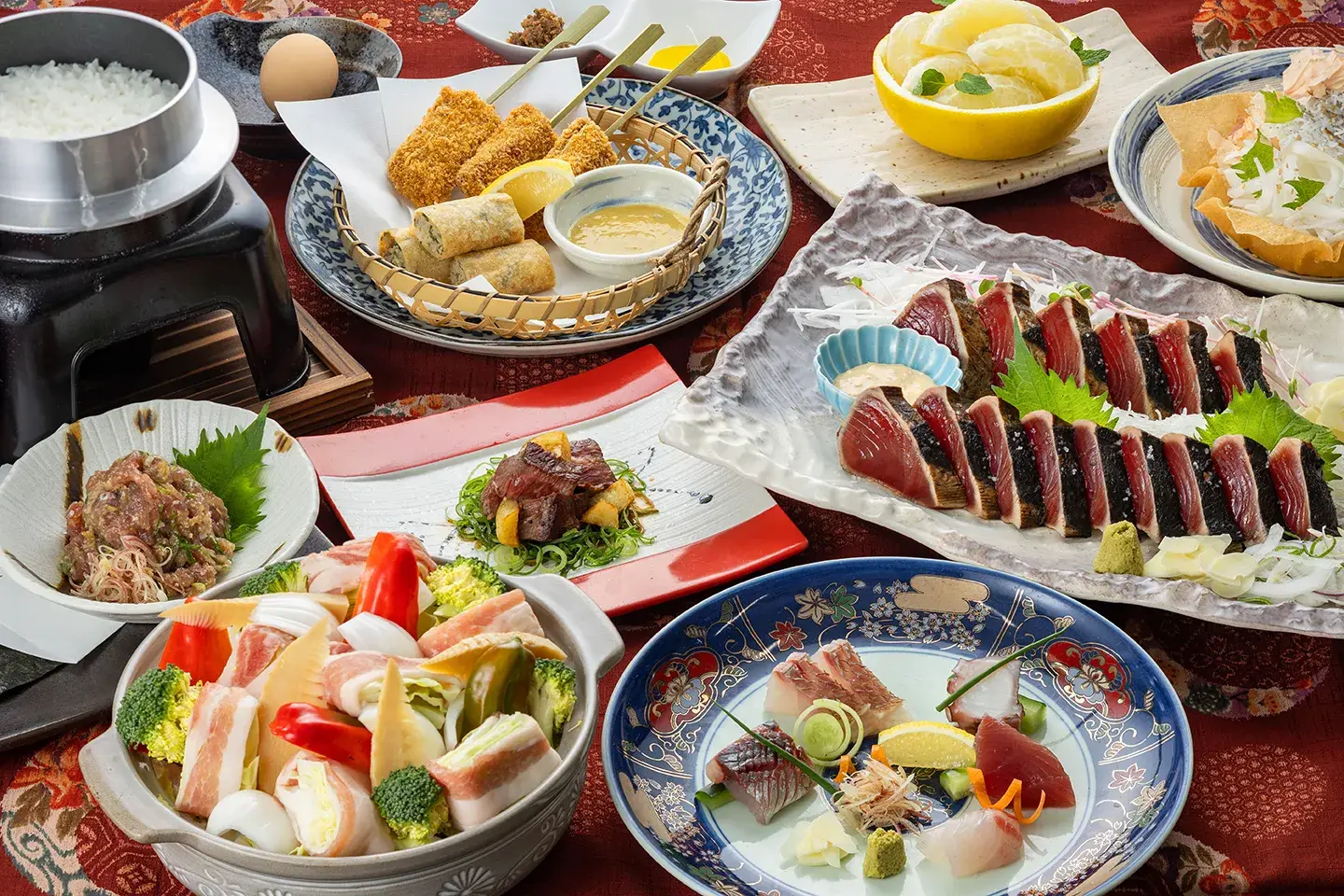
1. Myojinmaru (Main Branch)
Myojinmaru (Main Branch) is an izakaya run by Myojin Suisan, known for having Japan’s top bonito catch volume.
It’s within walking distance of JR Kochi Station and the Tosaden “Horizume” stop. They serve Kochi regional specialties and bonito dishes.
The interior is refined, reminiscent of a traditional Japanese restaurant.
In a relaxed setting, you can enjoy a local dining experience crafted by real fishermen.
2. 1×1=1 Ice Cream (Aisukurin)
1×1=1 Ice Cream (Aisukurin) is located Approx. 10 minutes on foot from Harimayabashi Station.
It’s an aisukurin shop attached to a workshop where the dessert is made using traditional methods.
For locals, its taste is a familiar flavor they’ve known since childhood.
It’s a sweet treat loved by many across generations.

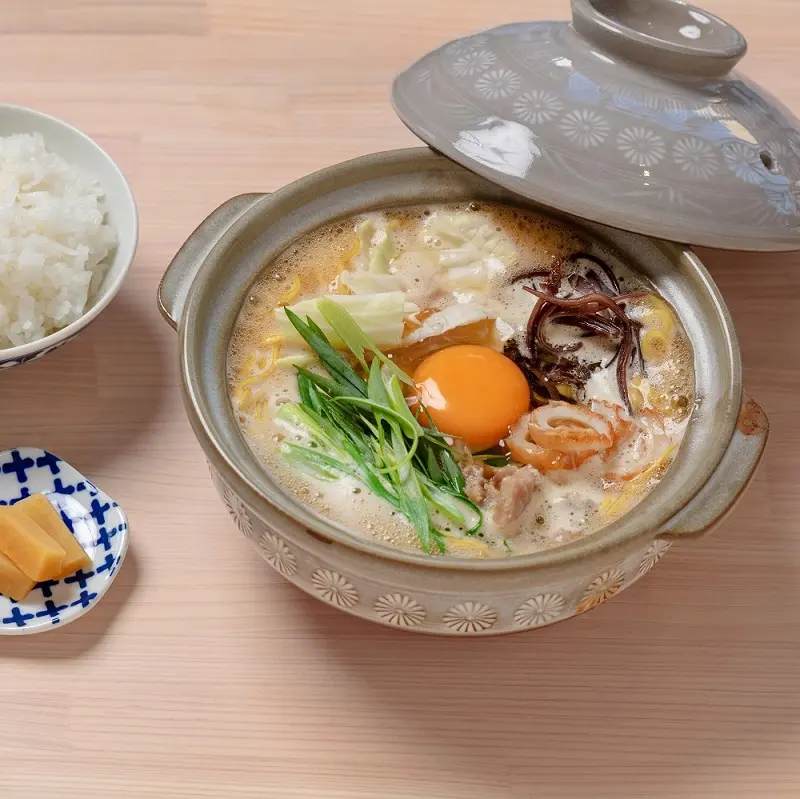
3. Nabeyaki Ramen no Garo~ Tosa no Sato Agricoretto Main Branch
“Nabeyaki Ramen no Garo~ Tosa no Sato Agricoretto Main Branch” is a nabeyaki ramen specialty restaurant inside the complex facility “Tosa no Sato AGRI COLLETTO (Agricoretto).”
A long-established business with 50 years since its founding in Susaki City, where this style originated.
With a taste that carries on old-fashioned traditions, you can enjoy Kochi’s food culture.
Reviews
3.67
Some reviews are AI-translated.
-
I've visited so many Japanese castles, and honestly, they all look pretty similar. If you're not really into Japanese history, it's mostly just a good spot for photos.
-
The location is right in the city, so it's very convenient to get to. Kochi Castle is built on a slope, so you'll need to climb some stairs, which can be a bit tiring. The exhibits inside are detailed, and there are Chinese translations, making it easy to understand the significance.
-
Kochi Castle is one of the 12 original castle towers among Japan's Top 100 Castles. It's really well preserved. There's an entrance fee only if you go inside the main tower, where you can get a great view of Kochi City. Definitely a must-visit spot in Kochi.
FAQ about Kochi Castle
Q
Who built Kochi Castle, and when?
A
It was built in 1611 by Yamauchi Kazutoyo, the first lord of the Tosa Domain.
Q
What makes Kochi Castle special?
A
Kochi Castle is the only place in Japan where you can see both an original castle keep and an original Honmaru Palace.
Summary
Kochi Castle is one of Japan’s Top 100 Castles.
From its highlights to the history and nearby attractions you’ll want to know to fully enjoy it, we’ve introduced all the information you need to see Kochi Castle to the fullest.
Kochi Prefecture has more great places to visit than just Kochi Castle.
To make the most of Kochi Prefecture, please use this article as a reference as well.