
![[Izumo Taisha Travel Guide] Highlights, Blessings, How to Pray, and Nearby Spots](https://static.gltjp.com/glt/data/article/21000/20423/20251205_102826_4f647449_w1920.webp)
[Izumo Taisha Travel Guide] Highlights, Blessings, How to Pray, and Nearby Spots
Izumo Taisha is a major shrine located in Izumo, often called the land of the gods.
As one of Japan’s leading power spots, it draws many visitors from Japan and abroad seeking all kinds of blessings.
In this article, we’ll cover the basics—like Izumo Taisha’s origins and access—along with highlights, how to pray, and goshuin temple stamps.
We’ve gathered the key things to know so even first-time visitors can fully enjoy their visit, so please read through to the end.
What is Izumo Taisha Like?
Izumo Taisha, located in Izumo City, Shimane Prefecture, is one of Japan’s most iconic Shinto shrines.
It is said to have been founded in the Age of the Gods (jindai, the era before Emperor Jimmu’s enthronement), and since ancient times it was known as Kizuki Taisha.
It was renamed Izumo Taisha in 1871. It’s commonly read as “Izumo Taisha,” but the correct reading is “Izumo Ooyashiro.”
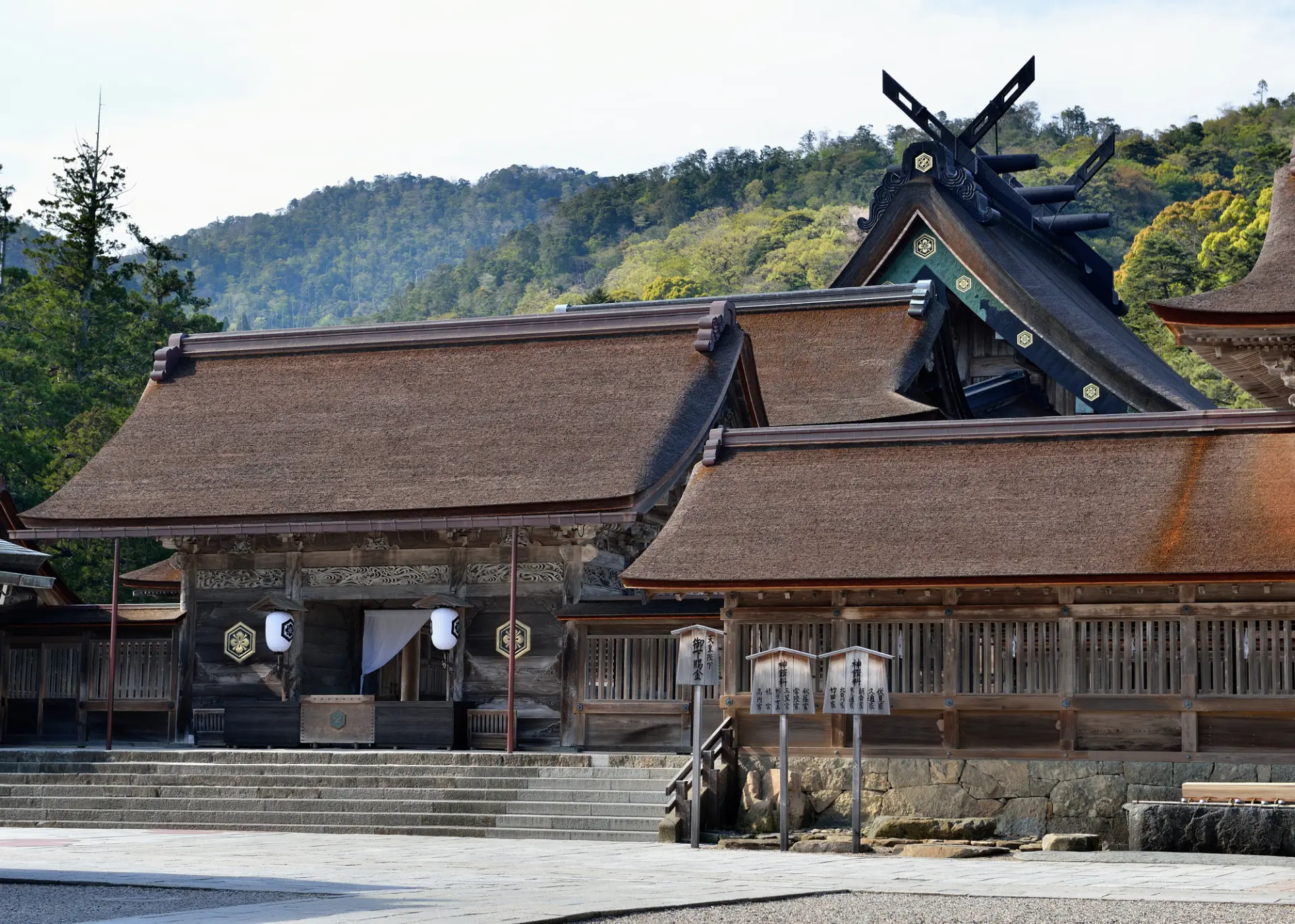
Its enshrined deity is Okuninushi-no-Okami, famed as a god of matchmaking and good fortune, and the shrine is deeply revered by worshippers from across Japan.
With a history and faith closely tied to mythology, Izumo Taisha offers a rich, multifaceted way to experience Japanese culture.
Within the solemn grounds, wrapped in pine-lined paths, there’s no shortage of sights—from the National Treasure Main Hall (Honden) with its commanding presence to the massive sacred straw rope at the Kagura Hall that leaves visitors in awe.

The History of Izumo Taisha
According to Japan’s oldest historical record, the Kojiki, and the official chronicle, the Nihon Shoki, Okuninushi-no-Okami developed the land and shared wisdom with people in areas such as agriculture, medicine, and fishing.
Later, under envoys acting on the command of the imperial ancestral deity Amaterasu-Omikami, the “transfer of the land” (kuniyuzuri) took place.
In exchange for yielding the land, Okuninushi-no-Okami requested that a grand palace be built, and the shrine buildings that were constructed are said to be the origin of Izumo Taisha. *There are various theories.
There is also a tradition that the former Main Hall once stood at around double today’s height, Approx. 157 ft (or 315 ft).
Since ancient times, Izumo Taisha was valued as an important political and religious center of the region, and it received strong patronage from the Amago clan and the Tokugawa shogunate.
In modern times, after fires, repairs, and Sengū (major repair and relocation rites of the Main Hall), it has been preserved in its present form.
Blessings of Izumo Taisha
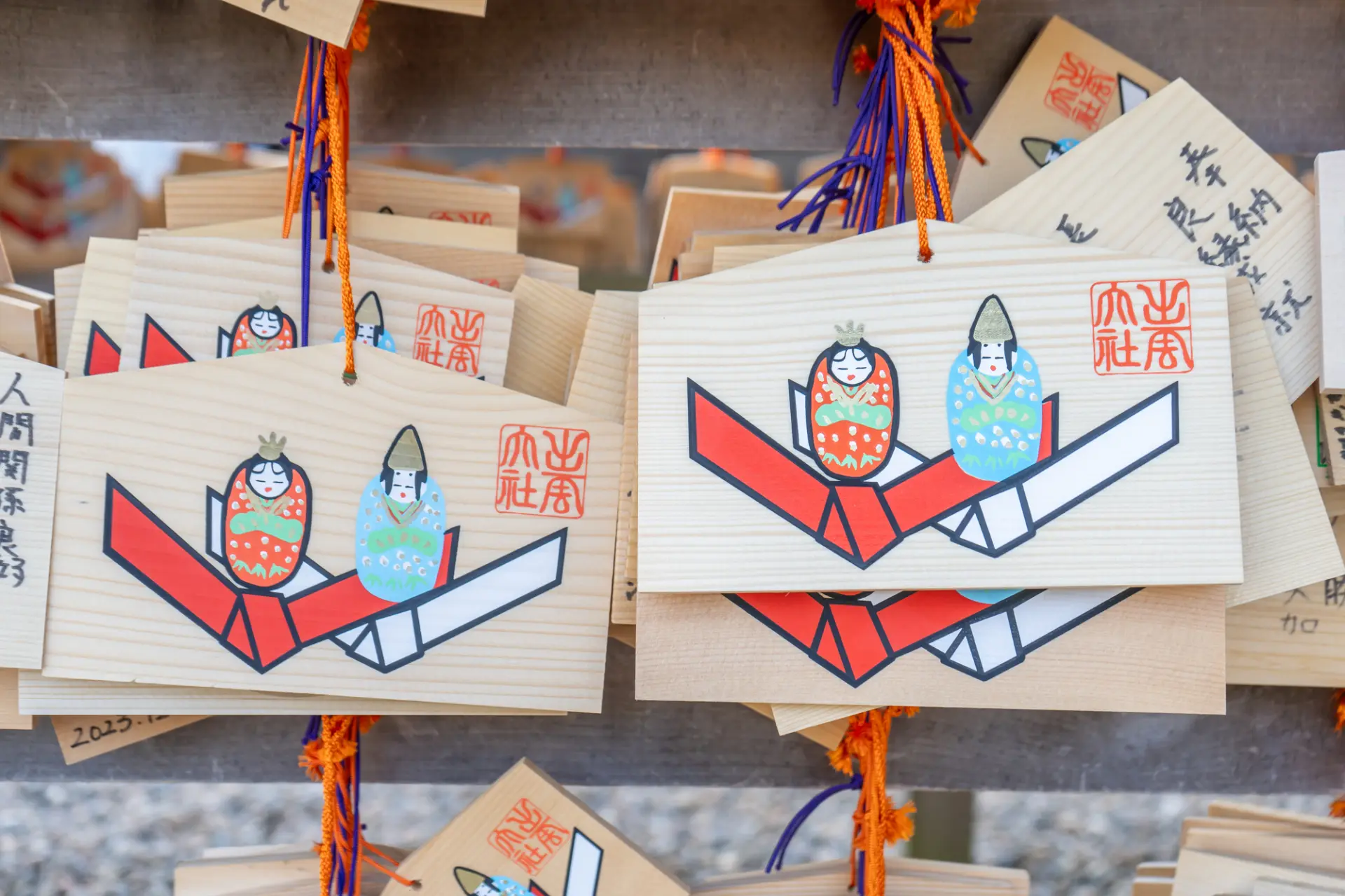
Izumo Taisha’s main blessing is “enmusubi,” or matchmaking. “En” doesn’t only mean romance and marriage—it refers to all positive connections between people, including building a happy family and forming good relationships of all kinds.
Also, as a deity of nation-building, it is believed to bring blessings such as good fortune, business prosperity, and bountiful harvests. As a deity associated with medicine, it is also said to help with recovery from illness and overall physical and mental well-being.
Hours and Admission at Izumo Taisha
Visiting Izumo Taisha itself is free, but admission to the Treasure Hall costs 300 yen for adults, 200 yen for university and high school students, and 100 yen for elementary and middle school students. Hours are as follows.
- Regular Hours
-
6am–7pm
※1. The area toward Soga no Yashiro north of the Main Hall is until 4:30pm
※2. The Treasure Hall is 8:30am–4:30pm - New Year’s First Shrine Visit Period
-
・December 31: 6am–12am
・January 1: 12am–7pm
・January 3: 12am–7pm
※Please check the official website
Access to Izumo Taisha
The closest station to Izumo Taisha is Izumo Taisha-mae Station on the Ichibata Electric Railway Taisha Line.
Below is a table showing how to get to Izumo Taisha from Izumo Enmusubi Airport, the area’s gateway, and from JR Izumoshi Station, a main sightseeing hub.
There are also free parking lots around Izumo Taisha, such as the Izumo Taisha Large Parking Lot and the Shimane Museum of Ancient Izumo parking lot, so visiting by rental car is also recommended. *Traffic restrictions may be in place during busy periods.
| Starting Point | Route | Travel Time |
|---|---|---|
| Izumo Enmusubi Airport |
From the “Izumo Enmusubi Airport” bus terminal (Taisha-bound stop), take the Izumo Ichibata Kotsu direct bus and get off at “Izumo Taisha” ※The direct bus generally runs only around 2 times a day and only departs in the morning, so please note |
Approx. 45 min |
| JR Izumoshi Station |
From the “Izumoshi Station” bus stop, take the Ichibata Bus Taisha Line bound for Izumo Taisha and get off at “Seimon-mae” ※You can also access by train from “Izumoshi Station” on the Ichibata Electric Railway Kitamatsue Line |
Approx. 35 min |
What’s the Best Season to Visit Izumo Taisha?
If you’re sightseeing at Izumo Taisha, the best time to go is during Kamiarizuki (the “Month of the Gods”).
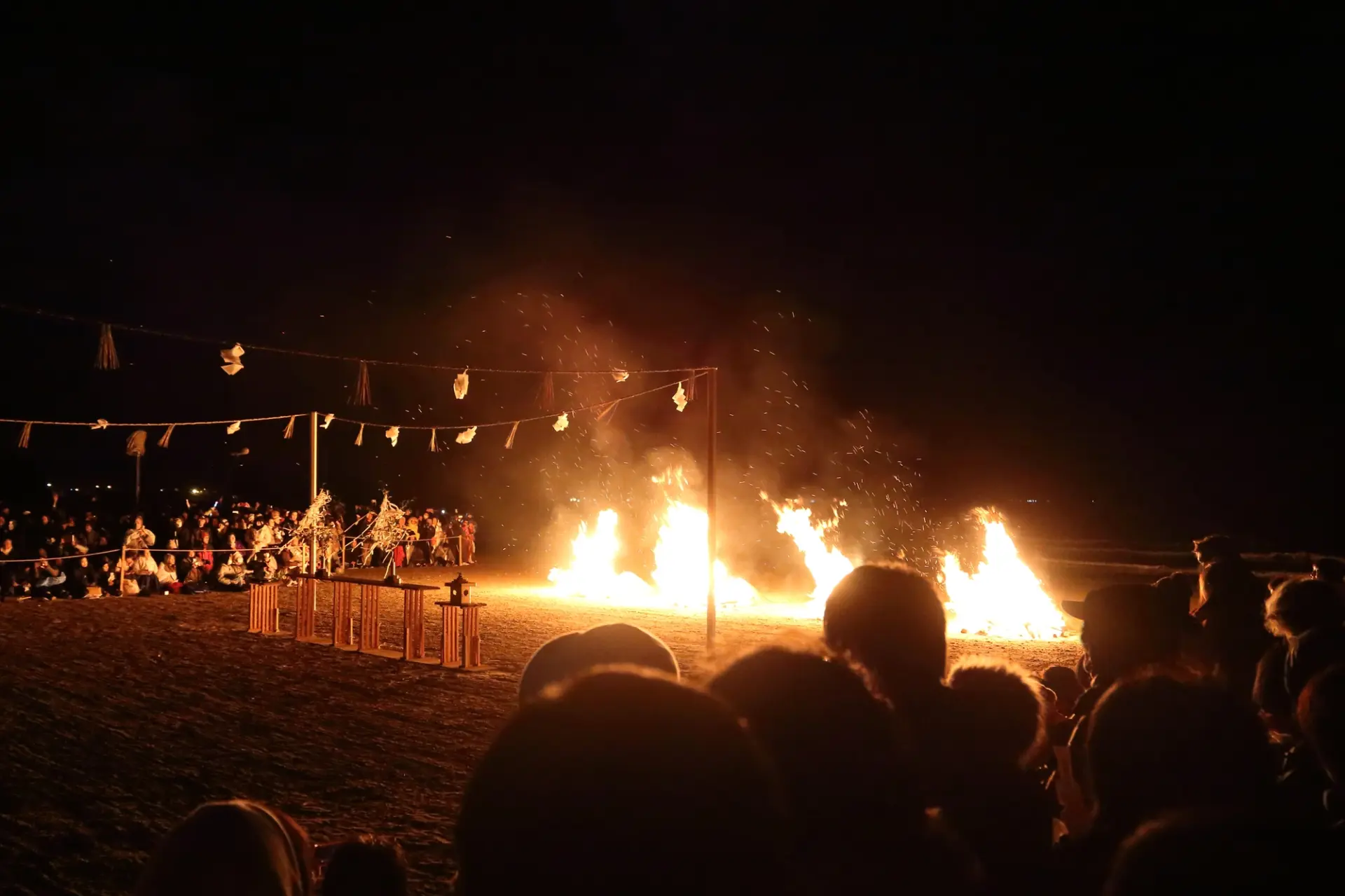
Kamiarizuki refers to the 10th month of the lunar calendar, or November–December in the modern calendar, a special period when the myriad gods from across Japan are said to gather in Izumo.
This tradition is said to date back to the Heian period (794–1185). In other regions, it’s called Kannazuki (the “Month Without Gods”) because the gods are believed to be away.
Important Shinto rituals are held at Izumo Taisha as well, and it becomes especially crowded.
It begins with the rituals to welcome the gods, Kami-mukae Shinji/Kami-mukae Sai, followed by Kamiari Sai and Enmusubi Taisai, and ends with Karasade Sai, where the gods are sent off across the country.
It’s a great chance to experience ancient traditions and mythology.
6 Must-See Highlights at Izumo Taisha
From here, we’ll introduce six key highlights of Izumo Taisha.
Each has a solemn atmosphere rooted in deep history and faith, and you can feel a mysterious spiritual energy.
Traditional architectural styles and distinctive structural beauty are also part of the appeal, creating spaces and views you’ll only find at Izumo Taisha.
The grounds are large and filled with many structures, but at the very least, be sure to see the highlights introduced below.
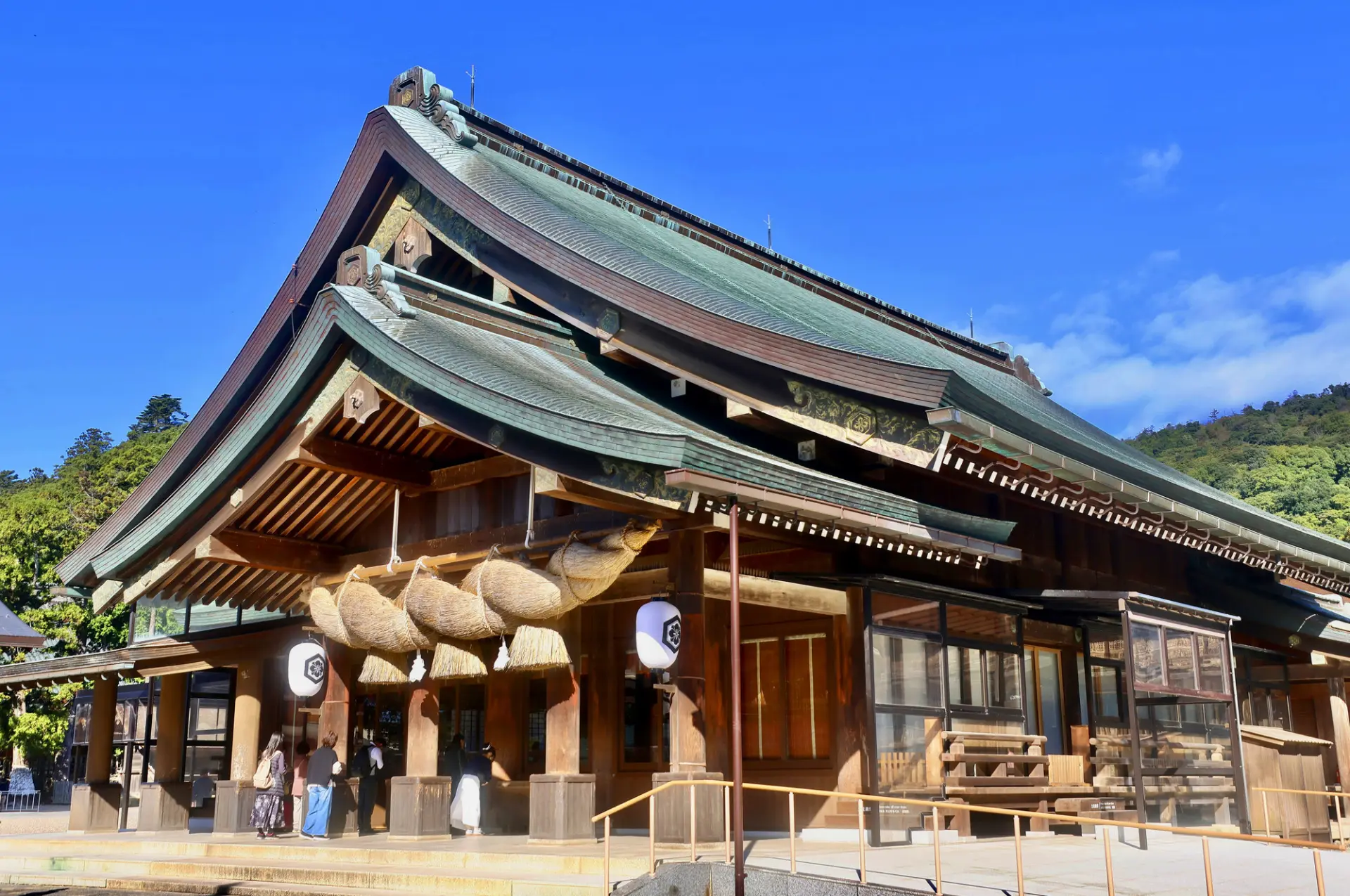
1. Kagura Hall
Kagura Hall was originally used as the grand hall of the Senge Kunizō family (the family responsible for rituals at Izumo Taisha).
In the Meiji era (1868–1912), it also took on the role of a sanctuary for Izumo Taishakyō, and in 1981 it was expanded into its current form.
One of the central sacred precincts of Izumo faith, it is now used separately from the Haiden for prayers, Shinto weddings, and various festivals.
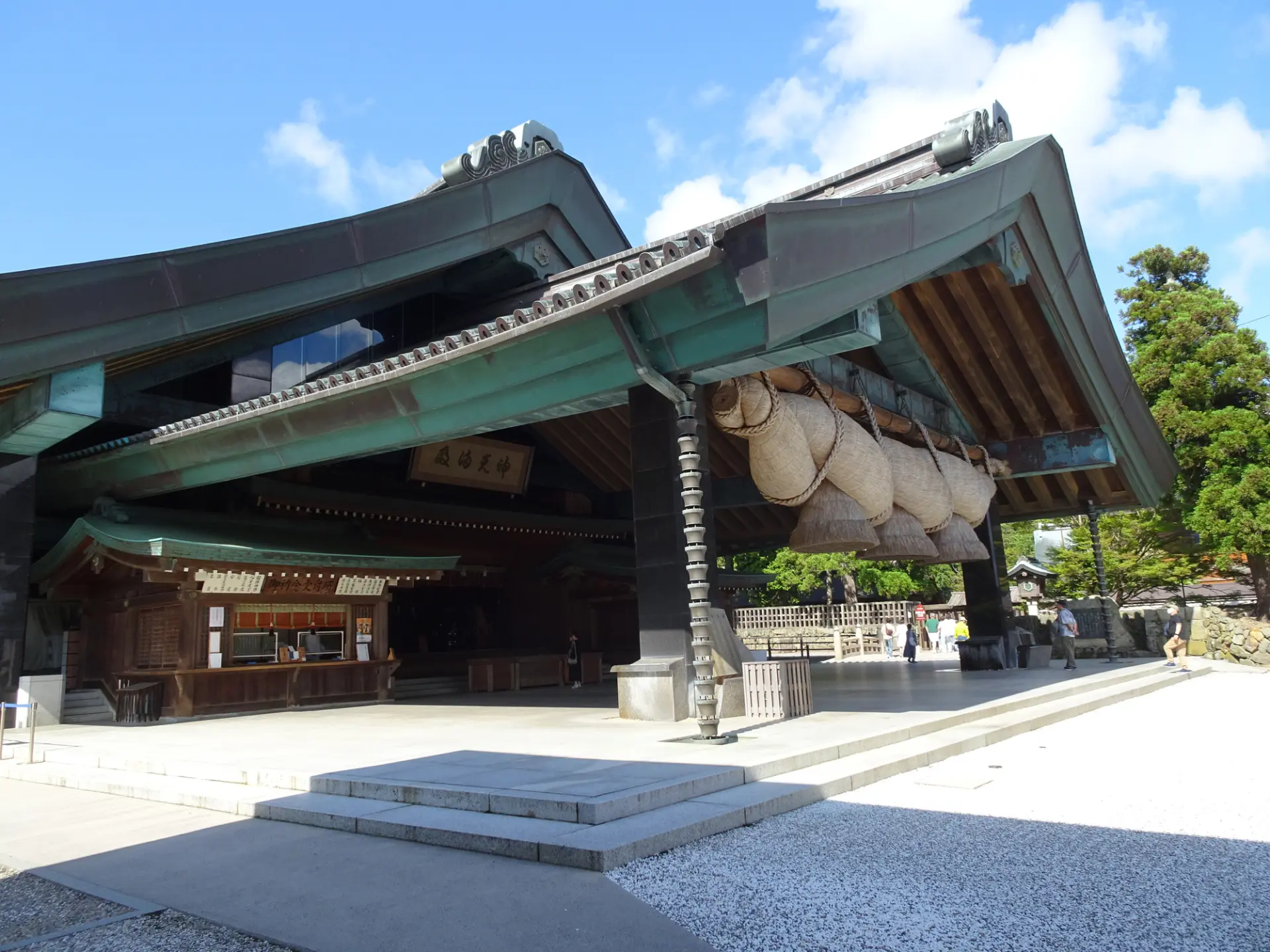
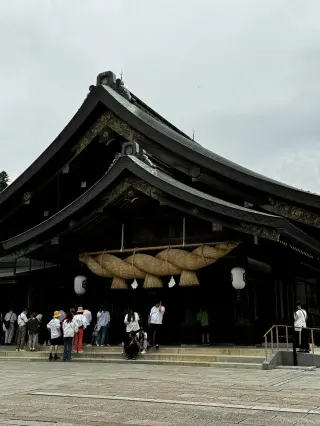
Its biggest draw is the giant shimenawa sacred rope hanging at the front.
At Approx. 44.6 ft long and weighing Approx. 5.7 tons, its overwhelming scale is hard to capture in photos and instantly draws the eye.
Another highlight is the tradition of replacing it with a new rope every few years.
The design is also striking for incorporating stained glass into the gable decoration—rare in shrine architecture.
2. Haiden (Worship Hall)
The Haiden is a “place of prayer for worshippers” built in front of the Main Hall.
In addition to regular worship and prayer services, important festivals such as the Koden Niiname-sai and various dedication events are held here, making it central to both ritual and practical functions.
Izumo Taisha’s Haiden was built in 1519, but most of it was destroyed in a fire in 1953, and the new Haiden was completed in 1959 (1963).
Its dignified appearance, Approx. 42.3 ft tall, is said to be the largest wooden Shinto shrine architecture built in Japan after World War II.
It features a unique architectural style that blends Taisha-zukuri and kirizuma-zukuri (gabled-roof construction), and its splendid exterior and sacred space create a calming atmosphere.
Another point to notice is the large shimenawa rope, which is attached in the opposite left-right orientation compared to most shrines.
3. Soga no Yashiro
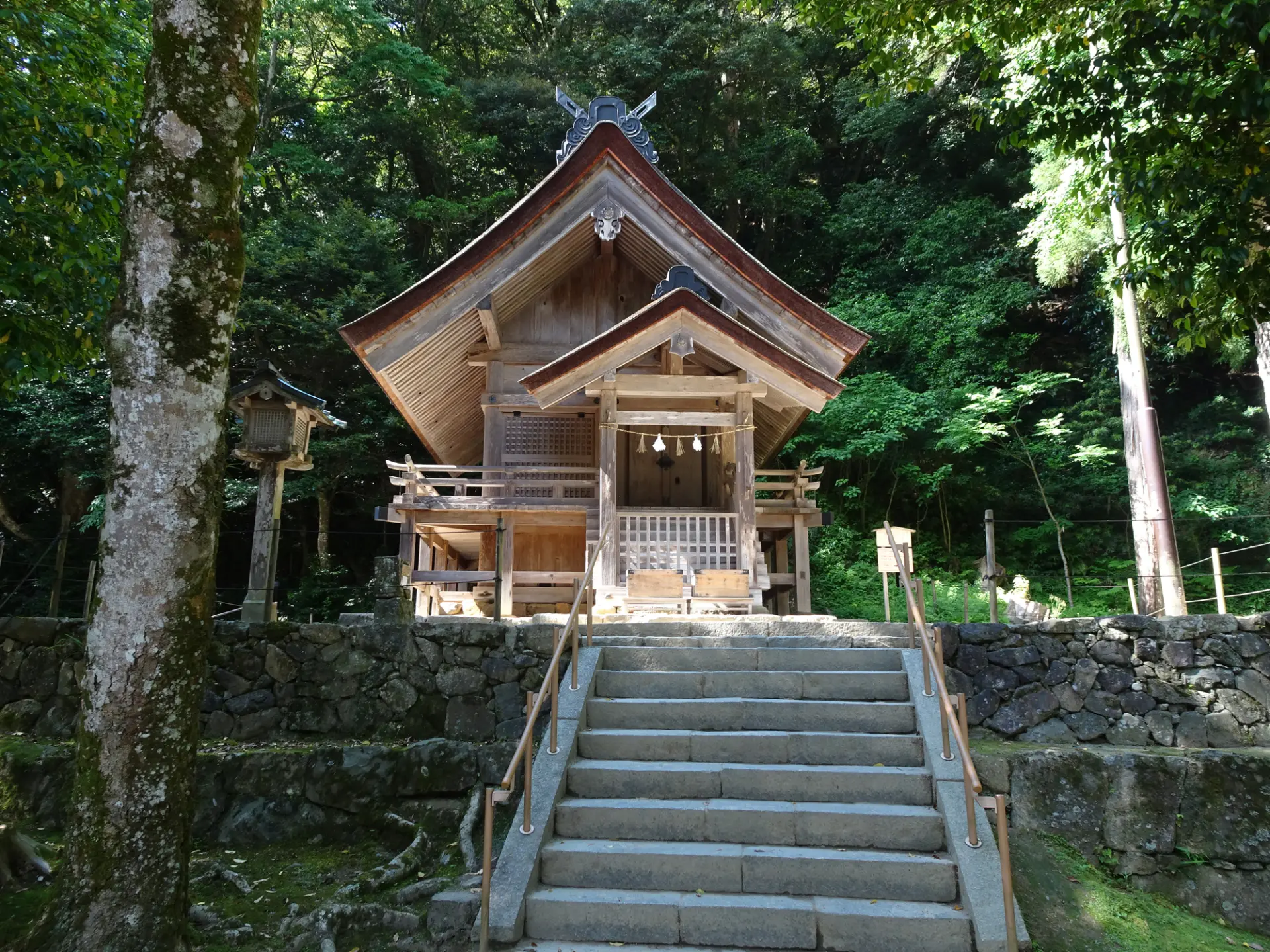
Quietly enshrined behind the Main Hall, Soga no Yashiro is one of Izumo Taisha’s sessha and massha (auxiliary shrines).
These are small shrines placed around the grounds in association with the main shrine: sessha enshrine deities closely connected to the main deity, while massha are of the next rank—together referred to as sessha and massha.
Soga no Yashiro enshrines Susanoo-no-Mikoto, famous for myths such as slaying Yamata no Orochi and the Kusanagi Sword, and it is said to bring blessings such as warding off evil, good fortune, and household safety.
A highlight is the sacred sand under the eaves called “Osuna.”
There is a custom of taking it home by exchanging it with sand from Inasa-no-Hama, and it is believed to hold spiritual power (for purifying homes, ground-breaking ceremonies, and more).
4. Harae no Yashiro
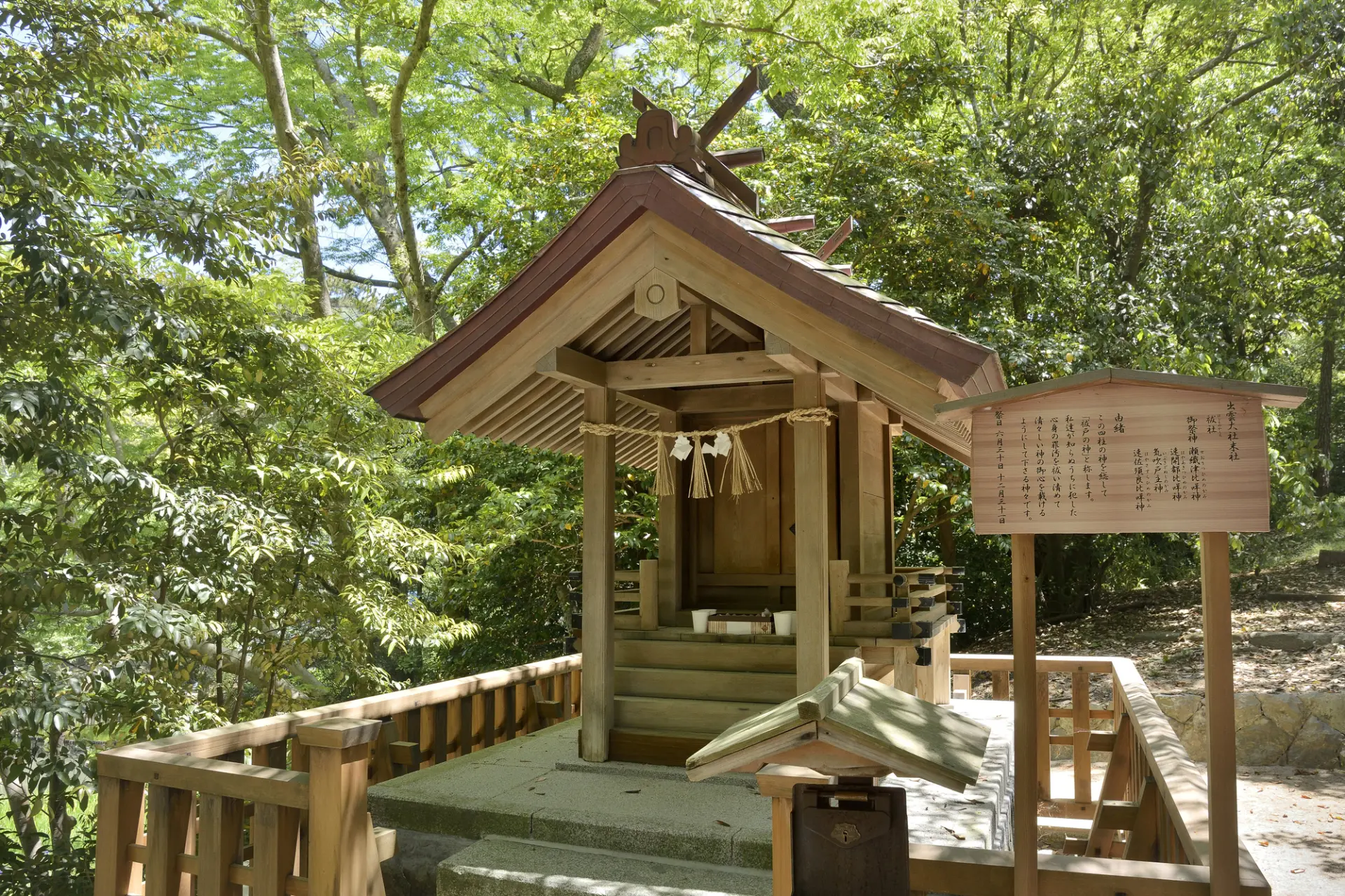
Harae no Yashiro, one of Izumo Taisha’s auxiliary shrines, is a sacred place to cleanse worshippers of all sins and impurities (kegare) and purify mind and body.
The air here feels taut and still, and while the shrine itself is small, it gives a strong sense of the entrance to the sacred precinct.
Enshrined here are four deities known as the Haraedo Yohashira no Kami, believed to cleanse misfortune that seeps into daily life.
To follow proper etiquette and face the deities with sincerity, Harae no Yashiro should be visited before praying at the Main Hall and Haiden.
It’s on the right side of the downhill approach just after passing through the main gate, Seidamari no Torii, so some people may pass by without noticing—but be sure not to miss it.
5. Main Hall (Honden)
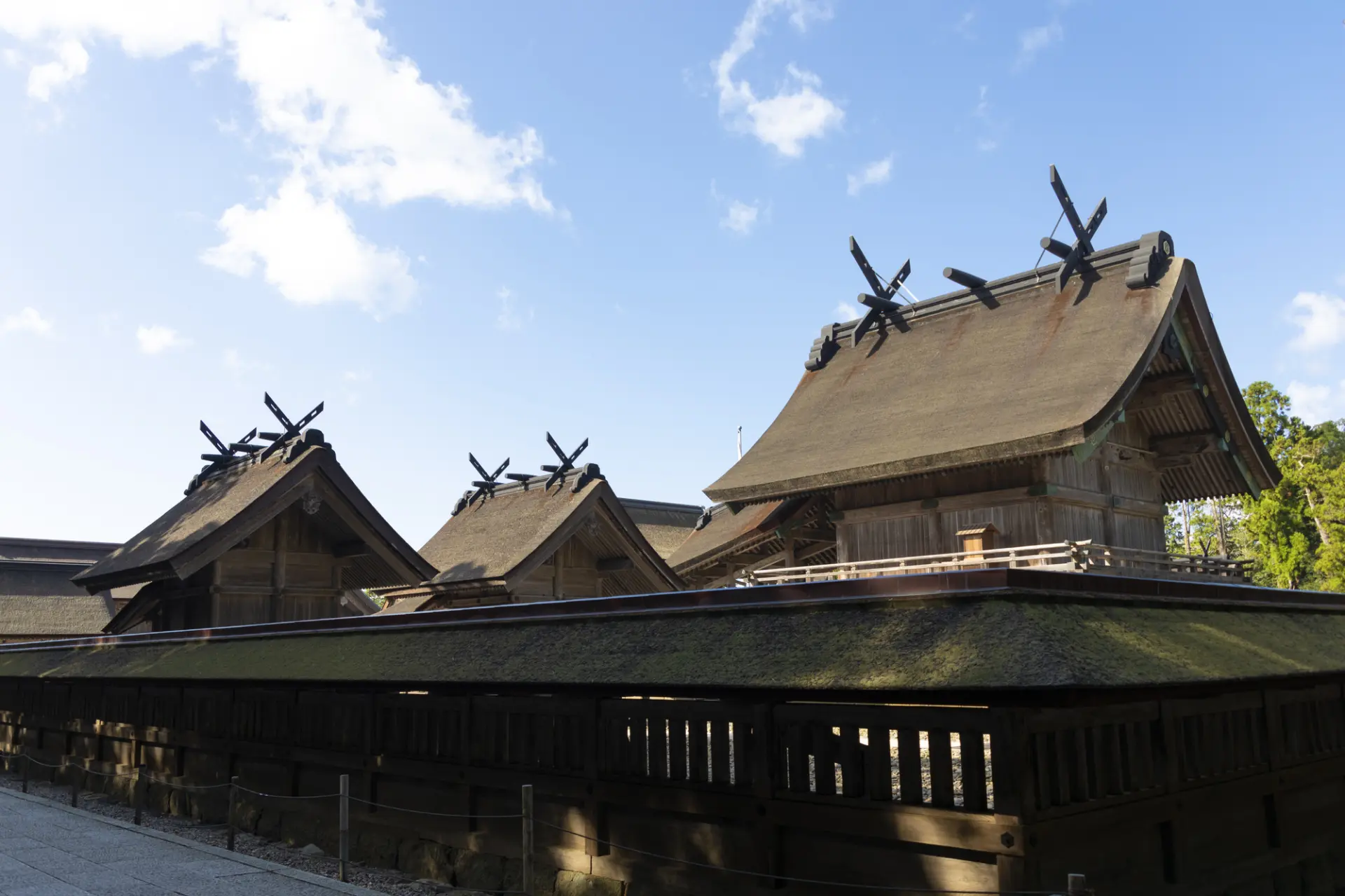
The National Treasure Main Hall enshrines Okuninushi-no-Okami, a versatile deity believed to bring all kinds of blessings, including enmusubi, bountiful harvests, business prosperity, and recovery from illness.
After repeated relocations and repairs over the ages, the current building carries on the line of the structure built in 1744.
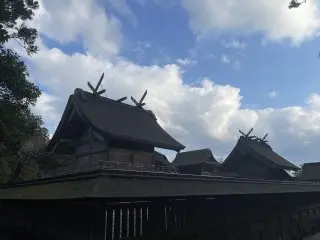
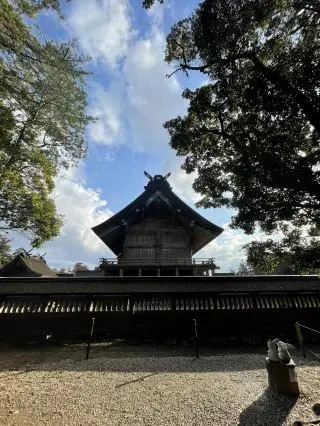
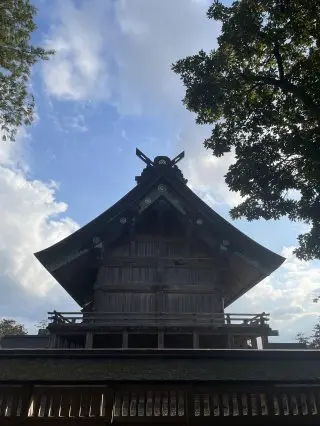
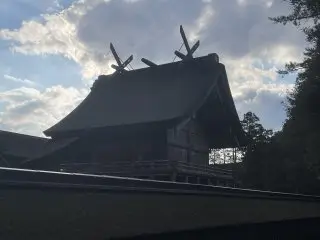
It stands 24 m tall and preserves Japan’s oldest shrine architectural style, known as Taisha-zukuri.
Its solid presence as a wooden structure, the ancient interior elements such as the shin-no-mihashira central pillar, and its story-like ties to mythology captivate visitors.
Its solemn, history-packed presence is overwhelming, fitting the praise “tenka musō no taisha” (a magnificent shrine hall without equal).
It is also said that the ancient Main Hall once stood at Approx. 157 ft (or 315 ft) tall.
6. Bronze Torii Gate
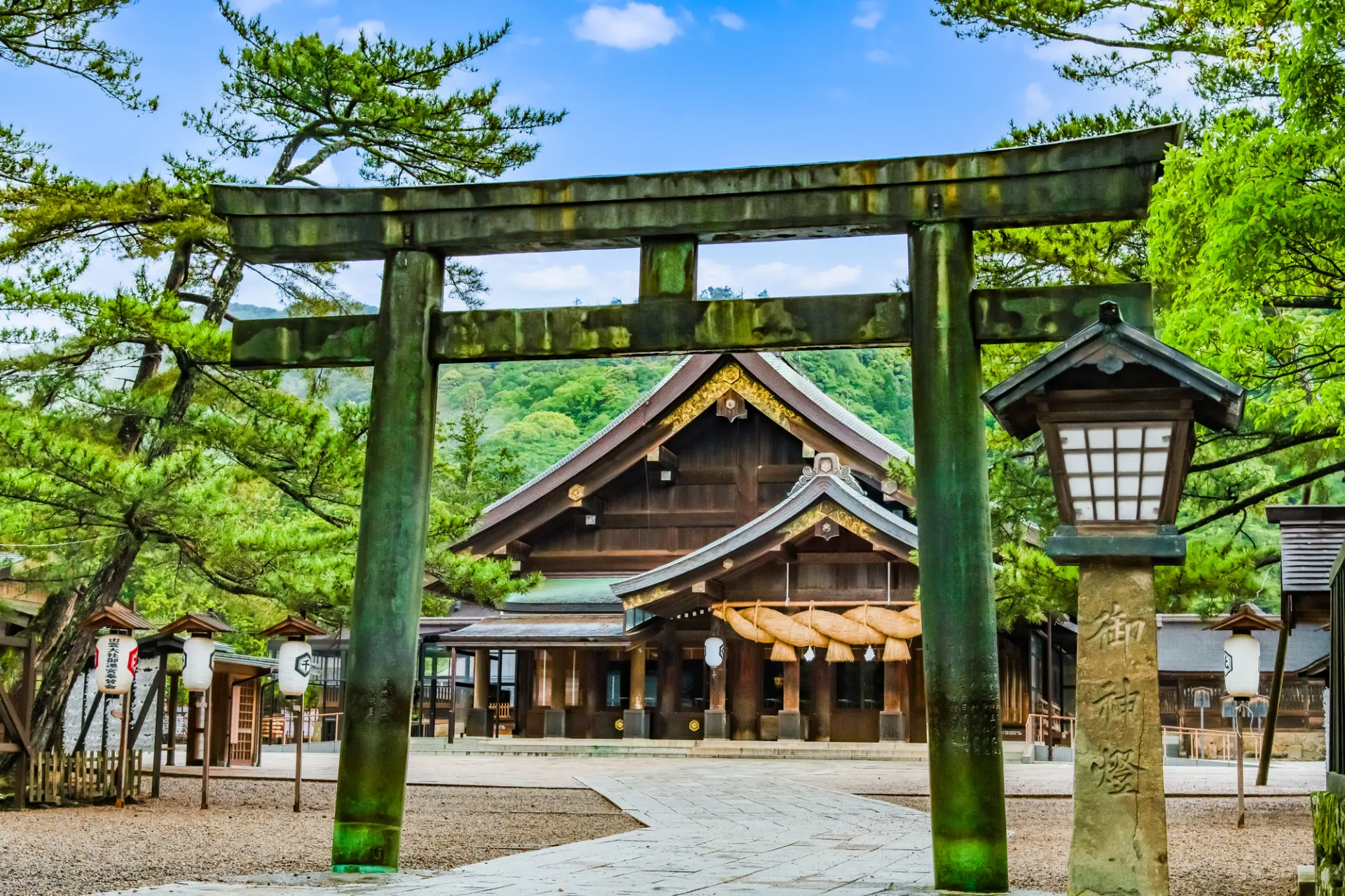
The Bronze Torii, standing closest to the Haiden, is an important structure marking the entrance to the sacred precinct at the Aragaki main gate.
It is a bronze torii gate donated in 1666 by Mōri Tsunahiro, also known as the “Fourth Torii.”
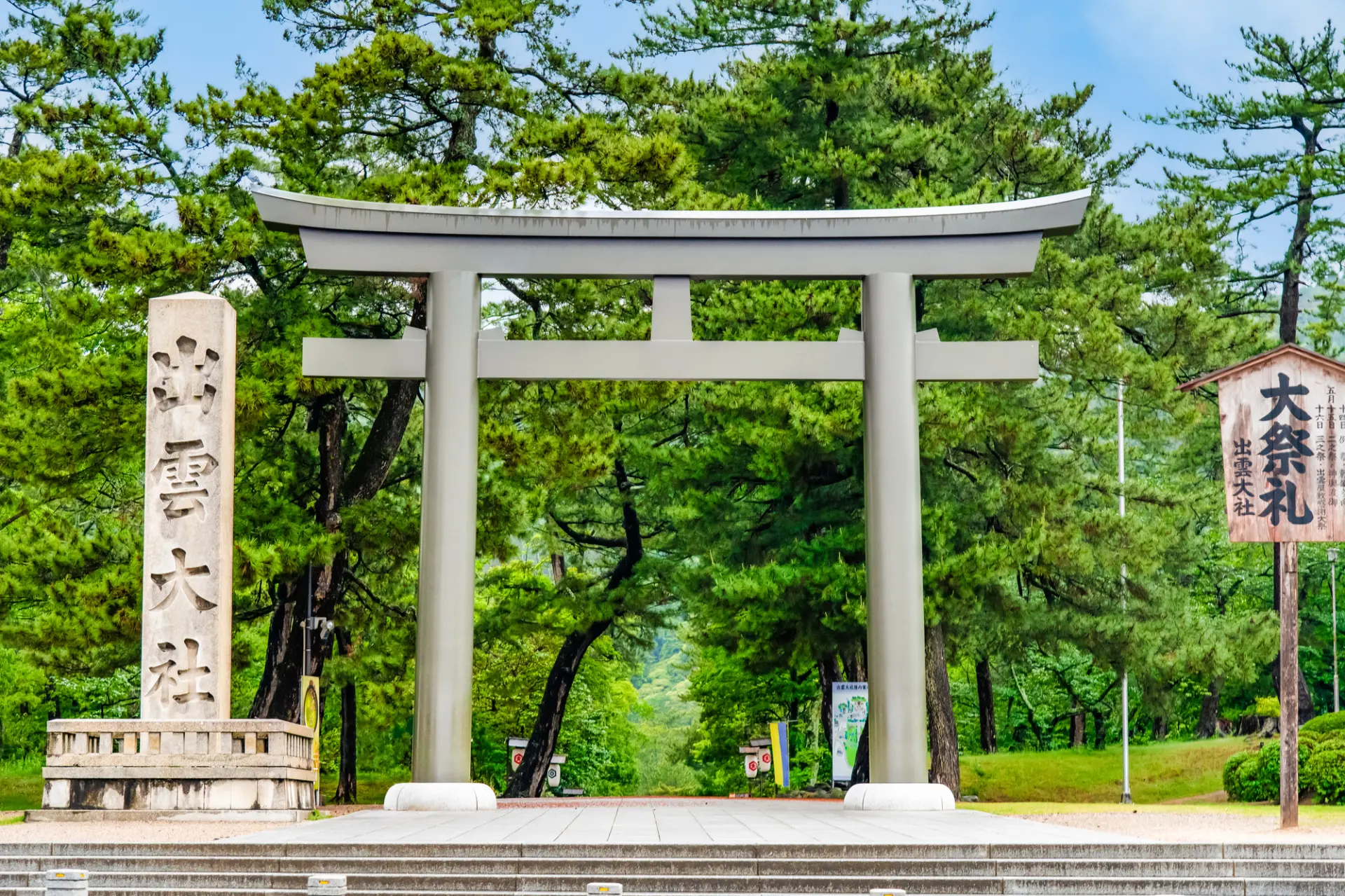
Izumo Taisha also has three other torii gates made of different materials: the First Torii made of reinforced concrete, the Second Torii made of weathering steel, and the Third Torii made of iron—so it’s also recommended to compare them.
With its weighty feel and distinctive texture, the Bronze Torii further enhances the sacred atmosphere and leaves a strong impression on visitors.
How to Pray at Izumo Taisha: What to Know Before You Go
The basic manners and rules for worship at Izumo Taisha are the same as at other shrines.
However, the way you pray differs from the common “two bows, two claps, one bow,” so be careful.
At Izumo Taisha, based on its traditions and ritual history, the formal etiquette at all shrine buildings is “two bows, four claps, one bow.”
The four claps represent the four seasons and the four directions (east, west, south, north), and they express the utmost respect for the deities while praying for harvest, prosperity, and peace. *There are various theories.
Also, at Izumo Taisha’s largest festival, the Reisai, people clap eight times, using “eight” to mean infinity, to praise the deities without limit.
You could say it reflects the unique mythology and faith of the Izumo region.

The Official Prayer Route at Izumo Taisha
If you want to follow not only the manners and rules but also the proper route, head to the Main Hall in the order below.
If you worship along this route, please use 1 to 1.5 hours as a guide for the time needed.
Also, if you want to enjoy nearby sightseeing spots and local food, setting aside 3 to 4 hours in total will let you take your time.
- Seidamari no Ootori
- Iharae no Yashiro
- Matsu no Sando
- Temizuya
- Bronze Torii
- Haiden
- Yatsuhashi-mon Gate
- Main Hall
Goshuin (Temple Stamps) to Collect as a Memento of Your Visit to Izumo Taisha
At Izumo Taisha, you can receive five different types of goshuin at three locations within the grounds, either as a calligraphy-and-seal sheet (kakioki) on hōsho paper or in your own goshuin book.
We also recommend buying Izumo Taisha’s original goshuin book, which is very popular. The overview is summarized in the table below.
| Type | Where to Receive (Hours) | Overview |
|---|---|---|
| Izumo Taisha: Main Hall Goshuin |
Reception desk behind the Haiden (7am–6pm) |
A signature goshuin stamped with “Izumo Taisha” in the center |
| Izumo Taisha: Kagura Hall Goshuin |
Kagura Hall reception desk (7am–6pm) |
A goshuin stamped with “Kagura Hall” in the center |
| Kitajima Kunizōkan Goshuin |
Kitajima Kunizōkan distribution office (9am–4pm) |
A goshuin stamped with “Kitajima Kunizōkan” on the right, and “Izumo-kyō” in a hexagon in the center |
| Kitajima Kunizōkan: Tenjinsha Goshuin |
Kitajima Kunizōkan distribution office (9am–4pm) |
A goshuin stamped with “Kitajima Kunizōkan” on the right, and “Tenjinsha” in a circle in the center |
| Izumo Koku Shinbutsu Reijō Meguri (No. 1 Sacred Site) Goshuin |
Reception desk behind the Haiden (7am–6pm) |
A goshuin exclusively for the sacred-site pilgrimage |

Omamori Charms at Izumo Taisha: Many Types to Choose From
At Izumo Taisha, various omamori (mamori charms) are available at the Omamori offices in front of Yatsuhashi-mon Gate and at the Kagura Hall.
Some of the most popular types are listed below.
In addition, there are also New Year’s-only and Kamiarizuki-limited charms, card-style charms, and enmusubi thread charms.
| Type | Overview | Blessings |
|---|---|---|
| Yomigaeri Charm | A charm commemorating the Heisei Grand Sengū, containing hinoki bark from the Main Hall | The impermanence of all things, special blessings |
| Enmusubi Charm |
Izumo Taisha’s signature charm, inspired by the deity of matchmaking ※Available in three colors: red, purple, green |
Good relationships (work, love), human connections *Each color has its own meaning |
| Yakuyoke Charm | A charm to safely get through your yakudoshi (unlucky year) | Safety prayers for yakudoshi years |
| Longevity Charm | A popular gift for older adults, wishing for health and long life | Health and longevity |
| Academic Success Charm |
A charm for academic improvement and passing exams ※Available in two colors: red, blue |
Academic achievement, exam success |
| Safe Childbirth Charm | A charm wishing for the health of pregnant women and children | Prayers for a safe delivery |
| Sōki Kenzen Charm |
A charm wishing for a calm, steady life ※Available in three colors: blue, purple, green |
Health and balance of mind and body |
| Good Fortune Charm | A charm to invite good fortune and pray for better luck | Overall increase in good luck |
Fun Facts About Izumo Taisha to Enjoy Your Visit Even More
From here, we’ll share fun facts you’ll want to know before visiting Izumo Taisha.
If you know a few stories related to Izumo Taisha and its enshrined deity Okuninushi-no-Okami, your visit will feel even more memorable.
Who is Okuninushi-no-Okami?
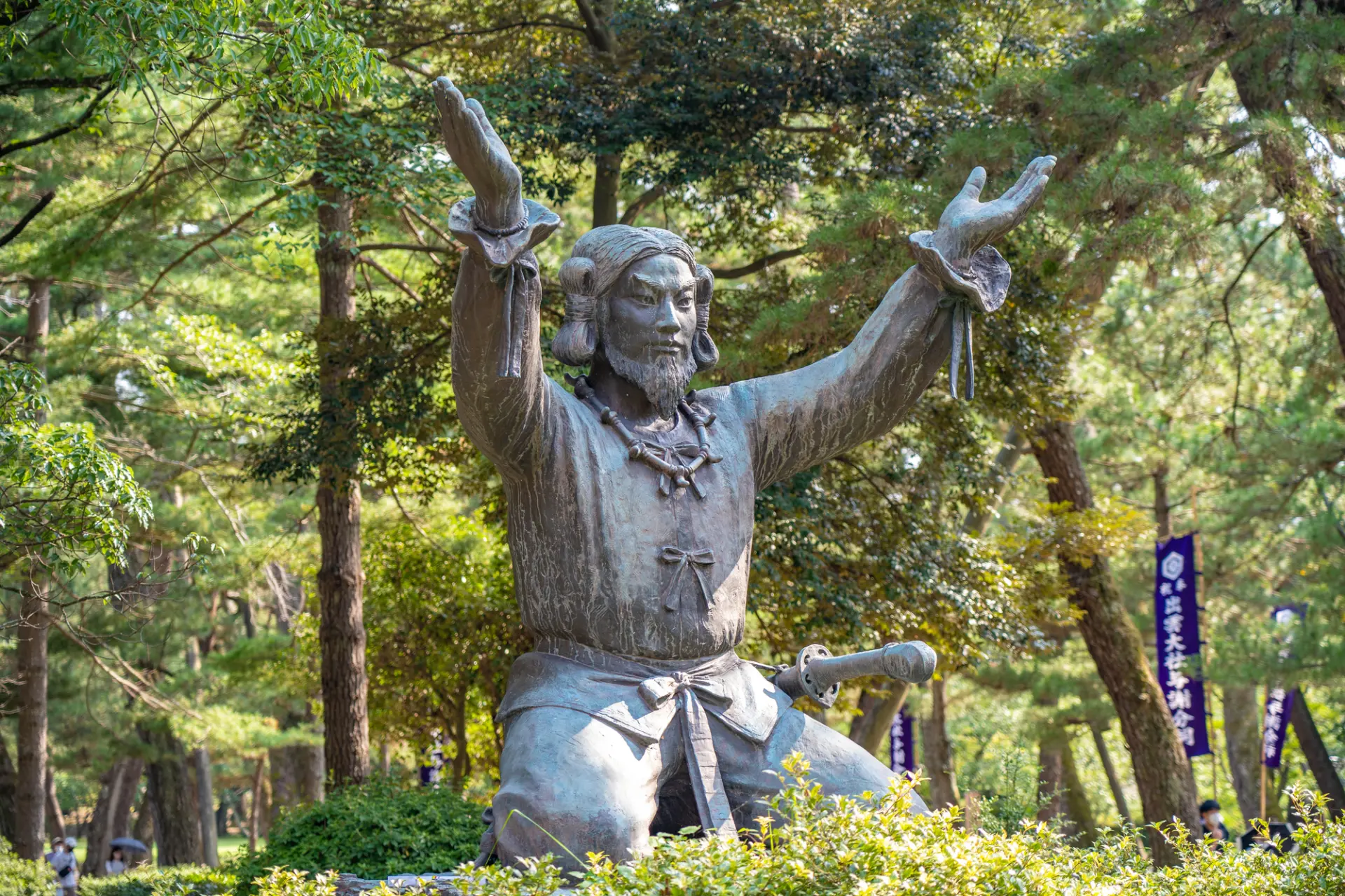
Okuninushi-no-Okami is the deity who created Japan and laid its foundation.
Along with Sukunahikona-no-Mikoto, he is said to have used great wisdom and power to develop the land and advance the nation in areas such as agriculture, medicine, hot springs, and construction.
He also appears in many legends as a compassionate presence who, while a ruler who unified the world of the gods, stayed close to the lives of people as well as animals and plants.
The “Transfer of the Land” Story in Japanese Mythology
The “transfer of the land” story is one of the most important episodes in Japanese mythology, as it mythologically supports the descent of the heavenly grandson and the legitimacy of the imperial line.
The simple outline of the story is as follows.
Okuninushi-no-Okami ruled the earthly land, Ashihara no Mizuhonokuni, in prosperity.
Amaterasu-Omikami, who ruled Takamagahara (the heavenly realm), planned to have the earthly right to rule passed to her descendant, and sent envoys to seek negotiations, but it did not go well.
When the warrior deity Takemikazuchi-no-Kami was dispatched, Okuninushi-no-Okami consulted with his children and ultimately decided to yield the land.
However, rather than a simple submission, he secured conditions such as “being given a splendid palace,” and he established his place in the land of Izumo. This later became Izumo Taisha.
“The White Hare of Inaba” Motifs Throughout the Grounds
The White Hare of Inaba is one of the myths recorded in the Kojiki.
A white hare living on the Oki Islands tried to cross to the land of Inaba by tricking sharks into lining up, then hopping across their backs.
But at the end, it let slip that it had lied, and an enraged shark skinned it.
In pain, the hare was told by Okuninushi-no-Okami’s older brothers that it would heal if it soaked in seawater and let the wind blow on it. It did so, but the wound only worsened.
Then Okuninushi-no-Okami told it the correct method (wash with fresh water and wrap the body in cattail fluff), and the hare recovered completely.
In gratitude, the hare foretold that Okuninushi-no-Okami would gain a good spouse—this is the well-known story.
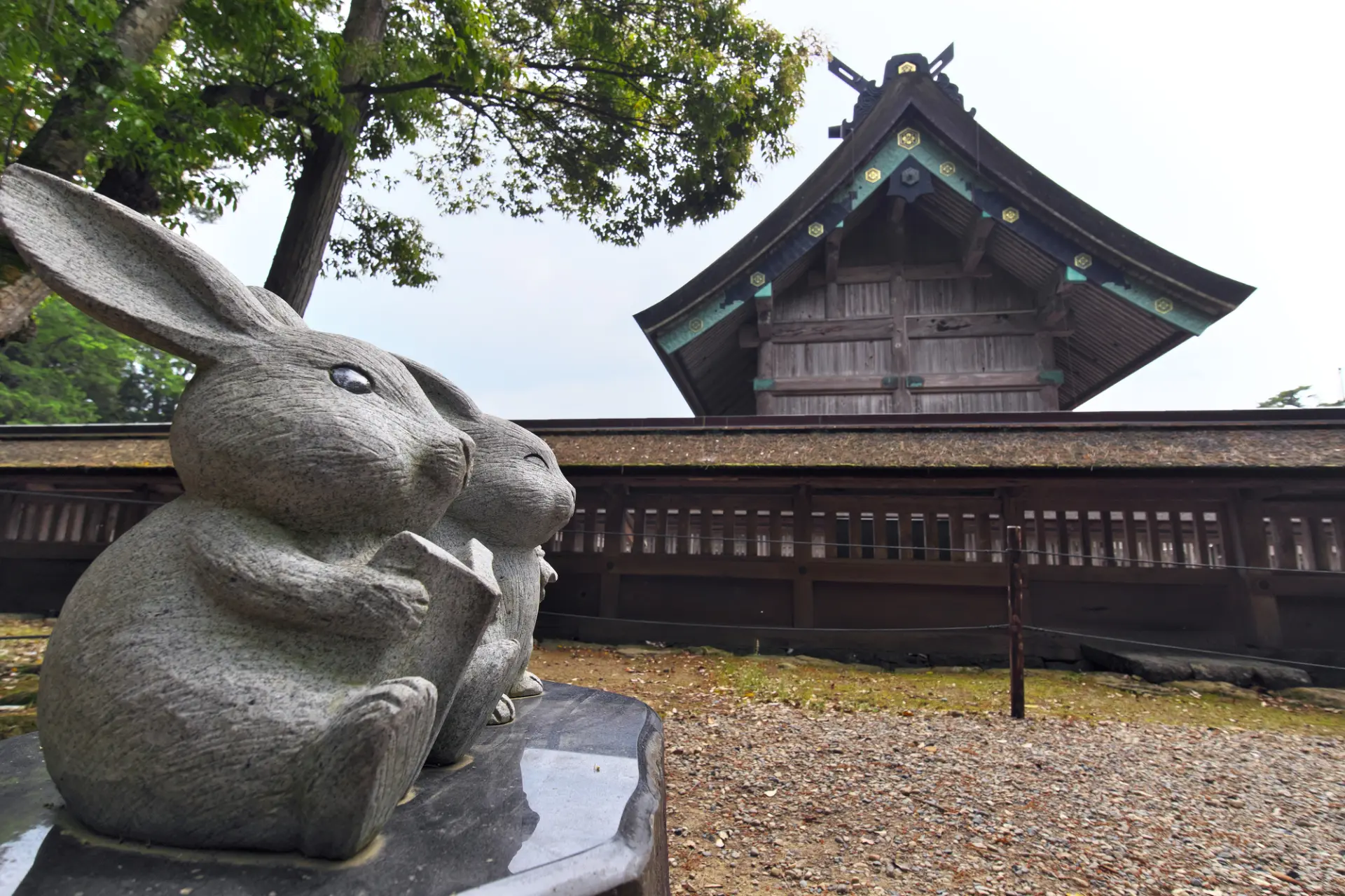
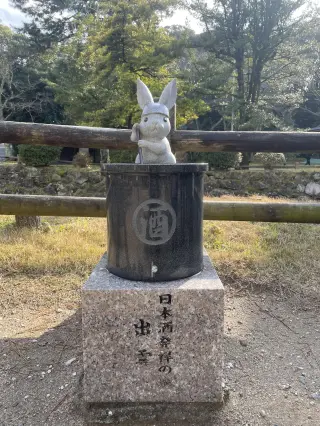
At Izumo Taisha, there is a bronze statue of Okuninushi-no-Okami and the white hare called Goji-ai no Goshinzo, inspired by this tale, and there are also 66 stone rabbit statues scattered throughout the grounds.
Best Places to Snack Around Izumo Taisha: Shinmon-dori & Goen Yokocho
Izumo City is packed with local specialty foods full of regional character.
There’s fragrant Izumo soba, known as one of Japan’s three great soba styles, Izumo zenzai with red-and-white shiratama dumplings, and traditional fugu dish uzuni, among many others—another hallmark is just how wide the range is.
Here are two spots where you can enjoy casual street eating around Izumo Taisha, so be sure to stop by after your visit.
Shinmon-dori
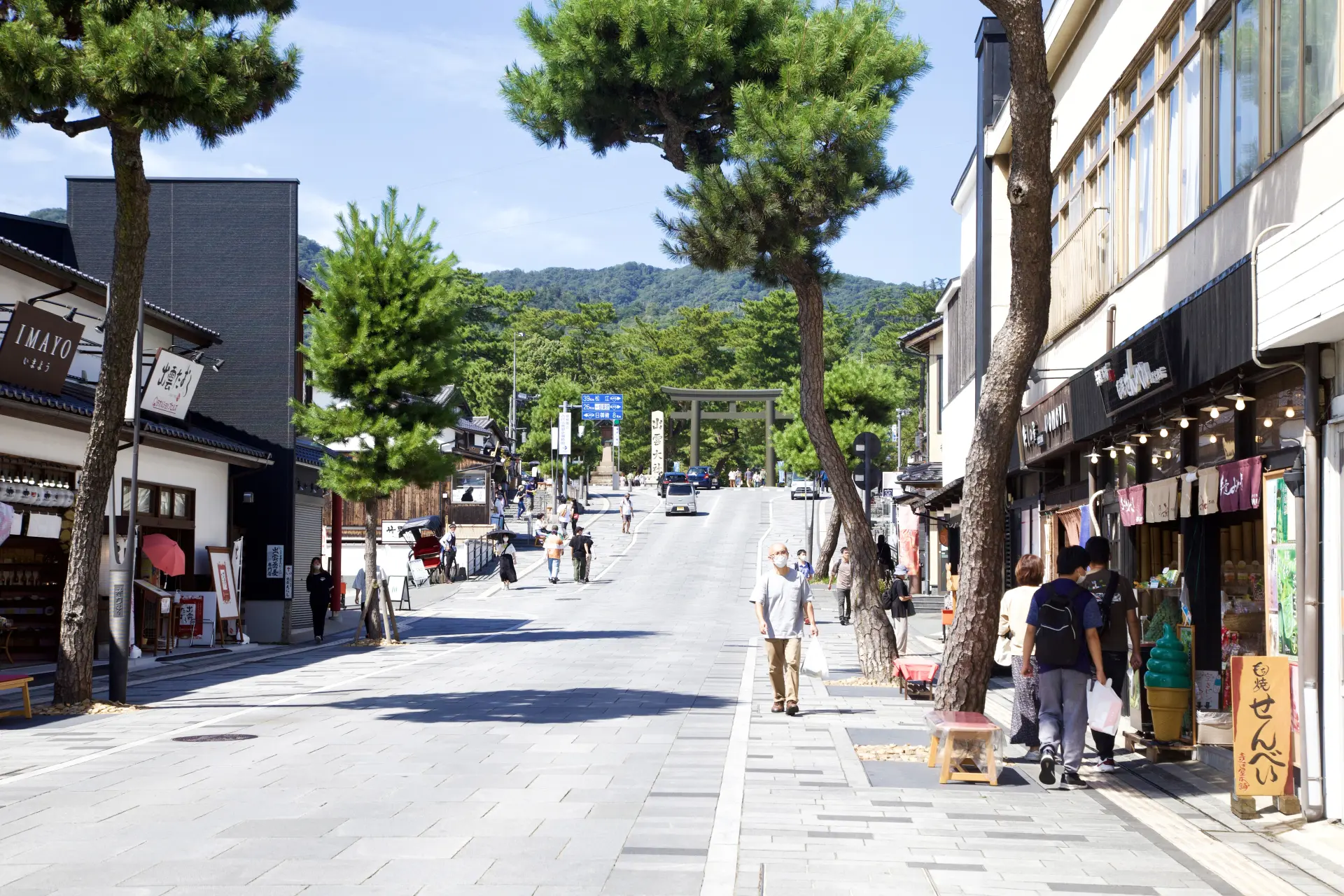
An Approx. 0.4-mile (700 m) approach stretching from the great torii at Ukabashi—registered as a Tangible Cultural Property of Japan—to the great torii at Seidamari. Known as Shinmon-dori, it bustles with people visiting before and after worship at Izumo Taisha.
One highlight is the beautiful view unique to this spot, looking from Izumo Taisha’s main gate toward the great torii at Ukabashi.
With old and new side by side, Shinmon-dori is lined with 60 shops, and it’s fun even just to stroll at a relaxed pace.
If you come here, be sure to try the local specialty Izumo soba. With so many well-known shops, it’s also fun to compare different bowls.
Goen Yokocho
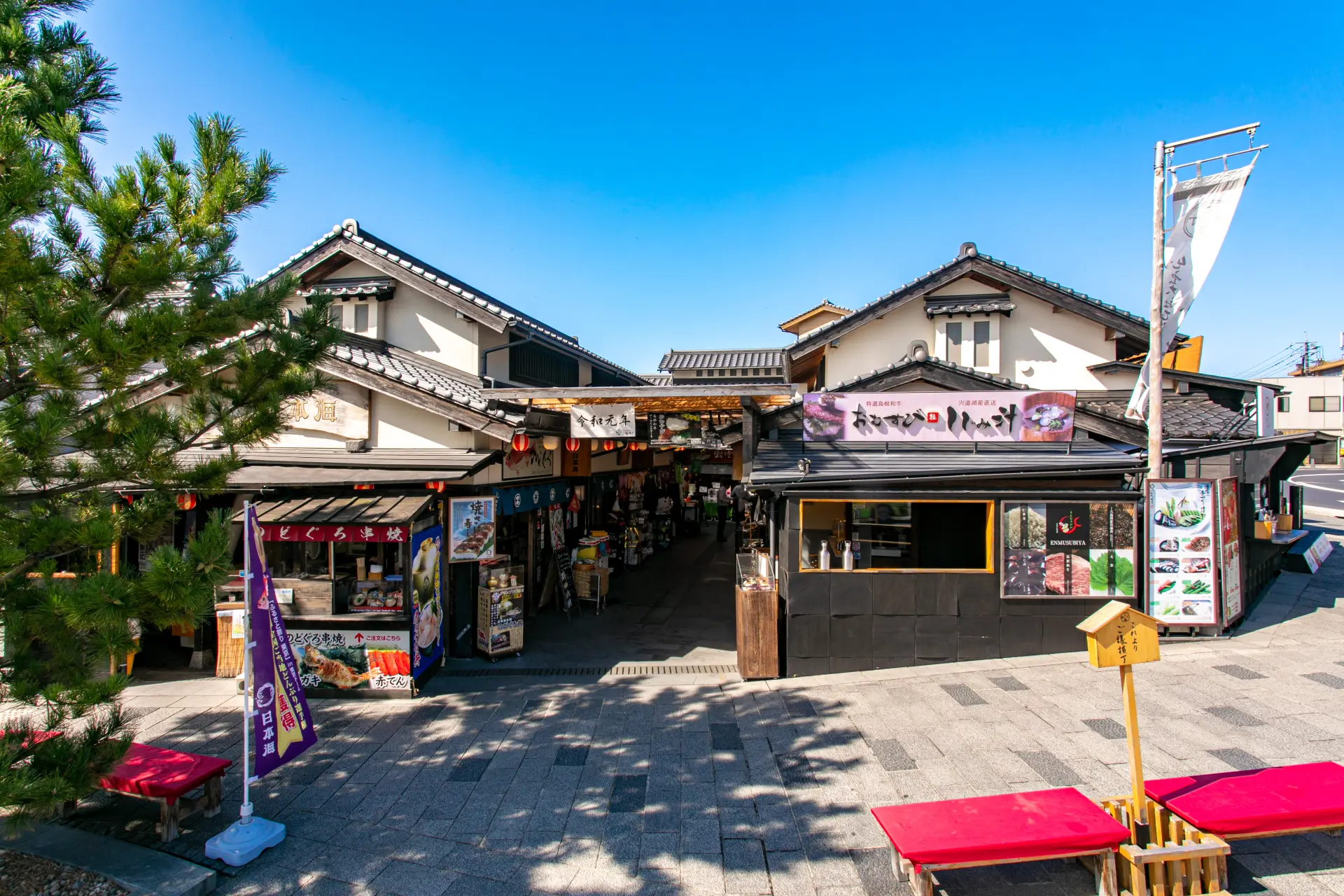
Goen Yokocho is a shopping and dining complex located right in front of Izumo Taisha’s main gate.
Inside wooden buildings reminiscent of Edo-period row houses, you’ll find shops offering local specialties made with ingredients from Shimane Prefecture, plus a wide variety of souvenirs.
From Izumo soba—often called one of Japan’s three great soba styles, milled with the outer husk for a deeper aroma—to sushi and seafood bowls featuring premium nodoguro (blackthroat seaperch), and fried chicken and chicken burgers made with Shimane’s local chicken variety Ginzan Akadori, the facility brings together a lineup of tempting local eats.
3 Tourist Spots Near Izumo Taisha
Here are three appealing spots near Izumo Taisha. Each is a sacred power spot connected to ancient Izumo myths.
With legends tied to the gods and holy places, you can feel history come alive.
They’ll add a lot to your trip, so we recommend visiting them along with your worship at Izumo Taisha.
1. Inasa-no-Hama
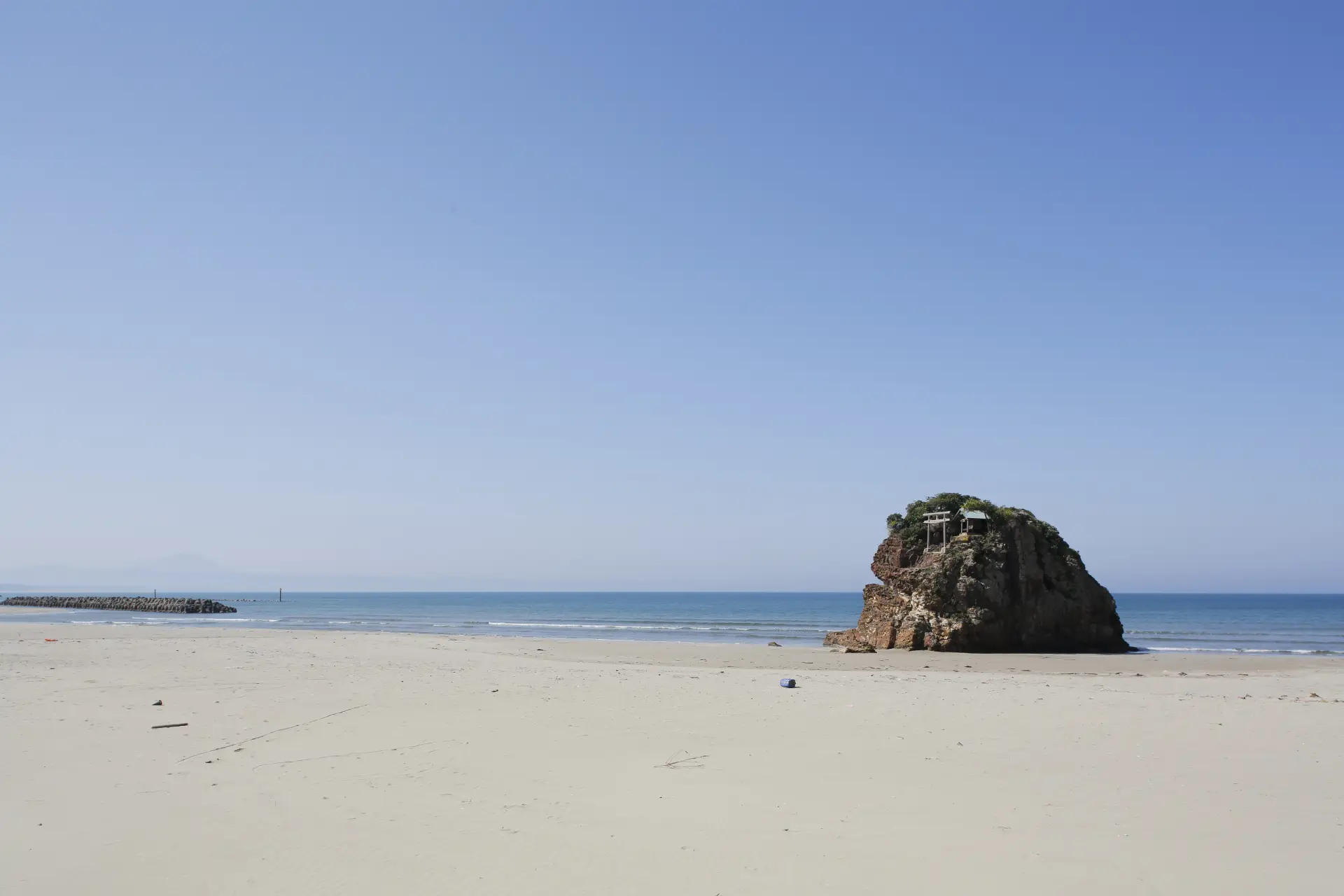
A sandy beach coastline stretching Approx. 1.2 miles (2 km), located around a 15-minute walk west of Izumo Taisha.
Known for its beautiful scenery of white sand and pine trees, it has been selected as one of Japan’s 100 best beaches.
It is the stage for the “transfer of the land” myth recorded in the Kojiki, and is also said to be the place where the myriad gods from across Japan are welcomed once a year. On the night of the 10th day of the 10th lunar month, a ritual to welcome the gods is held.
Near the beach is an auxiliary shrine of Izumo Taisha called Kaminomiya, where it is said that a meeting to connect many kinds of bonds, called Kamihakari, is held—including connections between men and women.
2. Shimane Museum of Ancient Izumo
A museum showcasing many valuable materials related to Izumo Taisha and ancient Izumo, where numerous myths remain.
In the central lobby, you can see the enormous pillar Uzu-bashira, discovered within the Izumo Taisha grounds in 2000. The themed exhibition rooms are divided into three sections, and “Izumo Taisha and Festivals of the Land of the Gods” features a 1/10 scale model of Izumo Taisha as it is believed to have been in the Heian period—as a massive high-rise shrine.
In “Bronze Ware and the Golden Great Sword,” you can see an awe-inspiring display of 358 National Treasure bronze swords and 39 bronze bells lined up together.

3. Hinomisaki Shrine
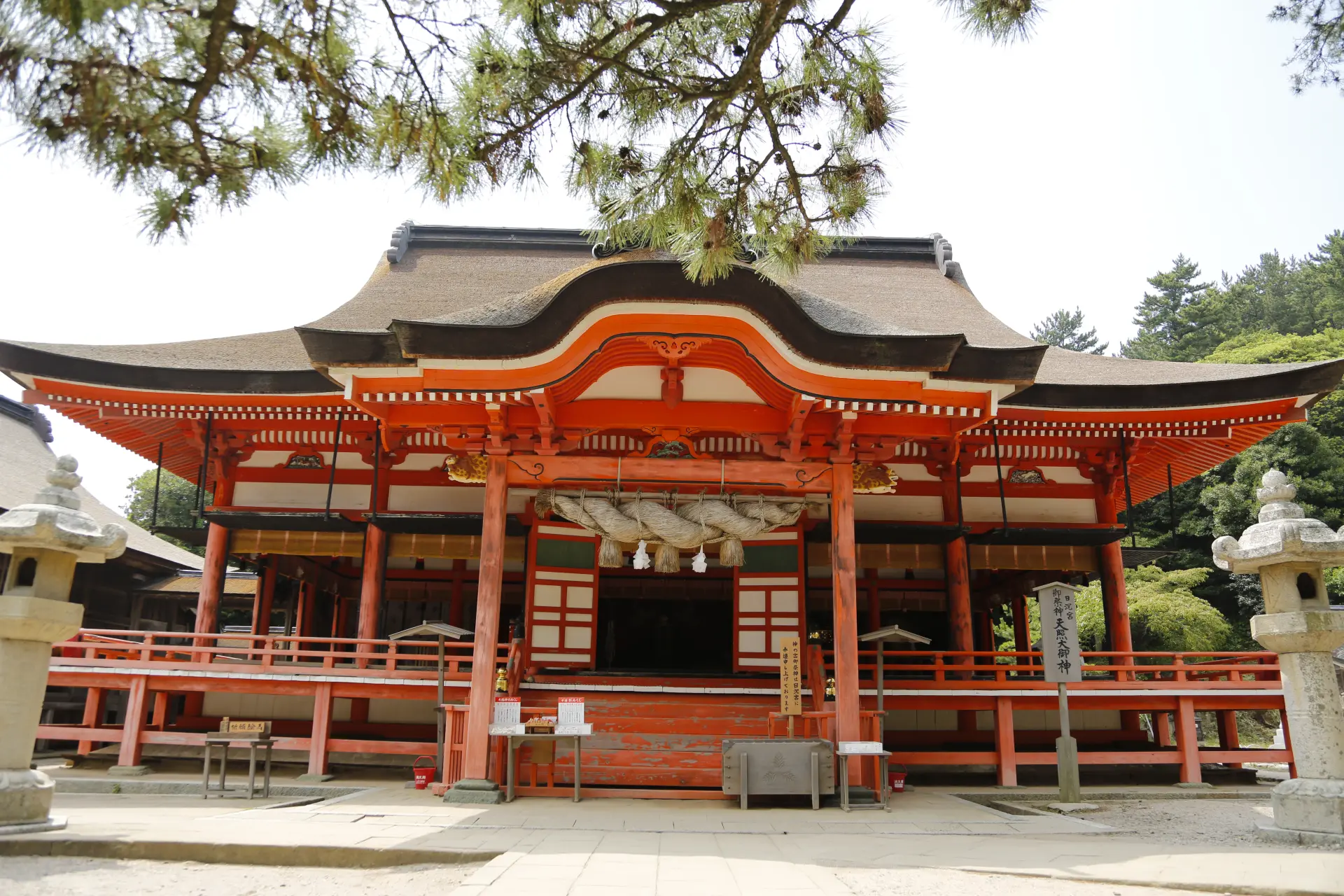
A shrine located at Hinomisaki on the westernmost tip of the Shimane Peninsula, recorded in the Izumo no Kuni Fudoki as “Misaki no Yashiro.”
It consists of two main sanctuaries: the lower shrine, Hishizumi-no-Miya, at the front, and the upper shrine, Kami-no-Miya, on a small rise to the right. It is said to protect Japan at night, paired with Ise Jingu, which is said to protect Japan by day.
Beyond a granite torii gate stands a vermilion two-story gate and a gongen-zukuri shrine building. The current buildings were constructed as a shogunate direct project by order of Tokugawa Iemitsu.
The vermilion-lacquered buildings, detailed carvings, and superb murals by painters of the Kanō and Tosa schools remain.
3 Recommended Places to Stay Near Izumo Taisha
Finally, here are three recommended places to stay near Izumo Taisha.
Each is in a great location close to Izumo Taisha, and they’re popular hotels that value Japanese atmosphere while offering modern comfort.
With a quiet, relaxing setting, you can enjoy the area’s charms during your stay through local food experiences and hot springs.
Use these descriptions to choose the place that suits you best.
1. Inishie no Yado Keiun
A luxurious Japanese-style hot spring inn located Approx. 2 minutes by car from Izumo Taisha. It’s elegantly appointed, yet has a relaxed, calming atmosphere where you can enjoy time immersed in Japan’s traditions and history.
Throughout the property are designs inspired by Izumo legends.
At the entrance, Izumo kagura masks welcome you, and motifs following the myth of the Yamata no Orochi legend add color to the traditional setting.
2. Hotel Kararako
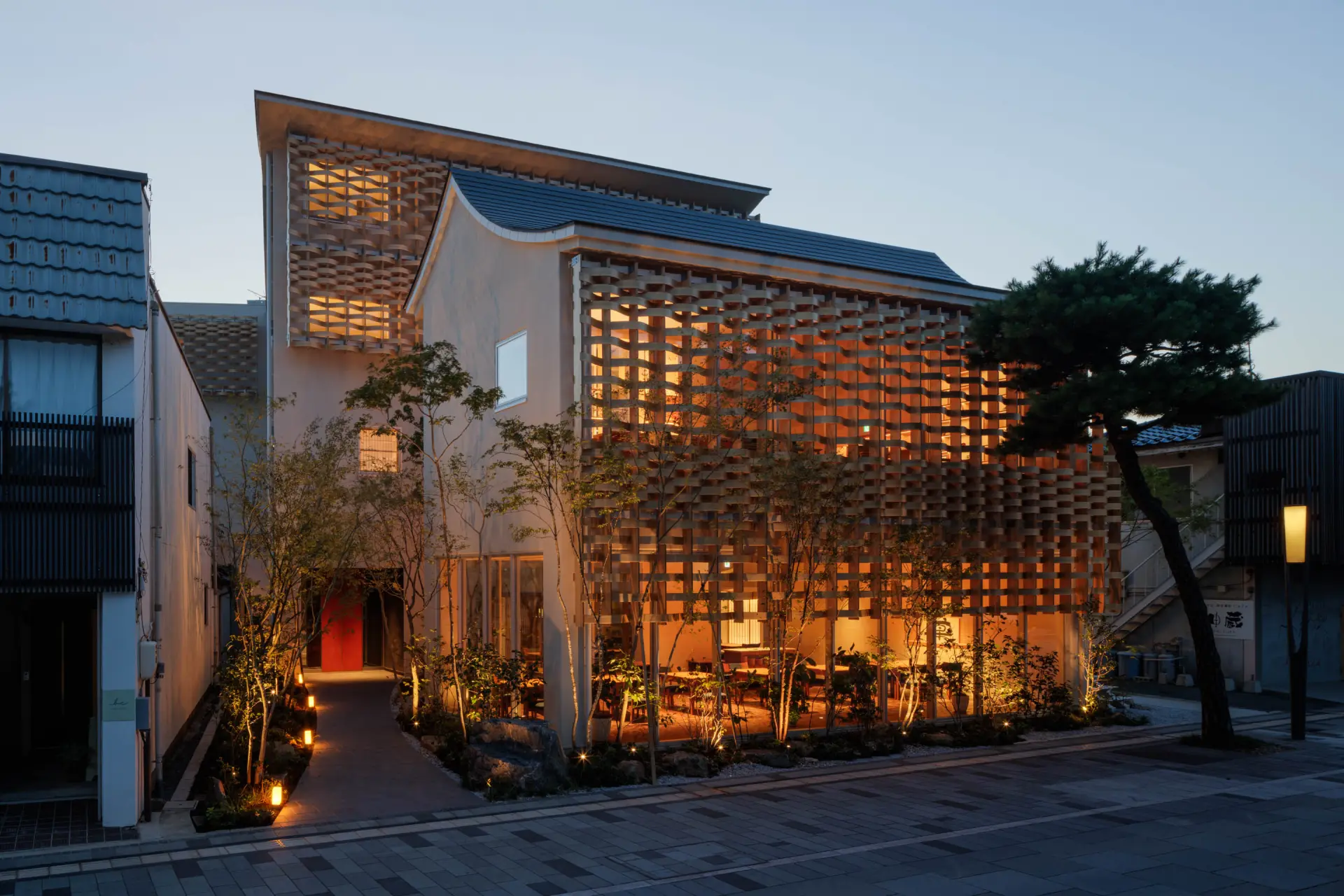
A hotel that opened in September 2023 along Shinmon-dori, the street leading to Izumo Taisha.
The name “Kararako (Karasade-raku)” expresses the desire to welcome guests as if hosting the gods who gather in Izumo once a year from across Japan.
The artworks displayed inside are highly original, blending Iwami washi paper and Iwami tile with painting and metal engraving.
Along with the striking timber-framed exterior and the staircase at the entrance, natural materials and crafts are used throughout, letting you feel Japanese and Izumo culture.
3. NIPPONIA Izumo Taisha Monzenmachi
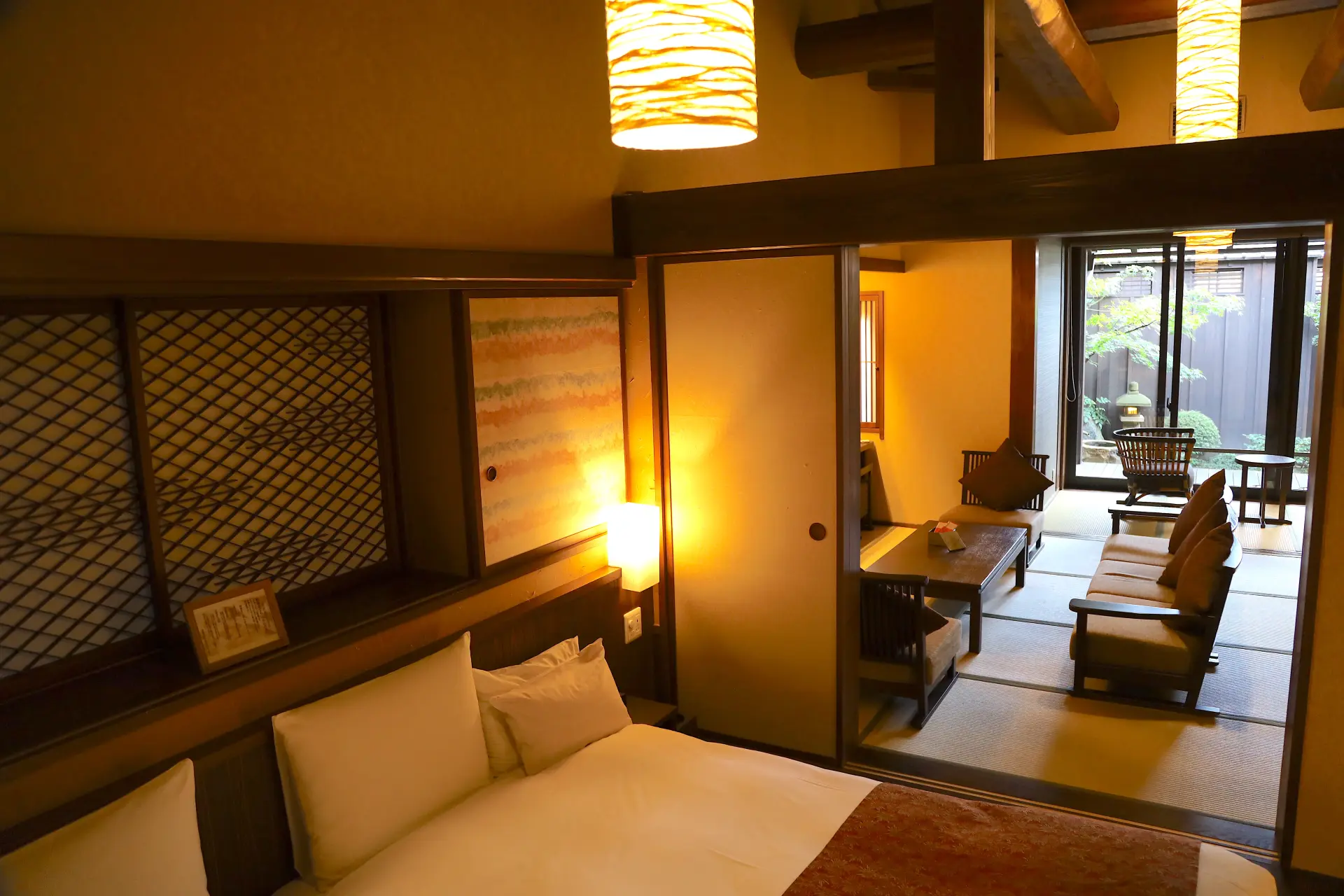
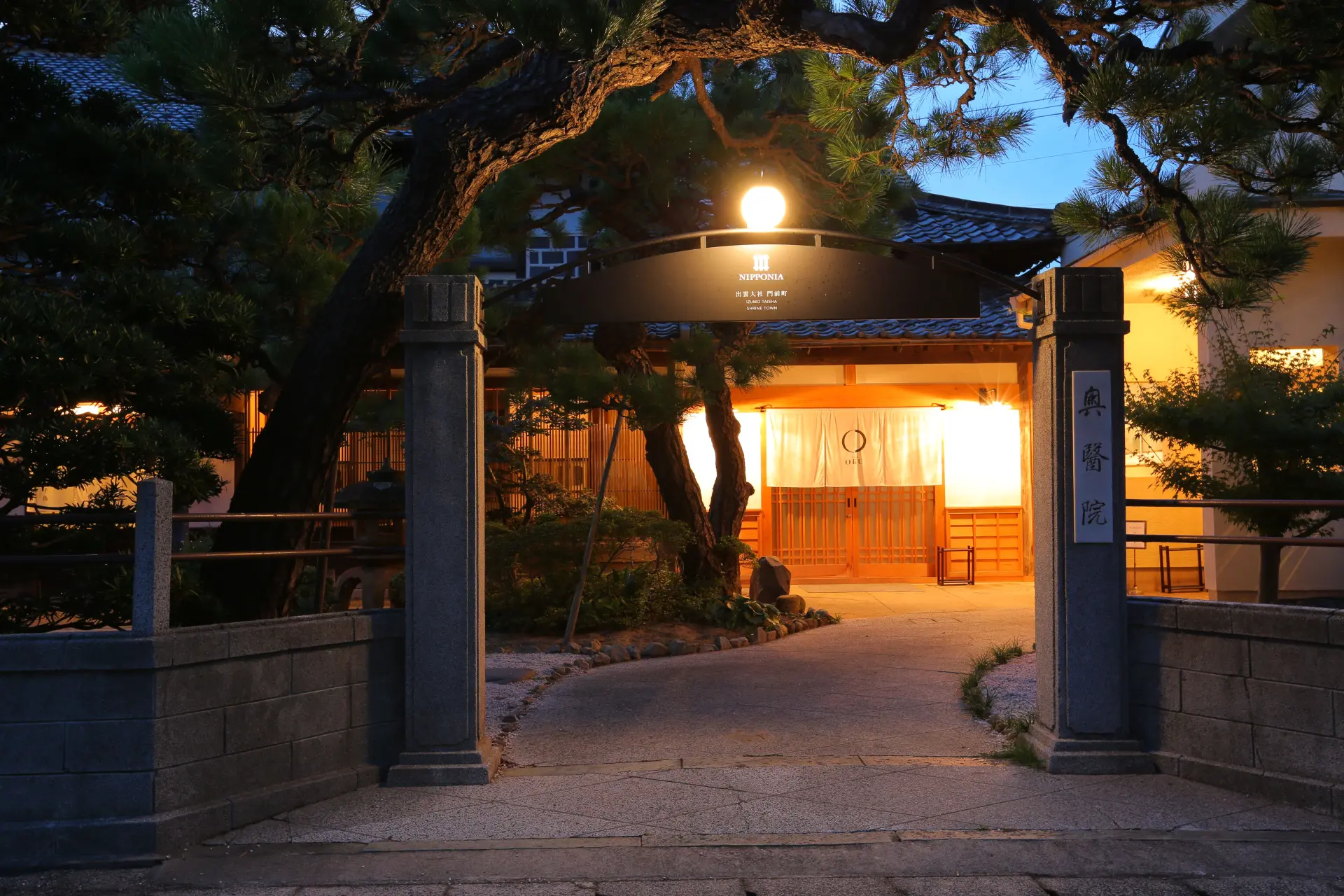
Approx. 5 minutes on foot from Izumo Taisha-mae Station, NIPPONIA Izumo Taisha Monzenmachi sits slightly off the approach to Izumo Taisha.
This renovated kominka-style stay is based in the former Oku Clinic (Kyu Oku Iin), a medical clinic built in the Taisho era (1912–1926), as well as a residence.
Modern architecture and traditional Japanese beauty are beautifully harmonized, and the six uniquely styled guest rooms are designed to let you enjoy the warmth of wood and a historic texture.
Electronic devices are kept to a minimum, creating an environment where you can spend a quiet Japanese night and sleep deeply.
At the on-site restaurant OKU, you can savor a chef’s French course of seven dishes made with local ingredients, paired with local sake.
There are also experience programs that make for wonderful memories, such as making a palm-sized “enmusubi makomo shimenawa” rope.
Reviews of Izumo Taisha
4.43
Some reviews are AI-translated.
-
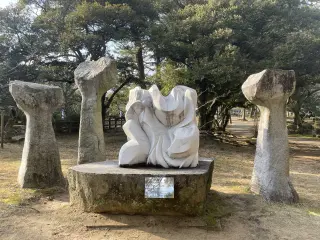
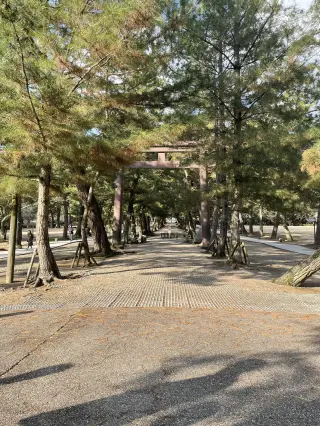
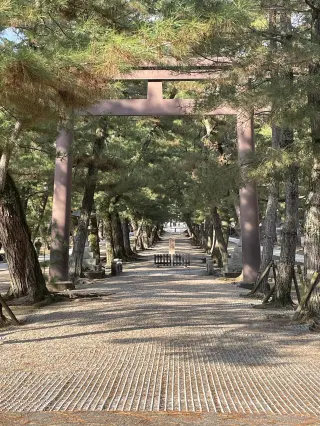
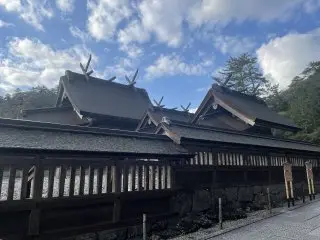
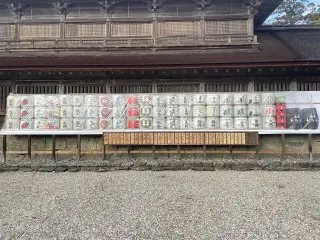
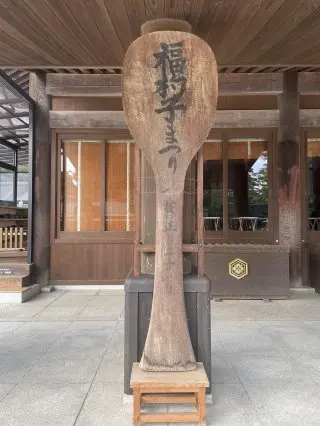
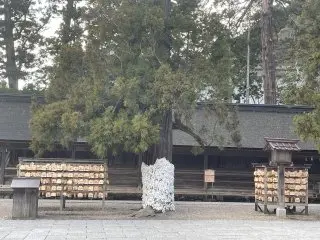
The shrine grounds are huge! The buildings, the approach, and the pine trees are all beautiful. It honestly feels like stepping into a world of Japanese mythology.
-
Many people visit Izumo Taisha to pray for good relationships and happiness, wishing for peace and happiness for themselves, their family, and friends.
-
Walking into this shrine, you can really feel a sacred power. It brings a deep sense of comfort and peace to your soul.
FAQ about Izumo Taisha
Q
What time is it most crowded?
A
It’s most crowded from 10am to 3pm. It also gets busy during the year-end and New Year holidays, Golden Week, Obon, and the Kamiarizuki season.
Q
Can I visit early in the morning or at night?
A
Hours at Izumo Taisha are 6am to 7pm (the area toward Soga no Yashiro is until 4:30pm). *Please confirm opening hours during the year-end and New Year period
Q
Can I still enjoy it on a rainy day?
A
The Main Hall and Haiden have roofs, so you can worship calmly. In fact, rainy days are said to feel more mysterious and bring good luck, and it’s believed you can share in special blessings.
Q
Is it OK to visit with kids?
A
As long as you follow proper manners, visiting with kids is no problem. The grounds are spacious with few steps, so it’s easy to get around with a stroller.
Summary
We’ve introduced the key details, appeal, and must-see highlights of Izumo Taisha, one of Japan’s most iconic ancient shrines.
With mythology, history, nature, and faith woven together, Izumo Taisha is a special place for Japanese people where you can feel the roots of Japanese culture.
It’s filled with a mysterious power that can spark new “en” connections that become turning points in life—so we hope you’ll visit at least once.
Be sure to also check out this article, which summarizes how to enjoy sightseeing in Izumo City and popular places to eat.