

Ise Jingu Travel Guide : A Complete Guide to Highlights, Visiting Order, and Access for Geku & Naiku
Ise Jingu, regarded as the most prestigious Shinto shrine in Japan, is a special and sacred place often called “the spiritual hometown of the Japanese people.”
With 7 to 8 million visitors each year, this sacred area has a history of over 2,000 years and offers a powerful sense of Japanese culture and faith.
This article covers everything from essential basics like Ise Jingu’s history and blessings to must-see spots, worship etiquette, and how to get around.
We’ve compiled key information that’s especially helpful for first-time visitors, so be sure to read to the end.
What is Ise Jingu Like?
Located in Ise City, Mie Prefecture, Ise Jingu—affectionately known as “Oise-san”—is considered Japan’s most prestigious shrine.
Its official name is simply “Jingu,” and among the Approx. 80,000 shrines across Japan, it is regarded as the head shrine (a uniquely special presence).
That said, there isn’t a single shrine called “Ise Jingu.”
Centered on Naiku (Inner Shrine), formally Kōtai Jingu, and Geku (Outer Shrine), formally Toyouke Daijingu, it is made up of 125 shrines in total, including subsidiary and associated shrines.
Naiku enshrines Amaterasu Omikami, the ancestral deity of the Japanese people, while Geku enshrines Toyouke Omikami, guardian deity of food, clothing, and shelter; both have been revered since ancient times.
Blending tranquil nature with a distinctive history, Ise Jingu’s appeal lies in letting you experience the origins of Japanese faith firsthand.
Its many structures preserve a simple, pure beauty, and the area’s living culture and traditions—from ancient forests to clear streams—continue to draw visitors in.

Enshrined Deities and Blessings at Ise Jingu
As noted above, Ise Jingu centers on Naiku and Geku, and the two deities enshrined there are its principal deities.
Naiku enshrines Amaterasu Omikami, the supreme deity in Japanese mythology and the ancestral deity of the Imperial Family. She is believed to bring blessings such as national peace and stability, strong good fortune and protection from misfortune, and peace of mind.
Because of Amaterasu Omikami’s maternal nature, many visitors also pray for family health and marital harmony.
Meanwhile, Geku enshrines Toyouke Omikami, the deity who provides meals for Amaterasu Omikami. Toyouke Omikami is believed to bring stability in daily life through blessings related to food, clothing, and shelter; protection of industry; and business prosperity.
While many kinds of blessings are associated with both, what matters most is approaching with a quiet heart and a sense of gratitude.

The Origins of Ise Jingu
According to traditions rooted in Japanese mythology, Ise Jingu’s origins date back Approx. 2,000 years.
Amaterasu Omikami was originally enshrined within the Imperial Palace (the emperor’s residence), but Emperor Sujin, the 10th emperor, decided she should be enshrined outside the palace.
Princess Yamatohime-no-mikoto then traveled throughout Japan in search of a suitable place. Guided by a divine revelation, she chose a site along the Isuzu River in Ise and built a shrine there.
This is considered the beginning of Ise Jingu.
Over time, from the medieval to early modern periods, Ise-centered devotion spread nationwide.
In particular, during the Edo period (1603–1868), pilgrimages to Ise became such a phenomenon that the saying “At least once in a lifetime, make the pilgrimage to Ise” was born.
From the Meiji period (1868–1912) onward, while also taking on aspects of national religious rites, Ise Jingu continued to serve as a spiritual anchor for the Japanese people and has carried its long history into the present day.

How to Get to Ise Jingu
Ise Jingu’s grounds are vast, and Naiku and Geku are about 5.5 km apart (Approx. 1 hour on foot).
The nearest stations are also different—Kintetsu Toba Line’s Isuzugawa Station for Naiku, and JR Sangū Line / Kintetsu Yamada Line’s Iseshi Station for Geku—so be mindful when planning your route.
Below, we’ll explain how to reach the nearest stations for Naiku and Geku from major Japanese cities: Tokyo, Osaka, Nagoya, and Fukuoka.
Access to the Nearest Station for Ise Jingu (Naiku / Inner Shrine)
| Starting Point | Route | Travel Time |
|---|---|---|
| Tokyo Station |
1. Take the Shinkansen Nozomi from JR Tokyo Station and get off at Nagoya Station, then walk to the Kintetsu Nagoya Line 2. From Kintetsu Nagoya Station, take the Kintetsu Nagoya Line Limited Express (all seats reserved; limited express ticket required) and get off at Isuzugawa Station |
Approx. 3 hr 30 min |
| Osaka Station |
1. Take the JR Osaka Loop Line (outer loop) from JR Osaka Station and get off at Tsuruhashi Station, then transfer to the Kintetsu Osaka Line 2. From Kintetsu Tsuruhashi Station, take the Kintetsu Osaka Line Limited Express (all seats reserved; limited express ticket required) and get off at Isuzugawa Station |
Approx. 2 hr 5 min |
| Nagoya Station | From Kintetsu Nagoya Station, take the Kintetsu Nagoya Line Limited Express (all seats reserved; limited express ticket required) and get off at Isuzugawa Station | Approx. 1 hr 30 min |
| Hakata Station |
1. Take the Shinkansen Nozomi from JR Hakata Station and get off at Nagoya Station 2. From Nagoya Station, take the JR Rapid Mie on the Nagoya Line and get off at Isuzugawa Station |
Approx. 5 hr 20 min |
* From Isuzugawa Station, take a Mie Kotsu bus to Naiku-mae; from the bus stop it’s Approx. a 15-minute walk.
Access to the Nearest Station for Ise Jingu (Geku / Outer Shrine)
| Starting Point | Route | Travel Time |
|---|---|---|
| Tokyo Station |
1. Take the Shinkansen Nozomi from JR Tokyo Station and get off at Nagoya Station, then walk to the Kintetsu Nagoya Line 2. From Kintetsu Nagoya Station, take the Kintetsu Nagoya Line Limited Express (all seats reserved; limited express ticket required) and get off at Iseshi Station |
Approx. 3 hr 20 min |
| Osaka Station |
1. Take the JR Osaka Loop Line (outer loop) from JR Osaka Station and get off at Tsuruhashi Station, then transfer to the Kintetsu Osaka Line 2. From Kintetsu Tsuruhashi Station, take the Kintetsu Osaka Line Limited Express (all seats reserved; limited express ticket required) and get off at Iseshi Station |
Approx. 2 hr |
| Nagoya Station | From Kintetsu Nagoya Station, take the Kintetsu Nagoya Line Limited Express (all seats reserved; limited express ticket required) and get off at Iseshi Station | Approx. 1 hr 20 min |
| Hakata Station |
1. Take the Shinkansen Nozomi from JR Hakata Station and get off at Nagoya Station 2. From Nagoya Station, take the JR Rapid Mie on the Nagoya Line and get off at Iseshi Station |
Approx. 5 hr |
* From Iseshi Station, it’s Approx. a 10-minute walk to the torii gate at Geku.
Ise Jingu Visiting Hours and Admission
There is no fee to visit Ise Jingu.
Visiting hours vary by season, so please check the schedule below.
- January–April, September
- 5:00am–6:00pm
- May–August
- 5:00am–7:00pm
- October–December
- 5:00am–5:00pm
When Is the Best Season to Visit Ise Jingu?
Ise Jingu is beautiful in every season, but spring and fall are especially recommended.
If you can adjust your schedule, try to plan your trip for one of these times of year.
“Spring at Ise Jingu,” When Cherry Blossoms Bloom in a Sacred Atmosphere
Ise Jingu is known as a cherry blossom spot, making spring a wonderful season to enjoy both shrine visits and hanami at the same time.
From late March to early April, when the blossoms are at their best, Approx. 600 cherry trees bloom in and around the shrine grounds, creating scenery that harmonizes beautifully with the sacred atmosphere.
In particular, the view of rows of blossoms alongside Uji Bridge and the clear flow of the Isuzu River is strikingly beautiful, as if washing your spirit clean.
Another highlight is the variety of cherry trees, including Somei Yoshino, yamazakura, and edohigan.
Around the same time, the seasonal Isuzugawa Sakura Festival is also held, with food stalls and events, and from sunset to 9:00pm, illuminations add a festive glow to the shrine precincts at night.
Cherry blossoms under the lights create a different mood from daytime, letting you savor the scene at an unhurried pace amid the quiet.

“Autumn at Ise Jingu,” Painted in Fall Colors
In autumn, Ise Jingu is wrapped in a sacred atmosphere and vibrant fall colors.
The best time is typically from late November to early December, when you can enjoy worship and rich seasonal scenery amid maple and ginkgo trees turning color across the grounds.
For example, the red and yellow leaves reflected on the clear Isuzu River look like a painting, and the contrast between the vermilion bridge seen from Kazahinomi-no-miya Bridge and the surrounding colors feels uniquely elegant in this sacred setting.
If you prefer a quieter experience, the area around Magatama Pond at Geku is especially recommended for its calm, refined mood.
With the crisp air, the scenery tends to photograph well, and you can fully appreciate the feeling of autumn in the fallen leaves along the paths and the ancient trees.

How Much Time to Budget for Ise Jingu
Here are estimated time frames for visiting Ise Jingu.
If you plan to stroll leisurely through both Geku and Naiku and include meals and breaks, it can take at least half a day, so it’s best to build in plenty of time.
- Geku only
- 30 min–1 hr
- Naiku only
- 45 min–1 hr 30 min
- Both Geku and Naiku
- 2 hr–3 hr
* Travel from Geku to Naiku takes Approx. 25 minutes by local bus, or Approx. 1 hour on foot.
5 Must-See Spots in the Naiku (Inner Shrine) Area
With a history of Approx. 2,000 years, the Naiku area of Ise Jingu is considered the most sacred place among Japan’s shrines.
Here you’ll find the solemn Shinmei-zukuri-style buildings of the main sanctuary, as well as the East and West Treasure Houses that store sacred garments and ritual treasures—where court rites and Shinto ceremonies are still strictly preserved today.
As you follow the long approach, you enter the sacred precincts and a quintessential Japanese landscape often called a “spiritual hometown.”
The grounds are expansive, with nature-rich walking paths that offer visitors a quiet sense of peace when approached with reverence.
At Naiku, keep to the right as you walk, and through various forms of etiquette you can have a truly sacred experience.
Let’s take a look at the main highlights in the Naiku area.
1. Kotai Jingu (Main Sanctuary)
The enshrined deity of Kotai Jingu (Main Sanctuary) is Amaterasu Omikami, the supreme deity in Japanese mythology and the ancestral deity of the Imperial Family.
Since ancient times, it has been closely connected to the Imperial Family and the court, and has been revered as the heart of national rites.
Also regarded as the ancestral deity of the Japanese people, it is associated with a wide range of blessings, including national peace and stability, health and longevity, industrial development, and strong good fortune and protection from misfortune.
Its sacred object is the Yata no Kagami, one of the Three Sacred Treasures, believed to contain Amaterasu Omikami’s divine spirit.
What makes Kotai Jingu so compelling is the solemnity of the place itself.
A path continues through dense forest, and the blend of nature and silence naturally centers the mind. The unadorned Shinmei-zukuri architecture further emphasizes the purity of the sacred grounds. Standing there, you’ll likely feel your posture straighten.

2. Aramatsuri-no-miya
Aramatsuri-no-miya is the first and most prestigious of Naiku’s subsidiary shrines, enshrining the Aramitama (a divine spirit) of Amaterasu Omikami.
A subsidiary shrine is considered second in importance to the main sanctuary. Naiku has 10 subsidiary shrines and Geku has 4; the highest-ranked among them is called the first subsidiary shrine.
Aramatsuri-no-miya has very old origins and is one of the important shrines served in ceremonies immediately after the main sanctuary.
The Aramitama is believed to embody dynamic power and energy, granting strength to break through the status quo and take on new challenges.
The area has a distinctive atmosphere that combines silence and tension, and the slightly larger shrine building compared with other subsidiary shrines can feel especially powerful.

3. Kazahinomi-no-miya
Kazahinomi-no-miya is a subsidiary shrine of Naiku that enshrines Shinatsuhiko-no-mikoto and Shinatobe-no-mikoto.
These deities govern wind and rain and are believed to bring blessings such as protection from maritime disasters, travel safety, and prayers for good harvests.
The shrine’s origins are old. It was originally called Kaze Shrine, but it was elevated to a subsidiary shrine in 1293 in recognition of its divine protection—said to have raised sacred winds to defend Japan during the Mongol invasions (1274 and 1281).
Since then, it has remained an important site for Naiku’s rites.
Located not far from the main sanctuary, its quiet grounds surrounded by towering old trees are especially memorable.

4. Uji Bridge
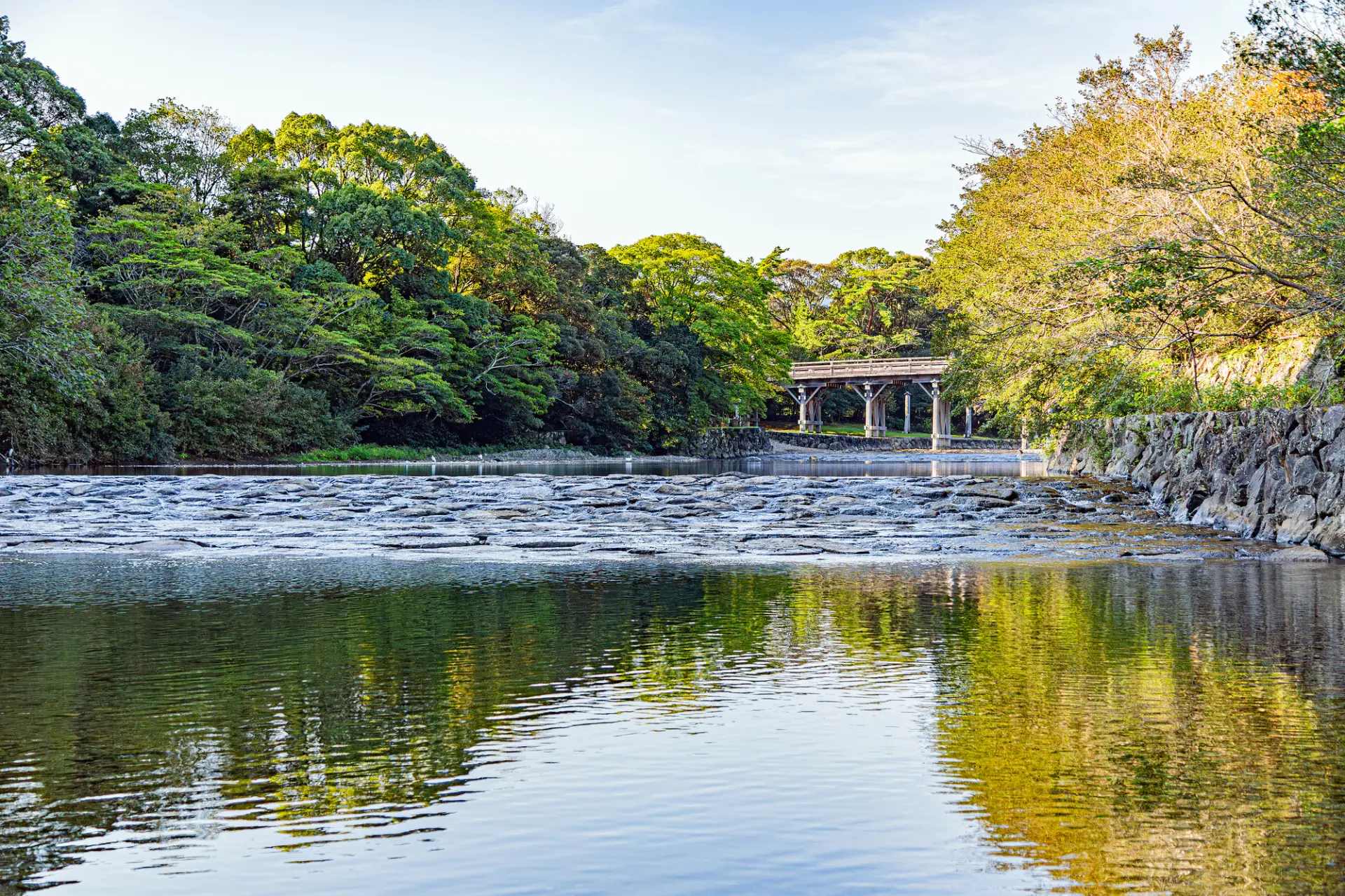
Uji Bridge is a traditional wooden bridge at the entrance to the Naiku approach, spanning the Isuzu River. It measures Approx. 101.8 m (334 ft) long and Approx. 8.42 m (28 ft) wide.
Often described as a bridge connecting the everyday world and the sacred world, it’s hard not to feel refreshed as you look toward the beautiful great torii gate ahead.
Crossing Uji Bridge marks the beginning of a Naiku visit, gently preparing visitors’ minds as they draw closer to the sacred precincts.
The bridge’s dignified design is another highlight, from the vermilion railings adorned with traditional giboshi finials to the 39 zelkova pillars chosen for their strength in water.

5. Isuzu River
Flowing through Ise City, the Isuzu River rises from Mount Kamiji and Mount Shimaji, runs through the Naiku area, and eventually empties into Ise Bay, stretching Approx. 20 km in total.
Also known as Mimosuso-gawa, it’s said to be where Yamatohime-no-mikoto purified the hem of her robes.
Closely tied to the sacred grounds through sites like Uji Bridge and the Mitarashi area, the river’s clear water itself brings visitors a sense of calm and healing.
With the sound of flowing water blending with the forest’s stillness, the Isuzu River is a symbolic landscape of the Naiku area’s serenity, celebrated in many waka poems.
5 Must-See Spots in the Geku (Outer Shrine) Area
With a history of Approx. 1,500 years, the Geku area of Ise Jingu is a sacred forested precinct filled with quiet.
Located in central Ise City, it has long played a vital role in supporting Naiku’s rites.
Made up of many shrines connected to life milestones and local events, it has an approachable atmosphere where you can feel culture up close.
While the overall layout resembles Naiku, there are subtle differences—such as the number of katsuogi roof logs and architecture that varies by rank—so it’s fun to compare details.
Here are the main highlights in the Geku area.
1. Toyouke Daijingu (Main Sanctuary)
The enshrined deity of Toyouke Daijingu (Main Sanctuary) is Toyouke Omikami, who governs protection of food, clothing, shelter, and industry, and is especially known as the deity of food (Miketsukami).
Approx. 1,500 years ago, Toyouke Omikami was invited to Ise from Tanba Province (present-day Kyoto) following a revelation from Amaterasu Omikami.
Long worshiped as a deity who supports regional prosperity and a plentiful daily life, Toyouke Omikami is associated with blessings ranging from abundant harvests and business prosperity to safety in everyday life.
Even today, the deity remains deeply revered and is a central presence at Ise Jingu.
Surrounded by sacred forest and greenery, the dignified shrine buildings standing in orderly silence are a key part of Toyouke Omikami’s appeal.
The area carries a unique atmosphere tied to everyday prayers, bringing visitors a sense of peace and comfort.

2. Taka-no-miya
Taka-no-miya is Geku’s first and most prestigious subsidiary shrine, enshrining Toyouke Omikami’s Aramitama.
Founded around the same time as Geku, it is treated as especially significant; for example, among the subsidiary shrines, only Taka-no-miya is recorded in ancient legal and ceremonial texts such as the Toyuke-gu Gishikicho and Engishiki Jinmyocho.
Because it is situated high on Mount Hio, it was known as “Taka-miya” until the Meiji period.
The Aramitama is believed to have an active nature, bringing blessings such as success in new challenges and support in making decisions, which is why it’s popular as a power spot for personal wishes.
The biggest feature of Taka-no-miya is the approach leading up 98 stone steps to the front of the shrine.
The wind and stillness you feel at the top, along with the sacred space before you, makes the visit especially memorable.
* If climbing stairs is difficult, you can worship from the distant worship area before the steps.

3. Tsuchi-no-miya
Tsuchi-no-miya is a subsidiary shrine of Geku that enshrines Otsuchi-no-mioya-no-kami.
Originally the guardian deity of Yamada-hara (present-day Ise City), it was incorporated into the sacred precincts after Geku was established, and in the Heian period (794–1185) it was elevated to a subsidiary shrine as a guardian deity for the Miyagawa river embankment.
Still closely tied to Geku’s ancient ritual traditions, it is believed to bring blessings such as peace and stability of the land, protection of embankments and rivers from flooding, and regional stability.
Tsuchi-no-miya is notable as the only subsidiary shrine whose sanctuary faces east.
It is located in a cedar grove on the west side, reached by crossing the turtle-shaped stone bridge over Geku’s pond. In this area, sacred traditions are carefully preserved, and the region’s history and faith remain strongly present.
Its calm presence offers a sense of the Japanese sensibility of living alongside nature.

4. Kaze-no-miya
Kaze-no-miya is a subsidiary shrine of Geku that enshrines Shinatsuhiko-no-mikoto and Shinatobe-no-mikoto.
These two deities govern wind and rain and are believed to prevent weather-related disasters that can harm crops, while also bringing blessings for safe voyages and national peace and stability.
Originally called Kaze Shrine, it was elevated to a subsidiary shrine in 1293 due to its divine power—together with Kazahinomi-no-miya—said to have raised sacred winds to defend Japan during the Mongol invasions (1274 and 1281).
Since then, it has been part of Geku’s ritual system and closely connected to rites for Kazahinohi.
This small shrine, quietly nestled in a cedar forest, reflects the traditional Japanese value of revering the power of nature and is a fitting place to offer prayers in a calm moment during a Geku visit.

5. Sengukan Museum
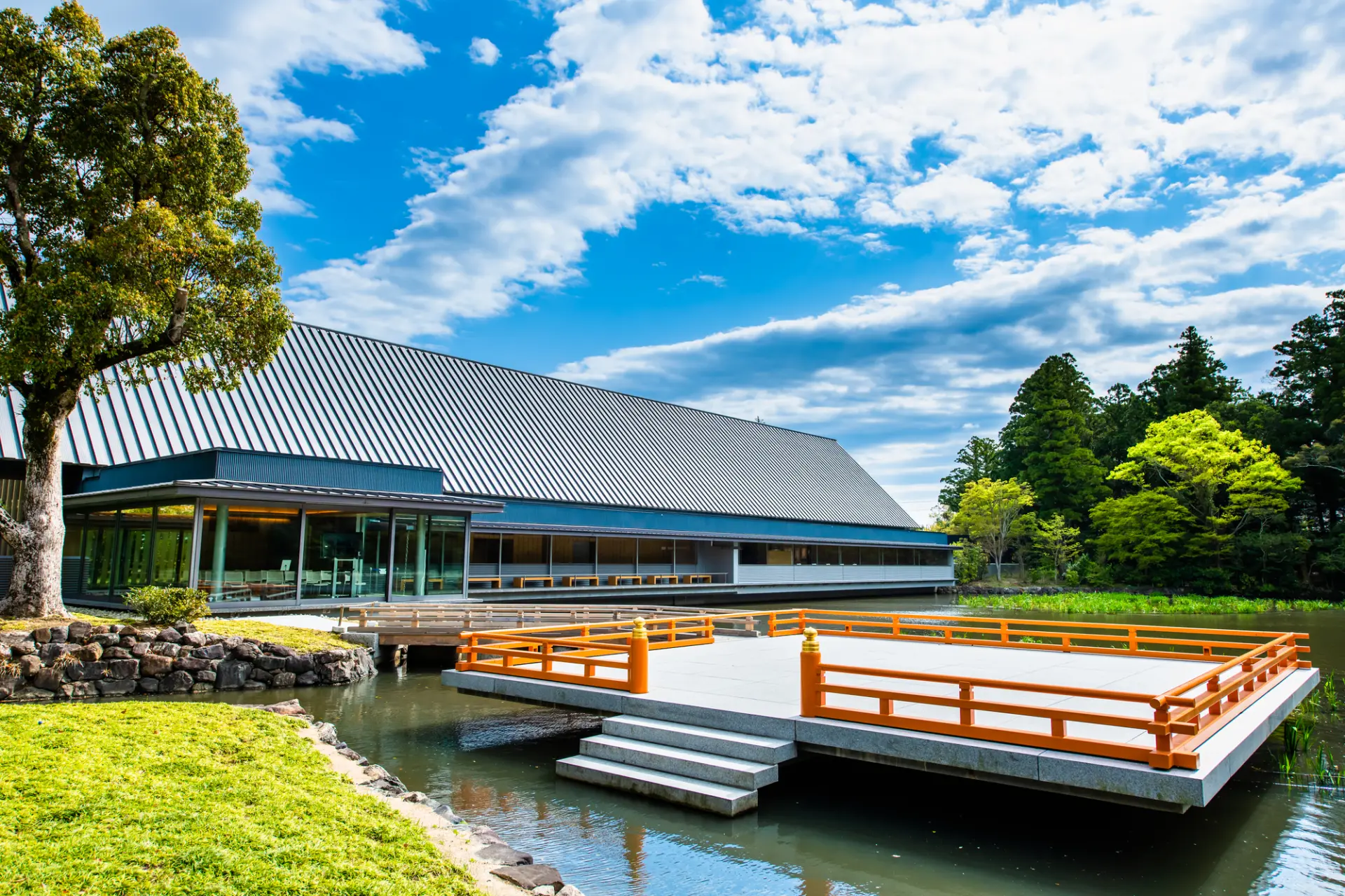
Sengukan, located by Magatama Pond at Geku, is a museum that clearly explains the meaning and history of Ise Jingu’s Shikinen Sengu (periodic rebuilding and relocation of the shrine).
Divided into multiple exhibit areas, it systematically introduces the purpose of the Sengu, shrine-building techniques, and the precision of traditional craftsmanship through diagrams, models, and video.
The layout makes it easy for general visitors to understand why the shrines are rebuilt every 20 years, helping you feel closer to the depth of Ise Jingu.
One standout is a full-scale replica of the Geku main sanctuary building.
Seeing it at near-life size lets you appreciate the structural beauty of Yuiitsu Shinmei-zukuri—details you normally can’t view up close.
There are also compelling displays of tools, garments, and sacred treasures used in rituals and craftsmanship.
The Official Route for Visiting Ise Jingu
When visiting Ise Jingu, the basic route is: Geku main sanctuary → Geku subsidiary shrines → Naiku main sanctuary → Naiku subsidiary shrines.
A key reason is that Toyouke Omikami of Geku is the deity who provides meals for Amaterasu Omikami of Naiku, and as a matter of etiquette, you first offer thanks at Geku before visiting Naiku.
This long-standing custom is known as “Geku first,” so it’s worth remembering.
Also, for both shrines, please receive goshuin stamps and omamori amulets at the end of your visit.
By following the formal order in line with Jingu festival traditions, your prayers can feel more meaningful and you can better express gratitude.
For reference, “main sanctuary” refers to the most central and prestigious shrines within Ise Jingu (Naiku/Kotai Jingu and Geku/Toyouke Daijingu). Shrines considered next in importance are called “subsidiary shrines.”
Etiquette to Know Before Visiting Ise Jingu
Here are key etiquette points to know when visiting Ise Jingu.
These gestures are important practices that express deep respect and gratitude for Japan’s long-standing Shinto culture.
Knowing them will help you worship politely and with a calm mind, so take a moment to learn and practice them.
From the moment you step into the sacred grounds, keeping your actions respectful can make the visit feel even more meaningful.
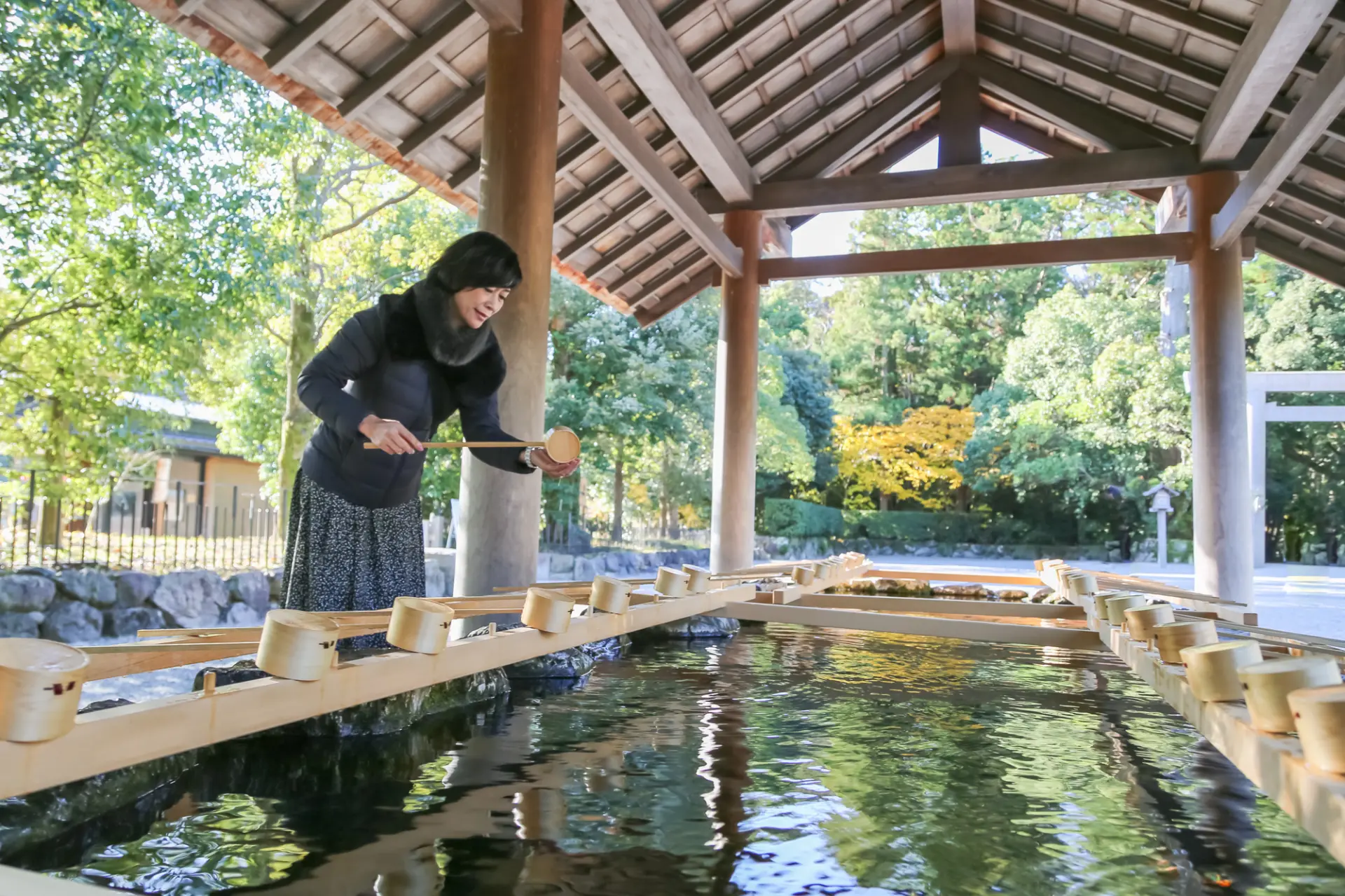
Temizu (Ritual Handwashing)
Temizu is an important practice to purify the body and mind and show respect to the deities.
At the temizuya, please follow this order:
- Hold the ladle in your right hand, scoop plenty of water, and cleanse your left hand
- Switch the ladle to your left hand and cleanse your right hand
- Switch the ladle back to your right hand, pour water into your left hand, and rinse your mouth *Do not put your mouth directly on the ladle
- Cleanse your left hand once more, use the remaining water to rinse the handle, and return the ladle to its original place

How to Pray
As with other shrines, at Ise Jingu you pray using the “two bows, two claps, one bow” method.
Be mindful of your behavior in this sacred place, and offer your prayers quietly with gratitude and appreciation.
- Step up to the front, stand straight, and bow deeply twice, bending at the waist to about 90 degrees (two bows)
- Bring your hands together at chest level, lower your right hand slightly, then separate your hands to about shoulder width and clap twice (two claps)
- Return your hands to their original position and bow deeply once more (one bow)


Rules and Manners to Follow at Ise Jingu
When visiting Ise Jingu, please behave quietly and be considerate so you don’t disturb other visitors.
At minimum, be sure to follow these rules and manners:
- At Geku, keep to the left; at Naiku, keep to the right
- No smoking in the sacred grounds (use designated smoking areas)
- Avoid eating and drinking in the sacred grounds; even for hydration, use rest areas
- Pets are not allowed (leave them at the guard station near the entrance)
- Do not enter restricted areas or conservation zones
- Do not take photos or videos where photography is prohibited
Goshuin Stamps at Ise Jingu: Different for Each Shrine
At Ise Jingu, you can receive different goshuin stamps at seven shrines in total: Naiku, Geku, and Tsukiyomi-no-miya, Takihara-no-miya, Izawa-no-miya, Yamatohime-no-miya, and Tsukiyomi-no-miya.
Each goshuin follows long-standing custom and features a simple style: only the red seal (shrine seal) and the date written in ancient seal script.
Unlike many other shrines, there are no designs or illustrations, reflecting Ise Jingu’s emphasis on the goshuin’s essence as proof of worship and its dignified tradition.
Goshuin are granted during visiting hours at the Kaguraden distribution office at Naiku and Geku, and at the Shukueya offices at each shrine (Approx. 300 yen offering) in your goshuincho or similar book that you bring with you.

8 Types of Omamori Amulets Available at Ise Jingu
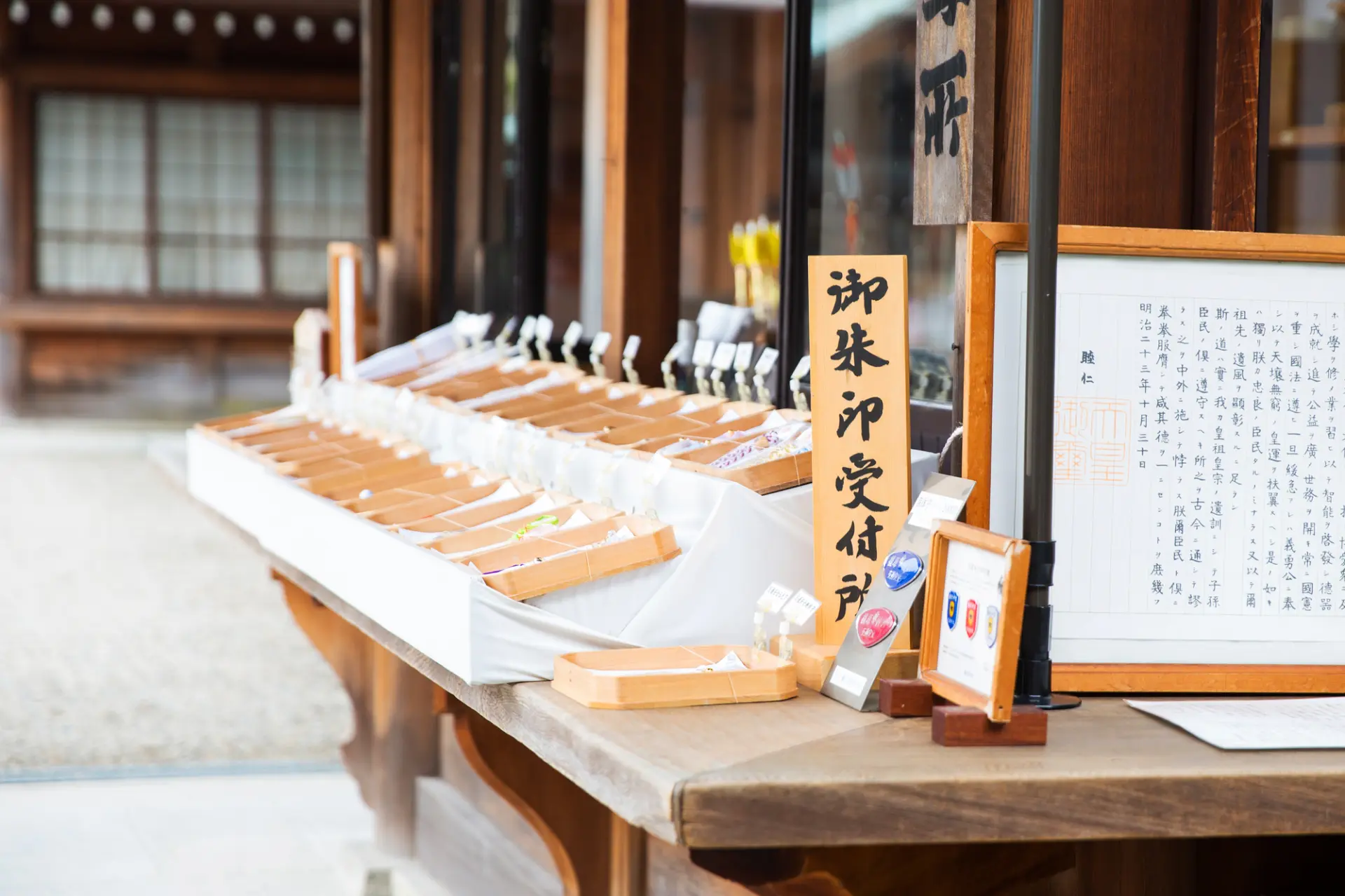
Like goshuin, omamori amulets are available during visiting hours at the Kaguraden distribution offices at Naiku and Geku, and at the Shukueya offices at Tsukiyomi-no-miya, Takihara-no-miya, Izawa-no-miya, Yamatohime-no-miya, and Tsukiyomi-no-miya.
There are mainly eight types, and their shapes and colors differ between Naiku and Geku.
- Omamori
- Prayers for health and good fortune
- Traffic Safety Omamori (Large/Small)
- Prayers for traffic safety and safe travel
- Good Fortune Bell Omamori
- Prayers for good fortune with the pure sound of a bell
- Academic Success Omamori
- Prayers for success in studies
- Protection from Misfortune Omamori
- Prayers for protection from misfortune and calamity
- Safe Childbirth Omamori
- Prayers for a safe delivery
- Mamori-harai
- Prayers for health and happiness (a small sacred paper talisman kept inside the omamori)
- Umisachi Omamori
- Prayers for safety at sea and a plentiful catch

Major Festivals at Ise Jingu
At Ise Jingu, “festivals” refer to sacred ceremonies and rites that offer gratitude and prayers to the deities.
They aren’t the lively festivals many people imagine, with portable shrines or floats; instead, they mainly consist of solemn, formal Shinto rites carried out by priests.
Japan’s traditional ritual culture is still strongly preserved here, with as many as 1,500 ceremonies held each year across the Jingu as a whole.
They are broadly categorized into three types: annual festivals, special festivals, and Sengu festivals, with details varying by importance, scale, season, and purpose.
Here are some of the most well-known festivals.
1. Kannamesai
Kannamesai is one of Ise Jingu’s most important festivals and is known for its especially old and prestigious history.
Newly harvested grain (new rice) and various blessings from the sea and mountains are offered to Amaterasu Omikami as an expression of gratitude to nature and for abundant harvests.
Each year, it is traditionally held from October 15 to October 17, in the order of Geku first, then Naiku.
Centered on the Yukioomike rite—where priests offer sacred food with purified hearts and movements—norito prayers are recited in accordance with formal ritual etiquette.
The main part of the ceremony is not open to the public, but you may be able to observe during visiting hours (5:00am–5:00pm), when many visitors gather along the approaches filled with a tense, quiet atmosphere.
Its appeal lies in experiencing, up close, the deep connection between the Japanese people and rice cultivation, and gratitude for the new harvest.

2. Kagurasai
Kagurasai is a traditional festival that expresses gratitude for divine blessings and prays for the peace and prosperity of the people.
Held twice each year—in spring (late April to early May) and fall (mid-September to early October)—its beautiful scenes, set against fresh greenery or an autumn sky, captivate many visitors like an ancient picture scroll come to life.
During the festival, you can enjoy performances such as maidens and dancers performing to bugaku court music passed down since the Heian period, as well as offerings like Noh recitations and dance-hayashi presented by distinguished families from around Japan.
In addition, tea rooms and gardens that are normally closed to the public are opened, making it a chance to fully experience Japan’s classic culture and refinement in a sacred atmosphere.
Despite its formal nature, it feels approachable for the public, and you can observe freely from the special stage set up in the Naiku shrine garden.

3. Kangetsukai
Kangetsukai is an elegant event held on the night of the mid-autumn full moon (early October, considered the most beautiful moon of the year).
It traces its origins to the “Kangetsu Utakai,” which began in 1898 based on the Reizei-style etiquette passed down by Chief Priest Reizei Tamemoto.
On the day, Magatama Pond at Geku becomes the offering stage. After outstanding tanka and haiku gathered from across Japan are read aloud by shrine musicians in the traditional manner, gagaku ensemble music and bugaku dance are performed.
Live music, moonlight, and the quiet of the sacred grounds blend together, offering participants and spectators a mysterious moment that feels removed from everyday life.
With the nighttime scenery around the stage—light reflected on the pond and the feeling of autumn—layered on top, the event’s appeal lies in savoring the depth of culture and tradition with an elevated sense of elegance. *Open to the public; free to observe

Helpful Tips to Know Before Visiting Ise Jingu
With a history of over 2,000 years, Ise Jingu has aspects that differ from typical shrines, along with various traditions and superstitions.
Here, we’ll share five tips that can make your visit even more enjoyable.
Many are fairly well known, but few people know the details or background.
They’re also closely tied to Japanese history and tradition, so it can be fun to share them with friends or family before or after your visit.
Shikinen Sengu, Held Once Every 20 Years
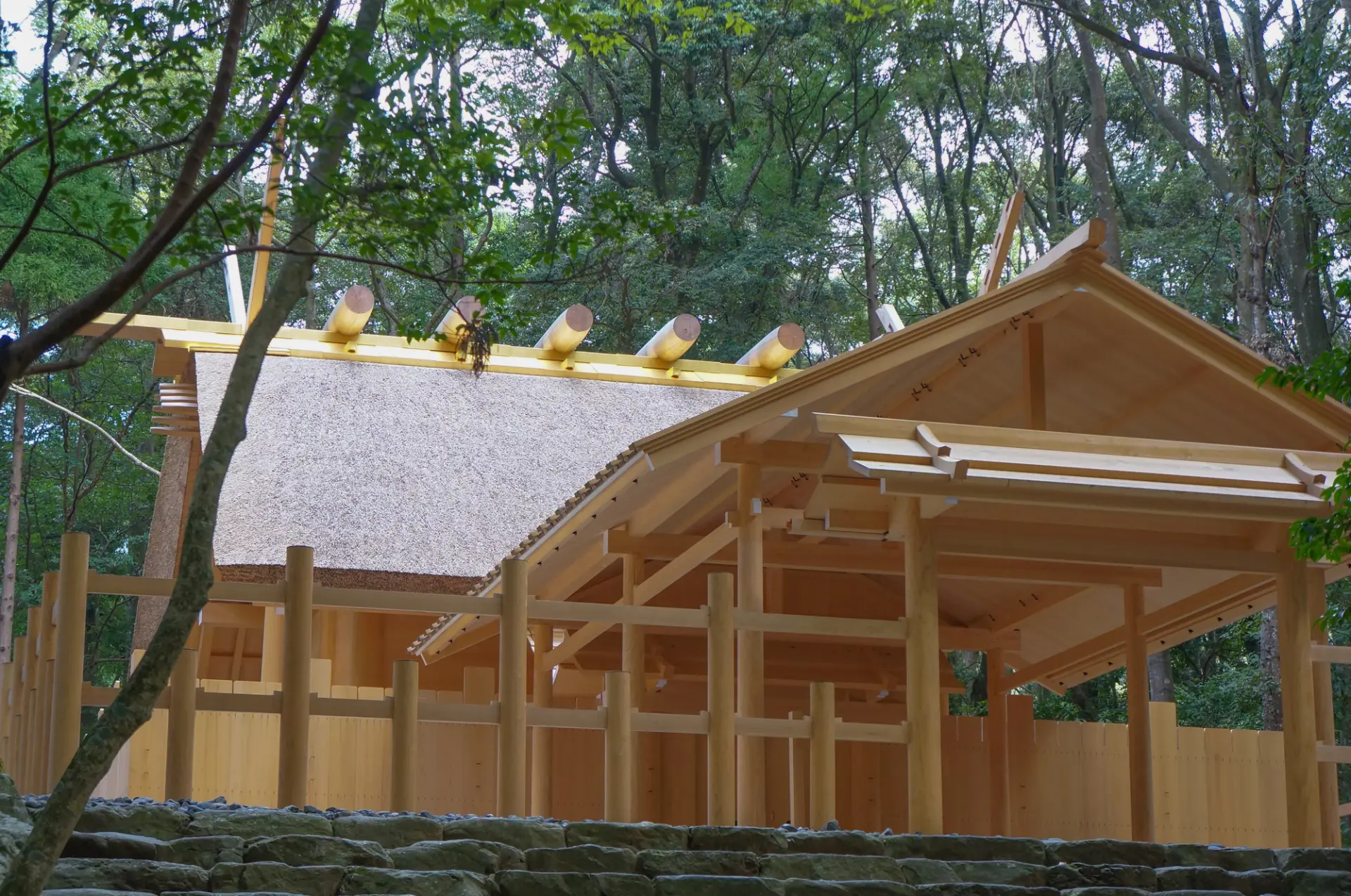
Shikinen Sengu is Japan’s largest festival, held at Ise Jingu every 20 years.
It involves rebuilding all shrine buildings and sacred treasures and moving the deity to the new shrine. It has continued for over 1,300 years, from the first in 690 to the 62nd in 2013.
Some 800 types and 1,600 items of sacred garments and ritual treasures are newly made, with craftspeople carrying on ancient techniques as they create them.
More than simply renewing architecture, it represents the renewal of sacredness and the passing down of faith, and it also holds social significance as a prayer for national prosperity and the stability of the Imperial Family.
Preparations take over eight years, and along the way, various festivals and traditional events such as Yamaguchi-sai and Mifunashiro-sai are held in stages, building momentum toward the main event.
The next, the 63rd, is scheduled for 2033.
Higoto Asayu Omikesai, Held Twice Daily for Over 1,500 Years
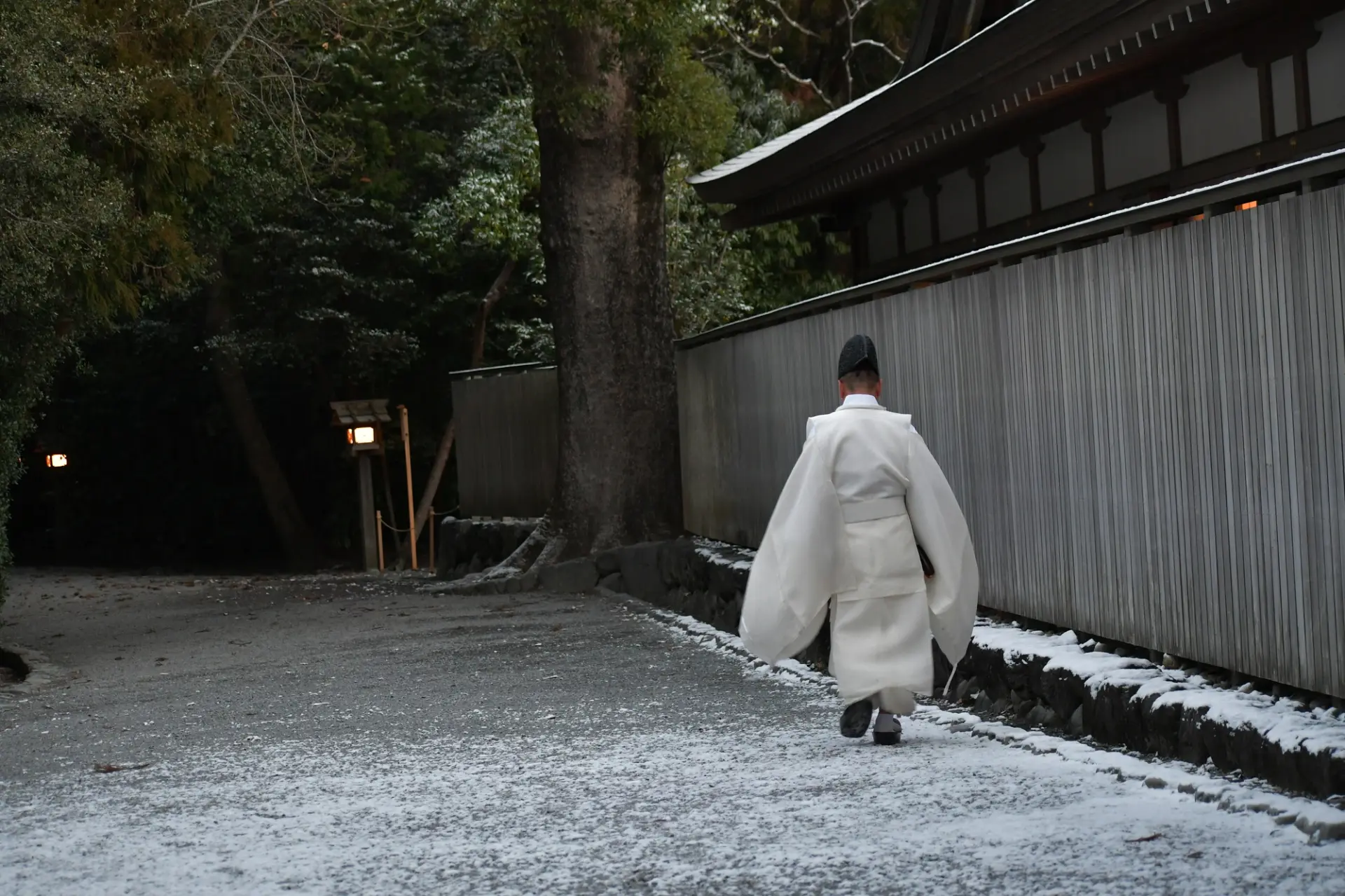
Higoto Asayu Omikesai is a festival in which sacred meals (mike) are offered to the deities twice each day—morning and evening—at Naiku, Geku, and subsidiary shrines.
It is an important rite that has continued without a single day missed for over 1,500 years since Geku was established, offering daily gratitude to the deities while praying, “May the nation be at peace; may the people be at peace.”
In the early morning, priests who have purified themselves by keeping vigil since the night before prepare the offerings at Imibiya-den, using pure water from within the sacred precincts.
At the Omike-den, rice, sake, and seasonal blessings from the sea and mountains and vegetables are offered, and a priest recites norito prayers and performs a ritual with eight bows.
It is generally not open to the public, but near the North Gate at Geku, you may be able to observe scenes such as the offerings being carried to the Omike-den.
At the Main Sanctuary, Avoid Personal Requests
The main sanctuaries have long been places to offer gratitude to Amaterasu Omikami. While personal requests aren’t prohibited, it is considered proper etiquette to do so elsewhere.
At Ise Jingu, there is a concept known as shihei kindan, meaning individuals other than the emperor should refrain from directly offering goods or money to the deities.
There is also no offering box at the main sanctuaries, as throwing coins could be seen as defiling the sacred grounds.
For these reasons, at the main sanctuaries, worship quietly with gratitude as your focus, and save personal requests for subsidiary shrines (such as Aramatsuri-no-miya at Naiku or Taka-no-miya at Geku).

Why Ise Jingu Doesn’t Have Omikuji Fortunes
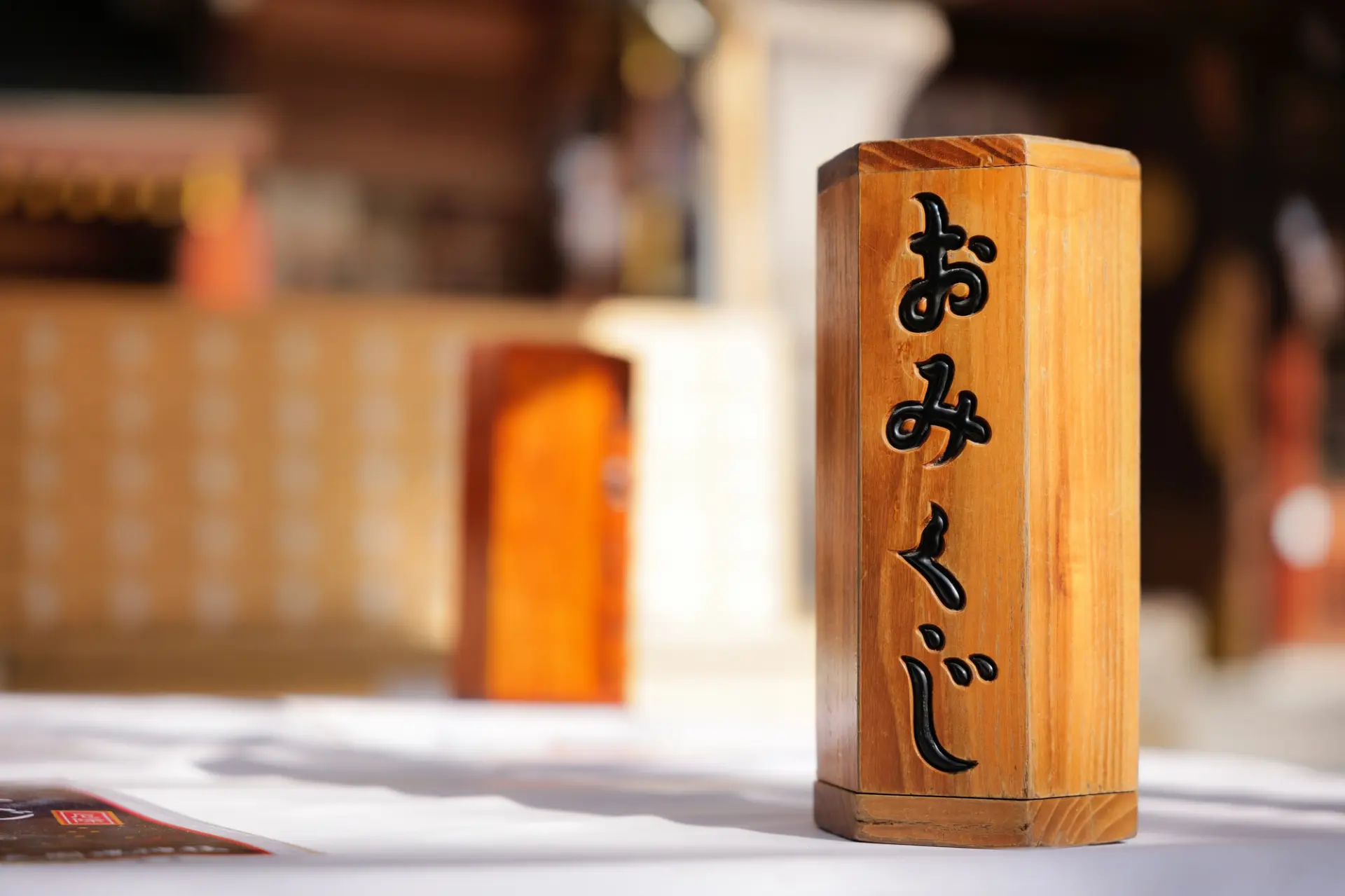
Ise Jingu has never had omikuji fortune slips.
As the saying goes, “If you can make the pilgrimage to Ise, you already have great fortune,” the main reason is that the act of visiting itself is considered a sign of great luck and divine protection.
Also, at Ise Jingu—where Amaterasu Omikami, the ancestral deity of the Japanese people, is enshrined—omikuji, which judge personal fortune as good or bad and can make people overly happy or upset, differs from the shrine’s original view of faith and purpose of worship.
Moreover, when Ise Jingu was founded, the practice of omikuji did not yet exist in Japan, and the absence of omikuji also reflects an emphasis on preserving ancient rituals, etiquette, and sacredness.
A Long-Standing Superstition About Ise Jingu
There’s a saying that you shouldn’t visit Ise Jingu as a married couple or as a couple.
There are various theories, but two are especially well known.
The first says that Amaterasu Omikami is a female deity who becomes jealous of couples’ happiness and causes them to break up.
The second says that in the Edo period, there was an entertainment district called Furuichi near Ise Jingu, and the rumor was used as an excuse to make it easier for men who came to worship to go out and have fun.
However, both are merely folk stories, with no official basis or credibility.
Rather, if you worship with proper etiquette, you can pray for marital harmony and good relationships, so it’s safe to regard it as just a superstition.

Oharai-machi & Okage Yokocho: A Must-Visit Along with Ise Jingu
If you’re visiting Ise Jingu, be sure to stop by Oharai-machi, a street along the approach located Approx. a 5-minute walk from Naiku.
This stone-paved street stretches Approx. 800 m from Uji Bridge and is lined with traditional gabled buildings, creating a nostalgic atmosphere.
Midway through Oharai-machi, you’ll find Okage Yokocho, a recreated townscape featuring Edo- to Meiji-era architecture.
Along with restaurants and souvenir shops, you can also enjoy seasonal events and traditional performing arts—an ideal way to experience “Ise” to the fullest.
There’s an incredible variety of unique foods too, so it’s recommended to stroll while snacking your way through.
In particular, Akafuku mochi, a signature Japanese sweet often seen as the face of Oharai-machi, and Ise udon, known for its thick, chewy noodles, are so popular they often have long lines.
For more details, please read this article as well.

3 Shrines Closely Connected to Ise Jingu
Across Mie Prefecture, you’ll find many shrines with sacred atmospheres and a variety of blessings.
Here, we’ll introduce three shrines with deep ties to Ise Jingu, where you can receive special divine protection.
All three enshrine deities associated with “opening the way,” guidance, and relationships—guardians of new beginnings in life and endeavors—so consider visiting them along with Ise Jingu.
1. Sarutahiko Shrine
This shrine enshrines Sarutahiko Okami, a deity said to appear at the start of things and guide everything in a good direction.
The Kojiki and Nihon Shoki also describe him as having “opened the way and guided the heavenly grandchild in the beginning of the land,” and the shrine’s ema votive plaques feature Sarutahiko Shrine’s unique “MICHIBIKI no Mai” dance, which is said to guide wishes toward a good outcome.
It also has a deep connection to Ise Jingu: Ota-no-mikoto, a descendant of Sarutahiko Okami, recommended the upper reaches of the Isuzu River as the site for Ise Jingu’s Naiku.

2. Tado Taisha
This shrine stands at the foot of Mount Tado, long revered as a sacred mountain.
The shrine buildings were established in the latter half of the 5th century, during the reign of Emperor Yuryaku.
The main sanctuary enshrines Amatsuhikone-no-mikoto, the third son of Amaterasu Omikami, the enshrined deity of Ise Jingu, and the subsidiary sanctuary enshrines Ame-no-Mahitotsu-no-mikoto, a grandchild deity.
Because of this, it has deep ties to Ise Jingu, and a folk song says, “If you visit Ise, visit Tado too—without Tado, it’s only half a pilgrimage,” reflecting the custom of praying at Tado Taisha when making the Ise pilgrimage.

3. Futami Okitama Shrine
This shrine enshrines Sarutahiko Okami and is believed to bring blessings for matchmaking, marital harmony, and traffic safety.
Since ancient times, there has been a custom called Hama-sangu, in which people perform misogi purification in the seawater at Futamiura before visiting Ise Jingu, cleansing body and mind by bathing in the salt water.
Today, even without entering the sea, it is said that receiving the Mukushio-barai purification at the shrine can serve as a substitute for misogi.
An ideal plan is to visit Futami Okitama Shrine first, then head to the Jingu with a purified spirit.

A 1-Day Model Itinerary to Enjoy Ise and Ise Jingu
If it’s your first time visiting Ise Jingu, you may find yourself wondering, “What order should I go in?”
In fact, the formal traditional order is: Futami Okitama Shrine → Geku → Naiku.
Following this route lets you experience a flow of purifying body and mind and offering gratitude to the deities.
Here, we’ll introduce a one-day model itinerary that lets you enjoy worship, street food, and nearby shrines and town walks to make the most of Ise in a single day.
- 8:30am
- Visit Futami Okitama Shrine and receive “Mukushio-kusa”
- 9:30am
- Visit the Geku area in the order: main sanctuary → Taka-no-miya → Tsuchi-no-miya → Kaze-no-miya
- 11:30am
- Visit the Naiku area in the order: Uji Bridge → main sanctuary → Aramatsuri-no-miya → Kazahinomi-no-miya
- 1:30pm
- Lunch and street food at Oharai-machi & Okage Yokocho
- 2:50pm
- Visit Sarutahiko Shrine
- 4:00pm
- Stroll along Kawasakihondori
3 Recommended Places to Stay Near Ise Jingu
For a base while visiting Ise Jingu, you’ll want a place so appealing it’s worth going a bit out of your way to stay there.
This time, we’ve selected quality accommodations where you can enjoy the nature and scenery of the Ise-Shima area, so you can unwind with a stay at a resort that harmonizes with the natural surroundings.
1. NEMU RESORT
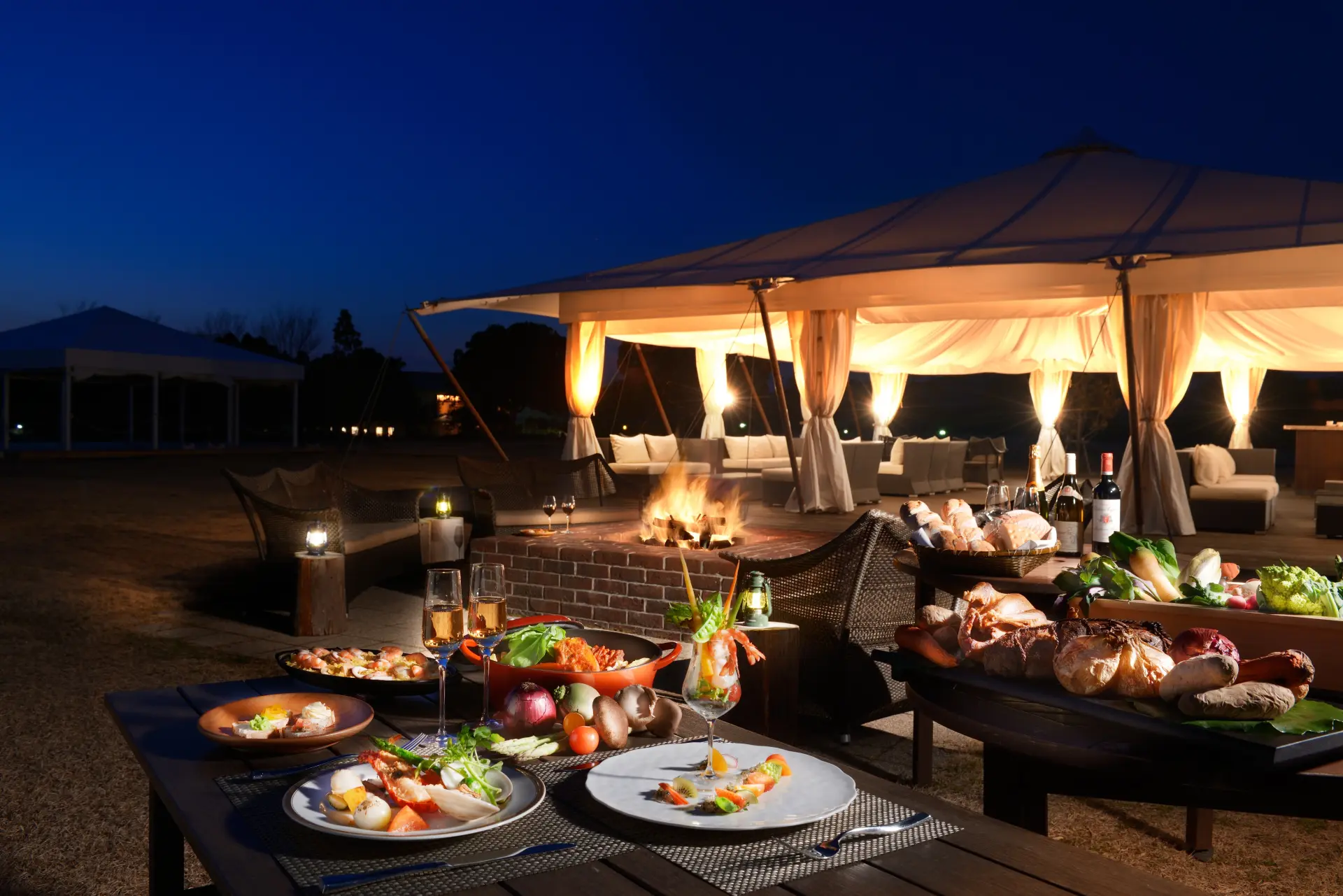
Located within Ise-Shima National Park, NEMU RESORT is a multi-facility resort where you can enjoy a stay that’s active at times and deeply relaxing at others, surrounded by the sea and lush greenery.
Across its expansive grounds, the resort offers a wide range of activities, including NEMU GOLF CLUB for refreshing seaside golf, as well as a garden pool and marine cruises.
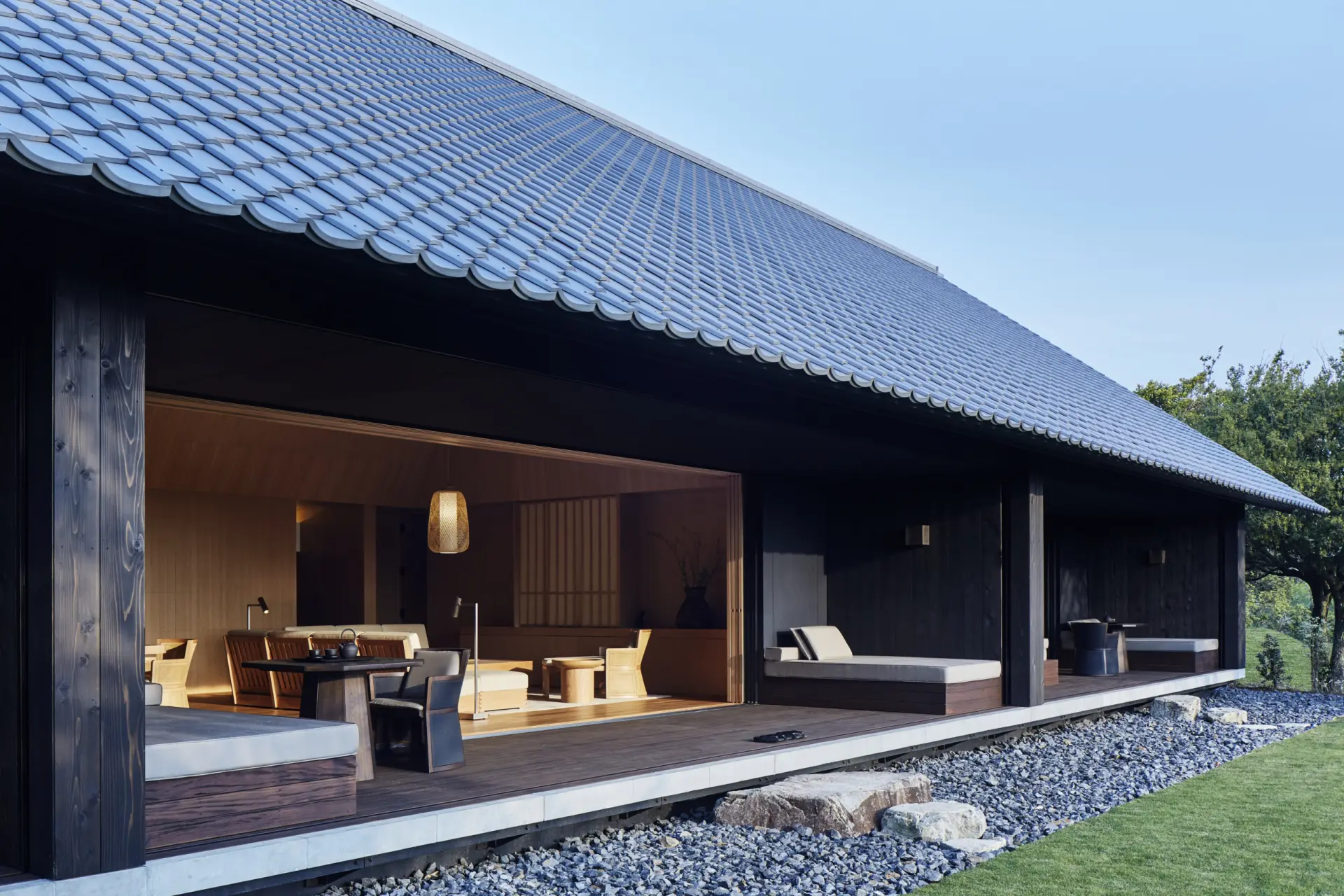
2. Amanemu
Quietly set on a hillside overlooking Ago Bay, Amanemu is the first property within the global luxury hotel brand Aman to feature its own hot springs.
All 24 suites and 8 villas have hot spring baths indoors, so you can enjoy onsen without leaving your room.
3. HOTEL VISON / Hatago VISON
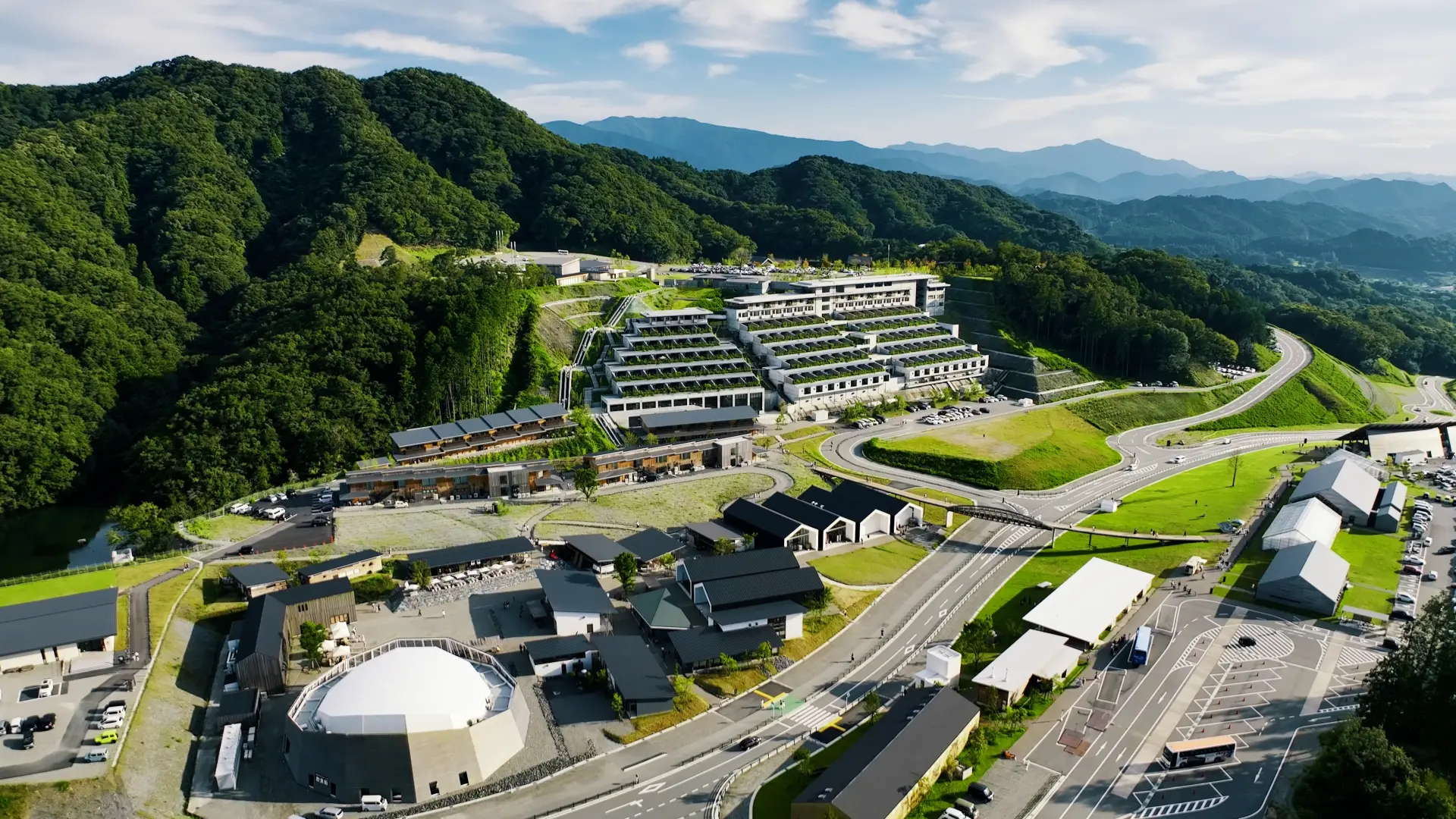
A luxury resort hotel located within VISON, one of Japan’s largest commercial complexes.
You can choose from three lodging styles: six standalone villas, 155 rooms in the hotel building across nine room types, or Hatago VISON with 40 rooms across four buildings.
Reviews of Ise Jingu
4.77
Some reviews are AI-translated.
-
You can really feel close to the divine here. Every time I visit, it feels like my soul is cleansed. It's so healing.
-
Walking through the natural surroundings of the shrine, I felt like I was far away from the everyday world. No wonder Ise Jingu is called the spiritual home of the Japanese people.
-
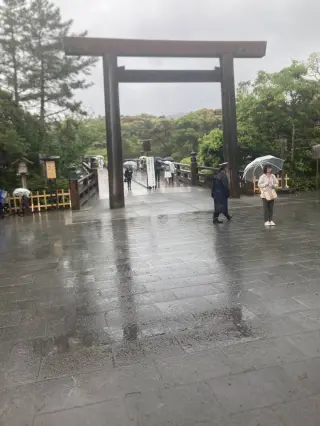
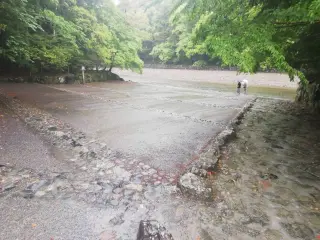
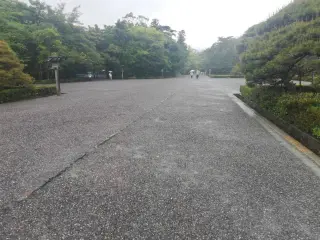
A must-snap spot at Ise Jingu! Be sure to take photos of the torii gate in front of the Inner Shrine, Uji Bridge, and the Isuzu River. Don't miss it!
FAQ about Ise Jingu
Q
Which deities are enshrined at Ise Jingu?
A
Centered on Amaterasu Omikami at Naiku and Toyouke Omikami at Geku, Ise Jingu as a whole enshrines as many as 151 deities.
Q
What blessings is Ise Jingu known for?
A
Naiku is associated with “strong good fortune and protection from misfortune, and peace of mind,” while Geku is associated with “food, clothing, shelter, and protection of industry,” among many other blessings said to come from worship.
Q
What is the correct order for visiting Ise Jingu?
A
The formal order is: Geku main sanctuary → Geku subsidiary shrines → Naiku main sanctuary → Naiku subsidiary shrines.
Summary
We’ve covered Ise Jingu—an enduring symbol of Japanese culture and spirituality—from an overview and key highlights to worship etiquette and more.
Beyond its prestige, another appeal is the chance to clear your mind and enjoy peaceful time in tranquil nature.
With living history in every corner, Ise Jingu is a special place for the Japanese people and truly a destination worth visiting at least once in a lifetime.
Ise City has many other great spots as well, so please read this article too and use it to plan your trip.