
![[Nanzen-ji Travel Guide] Explore a serene and beautiful space where history and nature exist in harmony](https://static.gltjp.com/glt/data/article/21000/20450/20230929_094534_03c3ee72_w1920.webp)
[Nanzen-ji Travel Guide] Explore a serene and beautiful space where history and nature exist in harmony
Nanzen-ji is one of the highest-ranking Zen temples in Japan.
Its spacious grounds offer a serene, beautiful setting where buildings designated as National Treasures and Important Cultural Properties blend with rich natural surroundings.
You can enjoy beautiful seasonal scenery throughout the year, but the cherry blossoms and autumn leaves are especially captivating.
To help you fully enjoy Nanzen-ji, this guide covers everything from its history and highlights
to access information and nearby sightseeing spots.
Use this article to make the most of your visit to Nanzen-ji.
What is Nanzen-ji Like?
Located in Sakyo Ward, Kyoto, Nanzen-ji is the head temple of the Nanzen-ji school of the Rinzai sect, which originated in Zen Buddhism.
The entire temple grounds are designated as a historic site, and they contain many historically valuable structures, including the National Treasure Hojo and Important Cultural Properties such as the Sanmon Gate and the Portrait of Daming Kokushi on silk.
The Hojo Garden, a Japanese garden on the grounds, is also designated as a nationally recognized Place of Scenic Beauty with high appreciation value.
The expansive grounds are surrounded by rich nature, allowing visitors to enjoy the scenery in every season.
The way each structure blends naturally into the landscape is truly charming.
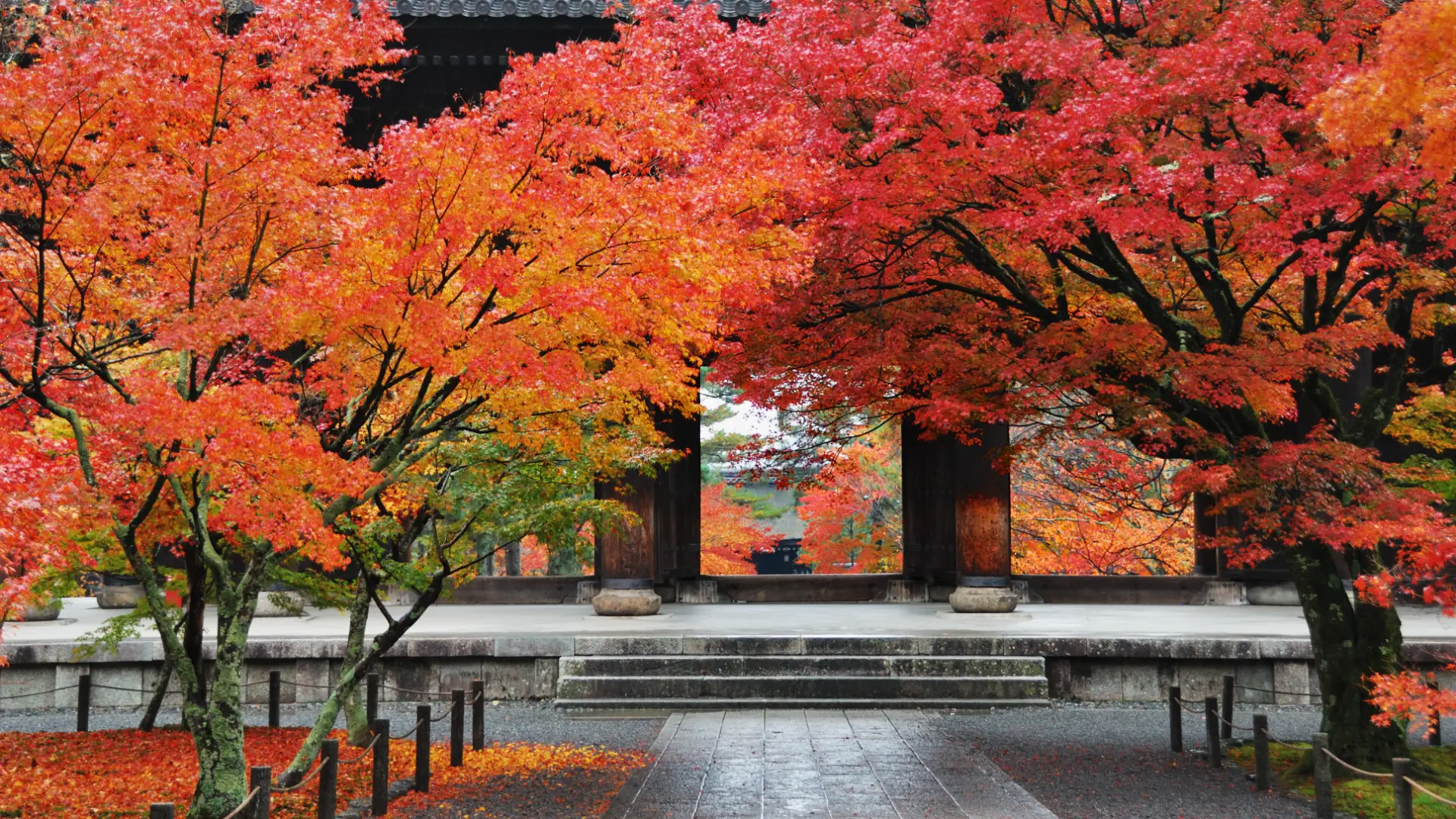
Nanzen-ji is also known as a famous spot for cherry blossoms and autumn leaves, with cherry blossoms in spring and vividly colored maple leaves in fall brightening the temple grounds.
The best time to see the cherry blossoms is from late March to early April, and the autumn leaves are best from mid-November to early December.
On the grounds, you’ll also find Nanzen Kaikan, where you can enjoy a peaceful stay away from the noise of the city.
Overnight stays are available, and in the morning you can hear the chanting of monks in training.
The history and origins of Nanzen-ji
Nanzen-ji was the first Zen temple established by imperial command.
It was founded in 1291 when Emperor Kameyama, after abdication, invited the Zen master Mukan Fumon.
A cloistered emperor is, simply put, an emperor who has entered the priesthood, or a retired emperor who has abdicated the throne.
In other words, Nanzen-ji was founded when a deeply devout emperor welcomed a Zen master.
During the Nanboku-cho period (1336–1392), it was ranked above even the prestigious Kyoto Gozan and Kamakura Gozan as Gozan no Jo, or “above the Five Mountains.”
With distinguished Zen priests serving as head priests over the generations, it came to hold the highest status among Zen temples.
Given its long history, it is also worth knowing that the temple was caught up in various conflicts and has been repeatedly destroyed by fire and rebuilt.

Access to Nanzen-ji
Here’s how to get to Nanzen-ji starting from JR Kyoto Station, a major transportation hub for sightseeing in Kyoto.
- Route
-
1. Take the Karasuma Line from JR Kyoto Station to Karasuma Oike Station.
2. At Karasuma Oike Station, transfer to the Tozai Line and get off at Keage Station.
3. Walk 7 minutes from Keage Station to reach Nanzen-ji. - Travel time
- Approx. 30 minutes
Nanzen-ji Hours and Admission
The hours and admission fees for Nanzen-ji are summarized in the table below for your reference.
Please note that closing times vary by season. Last admission is 20 minutes before closing.
Hours
- March–November
- 8:40am–5:00pm
- December–February
- 8:40am–4:30pm
Admission
- Hojo Garden
-
・Adults: 600 yen
・High school students: 500 yen
・Elementary and junior high school students: 400 yen - Sanmon Gate
-
・Adults: 600 yen
・High school students: 500 yen
・Elementary and junior high school students: 400 yen - Nanzen-in
-
・Adults: 500 yen
・High school students: 450 yen
・Elementary and junior high school students: 350 yen
What is the best season to visit Nanzen-ji?
Nanzen-ji offers beautiful scenery in every season, but autumn is especially recommended.
More than 200 maple trees color the temple grounds in brilliant shades of red and orange.
This makes landmarks such as the National Treasure Hojo and the cultural property Sanmon Gate look even more beautiful.
As one of Kyoto’s best-known spots for autumn leaves, Nanzen-ji offers many stunning views in fall.


5 recommended spots that showcase the charms of Nanzen-ji
The grounds of Nanzen-ji are large and full of things to see, so you may not know where to start.
But don’t worry.
If you visit the recommended spots below, you’ll be able to fully experience the charms of Nanzen-ji.
1. Suirokaku, a popular photo spot where nature, Japanese style, and Western style come together
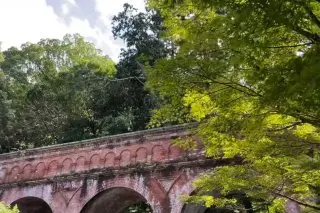
Suirokaku is a brick arch aqueduct on the grounds of Nanzen-ji, with a maximum height of 13 meters and a width of 93.2 meters.
Built in 1888 to carry water from Lake Biwa into Kyoto City, it is still in use today.
It is a place where you can see the beautiful and unexpected harmony between the Japanese character of Nanzen-ji, founded in 1291, and the Western-style Suirokaku, built about 600 years later.
Because of its beautiful scenery, it is also a popular photo spot.


2. Sanmon Gate, known for its commanding presence and panoramic views from above
Sanmon is the main gate of Nanzen-ji and is also known as Tenka Ryumon.
The term sanmon refers to the three gates one must pass through on the path of Buddhist practice to reach enlightenment.
Standing 22 meters tall, it is one of the largest gates in Japan and is counted among both the Three Great Gates of Kyoto and the Three Great Gates of Japan.
In 1899, it was designated an Important Cultural Property by the Japanese government.
The thick pillars supporting its 22-meter height give Sanmon an overwhelming sense of weight and presence.
Climb the stairs inside Sanmon and you’ll reach the upper level called Gohoro.
The panoramic view from Gohoro is spectacular and not to be missed.
Sanmon was originally built in 1295 through a donation from a noble family, but it was destroyed by fire during the Onin War in 1447.
The current gate was rebuilt in 1628 by the warlord Todo Takatora to honor soldiers who died in the Summer Siege of Osaka.


3. Tenjuan, where you can see exceptionally beautiful autumn leaves
Tenjuan was founded by Kokan Shiren, the 15th head priest of Nanzen-ji, as a sub-temple to enshrine Mukan Fumon, the founder of Nanzen-ji.
In Zen temples, a sub-temple is a small temple built to honor the virtue of a founder or distinguished monk after their death.
Like Sanmon, Tenjuan was destroyed in the Onin War, but it was rebuilt in 1602.
Surrounded by many maple trees, Tenjuan includes the main hall, two gardens, and a study within its grounds.
The main hall and study are not open to the public, so the two most popular highlights are the karesansui dry landscape garden and the pond strolling garden.
The karesansui garden is located in front of the main hall.
Its cedar moss and white sand are beautiful, and it can be viewed from the veranda of the main hall. Its geometric stone pavement was unusual for its time.
The pond strolling garden is located south of the study, where water lilies floating on the pond create a dreamlike scene.
The autumn leaves at Tenjuan are truly beautiful, and the illuminated foliage is especially not to be missed.


4. Hojo, packed with highlights including a nationally designated Place of Scenic Beauty and Important Cultural Properties
Designated a National Treasure, the Hojo consists of the Ohojo and the Kohojo connected behind it.
Among the various rooms that make up the Hojo, one room you should be sure to see is the one known as the Tiger Room.
The powerful Group of Tigers paintings by Kano Tan’yu are a must-see.
The Group of Tigers is also designated as an Important Cultural Property.
The Ohojo is another highlight, as part of a building from the Kyoto Imperial Palace was relocated here, preserving the appearance of the imperial court to this day.

5. The beautiful and deeply atmospheric Hojo Garden
The Hojo has several beautiful gardens, so be sure to enjoy not only the building itself but also each of the adjacent gardens.
The Hojo Garden is located on the south side of the Ohojo and is designated as a national Place of Scenic Beauty.
It is a karesansui dry landscape garden created in the early Edo period by the tea master Kobori Enshu.
Made up of stones representing tigers and white gravel representing a river, it is affectionately known as Toranoko Watashi.
The Kohojo Garden on the west side of the Kohojo is also called Joshin-tei.
It was created under passionate guidance from the chief priest of Nanzen-ji at the time of its construction, who instructed that the arrangement of the stones should express the heart.
As a result, it has a calm atmosphere, like a mind that has attained liberation.
Further inside the Kohojo is the Rokudo Garden.
While the Kohojo Garden is said to resemble a liberated mind, the Rokudo Garden serves as a cautionary garden expressing the Buddhist worldview of reincarnation.


3 recommended places to eat on the Nanzen-ji grounds and approach
There are several places to eat on the grounds of Nanzen-ji and along its approach, and here are three especially recommended ones.
At each, you can enjoy Japanese food culture in a serene setting while looking out over a Japanese garden.
Along with the highlights of Nanzen-ji, be sure to stop by one of these restaurants on the grounds or approach as well.
1. Nanzenji Junsei
A long-established restaurant beloved for many years along the approach to Nanzen-ji, it shares Kyoto’s yudofu culture and traditional Kyoto culture through its specialty, boiled tofu.
While gazing out over its 3,967-square-meter strolling garden, which reflects the changing beauty of seasonal flowers and plants, you can leisurely enjoy its famous yudofu and yuba.
Jyunsei Shoin, located within the garden, was a medical academy built by the Edo-period scholar of Dutch studies and physician Shingu Ryotei, and is now designated as a nationally registered Tangible Cultural Property.

2. Dairikitei
A villa-style dining venue located on the grounds of Nanzen-ji, one of Kyoto’s best-known sightseeing spots, featuring the Soryu Garden created by the 11th-generation landscape gardener Ogawa Jihei.
Inside, guests can enjoy meals while viewing the garden from four different spaces: Higashiyama, Nanzen, Ohiroma, and Hanare.
The menu includes course meals and à la carte dishes made with A5-ranked Japanese black wagyu beef, as well as udon made from a house blend of domestic wheat flour.

3. Oukakuen
A kaiseki restaurant set in a Japanese-style residence built in 1915.
Located along the approach to Nanzen-ji, it offers a relaxing time in a quiet atmosphere away from the bustle of the city.
Using ingredients that reflect the seasons and are unique to Kyoto, it serves Kyoto cuisine that can be enjoyed with all five senses, blending inherited tradition with fresh sensibility.

3 sightseeing spots near Nanzen-ji
Even after enjoying Nanzen-ji, there’s still plenty more to experience in Kyoto, a city of history and tradition.
Near Nanzen-ji, you’ll find temples, shrines, and scenic spots rich in natural beauty.
Start with the sightseeing spots around Nanzen-ji introduced below.
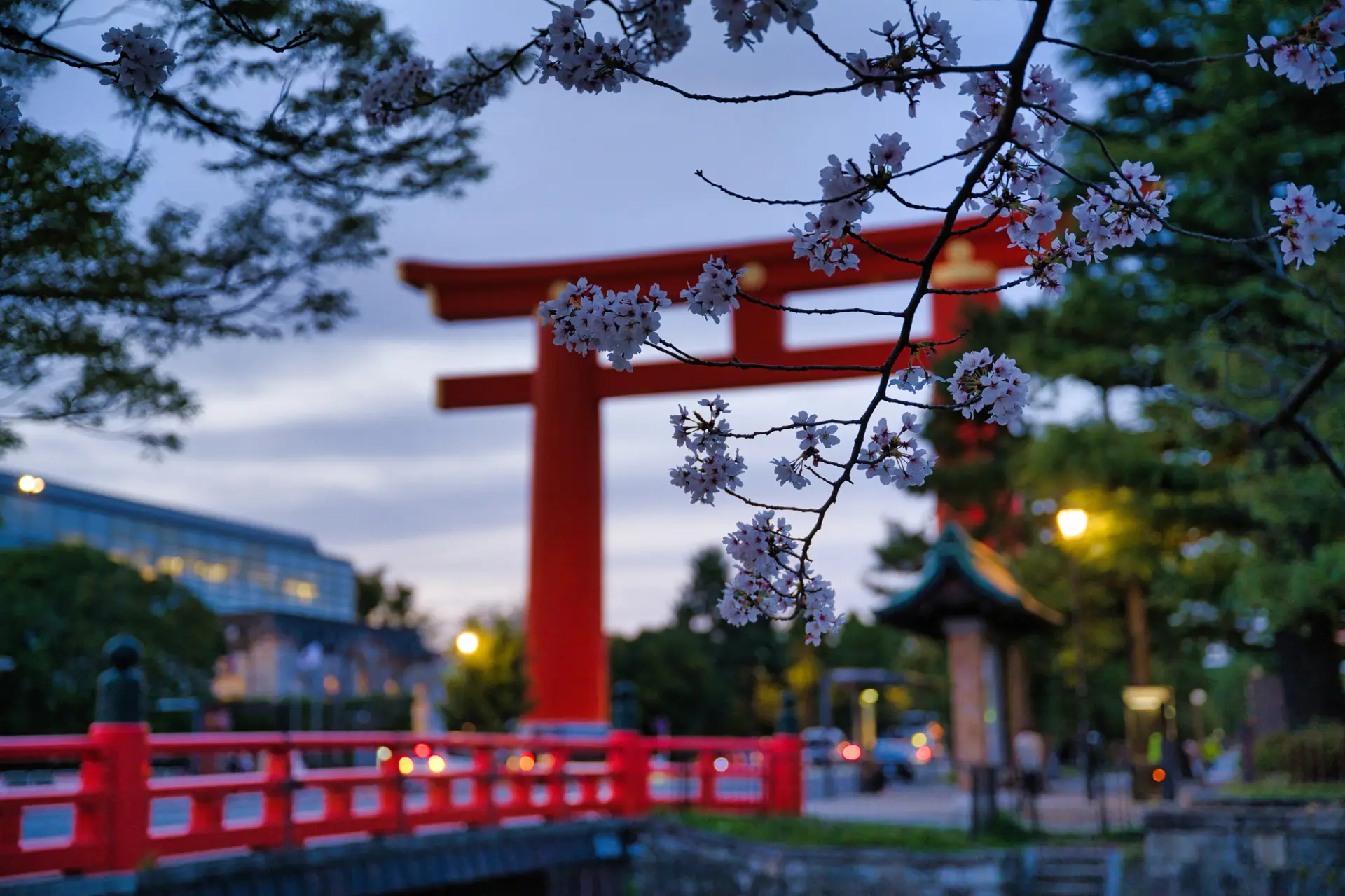
1. Heian Jingu Shrine
A relatively new shrine founded in 1895 to commemorate the 1,100th anniversary of the transfer of the capital to Heian-kyo.
Its shrine buildings recreate the Chodo-in, the main state hall complex where important ceremonies were held in ancient Heian-kyo.
The vermilion-painted buildings lining the grounds are beautiful, and stepping inside feels almost like traveling back to the Heian period.
With highlights such as the magnificent Daigokuden, modeled after the main hall of the Chodo-in, and the intricately designed Byakkoro and Soryuro, the site is filled with Important Cultural Properties designated by the Japanese government.
2. Keage Incline
The Lake Biwa Canal is an artificial waterway connecting Otsu and Kyoto.
Completed in the Meiji era, it remains in use today and consists of features such as the First Canal with a total length of Approx. 20 kilometers, the Second Canal with a total length of Approx. 7.4 kilometers, and the Branch Canal with a total length of Approx. 3.3 kilometers.
Each area, including Otsu in Shiga, Yamashina in Kyoto, and Okazaki, offers its own distinctive scenery, and the Keage area is also a popular spot dotted with many historically valuable buildings and structures, such as the Keage Power Station (Phase 1), the first hydroelectric power plant in Japan built for general power supply, which began operation in 1891, and the Former Imperial Household Waterworks Pump Room, a nationally registered Tangible Cultural Property.

3. Zenrin-ji (Eikando)
The head temple of the Seizan Zenrin-ji school of Jodo Buddhism, widely known as Eikando.
It began in 853 when Shinsho, a disciple of Kukai, opened it as a Shingon Buddhist training hall.
After the seventh head priest, Eikan, entered the temple in 1072, it gradually changed into a place of Pure Land Buddhist practice centered on nenbutsu.
It is so famous for its autumn leaves that it is also nicknamed “Eikando of the maples.”
When the leaves reach their peak, usually in mid-November, around 3,000 Japanese maple trees turn color and drape the temple grounds in vivid autumn shades.

3 recommended places to stay near Nanzen-ji
Known for its majestic Sanmon Gate and Suirokaku Aqueduct, Nanzen-ji is one of the leading historic temples in Kyoto’s Higashiyama area.
Nearby, you’ll also find the Philosopher’s Path and the Okazaki area, where you can enjoy a peaceful Kyoto atmosphere.
From here, we’ll introduce a carefully selected list of accommodations where you can enjoy a comfortable stay in the Higashiyama area. They’re especially recommended for travelers who value quiet surroundings and refined comfort.
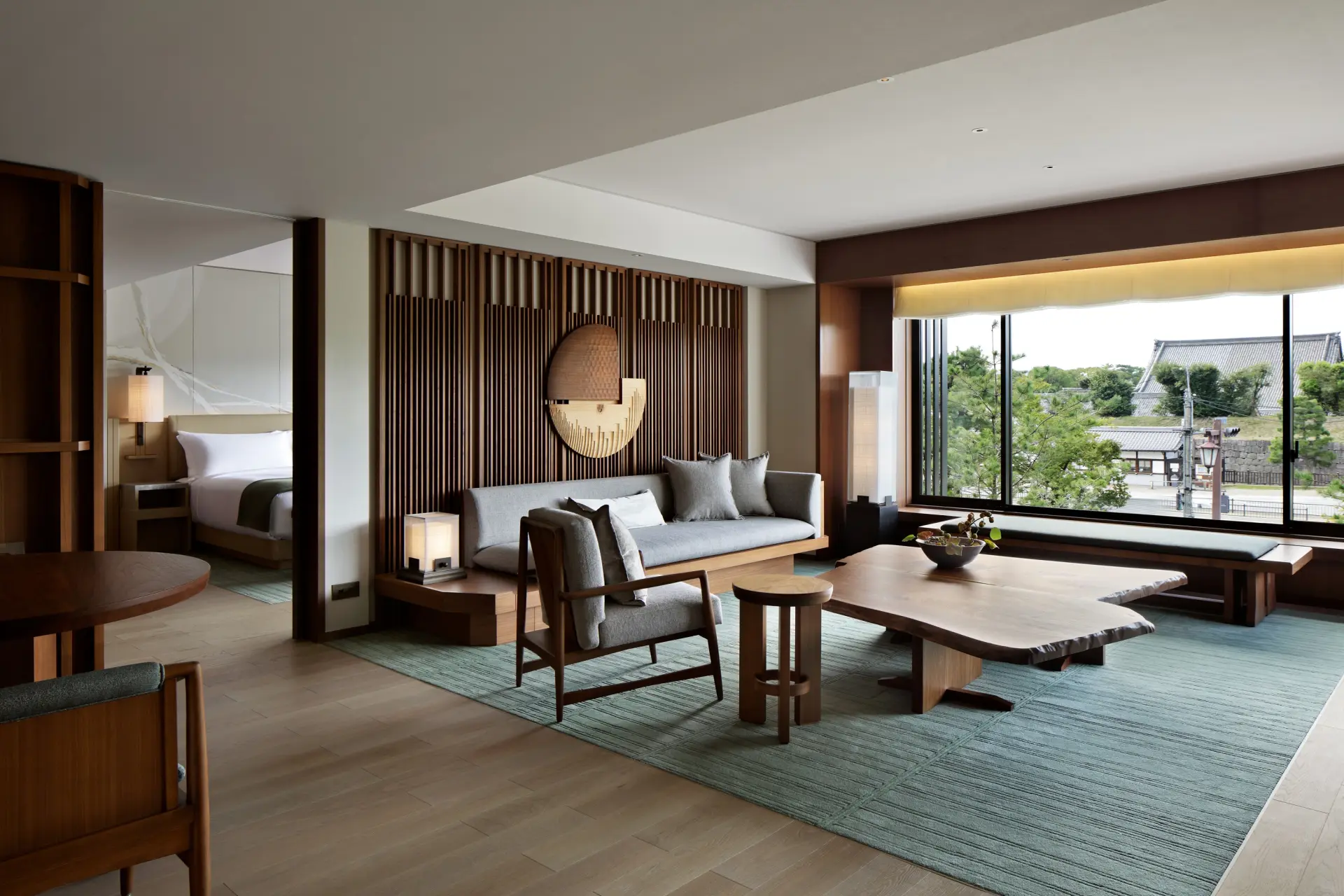
1. HOTEL THE MITSUI KYOTO
A hotel standing directly in front of the World Heritage site Nijo Castle, on the former grounds of the main Mitsui family residence.
Many original remains such as the gate, garden stones, and stone lanterns have been preserved, while renowned designers and artists helped transform the site into a modern space of relaxation, reborn as a luxury hotel.
The guest rooms, designed by interior designer Andre Fu, total 161 rooms including 22 suites.
2. Hotel Monterey Kyoto
A design hotel conveniently located in Karasuma-Sanjo in central Kyoto, making it a great base for sightseeing.
Its interior is inspired by Edinburgh, the ancient Scottish city that is Kyoto’s sister city, creating a calm and comfortable atmosphere.
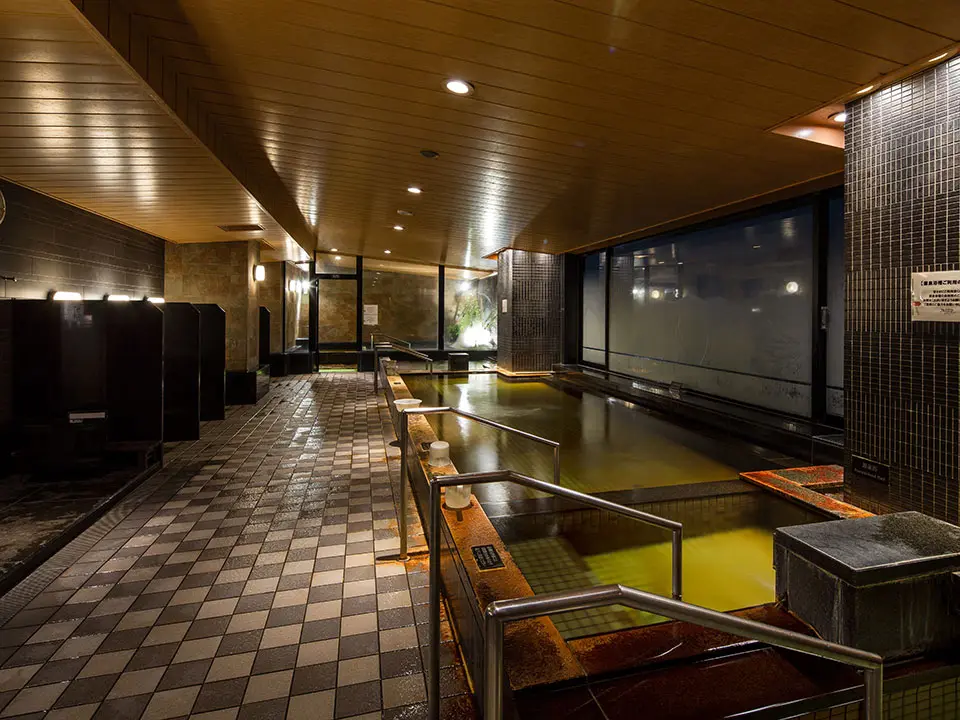
On the top floor, the spa facility Trinity features natural hot spring water drawn from 1,000 meters underground, along with spacious baths, a sauna, and a jacuzzi.
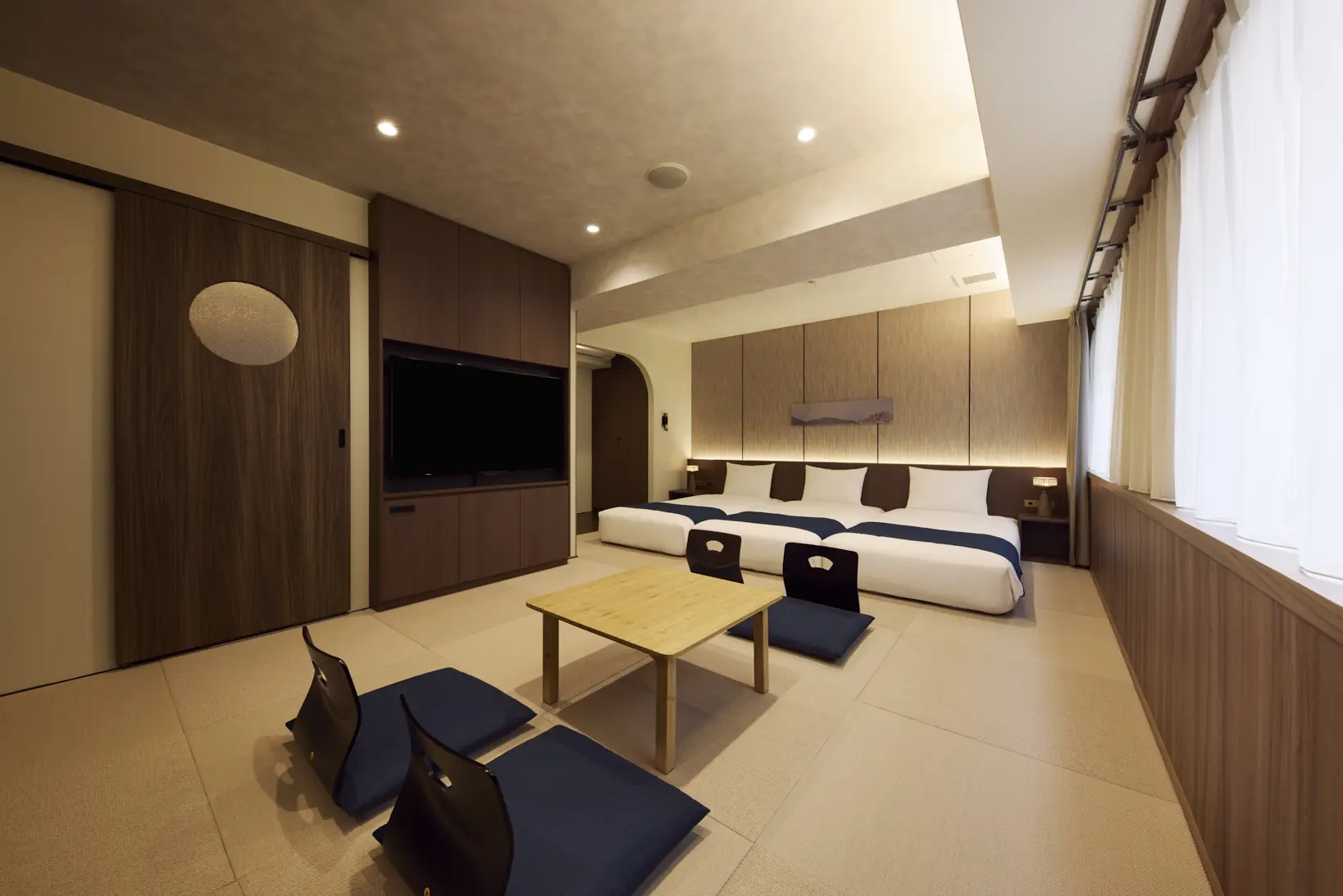
3. Village Kyoto
Located a 2-minute walk from Hankyu Omiya Station and Keifuku Shijo-Omiya Station, this hotel is an ideal base for visiting Arashiyama and sightseeing around the city.
Its calm atmosphere, inspired by the charm of a traditional Kyoto machiya townhouse, is one of its key appeals. Room options range from compact designer-style Japanese rooms to Japanese-Western rooms that can accommodate up to six guests, meeting a variety of travel needs.
Another welcome feature is the large public bath, spacious enough to stretch out and relax in.
Reviews
3.88
Some reviews are AI-translated.
-
I love the garden landscapes at Kyoto's temples. The little bridges and flowing streams make this a place I never get tired of visiting—especially during cherry blossom season! 😍
-
The garden is absolutely beautiful, and the Suirokaku aqueduct inside, built during the Meiji era, is a pretty impressive Western-style structure.
-
The Japanese-style garden is exquisite, and the Suirokaku Aqueduct from Lake Biwa makes a great photo backdrop. You can also try Kyoto's famous Junsei yudofu at the entrance.
FAQ about Nanzen-ji
Q
When is the best time to see the cherry blossoms at Nanzen-ji?
A
The best time to see the cherry blossoms is from late March to early April.
Q
When is the best time to see the autumn leaves at Nanzen-ji?
A
The best time to see the autumn leaves is from mid-November to early December.
Summary
Nanzen-ji is a temple known for its rich natural surroundings and deep history.
This article has introduced its charms in full.
The grounds of Nanzen-ji are very large, so be sure to give yourself plenty of time when visiting.
Beyond the nearby sightseeing spots introduced here, Kyoto is full of many more attractive places to explore.
When you visit Kyoto, use this article as a guide and enjoy all that the city has to offer.