
![[Togetsukyo Bridge Travel Guide] A Scenic Landmark and Iconic View Spot in Arashiyama](https://static.gltjp.com/glt/data/article/21000/20457/20260116_224241_7bb7ca5a_w1920.webp)
[Togetsukyo Bridge Travel Guide] A Scenic Landmark and Iconic View Spot in Arashiyama
Togetsukyo Bridge is one of Arashiyama’s most famous sightseeing spots and is always bustling with visitors.
Its biggest draws are the scenic views that change with the seasons and its deep historical significance.
This article covers how to get to Togetsukyo Bridge, the best seasons to visit, and popular attractions in the surrounding area.
By reading this article, you’ll get a full picture of what to know before visiting Togetsukyo Bridge.
What is Togetsukyo Bridge Like?
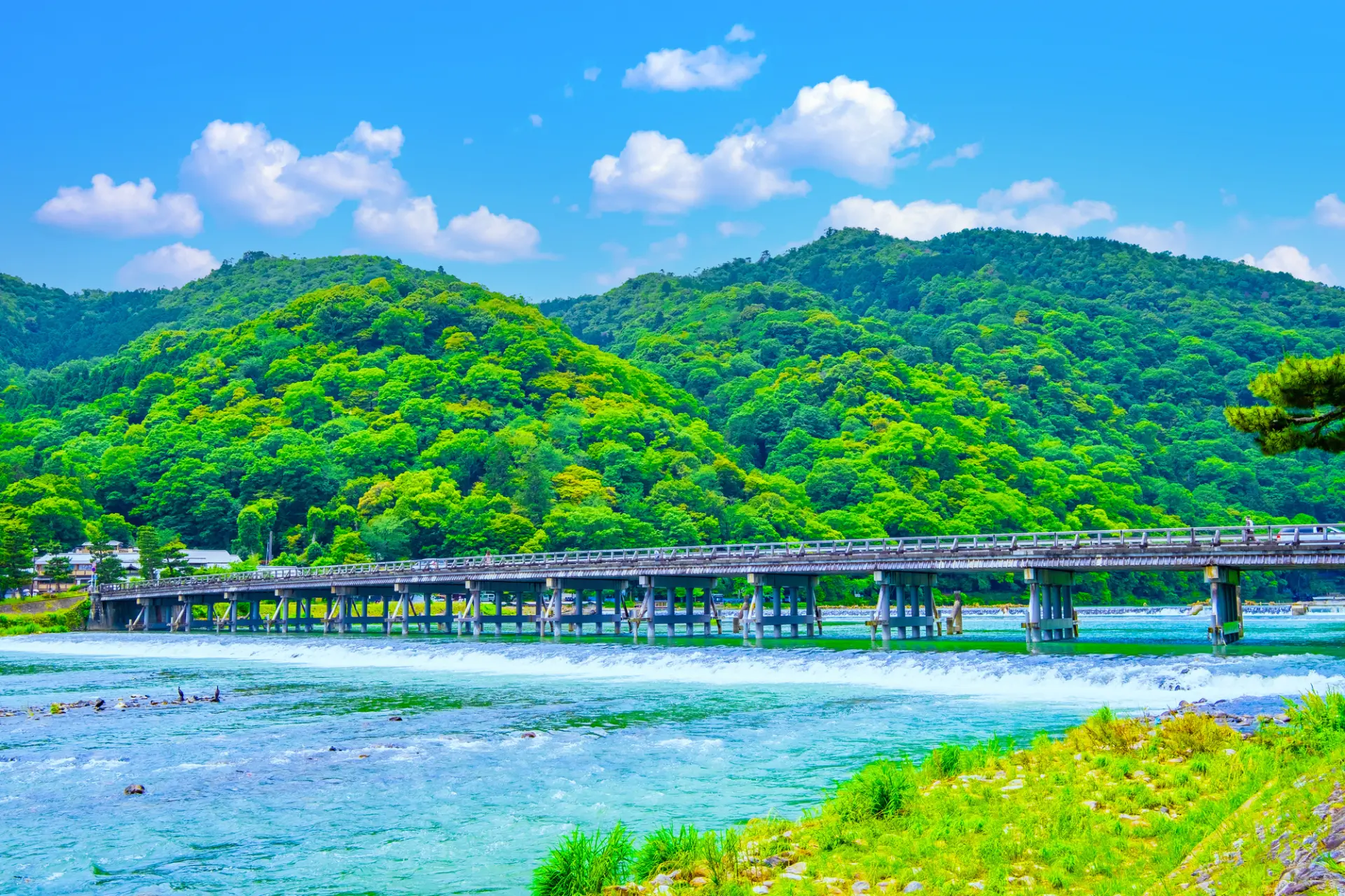
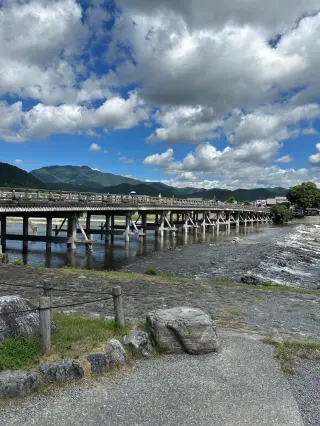
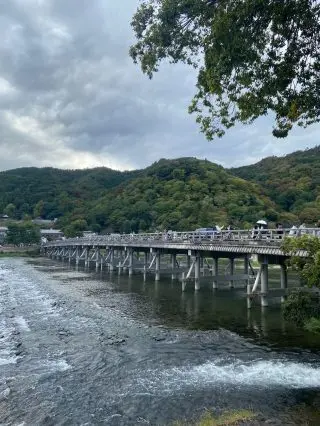
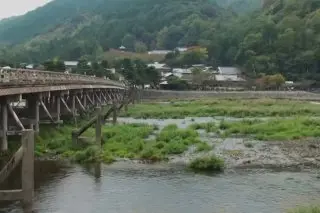
Togetsukyo Bridge is a bridge spanning the Oi River in Ukyo Ward, Kyoto City.
It is said to have first been built in 836 by a monk named Dosho, but it was lost several times due to floods, the Onin War, and other events.
The current Togetsukyo Bridge is based on the version rebuilt in its present location in 1606.
Originally called Horinji Bridge, it came to be known as Togetsukyo, or “Moon-Crossing Bridge,” after Emperor Kameyama wrote the poem “kumonaki tsuki no wataru ni niru” while viewing the moon above the bridge during the Kamakura period (1185–1333).
This poem means that the full moon looked as if it were crossing the bridge in a cloudless night sky.
The beauty of Togetsukyo Bridge has captivated people since ancient times, enough to inspire such poetry.
One of its charms even today is the chance to enjoy beautiful scenery in every season, including cherry blossoms, autumn leaves, and fresh greenery.
After sunset, the bridge is illuminated, creating a dreamy atmosphere.
The area around Togetsukyo Bridge is lined not only with some of Kyoto’s most appealing sightseeing spots, but also with cafes and places to enjoy traditional Japanese sweets.
You can also enjoy shopping, so finding souvenirs should be easy.


Access to Togetsukyo Bridge
Here is how to get to Togetsukyo Bridge starting from JR Kyoto Station, a major hub for getting around Kyoto.
- Route
-
1. Take the JR Sagano Line from JR Kyoto Station and get off at Saga-Arashiyama Station
2. Approx. 15 minutes on foot - Travel time
- Approx. 40 minutes
What Is the Best Season to Visit Togetsukyo Bridge?
Togetsukyo Bridge is beautiful in every season, but spring and fall are especially recommended.
In spring, the bridge is framed by cherry blossoms, creating a warm and distinctly Japanese atmosphere.
The best time to see the cherry blossoms around Togetsukyo Bridge is from late March to early April.
In fall, the surrounding mountains turn color, and you can enjoy vibrant autumn foliage.
The best time for fall leaves is from mid-November to early December.
If you can plan your trip around the season, choose based on whether you’d rather see cherry blossoms or autumn leaves.


6 Popular Sightseeing Spots Near Togetsukyo Bridge
The area around Togetsukyo Bridge is full of sightseeing spots where you can fully experience the charm of Kyoto.
Among the many options, here are some especially unmissable places.
After enjoying Togetsukyo Bridge, be sure to stop by these spots as well.
They’re sure to make your Kyoto trip even more rewarding.
1. Tenryuji Temple
The head temple of the Tenryuji school of the Rinzai sect.
It was founded in 1339 by Ashikaga Takauji, with Muso Kokushi as founding priest, to pray for the soul of Emperor Go-Daigo.
During the Muromachi period, it was ranked first among the Kyoto Gozan, the prestigious top five Zen temples in Kyoto.
The temple grounds, which spread across the former site of Emperor Go-Saga’s Kameyama detached palace, were the first place in Japan to be designated both a Historic Site and a Special Place of Scenic Beauty, and in 1994 were registered as a UNESCO World Cultural Heritage site as part of the Historic Monuments of Ancient Kyoto.
Its strolling pond garden, which incorporates Arashiyama and Kameyama as borrowed scenery, is said to have been designed by Muso Kokushi.
It is one of Japan’s finest gardens, beautifully blending the elegance of court culture with the austerity of Song and Yuan culture.


2. Arashiyama Monkey Park Iwatayama
Arashiyama Monkey Park Iwatayama has its entrance about Approx. 20m upstream along the river from Togetsukyo Bridge, one of Arashiyama’s best-known sightseeing spots, inside the grounds of Ichitani Munakata Shrine.
About 120 Japanese macaques currently live there in a natural state, delighting visitors throughout the year with the changing scenery of the seasons.
It takes about 20 minutes to hike from the entrance to the monkey park, and after climbing 120 steps, the path becomes a gentle uphill slope.
The trail is well maintained, so even small children can walk it safely.
Take your time, enjoy the forest air, and make your way up to the monkeys.
From the rest area at an elevation of 160m, you can look out over all of Kyoto City.
On clear days, you can even see Kyoto Tower.

3. Sagano Bamboo Grove Path
With its scenic beauty, Sagano was beloved by nobles and literary figures from 794 to 1185, and many villas and hermitages were built there.
The Sagano Bamboo Grove Path is a walking path that stretches for about 400m from Nonomiya Shrine, past the north gate of Tenryuji Temple, to Okochi Sanso Garden.
The beautiful sight of vivid green bamboo reaching into the sky often appears on the covers of travel magazines, in TV dramas, and in commercials, and is known as one of Kyoto’s most iconic landscapes.
The bamboo rises straight from the ground, then leans inward as it grows taller, creating the impression of a tunnel of bamboo.

4. Kimono Forest
A plaza in one corner of Arashiyama Station Hannari Hokkori Square.
It is lined with 600 vivid poles decorated with Kyoto Yuzen patterns.
The poles are installed not only in the plaza but also on the station platform and beside the tracks, making the entire Arashiyama Station feel like a work of art.
The facility also has restaurants, souvenir shops, and a footbath (200 yen), making it a relaxing stop for visitors.
Beyond the “Kimono Path,” lined on both sides with colorful poles, is Ryu no Atago Pond, known as a power spot.
It is said that dipping your hands into this pond brings peace of mind and happiness.

5. Hozugawa River Boat Ride
This boat ride takes you down about 16km of the Hozu River gorge from Kameoka to Saga-Arashiyama in a small flat-bottomed boat over the course of about 2 hours.
Three skilled boatmen work together to steer the boat through the rapids and between rocks, making for a dynamic river journey.
Originally, this waterway was developed in the early Edo period to transport timber, firewood, charcoal, and other products from Tanba to Kyoto.
Along the route, there are also points where the current becomes fast and large splashes rise up.

6. Sagano Scenic Railway
This sightseeing train operated by Sagano Scenic Railway runs on a revived section of the former Sanin Main Line that had been discontinued.
Its classical Art Deco-style carriages, pulled by a diesel locomotive, travel the 7.3km one-way route from Torokko Saga Station, next to JR Saga-Arashiyama Station, to Torokko Kameoka Station in about 25 minutes.
The train winds through the gorge along the Hozu River, and from the windows you can enjoy the river’s grand natural scenery and beautiful ravine landscape.
The gorge’s dynamic beauty is especially impressive as it changes with the seasons, from spring cherry blossoms and summer greenery to fall leaves and, at times, snowy winter scenery.

Shouldn’t You Look Back While Crossing Togetsukyo Bridge?
There is an interesting rumor about Togetsukyo Bridge that says you should not look back while crossing it.
The reason behind this rumor is a coming-of-age custom called Jusan Mairi.
Jusan Mairi is a visit by children who are 13 years old by traditional Japanese age counting to a temple or shrine dedicated to Kokuzo Bosatsu.
It is considered a rite of passage for receiving wisdom and growing into a fine adult.
This custom is said to have begun at nearby Horinji Temple, where Emperor Seiwa held his coming-of-age ceremony at age 13 during the Heian period (794–1185).
The reason you are not supposed to look back is the belief that the wisdom granted by Kokuzo Bosatsu will be taken back.
So if you are not doing Jusan Mairi, or if you are heading toward Horinji Temple, there is no problem with looking back.
Stories like this are part of what makes Togetsukyo Bridge feel so deeply rooted in history.

3 Popular Restaurants Near Togetsukyo Bridge
Popular restaurants near Togetsukyo Bridge offer plenty of Kyoto-style cuisine unique to the city.
If you get hungry after exploring Togetsukyo Bridge, stop by one of the places introduced below.
It’s a great way to experience Kyoto’s culture through its flavors as well.
1. Kyoto Kitcho Arashiyama Honten
Arashiyama is one of Kyoto’s most popular sightseeing areas, loved for its scenic beauty.
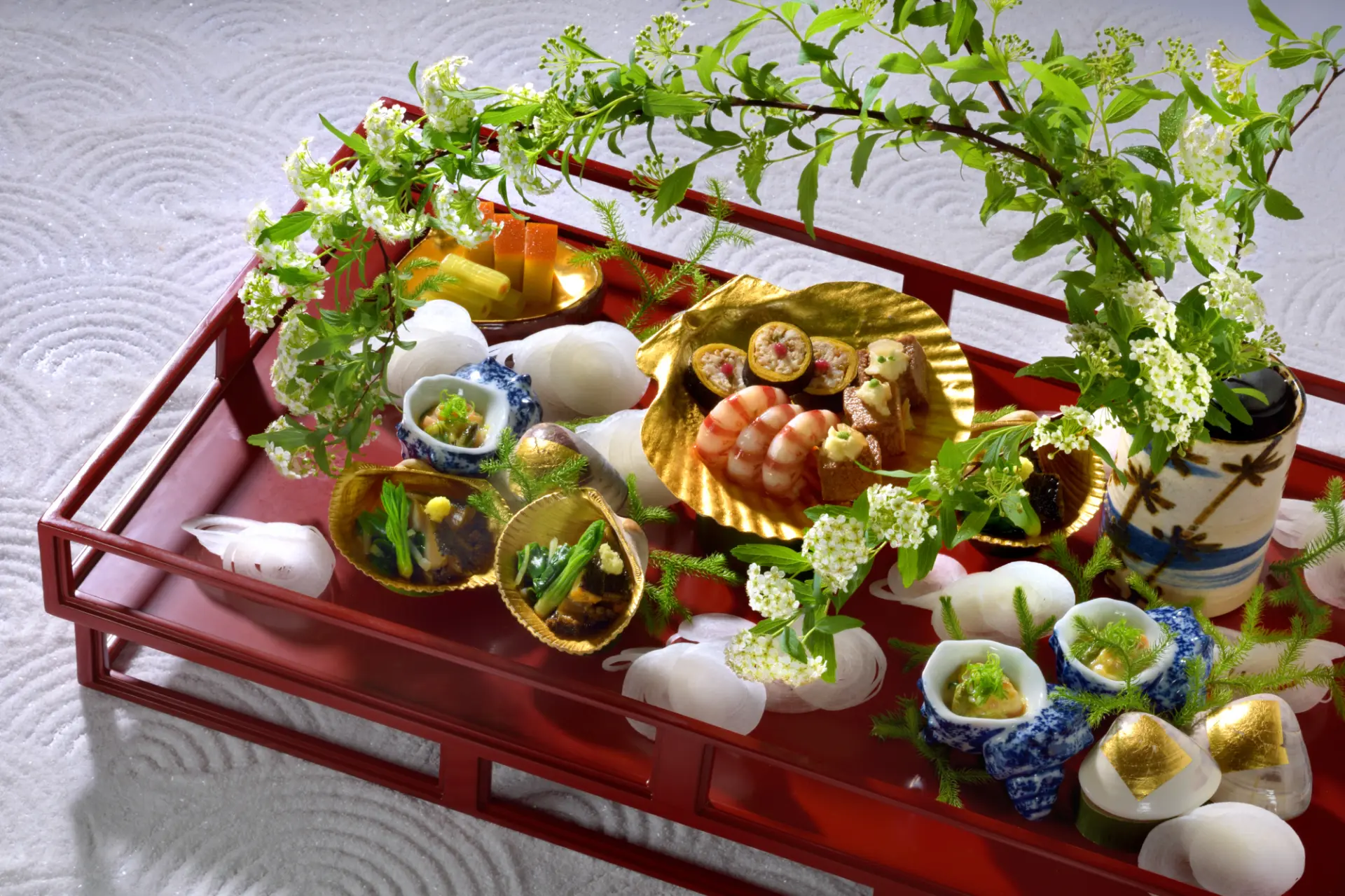
Kyoto Kitcho Arashiyama Honten stands along the road from Togetsukyo Bridge to Tenryuji Temple and is a traditional Japanese restaurant known not only across Japan but around the world.
Its course meals are based on traditional chakaiseki cuisine, originally served to guests during formal tea gatherings as an expression of hospitality, while incorporating modern elements for a more elegant presentation.
Before dining, many guests also enjoy a private boat excursion on the Oi River flowing in front of the restaurant, and in summer, you can also watch cormorant fishing.
2. Yudofu Sagano
Tenryuji Temple is a famous temple in Arashiyama known for Sogenchi Garden and the Cloud Dragon painting.
Located nearby, Sagano is a specialty restaurant serving yudofu, where you can enjoy a meal in a modern sukiya-style building designed by master architect Togo Murano while looking out over a beautiful Japanese garden.
In addition to the main building centered on traditional tatami rooms, there is also a newer annex with table seating and counter seats.
On fine days, you can also dine at the outdoor bench seating overlooking the garden.

3. Tenryuji Temple Official Shojin Cuisine Restaurant Shigetsu
Tenryuji Temple is a Rinzai Zen temple and is also registered as a World Heritage site as part of the Historic Monuments of Ancient Kyoto.
Sogenchi Garden within the temple grounds was designed by the founding head priest, Muso Kokushi, and is a strolling pond garden centered around Sogenchi Pond.
It is known for its magnificent scenery, which incorporates Arashiyama and Kameyama behind it as borrowed scenery, and it has been designated both a Special Place of Scenic Beauty and a Historic Site by the Japanese government.

3 Recommended Places to Stay Near Togetsukyo Bridge
Arashiyama, spreading out at the foot of Togetsukyo Bridge, is a place where the flow of the river and the mountain scenery gently slow the pace of your trip.
From here, we’ve selected accommodations nearby where you can feel connected to the landscape.
From the guest rooms and throughout the properties, you can enjoy the nearby natural beauty of the Katsura River and Arashiyama, which changes its expression throughout the day.
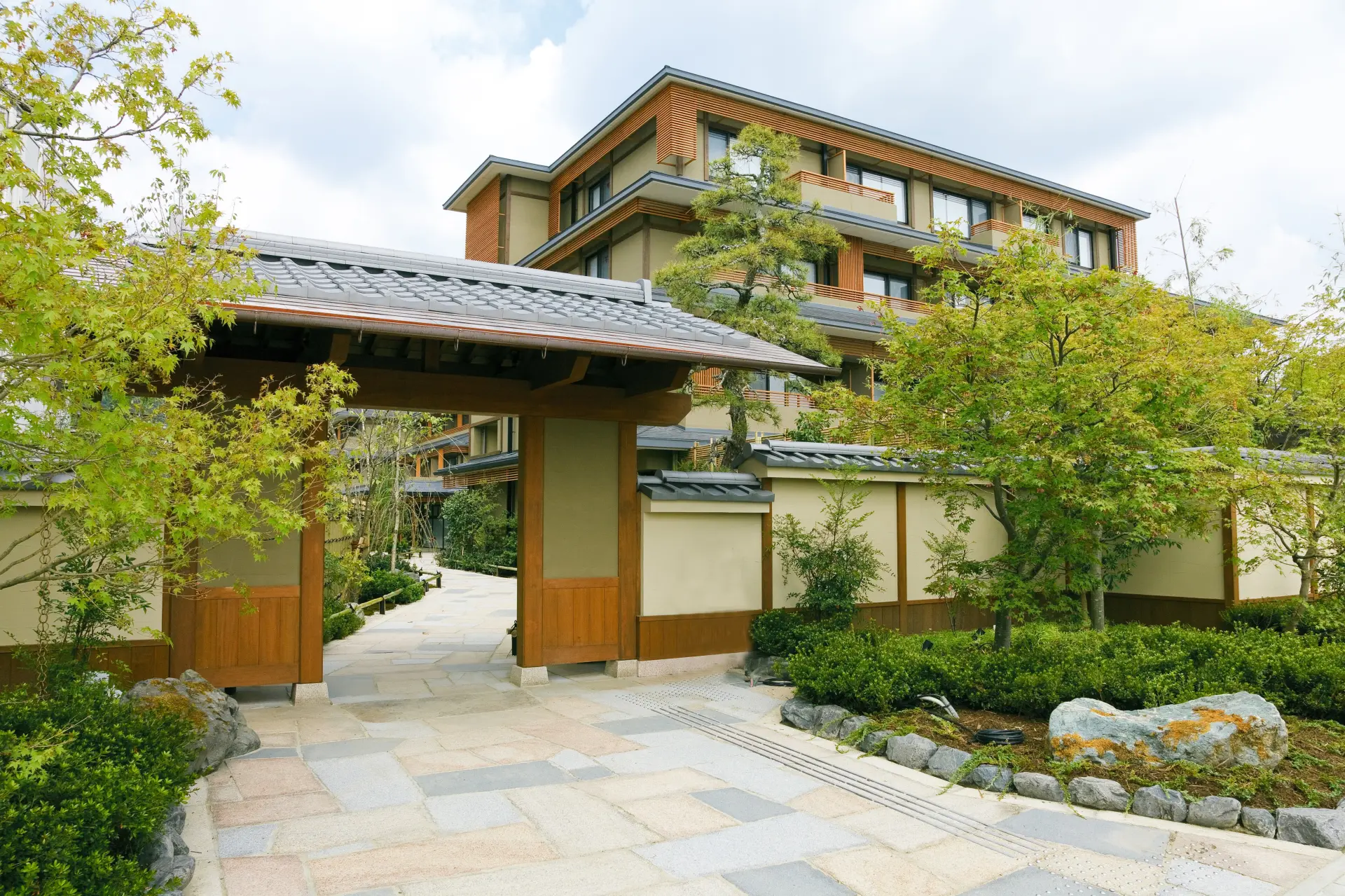
1. Arashiyama Onsen Saishiki no Yado Hanaikada
A hot spring ryokan located at the foot of Togetsukyo Bridge over the Oi River, making it an extremely convenient base for sightseeing in Arashiyama and Sagano.
In addition to Arashiyama’s only open-air panoramic bath, where you can soak while looking out over the seasonal scenery of Arashiyama and the sacred peak of Mt. Atago in the distance, the inn also offers indoor baths in two styles, all-hinoki wood and stone, as well as reservable private open-air baths.
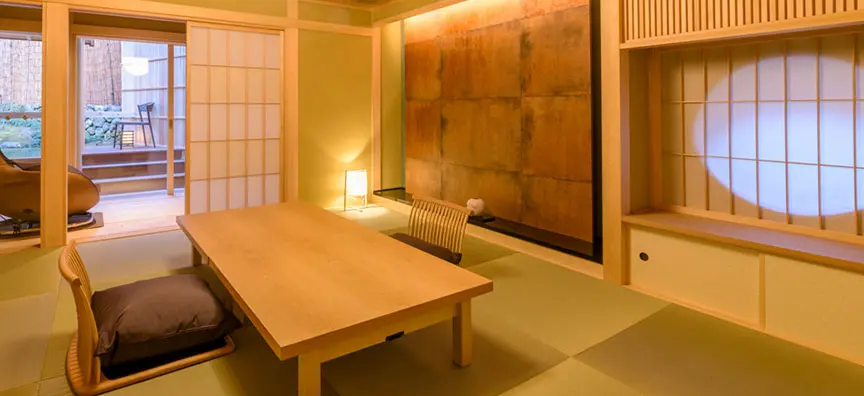
The guest rooms have a calm atmosphere with a traditional Japanese feel and come in a variety of types, including twin-bed rooms and 12-tatami rooms that can accommodate up to 6 guests.
2. MUNI KYOTO
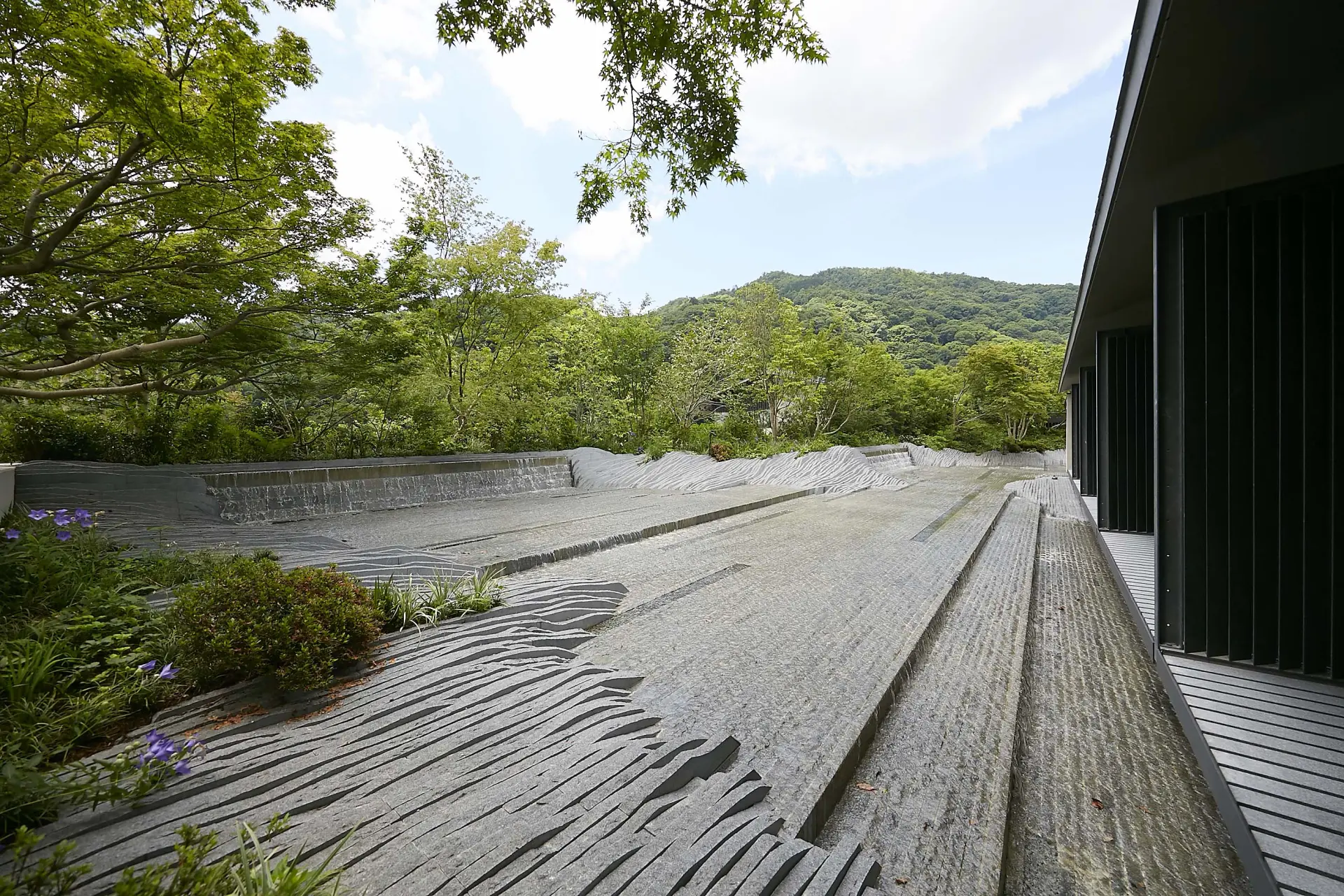
A luxury hotel offering exceptional relaxation and experiences under the concept of “one-of-a-kind scenery,” opened in August 2020 at the foot of Arashiyama in Kyoto, right in front of Togetsukyo Bridge.
The hotel has 21 guest rooms, all of them deluxe rooms of 50 sq. m or more, and each room offers views of Arashiyama’s scenery as it changes through the seasons.
Every detail is thoughtfully designed, from the 280cm-wide beds in the double rooms to the original bath amenities made with Kyoto-sourced materials, and that careful attention makes for a very comfortable stay.
3. Kyoto Arashiyama Onsen Kadensho (Kyoritsu Resort)
A Japanese-style hot spring inn located in Kyoto’s popular Arashiyama area.
Its 105 guest rooms come in three styles, “Kyomachiya,” “Kyowafu,” and “Kyomodern,” with 10 different layouts in total.
From the furnishings and bedding to small touches like tea and incense, the inn is filled with carefully crafted details that create a relaxing Japanese space infused with the charm of Kyoto.
In the indoor bath of the large communal bath, you can enjoy natural Arashiyama hot spring water, said to be beneficial for neuralgia and muscle pain.
Reviews
4.47
Some reviews are AI-translated.
-
It looks even better in person than in photos. The river views with the mountain backdrop are so relaxing!
-
This has always been a fantastic spot for viewing cherry blossoms and autumn leaves. In summer, you can take a yakatabune boat and watch cormorant fishing. It's one of Kyoto's most popular attractions.
-
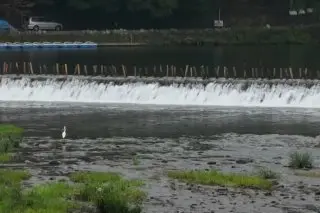
I thought it was a wooden bridge, but when I got closer, I realized it's actually made of reinforced concrete. The Oi River below has shallow, gentle water.
FAQ about Togetsukyo Bridge
Q
When is the best time to see cherry blossoms around Togetsukyo Bridge?
A
It is from late March to early April.
Q
When is the best time to see autumn leaves around Togetsukyo Bridge?
A
It is from mid-November to early December.
Summary
This article has introduced the basic information about Togetsukyo Bridge, the best seasons to visit, and local stories worth knowing before you go.
The seasonal scenery and the bridge’s deep history are two of its biggest appeals.
Togetsukyo Bridge is also a popular photo spot and one of the must-visit places when sightseeing in Kyoto.
If you’re unsure which attractions to visit in Kyoto, a city full of remarkable sights, be sure to check out the article below as well.