

Enjoy Scenery and Culture Passed Down Since the Edo Period! A Magome-juku Sightseeing Guide
Magome-juku is a beautifully preserved post town where the charm of old Japan still remains.
Locals welcome visitors with warm hospitality, creating a nostalgic atmosphere you won’t find in the city.
As you take in the peaceful mood of this former post town, you can relax and enjoy local specialties and traditional cultural experiences.
This article introduces the best ways to enjoy Magome-juku and its must-see highlights.
It’s organized in an easy-to-follow way so even first-time visitors can make the most of their trip, so be sure to read to the end.
What is Magome-juku Like?
Located in Nakatsugawa City, Gifu Prefecture, Magome-juku prospered as the 43rd post town on the Nakasendo route.
A post town was a settlement built mainly along major roads, referring to an area where inns, teahouses, horse exchange stations, and other commercial and logistics facilities were gathered.
During the Edo period, it played an important role in providing essential services to travelers and merchants on the road.
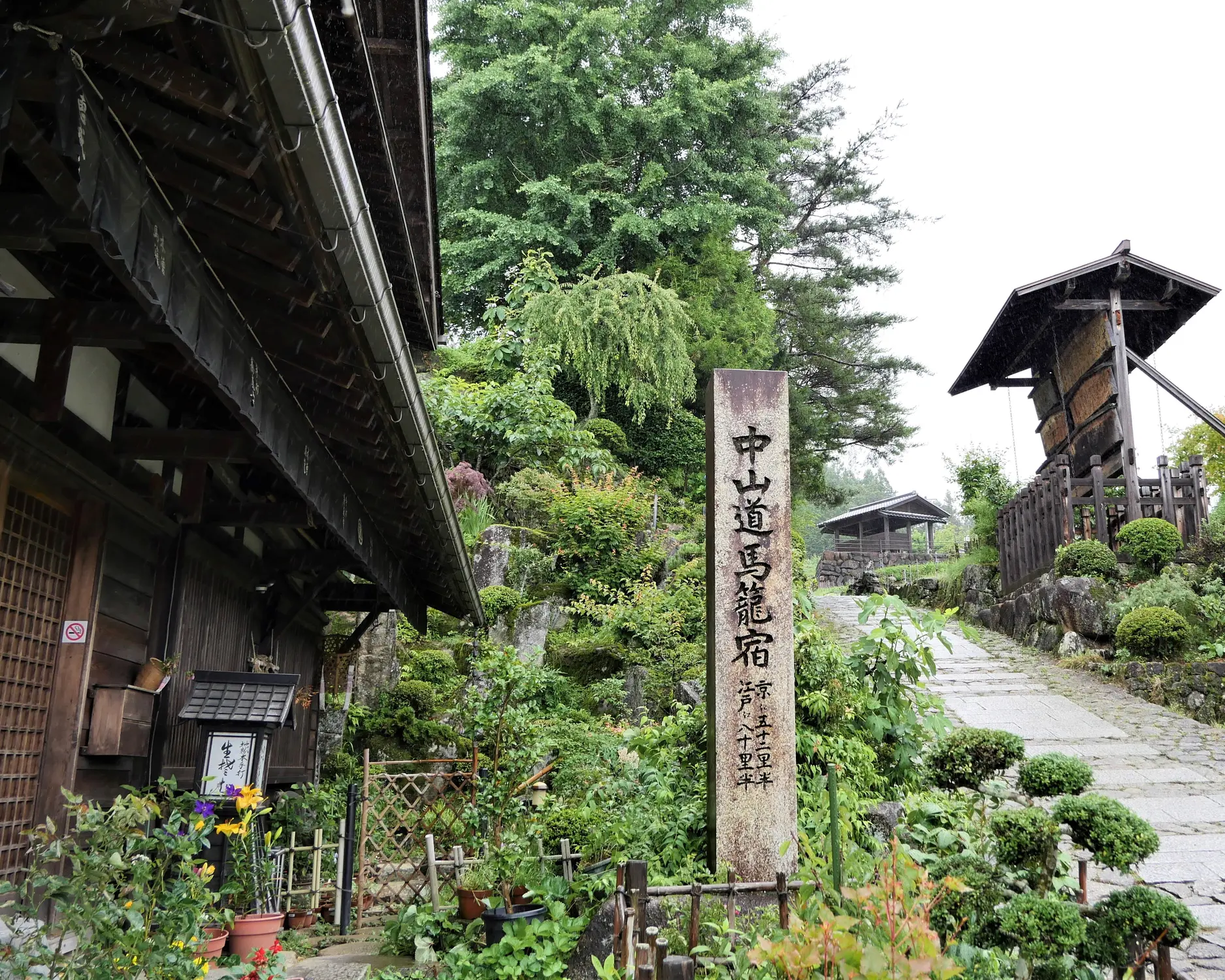
Today, Magome-juku is a popular sightseeing destination that preserves the feel of old Japan, with its stone-paved streets stretching along the slope as its biggest highlight.
The entire town is filled with the atmosphere of the Edo period, making it easy to feel as if you’ve stepped back in time.
On both sides of the slope, you’ll find old wooden buildings, traditional cafes, local food shops, and souvenir stores, making it a great place for strolling and eating as you go. It’s a recommended spot where you can experience both nature and history at once, but because the stone-paved slope continues for over 600 meters, wheelchairs and strollers are not recommended.

What Is the Nakasendo?
The Nakasendo was one of the Five Routes developed during the Edo period (1603–1868), connecting Edo (present-day Tokyo) and Kyoto over a total length of Approx. 530 km.
A total of 69 post towns were located along the route, and together with the Tokaido, it served as a major road used by merchants and travelers.
Compared with other highways, it passes through mountainous inland areas with many mountain passes, and one of its defining features is the beautiful seasonal nature and valleys seen along the way.
The real charm of the Nakasendo may be the chance to experience the atmosphere of historic post towns.
Starting with Magome-juku, stone-paved roads and traditional houses that still retain the look of the Edo period continue to welcome travelers today.
If you let your thoughts wander to the culture and lives of travelers from that time, your trip is sure to feel all the more romantic.

You can find more details about the Nakasendo in this article, so be sure to check it out as well.

The History of Magome-juku
Magome-juku was developed and flourished as a post town during the Edo period.
Under orders from the Tokugawa shogunate, post towns were strictly managed, and townspeople were required to provide lodging and meals to travelers.
Although it was originally a difficult area surrounded by steep mountains, it functioned as an important hub for relaying goods and information, and many cultural figures also visited.
It is also known as the birthplace of novelist Shimazaki Toson, and the fact that it became the setting for his masterpiece Before the Dawn is essential to understanding the history of Magome-juku.
The novel vividly depicts life and scenery in the post town, and its influence gave Magome-juku literary value as well.
When the Meiji period (1868–1912) began, the role of post towns gradually faded due to changes in transportation.
Even so, thanks to the efforts of local people and their love for cultural heritage, the beautifully preserved townscape remains protected today and has become a popular destination visited by many tourists.

Access to Magome-juku
Access from JR Nakatsugawa Station, the nearest station to Magome-juku, is as shown in the table below.
- Route
-
1. Walk from JR Nakatsugawa Station to the Nakatsugawa Ekimae bus stop (1–2 minutes)
2. Take the Kitaena Kotsu Magome Line from Stop No. 3 at Nakatsugawa Ekimae and get off at Magome
3. Walk from Magome (4–5 minutes) to arrive at Magome-juku - Travel Time
- Approx. 30 minutes
Buses are infrequent, with only around one per hour, and the last bus leaves at 6:30pm, so be sure to check the timetable in advance and plan your schedule accordingly.
The last bus back to JR Nakatsugawa Station also leaves at 6:15pm, so if you’re planning a day trip, take care not to miss it.
Routes also differ depending on whether you’re coming from Chubu Centrair International Airport or from the Nagoya area, so please refer to the following access options based on your starting point.
Access from Chubu Centrair International Airport to JR Nakatsugawa Station
1. Take the Meitetsu Airport Line μSKY from Chubu Centrair International Airport Station and get off at Kanayama Station
2. From Kanayama Station, take the JR Chuo Main Line Rapid bound for Nakatsugawa Station and get off at JR Nakatsugawa Station
Access from JR Nagoya Station to JR Nakatsugawa Station
You can reach JR Nakatsugawa Station via the following two routes.
Both are direct services.
1. JR Limited Express Shinano bound for Nagano (Approx. 50 minutes)
2. JR Chuo Main Line Rapid bound for Nakatsugawa (Approx. 1 hour 15 minutes)

What Is the Best Season to Visit Magome-juku?
The best seasons to visit Magome-juku are spring and fall.
In spring, the cherry blossoms reach full bloom around early April each year, and the pink-tinted scenery together with Magome-juku’s stone-paved streets and traditional houses creates a beautiful, photogenic view.
The mild and pleasant weather is also perfect for walking, allowing you to fully enjoy the relaxed atmosphere of the post town.
In fall, meanwhile, you can enjoy colorful autumn leaves as the mountains turn red and yellow.
The best viewing season usually runs from late October to mid-November, and the vivid scenery is especially popular as one of Gifu Prefecture’s top fall foliage spots.
It’s also a special pleasure to enjoy warm local dishes and tea in the slightly cool autumn weather.


3 Ways to Fully Enjoy the Charm of Magome-juku
To help you make the most of your visit, here are three recommended ways to enjoy Magome-juku.
Each offers a wonderful experience filled with the unique appeal of this historic post town.
1. Enjoy the Atmosphere and Townscape of the Edo Period
The stone-paved streets of Magome-juku are a precious townscape that still conveys the atmosphere of an Edo-period post town.
As you stroll along the gently sloping stone path, traditional-style houses, souvenir shops, and teahouses appear one after another, creating a nostalgic scene you won’t find in the city.
There are also many photogenic spots where you can really feel the essence of Japan, so it’s best to walk at a relaxed pace and enjoy taking photos.

2. Sample Post Town Food as You Walk
Magome-juku has many places to eat where you can enjoy local specialties and regional dishes unique to a historic post town.
Eating your way through the area while walking its atmospheric streets is especially enjoyable, and the setting makes the food taste even better.
Some of the most popular local foods are listed below.
Each shop has its own seasoning and shape, so trying the same dish at different places is also recommended.
- Gohei Mochi
-
A Magome-juku specialty and the perfect light snack for the road.
This handmade grilled rice cake is coated with a sweet and savory sauce based on soy sauce or miso and made with walnuts, sesame, and other ingredients, giving it a fragrant aroma and chewy texture. - Soba
-
Handmade soba made with local buckwheat flour produced in an area blessed with good water and climate is known for its smooth texture and rich flavor.
Be sure to try it with locally grown mountain vegetables as well. - Kuri Kinton
-
A simple yet refined Japanese sweet made with local chestnuts and finished using only sugar.
It is especially popular in fall and also makes a great souvenir. - Oyaki
-
Grilled buns filled with a variety of ingredients such as nozawana greens, pumpkin, and dried daikon radish.
With options ranging from sweet to savory, there is a wide selection, and you can enjoy them freshly made. - Chestnut Okowa
-
The combination of chewy okowa (steamed glutinous rice) and fluffy chestnuts is excellent and delicious.
It’s also filling, making it a great choice for lunch.

3. Experience Post Town Culture
At Magome-juku, you’ll find programs that let you learn about and experience the traditional culture of the post town that has continued since the Edo period.
The programs are quite varied, offering valuable experiences such as interacting with local people and getting a firsthand feel for the way of life passed down in the area.
The main programs are listed below.
Different events are held depending on the season, so be sure to check the schedule in advance.
- Local Food-Making Experience
- A program where you can make and eat local specialties such as gohei mochi and soba together with artisans while learning traditional recipes.
- Bamboo Lantern-Making Experience
-
An experience where you create a modern-style lantern using bamboo from Magome and LED lights.
Elementary school children and older can join, and since it can be used at home, it’s also perfect for making memories. - Dressing in Kimono + Walking Around Town in Kimono
-
A program where you change into Edo-style kimono or yukata and stroll through the post town.
There are plenty of photogenic spots, so it also makes a memorable experience. *Women only - Tea Ceremony Experience
- A program where you can learn how to prepare matcha and proper etiquette while enjoying the taste and aroma of Japanese culture. Another highlight is being able to drink the matcha you prepared yourself.

5 Must-See Highlights You Can’t Miss in Magome-juku
Here are five popular spots where you can truly experience the charm of Magome-juku.
Each is either part of its historic streetscape or connected to Shimazaki Toson, offering a chance to experience the traditions and culture of this former post town.
If you stroll through them while imagining the travelers of the Edo period, you’re sure to enjoy a deeply memorable time.
When visiting Magome-juku, try planning an itinerary that includes these spots.
1. Magome Wakihonjin Museum
The Magome Wakihonjin Museum is a historical museum that recreates a wakihonjin, a secondary inn for high-ranking travelers, that was actually used in Magome-juku during the Edo period.
The beautiful details of the wooden architecture have been reproduced, and the tatami rooms, earthen floor area, and wooden-floored spaces are designed to let visitors sense the living spaces of the time and how daimyo processions were welcomed.
One especially notable highlight is the formal Jodan-no-Ma room.
This room, where important guests were received, is decorated with luxurious furnishings and ornaments, allowing visitors to sense the role and dignity of a wakihonjin.
The rest of the museum is also rich in exhibits, including materials introducing the history and culture of the Nakasendo and the relationship between Magome-juku and the literary works of Shimazaki Toson, making it possible to learn deeply about the area.
Another appeal is that from in front of the museum, you can enjoy beautiful views of Magome-juku’s streets and the surrounding mountains, letting you appreciate both history and nature.

2. Toson Memorial Museum
The Toson Memorial Museum was built to honor the achievements of novelist Shimazaki Toson, who was born and raised in Magome.
It stands on the site of his family home as well as the former honjin of Magome-juku, and it has also been designated as part of a Japan Heritage site.
Inside, around 6,000 valuable materials are displayed, including handwritten manuscripts, letters, first editions, and photographs, helping visitors understand the background, ideas, and worldview behind his literary works.
There are also materials related to his family and life in Magome-juku, which offer a glimpse into daily life and his private side at the time.
The main highlight is, of course, the exhibits related to his masterpiece Before the Dawn.
There are introductions to the places that inspired the work and to the characters connected with it, which may give you a renewed appreciation for the novel.
The building itself is also full of character and blends beautifully into the surrounding scenery, making it an essential stop for anyone wanting to experience the breath of literature and history in Magome-juku.

3. Shimizuya Museum
Shimizuya Museum is a historic facility that preserves the 모습 of an inn that has continued since the Edo period to the present day.
For generations, Shimizuya served as an official lodging in Magome, and inside the museum you’ll find a variety of exhibits introducing life and culture in the post town, including tools and furniture actually used by travelers.
Because the inside of the inn has been preserved as it was, another attraction is the chance to experience authentic spaces from the old post town, such as guest rooms, the kitchen, and the earthen floor area.
Other highlights include traditional ceramics gathered from around Japan, such as Kutani ware, Imari ware, and Karatsu ware.
In addition, because the Hara family, owners of Shimizuya, had close ties with the Shimazaki family, there are many exhibits of letters and hanging scrolls related to Shimazaki Toson.
Take your time and enjoy the charm of the post town in this place that connects past and present.

4. Masugata and the Waterwheel Hut
Located near the entrance to Magome-juku, Masugata is an L-shaped bend built to prevent or delay enemy intrusion.
It has now been renovated to make walking easier, but it remains one of the area’s photogenic spots, where you can enjoy the charming scenery created by the stone-paved path and traditional houses.
The Waterwheel Hut standing beside the stone steps, meanwhile, was a traditional facility that used the clear stream flowing through the post town and once supported local daily life.
It still operates today as a hydroelectric generator, and the electricity it produces is used for lighting and street lamps.
Its presence is so striking that it has become a symbol of Magome-juku, overflowing with a sense of atmosphere that naturally makes people stop and look.
It’s an ideal place to experience both historical value and natural beauty, so be sure to stop by.

5. Magome Jinbaue Observation Plaza
Magome Jinbaue Observation Plaza, located at the top of the slope in Magome-juku, is the highest viewpoint in the area and offers spectacular scenery.
From the observation point, you can see Mt. Ena, the Kiso Valley, and the mountains of the Central Alps stretching into the distance.
It is one of the top photo spots in Magome-juku and a perfect place for commemorative pictures.
The scenic view changes with the seasons, which is another reason it can be enjoyed no matter when you visit.
The plaza has benches and open space, making it a good place to rest during a Nakasendo journey or refresh yourself during a walk.
It is also known as a historic site where the allied forces of Oda Nobukatsu and Tokugawa Ieyasu camped in 1584 during the Battle of Komaki and Nagakute in order to capture Magome Castle.

Here’s Where to Enjoy Great Food! 5 Popular Restaurants in Magome-juku
Here are five highly recommended places to eat that you should know when visiting Magome-juku.
All of them are popular restaurants serving local specialties and regional dishes made with local ingredients, so you can enjoy thoughtfully prepared food.
They also match the historic streetscape, which makes it easy to enjoy the atmosphere along with your meal. Be sure to stop by any that catch your interest.
1. Keiseian
Keiseian is a soba restaurant in a traditional house-style building located at the very top of the slope in Magome-juku.
Its charming exterior and calm interior let you enjoy a meal while feeling the atmosphere of the Edo period.
One of its defining features is that it mainly uses domestic whole buckwheat from Nagano Prefecture, mills it in-house with its own stone mill room, and carefully handmakes each serving one by one.
The thicker noodles have the uneven width typical of hand-cut soba, with the unique aroma of stone-milled buckwheat, firm texture, and satisfying bite.
If you visit, recommended popular dishes include the generous zaru soba (two trays per serving), which lets you fully enjoy the aroma of the noodles, and sansai kake soba topped with local mountain vegetables.
Hours are short, from 11:00am to around 2:30pm, and lines before opening are common. Also note that service ends once sold out.
2. Kanameya
Kanameya is a specialty gohei mochi shop located around the middle of Magome-juku, near the Shimizuya Museum mentioned above.
As you approach the shop, the fragrant aroma of grilled miso whets your appetite and naturally draws you in.
You can enjoy it inside as a break during your walk or take it to go and eat as you stroll.
Its gohei mochi, made with 100% non-glutinous rice, is carefully grilled one by one right in front of you only after your order is placed, so you can enjoy it piping hot and freshly made.
The chewy texture pairs perfectly with the shop’s signature sweet and savory sauce made with sesame, walnuts, peanuts, and more, creating an exceptionally mellow flavor.
There are two shapes, dumpling-style and sandal-style, so paying attention to the skewers is part of the fun as well.

3. Daikokuya Sabo
Daikokuya Sabo is a long-established restaurant serving local ingredients and regional cuisine.
It began as a sake brewery that prospered in the Edo period and is also known as the family home of Oyufu-san, Shimazaki Toson’s first love.
The building is also famous for appearing in Before the Dawn, where its specialty kuri kowameshi is described, which is one reason it has many repeat visitors and fans.
With its stately traditional architecture, the building has a rich atmosphere both outside and inside, allowing you to enjoy your meal in a special setting.
There are several menu items, but the signature Kuri Kowa Set Meal is especially recommended.
It’s a satisfying set featuring fluffy chestnut okowa filled with large, high-quality chestnuts, along with seasonal mountain vegetables, kombu-wrapped fish, and wanko soba.
There is also a gallery and folk craft corner in one area, where you can purchase local traditional crafts.

4. Soba-dokoro Magomeya
Soba-dokoro Magomeya is a large restaurant serving dishes that make the most of local ingredients.
With as many as 280 seats, the spacious and clean interior makes it an ideal place for large groups and families with children to relax.
The calm atmosphere, filled with the warmth of wood from abundant Kiso cypress, also lets diners enjoy magnificent views of Mt. Ena from their seats.
One of the most popular menu items is the signature tempura soba, made with hand-cut noodles from buckwheat flour produced in Shinshu.
It’s a satisfying dish featuring fragrant, firm soba topped with two pieces of freshly fried crispy shrimp and vegetables.
For a more indulgent meal, the richly marbled Shinshu Beef Steak Bowl Set is also recommended.

5. Dochu Oyaki
As the name suggests, Dochu Oyaki is a specialty oyaki shop that is perfect for stopping by during a walk.
Made carefully by hand without additives or preservatives and steamed fresh at the storefront, its oyaki can be enjoyed piping hot right after they are made.
Compared with other shops, the oyaki here are distinctive for their fluffy, very soft dough, almost like a steamed meat bun, and their generous fillings packed inside.
Another appeal is the wide lineup of fillings, from savory options such as meat, nozawana greens, eggplant, dried daikon radish, and pumpkin to sweet varieties such as walnut with white bean paste and mugwort with red bean paste.
At around 200 yen each, buying several kinds and sharing them makes the experience even more enjoyable.
They also taste good even after cooling, so many people buy them as souvenirs.

Souvenir Shopping Is Part of the Fun! 3 Classic Shops in Magome-juku
Here are some classic shopping spots in Magome-juku.
Each is perfect for souvenir hunting, offering local specialties and folk crafts, including items you can only find here.
They’re also easy to stop by while strolling around, so be sure to visit.
1. Magomekan
Magomekan is a facility loved as a sightseeing base in Magome-juku and a place worth visiting to make your trip more fulfilling.
Inside, you’ll find panels and models introducing the history of Magome-juku, photo displays showing local life, and the previously mentioned Soba-dokoro Magomeya restaurant.
It is also known as the largest souvenir shop in Magome-juku and is a great place to buy local specialties and crafts.
From local specialties like kuri kinton, handmade gohei mochi, and Kiso local sake to many other attractive products unique to Magome-juku, the selection is extensive.
If you visit Magomekan, you’re likely to find a favorite keepsake or a gift that will delight someone special.
It also has a large parking lot and lockers, making it easy to stop by during your visit.

2. Marukitano-ya
Marukitano-ya is a shop offering more than 50 kinds of products, centered on craft goods, handmade items, traditional folk crafts, and sweets.
Blending into the stone-paved streetscape, the shop retains an old-fashioned appearance that warmly welcomes visitors.
In particular, memorable items that reflect local culture, such as high-quality Kiso-made wappa containers and easy-to-wear Nezuko geta, traditional Kiso wooden sandals, are especially popular.
It’s a perfect place to look for souvenirs, so be sure to stop by.

3. Shioya
Shioya is a souvenir shop carrying beautiful crafts, folk art, ceramics, and other items made by local artisans.
From cute accessories, tenugui cloths, and straps to distinctive original goods, it has a rich selection of products and is especially popular with tourists.
The shop interior also has a calm, modern atmosphere that feels so comfortable you may end up staying longer than planned.
There is also a relaxing cafe next door called Sabo Dozo, making it another recommended stop during a walk around the area.

Charming Spaces Full of Travel Atmosphere! 3 Recommended Places to Stay in Magome-juku
Here are three recommended accommodations around Magome-juku.
Each one has its own unique appeal and features, but wherever you stay, you’re sure to enjoy a meaningful time that suits the spirit of your trip.
Use the following information to book the place that best matches your preferences and travel style.
1. Oyado Shirakiya
Oyado Shirakiya is a guesthouse in an excellent location for sightseeing in Magome-juku, just a 1-minute walk from the Magome bus stop.
The traditional house-style building blends into the stone-paved streets and highlights the beauty of traditional wooden architecture, evoking the feel of an Edo-period post town.
All rooms are Japanese-style, and the scent of tatami creates a calm atmosphere.
From the windows, you can enjoy views of Mt. Ena and the rows of buildings in the post town, which adds greatly to the overall charm.
Meals center on home-style Japanese cooking made with local ingredients, letting you enjoy seasonal flavors throughout the year.
Particularly recommended are the rich local sake Kujiranami and the gohei mochi lovingly made by the proprietress.
The heartfelt hospitality of the staff is another highlight. They kindly provide information about Magome-juku’s history and sightseeing spots, helping make your stay a special one.

2. Eishoji Manpukuan
Eishoji Manpukuan is a temple lodging quietly tucked away just off the main street of Magome-juku.
A temple lodging refers to accommodation within temple grounds originally built for priests and monks.
Its greatest appeal is the chance to spend quiet, unhurried, and truly irreplaceable time.
The guest rooms have no TV, and toilets are shared, with only air conditioning and heating provided, while the only amenity is a bathrobe.
Look outside and you’ll be greeted by a beautiful garden that changes with the seasons.
It’s the perfect setting to clear your mind of everyday distractions and refresh both body and soul.
Guests also praise the gentle personalities of the head priest and his wife, as well as the delicious meals featuring mountain produce, and overall satisfaction is very high.
Another feature is the chance to enjoy temple-specific experiences such as zazen meditation and shojin cuisine in this serene setting.

3. Minshuku Magome Chaya
Minshuku Magome Chaya, located near the center of Magome-juku, is an international guesthouse that recreates the atmosphere of an Edo-period post town.
It has 13 rooms in total (six 6-tatami rooms, five 8-tatami rooms, and two 10-tatami rooms), all simple yet traditional Japanese-style rooms with tatami flooring.
Rates are relatively affordable, and you can choose between room-only plans and plans that include dinner.
Free Wi-Fi is another welcome feature.
It is also known for attracting not only Japanese guests but many international visitors and long-term foreign travelers, and one-time encounters often turn into cross-cultural交流 in the shared lounge, washrooms, kitchen, and laundry area.
With various languages heard throughout this homey environment, it’s a recommended place for travelers who value meeting new people on the road.

2 Events That Let You Feel the Atmosphere of Magome-juku Even More
At Magome-juku, various events are held regularly throughout the year, including traditional celebrations.
Here are two especially recommended events among them.
If possible, try adjusting your schedule to visit during one of these events, as doing so can make your trip even more fulfilling.
Nakasendo Magome Shukuba Festival
The Nakasendo Magome Shukuba Festival is a traditional event that recreates the atmosphere of the Edo period and brings locals and visitors together to experience the history and culture of Magome-juku. It is usually held on weekends and national holidays from November 3 to November 23 each year.
During the festival, andon lanterns lined along the road softly illuminate the town, allowing visitors to enjoy a post town atmosphere that feels different from usual.
The beautiful autumn scenery is impressive both in the daytime and at night, when the streets take on a magical look, along with the illuminated fall leaves in nearby Shimada Park.
One event unique to this festival is the reenactment of the Imperial Princess Kazunomiya procession, in which participants dressed in splendid Edo-period costumes parade through the town.
The whole area feels like a scene from a period drama, and Magome-juku becomes filled with lively energy.
It’s also nice that food stalls line the streets, offering local dishes such as gohei mochi and chestnut sweets.

Magome Kisoji Hyosetsu no Tomoshibi Festival
The Magome Kisoji Hyosetsu no Tomoshibi Festival is a magical event held each year around mid-February in the evening.
For only Approx. 2 hours once a year, the stone-paved streets and old townscape of Magome-juku are wrapped in the glow of ice and snow in this fleeting festival.
The main highlight is the sight of handmade snow lanterns and ice candles lined along the road, their gentle light coloring all of Magome-juku.
You’ll find movie-like scenes all around that can only be experienced at this moment, making it perfect for photos as well.
The romantic atmosphere created by winter’s quietness and the historic landscape is truly one of a kind, and walking through it becomes a special experience that will stay with you for a long time.
In addition, hot amazake is served free of charge during the event, and in the cold winter air, the warmth of the lights and the kindness of local people gently embrace visitors.

Extend Your Trip from Magome-juku to Tsumago-juku
Tsumago-juku is the 42nd post town on the Nakasendo, located in Nagiso Town, Nagano Prefecture.
Known as a sightseeing destination that strongly preserves the atmosphere of the Edo period, it became the first area in Japan to be selected as an Important Preservation District for Groups of Traditional Buildings in 1976.
The orderly preservation of its historic buildings has been introduced by overseas media, including the BBC in the UK, as part of the “Samurai Road,” drawing attention not only from Japan but from around the world.
The streets lined with wooden buildings, stone-paved roads, and houses with lattice windows still convey the appearance of a post town and let visitors imagine what life was like in those days.
There is no shortage of highlights, including cultural facilities where you can learn about local life and history, such as Wakihonjin Okuya, which recreates a former inn, and Tsumago-juku Honjin, which displays materials on the history of the post town.

If You’re Heading to Tsumago-juku, Enjoy the Hike Too
If you’re going from Magome-juku to Tsumago-juku, taking the Nakasendo hiking course is highly recommended.
Although the route crosses Magome Pass at an elevation of 790 meters, overall there are not too many steep ups and downs, making it easy even for beginners to enjoy.
The course is Approx. 9 km long and takes about 3 hours at a leisurely pace, with plenty to see along the way, including seasonal nature, magnificent views of Mt. Ena, and waterfalls such as Otaki and Metaki.
Just thinking that you are walking the same ground as travelers of the past makes the experience especially moving.
Important points to note and what you should prepare for the hike are summarized below.
Important Notes
- There are no streetlights along the route, so start by 3:00pm in summer and by 2:30pm in winter
- Rest areas and shops are limited, so take breaks regularly as needed
- Follow the guide signs and do not leave the route
- Many parts of the trail are unpaved, so watch your step
- Children under 3 should be carried by an adult
- Wheelchairs and strollers cannot be used
- There are no places to take shelter from rain
What to Bring and Wear
- Backpack
- Drinks
- Towel
- Trash bags
- Rain gear, warm clothing
- Sunscreen
- Cash
- Insect repellent spray (summer)
- Outdoor wear (long sleeves, long pants)
- Sneakers (hiking shoes)

Access from Tsumago-juku to the Nearest Station
The nearest station to Tsumago-juku is JR Nagiso Station.
It is located a little over 1 hour from JR Nagoya Station by Limited Express Shinano.
From Tsumago-juku, JR Nagiso Station is Approx. 10 minutes by local bus or sightseeing taxi from the nearby Tsumago bus stop. On foot, it takes Approx. 40 minutes.
There are also accommodations in Tsumago-juku, so if your schedule and budget allow, consider staying overnight and enjoying some sightseeing there as well.
You can also walk from Tsumago-juku to Magome-juku along a similar route to the one introduced above, but it is not especially recommended because there are many uphill sections.

FAQ about Magome-juku
Q
What is the average annual temperature in Magome-juku?
A
The yearly average is around 11°C. However, please note that seasonal temperature differences are very large, with summer highs over 30°C and winter lows below freezing.
Q
Should I wear comfortable clothes for visiting Magome-juku?
A
Yes. There are many uphill and downhill slopes, so walking can be demanding. Outdoor wear and sneakers are recommended. Depending on the season, warm clothing, rain gear, and sunglasses can also be useful.
Q
How long does sightseeing in Magome-juku take?
A
It depends on your interests and how you want to enjoy the area, but if you allow around 2 hours as a guide, you should be able to enjoy it fully.
Summary
This guide has introduced the highlights of Magome-juku, a historic post town that still strongly preserves the atmosphere of the Edo period, along with recommended restaurants and accommodations.
The spirit of warm hospitality that once captured the hearts of many great figures and travelers has clearly been passed down to the present day.
Magome-juku does not have the flashy excitement of an entertainment destination, and that is exactly part of its charm, giving visitors a sense of nostalgia.
Many people say they want to come back again, so be sure to visit and experience the warmth of this town for yourself.
If this has sparked your interest in the Nakasendo, check out this article as well.