

Meet the Namahage and Stunning Scenery! 13 Popular Tourist Spots in Oga
Oga City in Akita Prefecture is a sightseeing destination famous for Namahage, an Important Intangible Folk Cultural Property of Japan.
Surrounded by rich nature, Oga is packed with highlights such as scenic viewpoints, local gourmet food, and hot springs.
This article mainly introduces the charm of Oga, recommended popular tourist spots, and the culture of Namahage.
It also brings together the essential information you need to enjoy your first visit, so use it as a guide while exploring the city.
What is Oga Like?
Oga City, located in western Akita Prefecture, is a town of around 25,000 people that occupies most of the Oga Peninsula.
On the map of Japan, it is the part that juts out a little on the western side of Akita.
Surrounded by the Sea of Japan on three sides, it is blessed with rich nature and is known for its beautiful landscapes where mountains and sea flow seamlessly together.
Scenic spots are scattered throughout the city, and driving routes along the coastline, with blue skies and the sea as a backdrop, are especially popular.
When people think of Oga, the first thing that comes to mind is probably Namahage, Akita’s representative folk event.
In Japan, the connection between Namahage and Oga is so strong that seeing the many Namahage-related facilities and shops throughout the city shows just how much it is loved by local residents.
Another part of Oga’s appeal is its wide variety of gourmet food, including fresh seafood such as hatahata sandfish and sea bream, as well as yakisoba and Wakami melon.
Among them, stone-grilled cuisine, in which seafood is instantly cooked with heated stones, is a specialty unique to Oga that can be enjoyed with all five senses.

What Is Namahage?
Namahage is a traditional folk event passed down mainly in Oga City.
On the night of New Year’s Eve every year, December 31, young men from the community put on ogre-like masks, wear straw mino capes, a type of rainwear, and go from house to house carrying wooden knives.
Shouting loudly, “Any crying kids around?” and “Any lazy people around?”, the Namahage bang on doors, wave their knives, and move about wildly inside the house.
Their overwhelming presence is so intense that not only children but many adults are frightened as well.
When the homeowner serves them sake and food, the Namahage ask about the family’s health, the harvest, and other matters.
After the exchange is over, they pray for good health and a bountiful harvest in the coming year, then head to the next house. That is the basic outline of the event.
Namahage are also seen as members of the family who watch over children’s growth, and it is said that if parents simply mention Namahage, most children will behave.

The Identity and History of Namahage
Just from the description, many people may wonder what Namahage really are, with their fearsome faces and frightening presence.
They are believed to be visiting deities, gods that appear once a year in a designated place, said to live in the mountains of the Oga region.
They have been revered from more than 200 years ago, when the event began, to the present day, and are deeply connected to people’s lives and faith.
Another distinctive feature is that the masks, costumes, and details of the ritual differ from one community to another.
Incidentally, Namahage do not enter homes where there is a sick person or where the family has suffered a recent misfortune, so a person with the role of sakidachi, or forerunner, obtains permission in advance.
What they do inside the home is meant to admonish wrongs such as laziness and discord and to drive away misfortune, making them a welcome presence for people.
In 2018, the tradition was internationally recognized for its value as a Japanese cultural event and was inscribed on UNESCO’s Intangible Cultural Heritage list as “Raiho-shin, ritual visits of deities in masks and costumes.”

When Is the Best Season to Visit Oga?
If you are planning to visit Oga, summer or winter is especially recommended.
From July to September, the average temperature is around 22°C, making it comfortable for fully enjoying drives and walks with beautiful coastal scenery.
Oga also offers many ways to enjoy the outdoors, such as tide pooling, sea fishing, and camping, so summer is perfect for experiencing nature to the fullest.
In contrast, Oga covered in snowy winter scenery has a magical atmosphere, and you can savor winter specialties unique to the area, such as cold yellowtail and hatahata sandfish.
Another highlight is the chance to experience Namahage Sedo Festival, one of Oga City’s signature traditional events.
What to Wear in Oga by Season
- Spring (March - May): Heavy jacket or coat
- Summer (June - August): T-shirt, long-sleeved shirt
- Fall (September - November): Sweater or cardigan
- Winter (December - February): Coat, heavy sweater, or jacket
How Do You Get to Oga?
When visiting Oga, first make your way to the nearest station, JR Oga Station.
You can reach JR Oga Station via JR Akita Station or Akita Airport.
Here, we introduce routes from Tokyo and Osaka.
Access to Oga from Tokyo
- Route
-
1. From JR Tokyo Station, board the JR Komachi Shinkansen bound for Akita and get off at Akita Station
2. From Akita Station, board the JR Oga Line bound for Oga and get off at Oga Station, then arrive - Travel Time
- Approx. 5 hours 10 minutes
Access to Oga from Osaka
- Route
-
1. From Osaka International Airport (Itami Airport), board a JAL or ANA flight, get off at Akita Airport, and head to Bus Terminal Stop 1
2. From Akita Airport bus stop, board the Akita Chuo Kotsu limousine bus bound for Kencho, Shiyakusho-mae and get off at Akita Ekimae, then head to JR Akita Station
3. From Akita Station, board the JR Oga Line bound for Oga and get off at Oga Station, then arrive
※There are 6 flights a day, and from Akita Airport you can also go directly to tourist spots in Oga by Akita Airport Liner, a shared taxi with reservation required - Travel Time
- Approx. 3 hours 30 minutes
Main Transportation for Sightseeing in Oga
When visiting tourist spots around Oga City, renting a car is the most recommended option.
Public transportation is limited to route buses mainly scheduled for local residents, and the Oga Peninsula covers a wide area with natural attractions and famous spots scattered throughout, making access difficult.
A rental car lets you travel efficiently and freely, and the coastal drive offers spectacular views, making the journey itself part of the sightseeing experience.
There are rental car services within walking distance of the station, so it is a good idea to stop by one first.
If you do not have a driver’s license or are not confident about driving, use a sightseeing taxi with fixed fares connecting major attractions or a shared taxi.
13 Popular Tourist Spots Where You Can Fully Enjoy the Charm of Oga
Here are some popular tourist spots you should visit in Oga.
All of them are places connected to the traditional culture of Namahage or scenic spots where you can enjoy photogenic views, making them must-visits when sightseeing in Oga.
If you plan your trip around these places, you can fully experience the charm of Oga, so be sure to use this list as a guide.
1. Oga Aquarium GAO
This aquarium stands along the west coast of the Oga Peninsula, where fish from the waters of Oga and other popular sea creatures welcome visitors.
The Oga Sea Tank right near the entrance is a large aquarium recreating the Sea of Oga, with Approx. 2,000 fish from around 40 species swimming inside.
Its tunnel-like design lets you look up at the fish from below, making you feel as if you are walking on the ocean floor. The most popular stars are the adorable polar bear parent and child, Gota and Yuki, known for their playful behavior.

2. Nyudozaki
A cape located at the northernmost tip of the Oga Peninsula, jutting out into the northwest of Akita Prefecture, on the 40th parallel north.
Beyond the gently sloping grassy land, you will find 30-meter-high cliffs and sweeping views of the Sea of Japan.
The contrast of green fields, blue sky, and sea makes it a beautiful scenic spot, with plenty to see including a lighthouse you can climb and a glass-bottom sightseeing boat.

3. Oga Shinzan Folklore Museum and Namahage Museum
Oga no Namahage is a traditional event passed down on the Oga Peninsula that has been designated as an Important Intangible Folk Cultural Property of Japan and registered as UNESCO Intangible Cultural Heritage.
At the Oga Shinzan Folklore Museum, which uses a typical magariya farmhouse of the Oga Peninsula, you can experience an impressive Namahage performance up close in keeping with old customs. Watching the full sequence, you will see that Namahage is not simply wild rampaging, but a refined ritual with formal exchanges and subtle give-and-take with the head of the household.

4. Kanpuzan Revolving Observatory
Mount Kanpu, located at the base of the Oga Peninsula, is a mountain with an elevation of 355 meters.
At the summit stands the Kanpuzan Revolving Observatory. Although the mountain is not especially high, nothing blocks the view, making it a truly outstanding place to enjoy the scenery.
Inside are a restaurant, souvenir shop, and exhibition halls on each floor, featuring displays on the history of Wakimoto Castle to the south of Mount Kanpu, the Oga Peninsula and Ogata Geopark that includes this area, and the plant life of Mount Kanpu.

5. Unshoji Temple
A Soto Zen temple on the Oga Peninsula, the westernmost point of Akita Prefecture.
It is said to have been founded in 1624, and its main hall is a historic building constructed in the Edo period. The principal image enshrined there is a statue of Shakyamuni said to have been made by a Buddhist sculptor from Osaka.
The temple’s main attraction is the hydrangea grove that colors the grounds. It all began with a single hydrangea planted by deputy chief priest Soun Konaka.

6. Shinzan Shrine
Mount Shinzan, located in northern Oga, has flourished since ancient times as a sacred site of mountain worship.
Shinzan Shrine on the mountainside still conveys that former prosperity today.
Surrounded by Akita cedar, the shrine grounds have a solemn atmosphere, and the shrine is said to date back to the era of Emperor Keiko, 71 to 130.
From the Heian period onward, it prospered as a center of Shugendo under the protection of the rulers of the time.

7. Godzilla Rock
The giant rock on the rocky shore of Shiosezaki at the southwestern tip of the Oga Peninsula is known as Godzilla Rock.
It was named in 1995 because its silhouette resembled the profile of Godzilla.
Formed by many years of erosion from the sea, this natural rock formation is known for its powerful appearance, as if it is roaring toward the ocean.
Its unique shape, created from volcanic lapilli tuff formed by a volcanic eruption Approx. 30 million years ago, is counted among Japan’s 100 remarkable rock formations.
The biggest highlight is Fire-Breathing Godzilla, when it is seen together with the setting sun and glowing evening clouds.
At sunset, Godzilla Rock against the red sky creates a magical scene, and many tourists and photographers come to capture this moment.
Nearby, you can also see many other unusual rock formations, including Godzilla’s Tail Rock and Gamera Rock.

8. Unosaki Coast
Unosaki Coast, located in the southern part of the Oga Peninsula, is a beautiful shoreline stretching for 1.5 kilometers.
The view of rippling patterns appearing across the shallow sandy beach and rocky shore is truly symbolic of Oga.
Especially on clear days, the reflection on the water makes it look as though the sky and sea have merged, creating an even more beautiful scene, and it has been selected as one of Japan’s 100 Best Beaches.
In recent years, it has gained popularity among younger visitors as an Instagram-worthy spot nicknamed Akita’s Uyuni Salt Flat.
At low tide, a vast tidal flat appears, and you can walk Approx. 200 meters out toward the offshore area.
The coast is also home to unusually shaped rocks and many small creatures such as crabs and shellfish, making it a great place to enjoy nature while exploring the shore.

9. Hachibodai Observatory
Hachibodai is an observatory on a hill with an elevation of Approx. 180 meters, located near the center of the Oga Peninsula.
It was named by Prince Nobuhito Takamatsu.
It is popular as a scenic spot overlooking Toga Bay, Ichinomegata, the Ou Mountains, and even the border with Aomori Prefecture.
Among its most moving sights is the romantic view at sunset, when the sun slowly sinks beyond the sea and turns the whole area golden.
This is one of Oga’s finest scenic spots and even recommended by locals, so it should definitely be included in your sightseeing route.
On clear days, you can also see the straight coastline and the Shirakami Mountains, while from spring through fall the fresh greenery and autumn colors create beautiful seasonal scenery across the mountains.

10. Akagami Shrine Goshado
Akagami Shrine Goshado is a National Important Cultural Property said to have been founded in 860 by the monk Jikaku Daishi.
The shrine is home to many legends, especially the Namahage legend, allowing visitors to feel the traces of myths that still remain today.
Its most famous feature is the 999 stone steps leading to the shrine grounds, which are said to have been built overnight by ogres around 2,000 years ago and are believed to mark the beginning of Namahage.
Although the truth is unclear, the steps do look hastily made, uneven and rough, and it is said that a giant thousand-year cedar tree damaged by the ogres remains at the shrine office.
If this interests you, it is recommended to look into the details and walk while imagining the scene.
At the top, along with a strong sense of accomplishment, you will be greeted by five magnificent shrine buildings standing on the steep slope.
Harmonizing with the surrounding nature, the site has a mysterious atmosphere that leaves you feeling refreshed in spirit.

11. Kankane Cave
Kankane Cave is one of the largest mystical caves created by nature on the Oga Peninsula.
Formed by erosion from the rough waves of the Sea of Japan, it is a spot with a unique landscape that stirs a sense of adventure.
It is said that the name Kankane came from kagikake, because people once passed by locking the outer wall of the cave with a key.
For some reason, the cave has two large openings facing the open sea and one in the ceiling, and when sunlight streams in, it creates a mysterious space where the water surface sparkles.
The gentle sound of ripples echoing inside the cave also serves as natural background music, giving the place an otherworldly feeling.
You can walk there from the Kamoaosa settlement, but because the footing is unstable and rockfalls are possible, do not enter the cave under any circumstances.

12. Oga Onsenkyo
A hot spring area located on the northern side of the Oga Peninsula, open to the sea on three sides.
According to legend, Sakanoue no Tamuramaro, the shogun who subdued the Emishi, discovered these springs during his eastern campaign, and the area was also visited by the lords of the Akita domain in the Edo period, giving it a long and distinguished history.
The spring water is mainly sodium chloride spring water, similar in composition to seawater and rich in salt. When you bathe, the salt left on the skin helps prevent sweat from evaporating, enhancing heat retention and making it less likely for you to feel chilled afterward. It is also called Netsu no Yu, or heat spring, and is known as a beautifying hot spring.

13. Namahage Sedo Festival
Namahage Sedo Festival is a traditional winter event held every year in February on Friday, Saturday, and Sunday of the second week, centered around Shinzan Shrine.
It is an event that combines and fuses the long-standing Namahage custom of the Oga region with the shrine ritual Sedo Festival.
The atmosphere created by the mystical snowy scenery and the flickering flames of torches at night is deeply moving, and from the powerful appearance of the Namahage to the final rush into the crowd, there is no shortage of highlights.
In the Namahage Ritual Reenactment, you can experience the Namahage as they visit homes and warn against laziness while startling the audience.
Be sure to watch for the intense sight of the Namahage parading through the shrine grounds and the climactic ritual of Kenpei, or sacred rice cake offering.
At the end, visitors can interact with the Namahage and take photos, making it a truly unforgettable experience.
Advance admission registration is required, and it reaches capacity every year, so make your reservation early and be sure to attend.


Enjoy Seafood and Local Gourmet Food! 3 Popular Restaurants in Oga
Here are some popular restaurants in Oga.
Each one is a recommended place where you can enjoy seafood dishes made with catches from the Oga Peninsula area.
Many also use local ingredients, making them great choices for a satisfying meal during your trip.
1. Nyudozaki Namahage Palace (New Hatakane)
A dining spot in Nyudozaki that has been in business since 1956, where you can enjoy fresh seafood in a scenic setting.
A large sign in front clearly says “The birthplace of kaisendon,” so naturally the top recommendation is the seafood rice bowl. Packed with fresh seafood caught in Oga, the kaisendon comes in many different varieties.

2. Minoko
Minoko in Nyudozaki is a restaurant where you can enjoy local dishes and meals made with plenty of seafood.
The interior has a homey atmosphere, and guests are welcomed with simple, warm hospitality that reflects the character of Oga.
The signature dish is the Oga specialty Ishiyaki Set Meal, made with wild sea bream.
Fresh sea bream and seaweed are placed in a pot, then stones heated to 800–1,000 degrees are added to cook it all at once, locking in the flavor and aroma.
The dramatic cooking method is a highlight, and the Japanese pepper added at the end creates a unique flavor original to this restaurant.
Everyone agrees that the plump, springy sea bream is exceptionally delicious.

3. Oshokujidokoro Kaisenya
Kaisenya, located in a corner of Oga Seafood Market, is a popular restaurant serving generous portions of seasonal seafood landed at the fishing port.
From sashimi to fried dishes, the lineup is wide-ranging, and one of its biggest draws is that you can enjoy many local flavors at relatively reasonable prices.
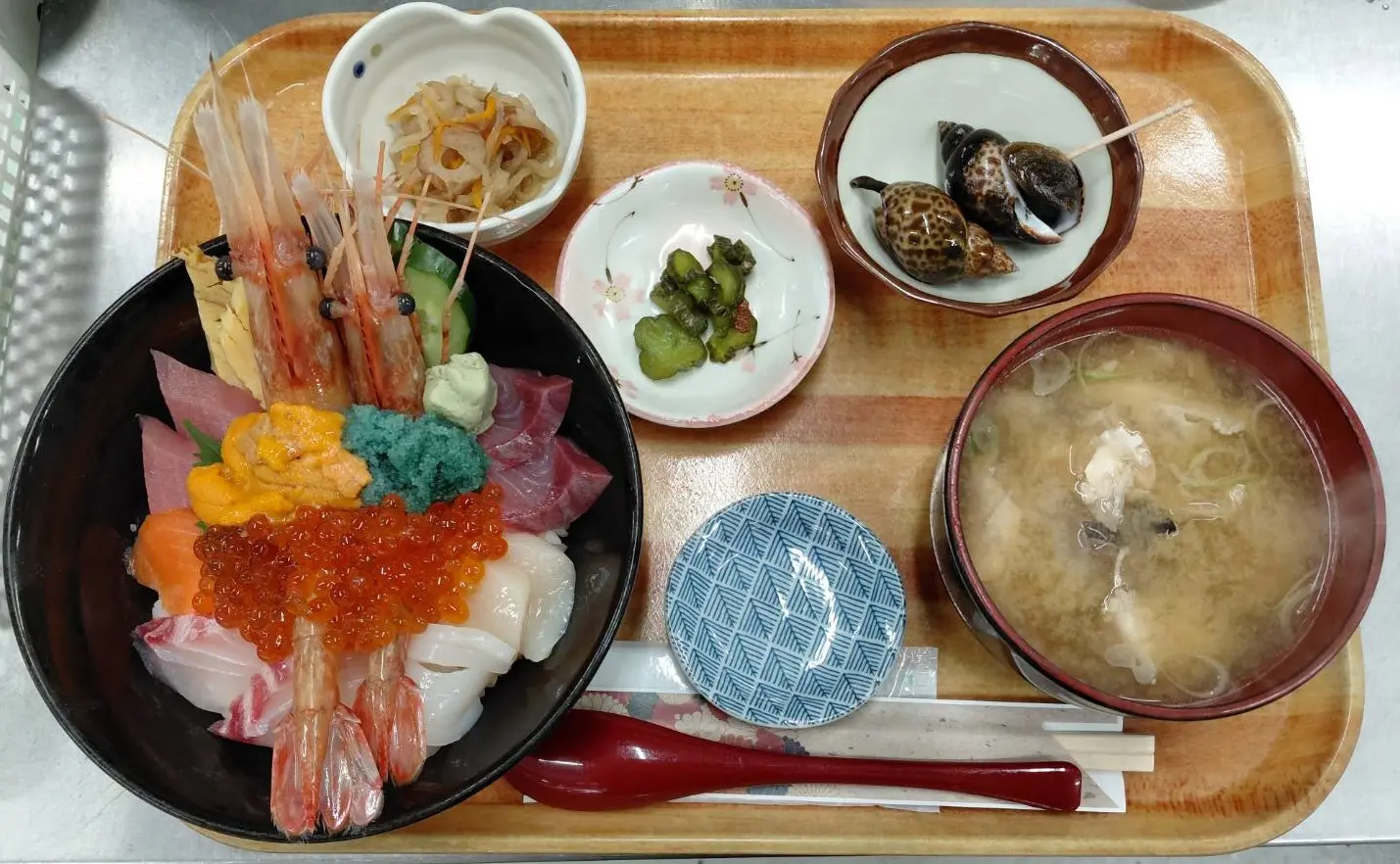
Among them, the limited-quantity Kaisen Teishoku is an especially popular menu item that often sells out.
On the plate, a whole flounder is arranged in four rows, joined by colorful sweet shrimp and tuna, and the meal also comes with a large bowl of fish soup and kiriboshi daikon, making it a very lavish set.
The fluffy rice made with local-grown rice pairs perfectly with the dishes and leaves you feeling fully satisfied after the meal.
The local specialty shottsuru yakisoba is also very popular.
Its seafood broth, packed with seaside aroma and umami, wins over many first-time visitors.
FAQ about Oga Sightseeing
Q
How long does it take to drive around the Oga Peninsula?
A
If you rent a car, you can make a full loop in 7–8 hours, including sightseeing at the main spots.
Q
Where can I see Namahage?
A
You can see them at places such as the Namahage Museum, which displays Approx. 150 diverse Namahage masks, and the Oga Shinzan Folklore Museum, where you can experience Namahage in person.
Summary
This article has introduced the appeal of Oga, focusing on its highlights and popular tourist spots, especially its famous traditional culture, Namahage.
With nature, culture, gourmet food, and history all in one place, Oga offers something special in every season and has an atmosphere quite different from the city.
There are many experiences you can only have here, making it a wonderful place to visit.
Be sure to also read this article, which clearly introduces Akita’s classic sightseeing spots, famous attractions, and shopping destinations, and make the most of your trip to Akita.