
![[Oshino Hakkai Travel Guide] Explore Stunning Views of Crystal-Clear Ponds and Mt. Fuji](https://static.gltjp.com/glt/data/article/22000/21250/20251222_095500_167e52f6_w1920.webp)
[Oshino Hakkai Travel Guide] Explore Stunning Views of Crystal-Clear Ponds and Mt. Fuji
Oshino Hakkai, located in Yamanashi Prefecture, is a group of eight spring-fed ponds sourced by underground water from Mt. Fuji.
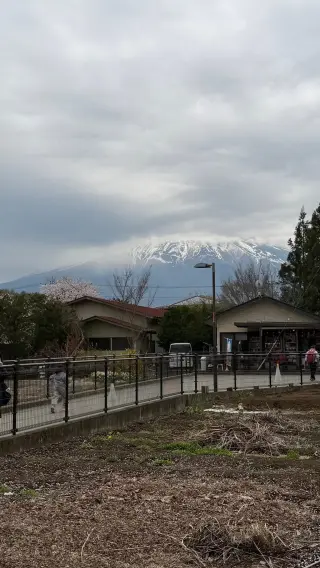
Known as “the place where Mt. Fuji looks the most beautiful in Japan,” the area is surrounded by vast nature and filled with scenic spots.
It is also part of the UNESCO World Cultural Heritage site “Fujisan, sacred place and source of artistic inspiration,” and its mystical scenery attracts visitors from Japan and abroad.
This article introduces the overview and appeal of Oshino Hakkai, with a focus on the highlights of its eight ponds.
It also brings together useful information in an easy-to-understand way for first-time visitors, so be sure to read to the end.
What is Oshino Hakkai Like?
Oshino Hakkai, located in Oshino Village, Minamitsuru District, Yamanashi Prefecture, is a group of spring-fed ponds sourced by underground water from Mt. Fuji.
It refers to the collective name for eight ponds fed by snowmelt from Mt. Fuji that has been naturally filtered over many years before emerging as spring water: Deguchi Pond, Okama Pond, Sokonashi Pond, Choshi Pond, Waku Pond, Nigori Pond, Kagami Pond, and Shobu Pond.
It has long been a sacred site of Mt. Fuji worship, and it is said that during the Edo period (1603–1868), climbers visiting Mt. Fuji came here as a pilgrimage site to purify themselves.
Its historical background, scenic value, and conservation status have all been highly praised, leading to its designation as a National Natural Monument in 1934 and its selection for several notable lists, including the Ministry of the Environment’s “100 Exquisite and Well-Conserved Waters of Japan” in 1985.
In addition, it was registered in 2013 as part of the UNESCO World Cultural Heritage site “Fujisan, sacred place and source of artistic inspiration.”
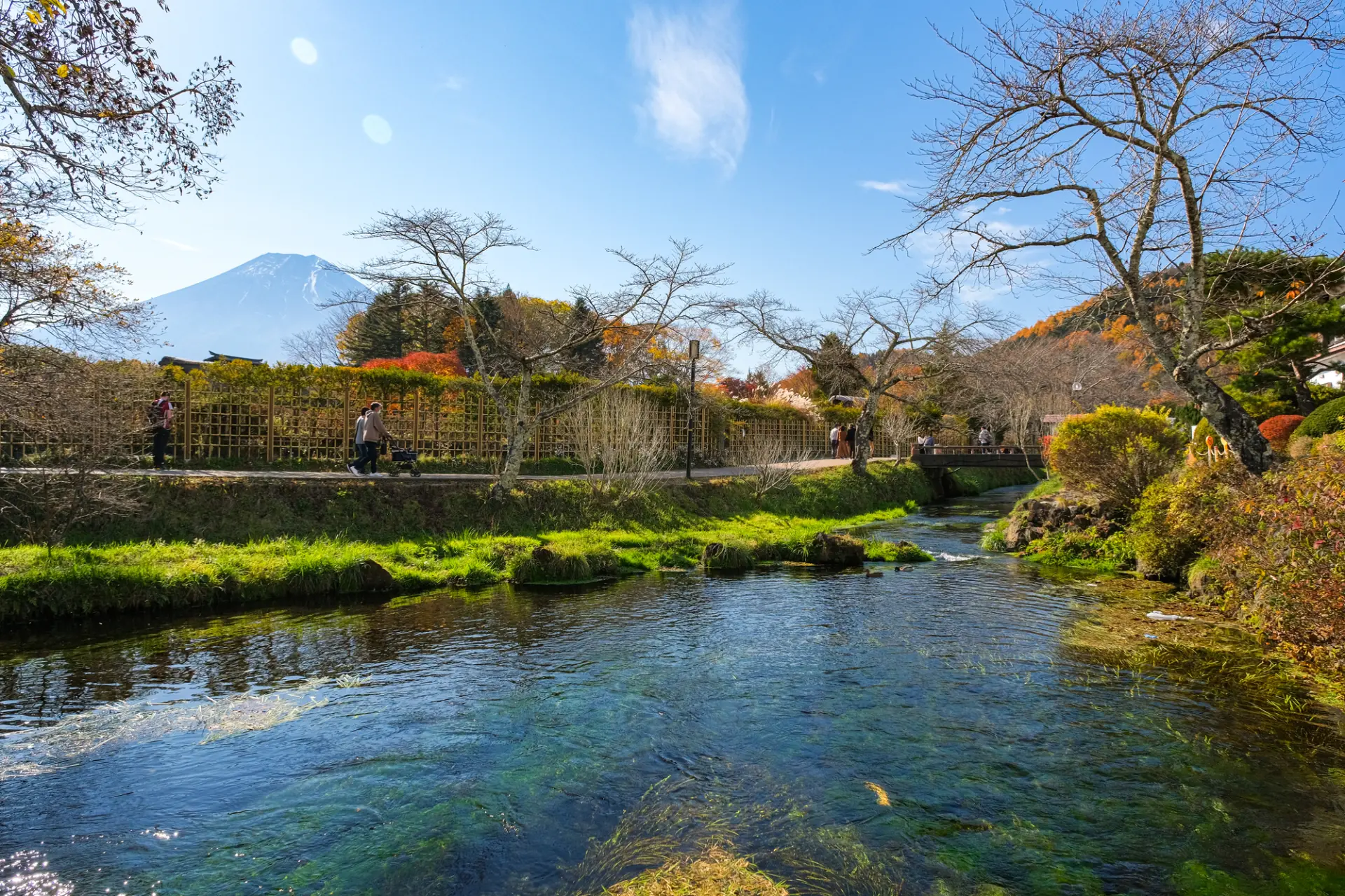
One of Oshino Hakkai’s greatest charms is its remarkably clear water, so transparent that you can see straight to the bottom of the ponds.
Fish swimming underwater and aquatic plants look as if they are floating in midair, creating an otherworldly scene right before your eyes.
On sunny days in particular, the reflection of Mt. Fuji on the water’s surface is mystical and photogenic.
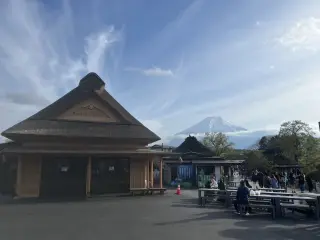
The nostalgic satoyama atmosphere, with traditional thatched-roof houses and waterwheels, is another highlight.
Access to Oshino Hakkai
The nearest station to Oshino Hakkai is Fujisan Station on the Fujikyuko Line.
From there, taking a local bus is the most common way to get there.
Below is a table summarizing routes to Oshino Hakkai from Shinjuku Station, Busta Shinjuku, and Kawaguchiko, all of which are convenient starting points.
| Starting Point | Route | Travel Time | Notes |
|---|---|---|---|
| Shinjuku Station |
1. Take the JR Chuo Line Rapid service bound for Otsuki from JR Shinjuku Station and get off at Otsuki Station 2. From Otsuki Station, take the Fujikyuko Line bound for Kawaguchiko, get off at Fujisan Station, and walk to the bus stop in front of the station 3. From Fujisan Station, take the Fujikyu Bus bound for Uchino, get off at “Oshino Hakkai Iriguchi” or “Oshino Hakkai,” and arrive |
Approx. 2 hours 45 minutes | - |
| Busta Shinjuku | Take the Fujigoko Line bound for Yamanakako Asahigaoka from the 4th-floor bus terminal at Busta Shinjuku, get off at “Oshino Hakkai,” and arrive | Approx. 2 hours 10 minutes | There are four departures: 8:15am, 10:15am, 5:15pm, and 7:15pm |
| Kawaguchiko |
1. Go from Kawaguchiko to the Kawaguchiko Station bus stop 2. From Kawaguchiko Station, take Fujikyu Mobility A1 or the Fujikyu Bus Express bound for Oshino Hakkai, get off at “Oshino Hakkai,” and arrive |
Approx. 40 minutes | Approx. 1 or 2 buses every 1 hour–1 hour 30 minutes |
Oshino Hakkai Through the Four Seasons
Oshino Hakkai offers beautiful scenery no matter what season you visit.
Its appearance changes with the seasons, each bringing its own charm, from cherry blossoms in spring to autumn leaves in fall.
Next, we’ll introduce the seasonal highlights so you can choose the best time to visit and how you want to enjoy it.
Spring at Oshino Hakkai: Stunning Views of Cherry Blossoms and Mt. Fuji
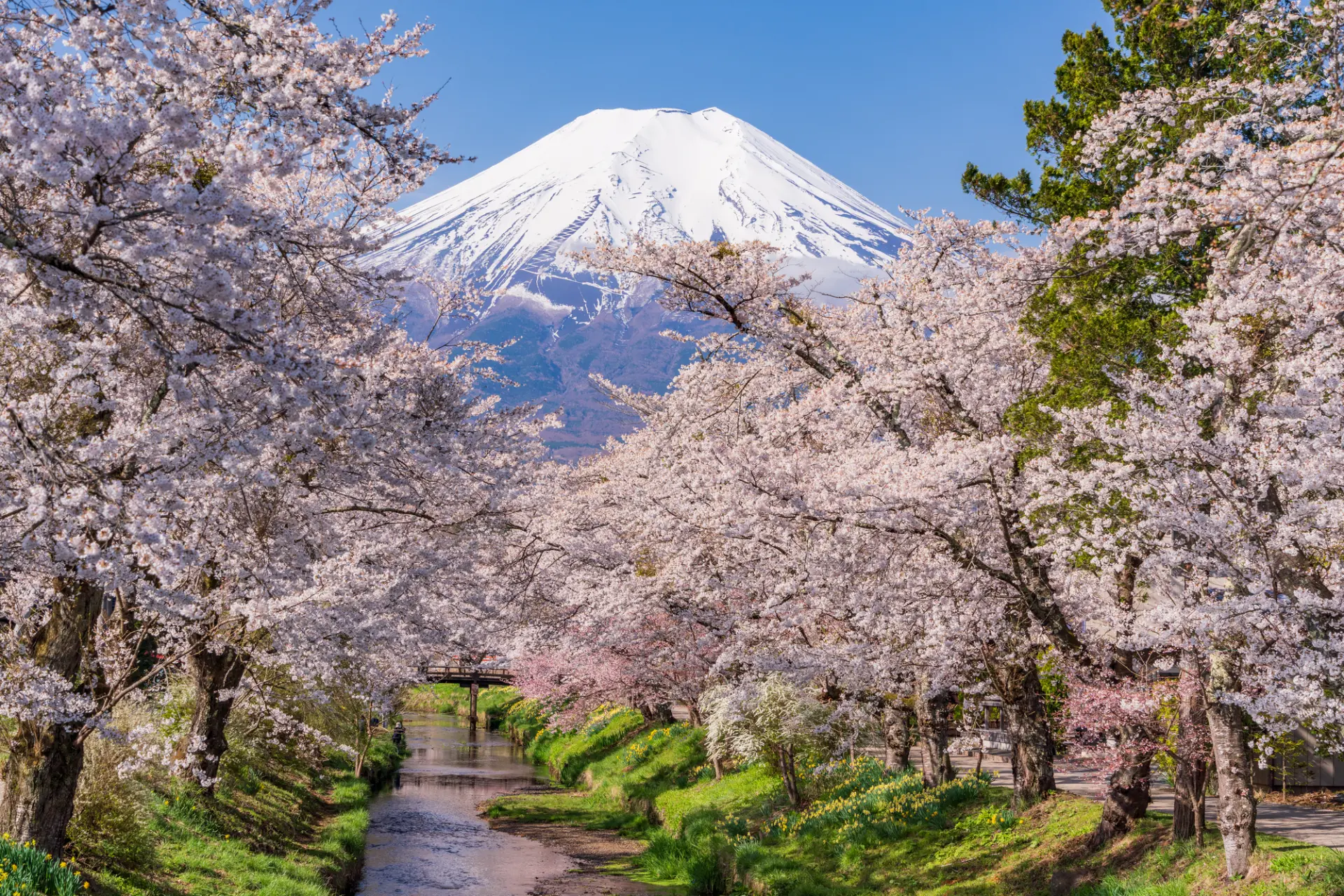
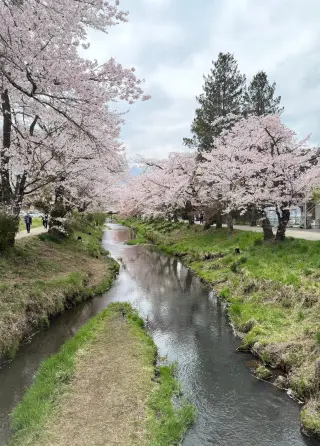
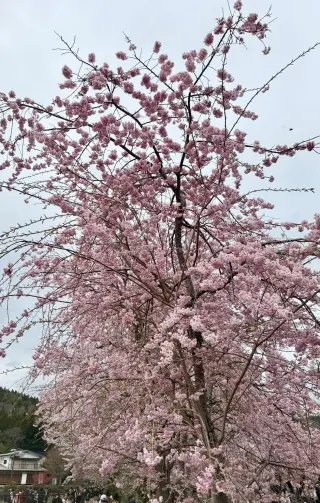
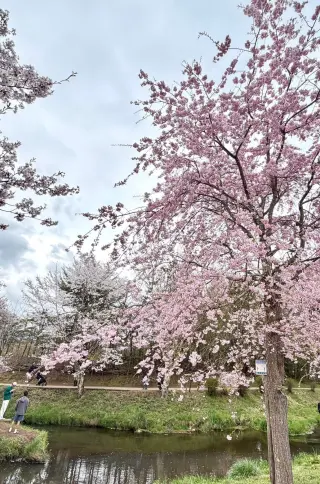
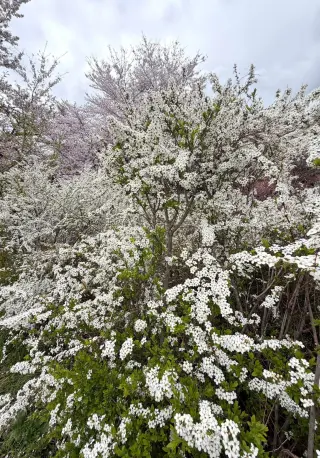
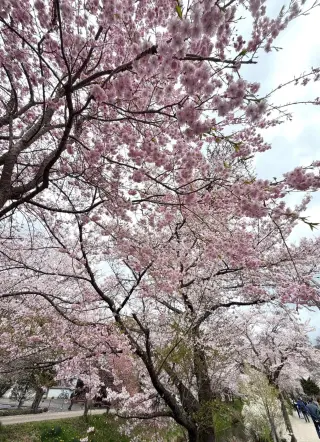
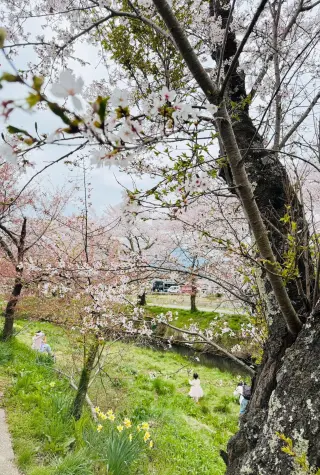
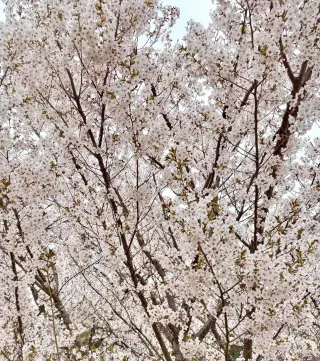
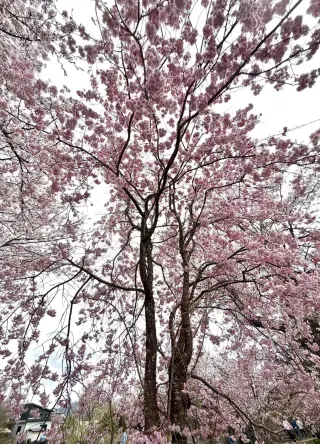
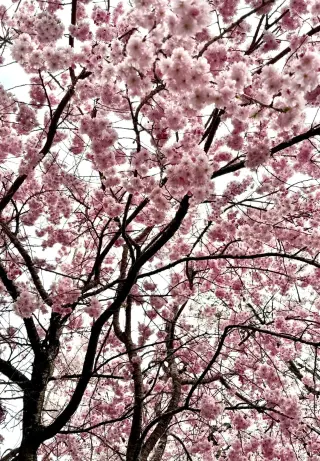
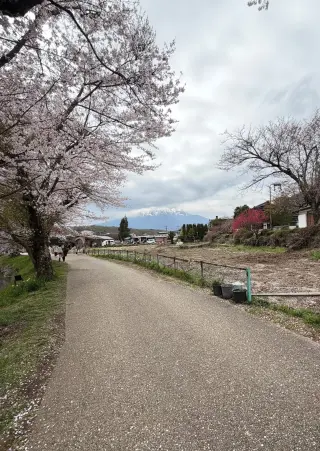
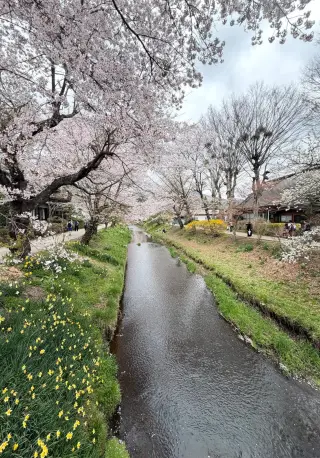
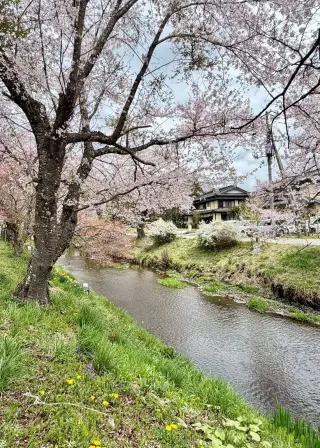
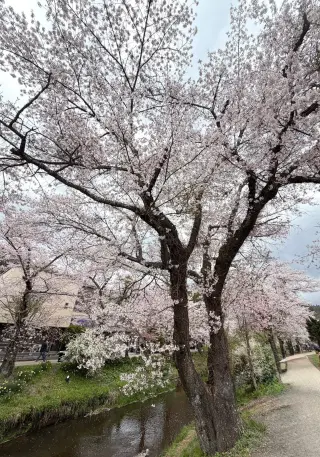
Spring at Oshino Hakkai is the season when the contrast between the crystal-clear ponds filled with snowmelt from Mt. Fuji and the cherry blossoms is especially beautiful.
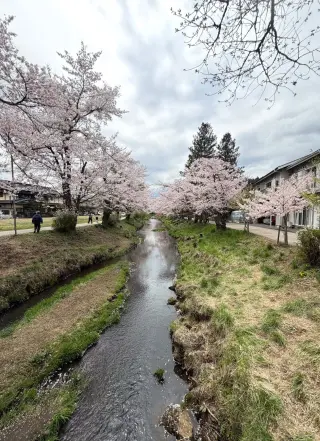
The cherry blossoms are usually at their best from mid-April to late April, and along the Shinmeisho River flowing to the north in particular, you can enjoy about 400 meters of Somei Yoshino cherry trees with Mt. Fuji in the background.
The pale pink blossoms reflected on the water create a dreamy scene, and when they sparkle in the spring sunlight, the classic Japanese landscape feels even more striking.
Omiyabashi Bridge is a recommended viewpoint for taking beautiful photos of Mt. Fuji.
With mild temperatures and a pleasant spring breeze, it is also perfect for a refreshing walk.
Summer at Oshino Hakkai Surrounded by Fresh Greenery
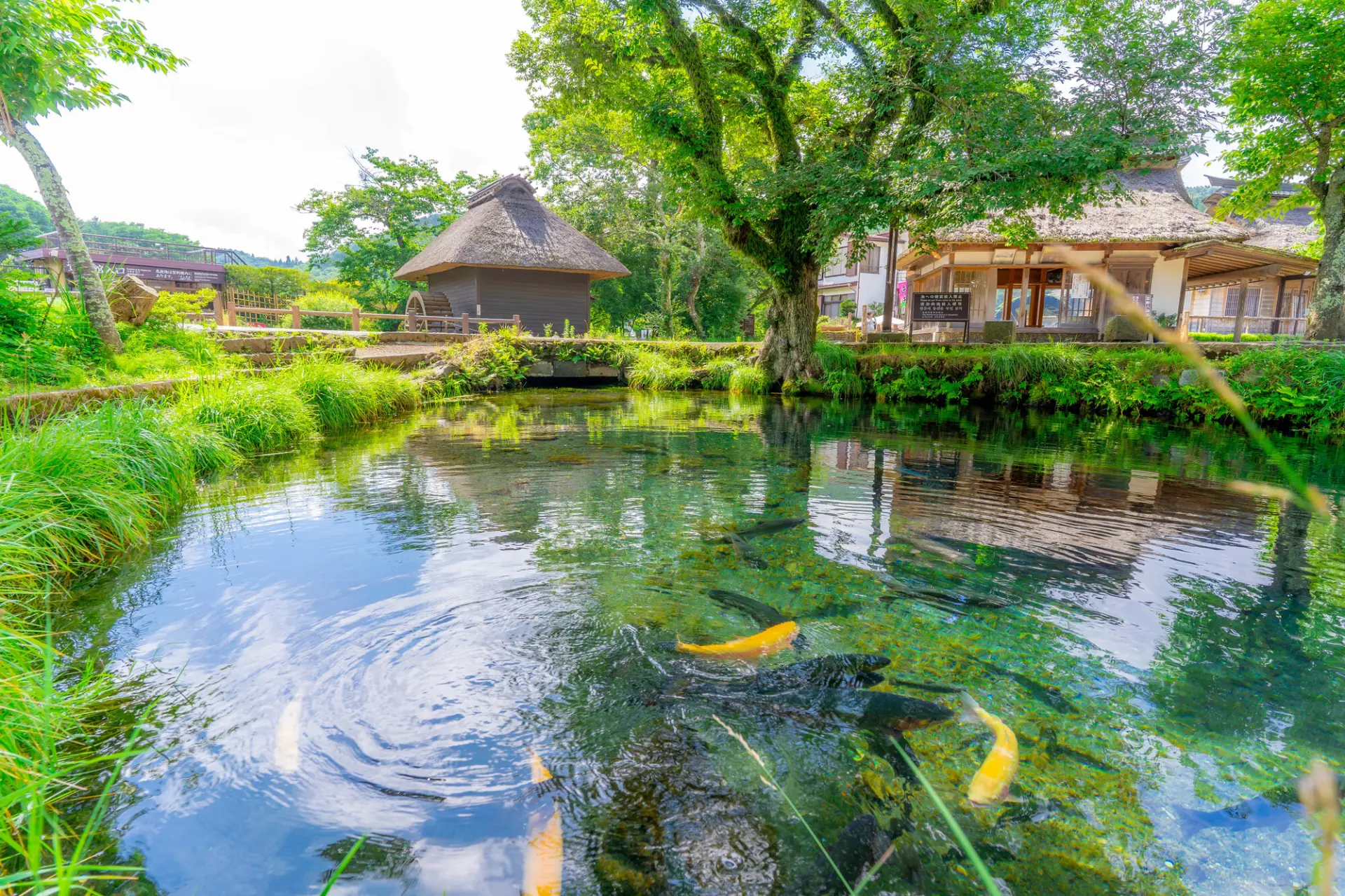
Summer at Oshino Hakkai is popular as a cool getaway with a comfortable climate.
Located at an elevation of 940 meters in the northern foothills of Mt. Fuji, the average temperature in August is around 22°C, making it easy to spend time outdoors.
The ponds are surrounded by lush greenery and plenty of shade, so a leisurely walk with the sound of cicadas in the background offers a soothing experience of cool spring water and nature.
If your schedule works out, it is also recommended to join the local annual event “Hakkai Festival,” held every year on August 8.
The Bon dance festival, character events, and food stalls create a lively atmosphere, and the fireworks finale adds color to the summer scenery.
Autumn at Oshino Hakkai: Charming Scenery Colored by Fall Leaves
After the summer crowds settle down, autumn at Oshino Hakkai has a calm and relaxed atmosphere.
The scene created by the crisp air, the sound of leaves rustling in the wind, and the quietly bubbling spring water is full of charm and slowly sinks into your heart.
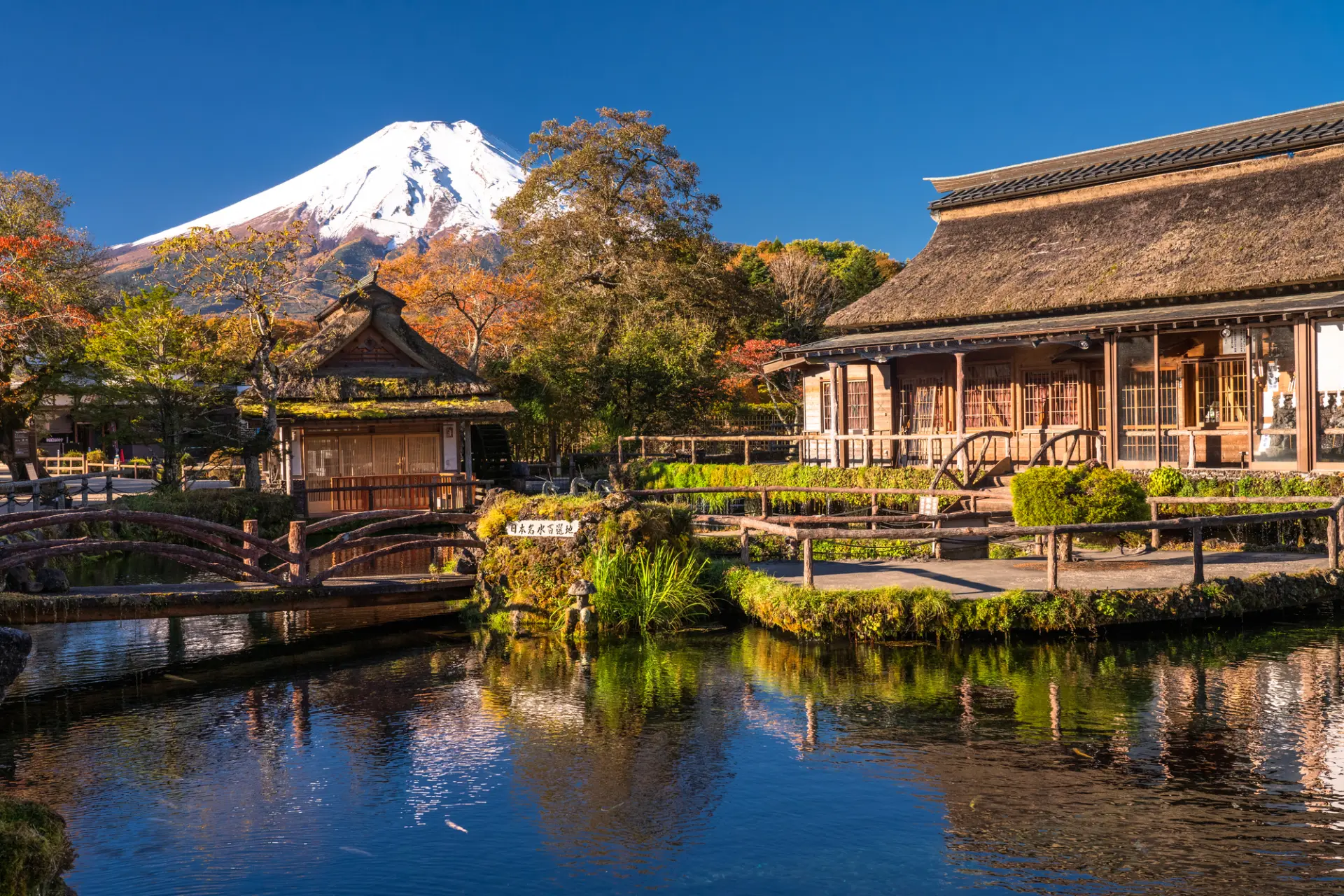
The biggest highlight is the mystical combination of the ponds, autumn leaves, and Mt. Fuji.
Maples and ginkgo trees all turn color at once, and the scenery reflected on the water is picture-perfect from every angle.
In particular, the sight of mountains painted in red and yellow blending with thatched roofs and waterwheels is breathtaking.
The best season is usually from late October to around mid-November, and it is also interesting to see how each pond has its own different character.
Winter at Oshino Hakkai: A Silver World of Snow
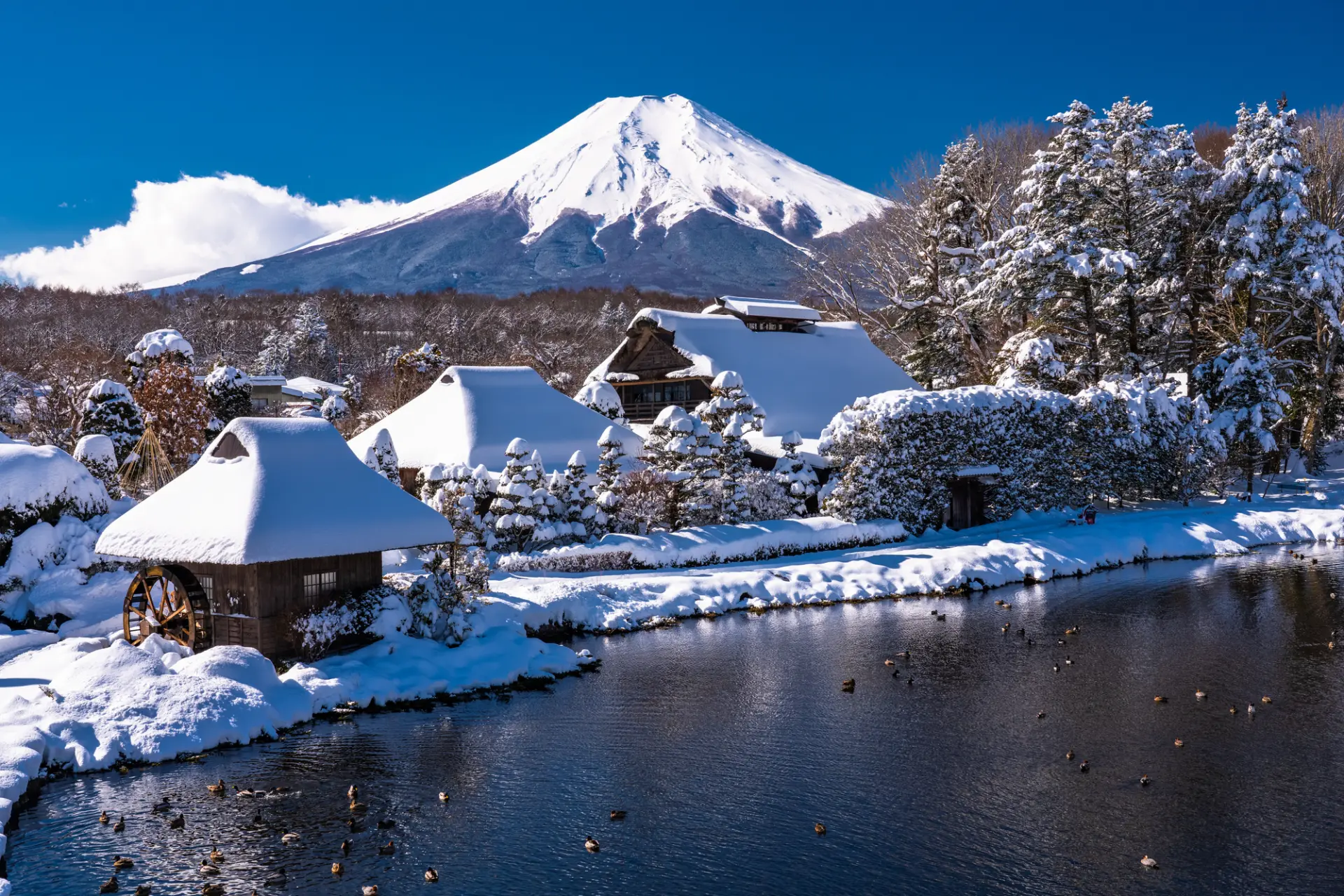
Winter at Oshino Hakkai lets you enjoy a silver world created by snowy scenery and the crystal-clear spring water.
A dignified beauty spreads through the cold, and the contrast between the blue water, clear enough to see the bottom, and the white snow is both dreamy and overwhelming.
There are relatively fewer visitors, so the sounds of water and wind stand out more, making it easy to enjoy the tranquil scenery at your own pace.
Winter-only scenes such as frost formed when steam rising from the spring water freezes in the cold air, as well as the thin morning mist over the ponds, are also popular.
The Eight Ponds That Make Up Oshino Hakkai
From here, we’ll introduce the highlights of the eight ponds that make up Oshino Hakkai.
All of them have exceptionally high clarity, with deep bottoms shining in cobalt blue or emerald green, yet each one has its own character, making them enjoyable to compare.
Another defining feature is the quiet worship atmosphere, with waka poetry stone monuments and local legends remaining from its history as a pilgrimage site for Fuji-ko devotees.
If possible, try to visit all of the ponds (Approx. 1 hour 30 minutes–2 hours, in any order you like).
1. Deguchi Pond
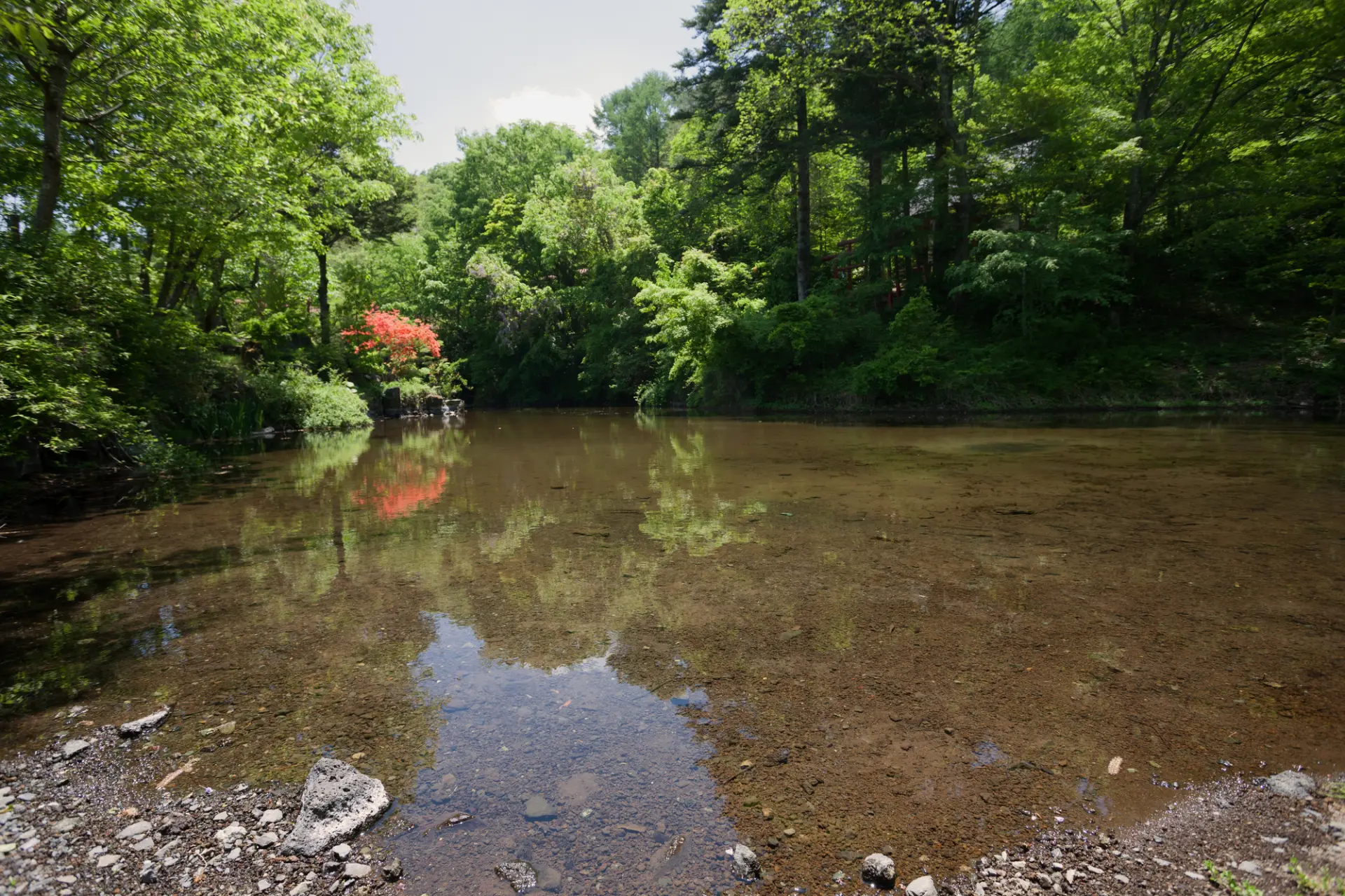
The first sacred site, Deguchi Pond, is the largest of the Oshino Hakkai ponds and the only one located a little apart from the others.
It is also known as Shojin Pond because Fuji-ko practitioners once purified themselves here before climbing Mt. Fuji.
On a small rise by the pond stands Deguchi Inari Daimyojin, where you can sense the spiritual stories of ascetics offering prayers.
Its greatest charm is the silence and natural atmosphere that remains almost untouched.
A sacred and calming air fills the area, and the peaceful water surface surrounded by green forest, along with the purity of the spring water, offers a soothing experience.
The pond is filled with crystal-clear spring water, and on windless days, you can enjoy a dreamlike view of the surrounding trees, shrine, and part of Mt. Fuji reflected on the surface like a mirror.
There are few tourists and no shops, so it is a perfect place to take a quiet break.
2. Okama Pond
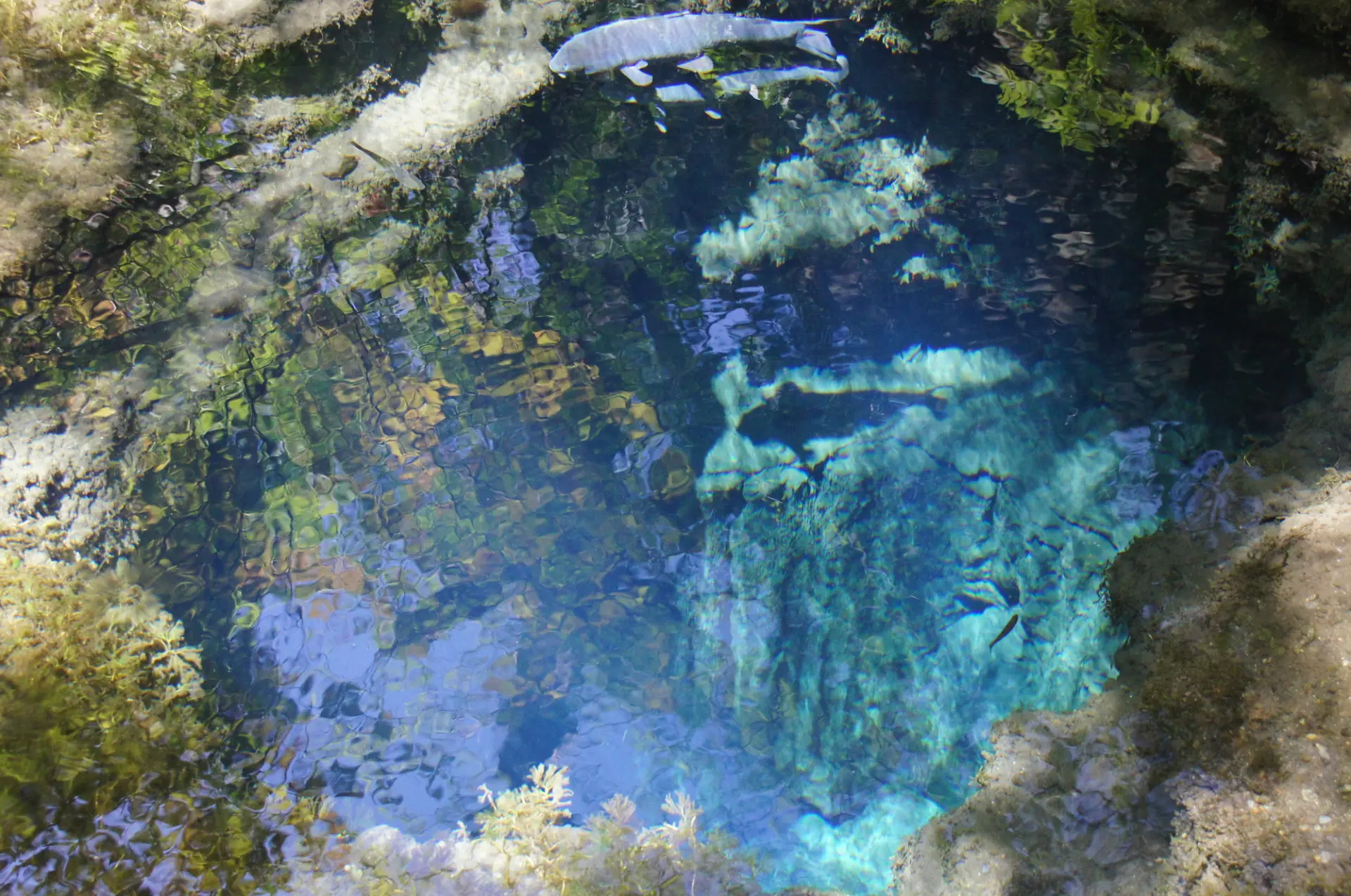
The second sacred site, Okama Pond, is the smallest pond in Oshino Hakkai, with an area of 24 square meters.
It is about 4 meters deep, and its mysterious beauty is defined by the way the surrounding nature reflects on the surface, while the bubbling spring water and sounds like a suikinkutsu stimulate the senses.
Its clarity and calm surface are memorable, and another highlight is the subtle change in tone, from cobalt blue on sunny days to a softer blue under thin clouds.
The swaying underwater plants such as baika-mo create a refined atmosphere, and because the pond is small, looking at it closely reveals discoveries that feel different from the others.
There is also a tragic legend that a young woman living by the pond was pulled in by a giant toad, which is why it is also called Ogama Pond.
3. Sokonashi Pond
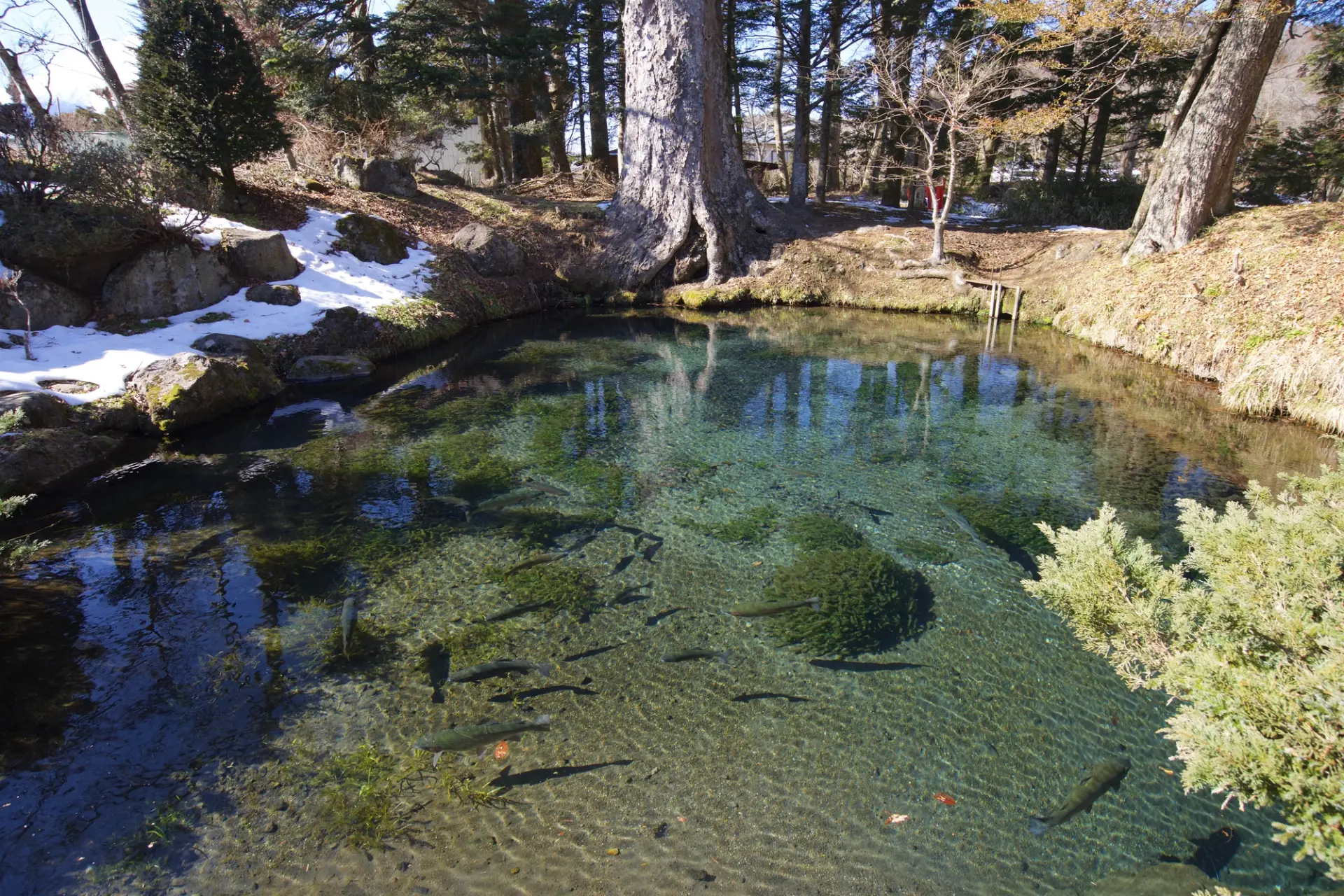
The third sacred site, Sokonashi Pond, is the only privately owned pond in Oshino Hakkai.
It is located deep inside the grounds of the Hannoki Bayashi Shiryokan Museum, and viewing it requires an admission fee of 300 yen.
Its name is said to come from a legend that things washed or dropped into the pond would disappear and later float up in Okama Pond.
One of its attractions is that you can fully enjoy the satoyama landscape along with a sense of faith and folklore, reflected in the old stone monument by the pond engraved with waka poetry and the name of Shagara Ryuo, the enshrined deity.
Surrounded by horse chestnut trees and woodland, the pond sits in a quiet setting and preserves the oldest-looking scenery among the eight ponds, giving it a unique air of mystery.
Your visit will be even more rewarding if you also stop by the museum to see displays of household goods and farming tools from the Tokugawa period, important documents, and an observation deck with a view of Mt. Fuji.
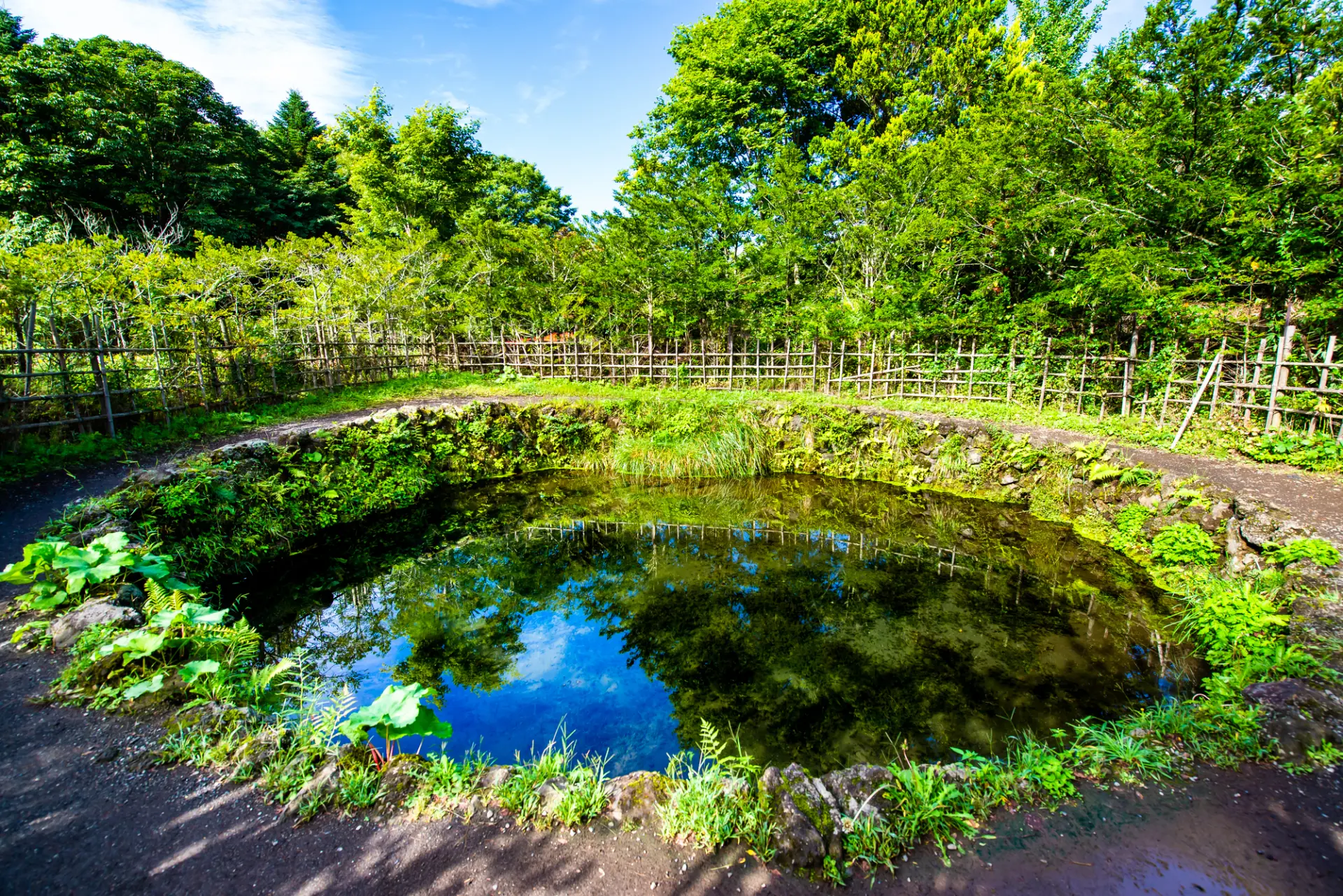
4. Choshi Pond
The fourth sacred site, Choshi Pond, is a quiet pond tucked away in a grassy area along the Aharagawa River.
Its name comes from its shape, which resembles a choshi, a sake pouring vessel with a handle.
Wrapped in a peaceful atmosphere, it may not be flashy, but the surrounding moss and stones give it a calming presence, making it something of a hidden gem.
Its biggest highlight is the clear water surface and sandy spring outlet that you can observe up close.
You can enjoy the clarity of the water, the look of the bubbles, and the way the sand swirls, almost feeling the living presence of the water itself.
Choshi Pond is also said to be a matchmaking pond, based on a tragic tale about a bride who, embarrassed after passing gas during her wedding, threw herself into the pond while holding a sake vessel.
If you also pay attention to the stone monument by the pond engraved with the waka poem “Kumebakoso choshi no ike no sawaguran motoyori mizu ni nami no aru kawa,” the place will feel even more meaningful.
5. Waku Pond
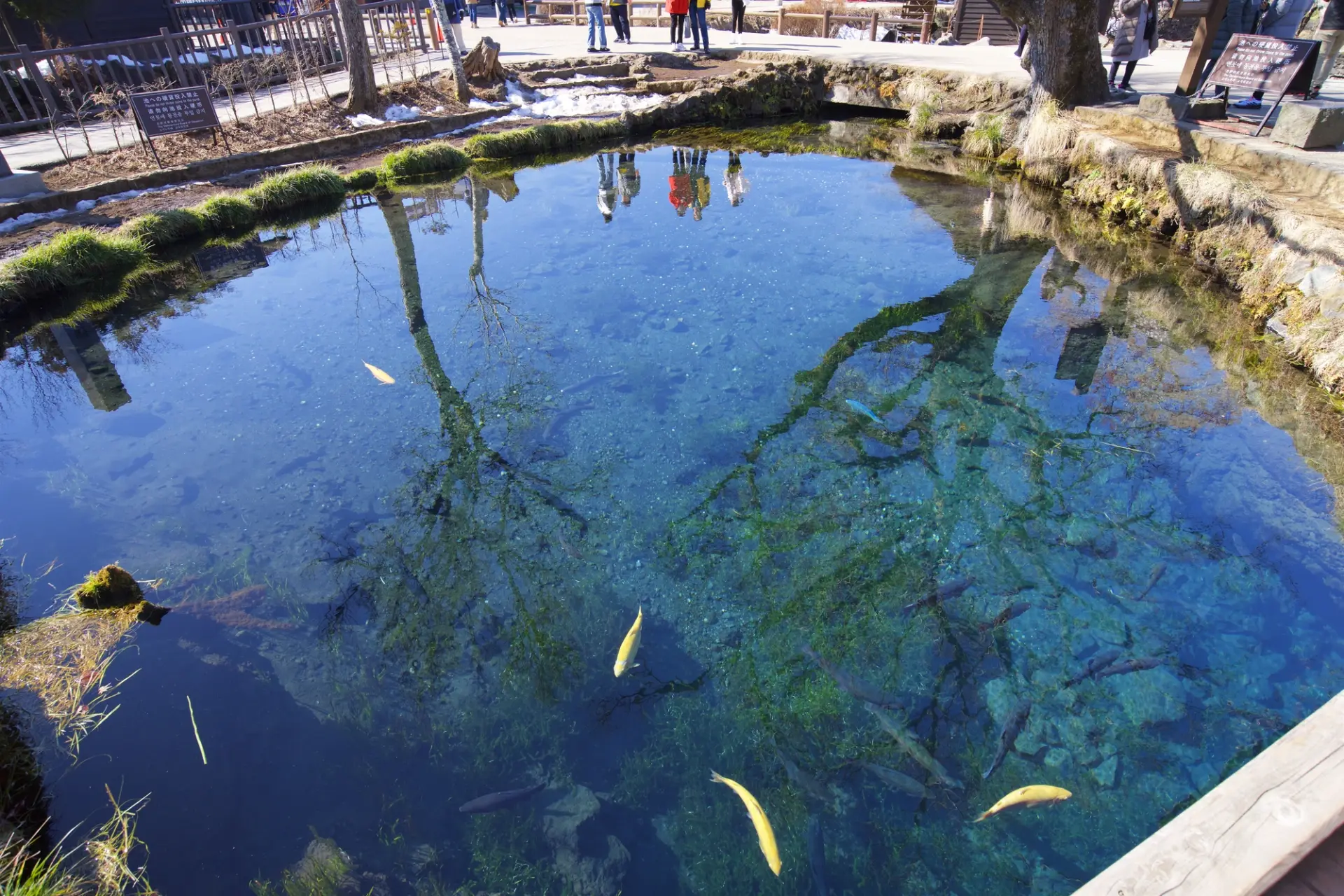
The fifth sacred site, Waku Pond, is the most representative pond in Oshino Hakkai, with the largest volume of spring water and exceptionally high clarity.
Facing a lively street lined with souvenir shops, snack spots, and waterwheel huts, it is also the central and most popular area for sightseeing.
Its greatest charm is the visual beauty created by the combination of its clear blue water and the surrounding scenery as a whole.
The cobalt-blue gradation formed by continuously bubbling underground water, the delicate movement of aquatic plants underwater, and the satoyama landscape all come together beautifully to create a scene like a classic Japanese landscape.
You can also observe fish such as golden rainbow trout and the rare cobalt trout swimming gracefully, giving the pond a sacred, powerful atmosphere.
The view with Mt. Fuji in the background is another highlight, and photogenic scenes can be found everywhere.
6. Nigori Pond
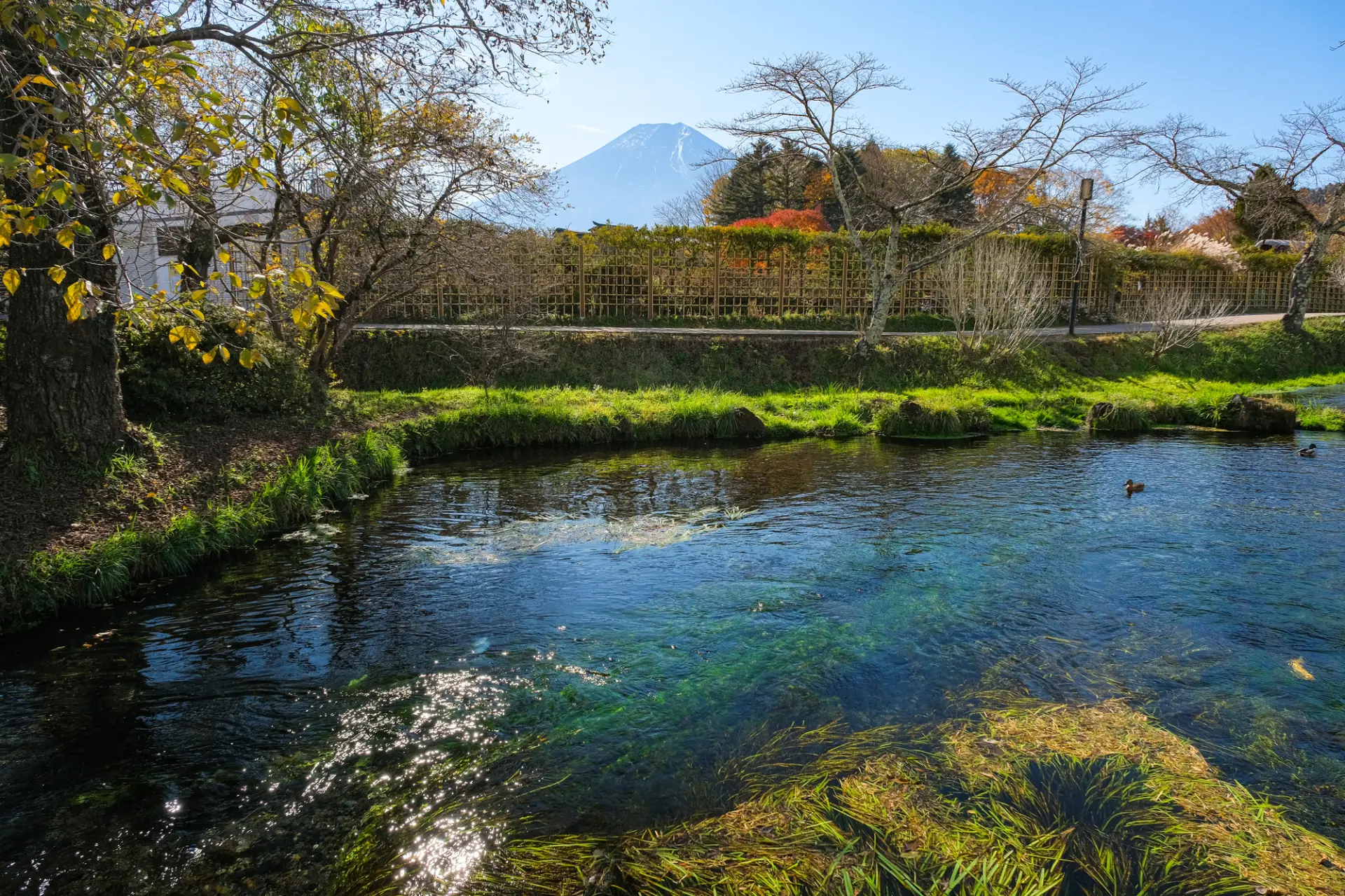
The sixth sacred site, Nigori Pond, is a small pond about 50 cm deep located right next to Waku Pond, where it joins the Aharagawa River.
Its name comes from a legend that the pond turned cloudy after a shabby ascetic asked a landowner for a cup of water and was refused.
Today, only a very small amount of spring water has been confirmed from the pond bottom, but the water is clear and not actually cloudy at all.
The contrast between its image and the real scene is striking, and you will likely be surprised by how clear the water is.
Though shallow, aquatic plants and small rising bubbles sway across the surface, and the atmosphere blending with the surrounding scenery has a character different from Waku Pond.
Seasonal contrasts such as fresh greenery in spring, autumn leaves in fall, and snow in winter add poetic beauty to the pondside scenery and make it especially photogenic.
7. Kagami Pond
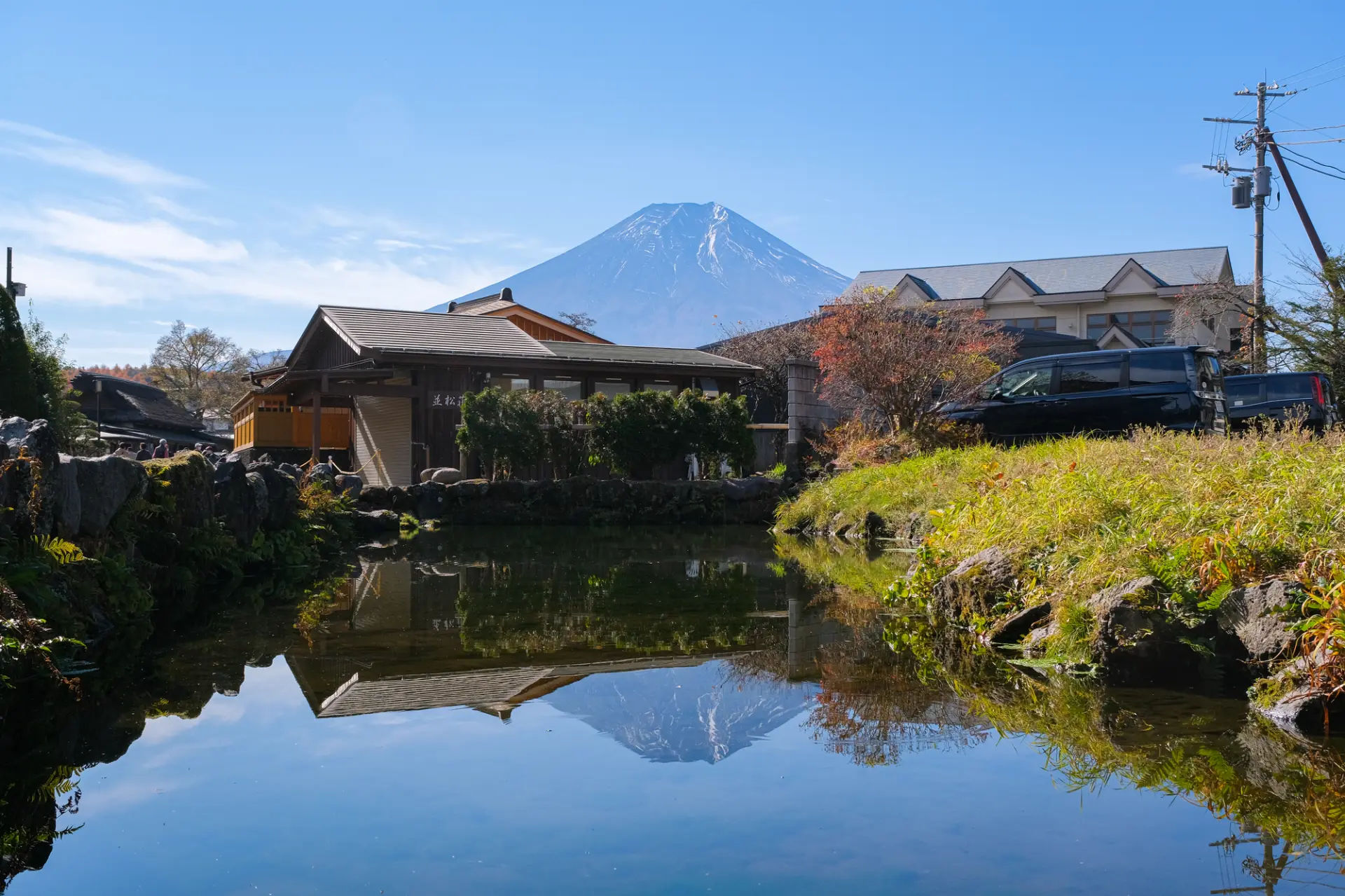
The seventh sacred site, Kagami Pond, is a small pond shaped roughly like a rectangle.
It has a small volume of spring water and a calm surface, which beautifully reflects the surrounding scenery and Mt. Fuji.
Because it is easy to take striking photos here, it is a popular spot for photographers and visitors alike.
Its main attraction is the view of “upside-down Mt. Fuji reflected clearly like a mirror,” which is also the origin of its name.
When the weather conditions are just right, a vivid reflection of Mt. Fuji appears, creating a moving scene together with the thatched-style buildings and satoyama landscape.
In the past, it was called Konoshiro Pond, and there is a legend that it had spiritual power to distinguish good from evil in all things.
It is said that when disputes arose in the village, people believed they could be resolved if the parties purified themselves with water from Kagami Pond.
8. Shobu Pond
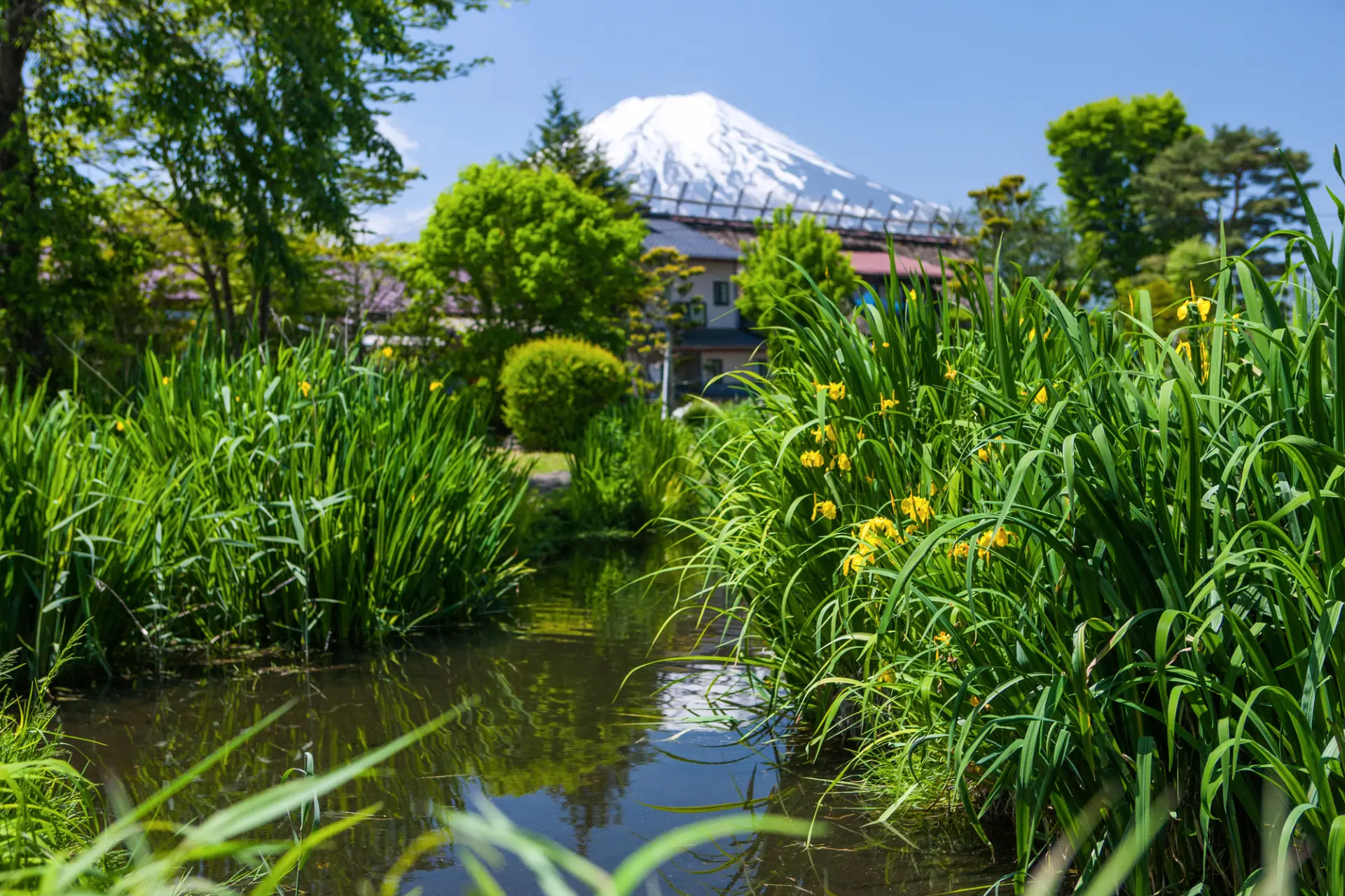
The eighth sacred site, Shobu Pond, is a long, narrow marsh-like pond located east of Kagami Pond.
Its name comes from the shobu plants growing around it, including large native plants from the arum family as well as the non-native yellow iris.
Among the Oshino Hakkai ponds, it has a particularly wetland-like atmosphere and, together with the quietly tucked-away Hakkai Shobuike Park, forms a lush green area.
The clumps of shobu plants gain seasonal color when they bloom, delighting visitors.
In early summer especially, they grow to over 1 meter tall and bloom in vivid colors, creating a seasonal landscape with the blue water and green surroundings.
There is also a legend that when a wife wrapped the pond’s shobu around the body of her husband, who had lung disease, he recovered.
It is also a sacred site dedicated to Uhatsura Ryuo, a dragon king said to dwell in blue lotus flowers and bring peace to people, giving the area a naturally calming atmosphere.
3 Popular Tourist Spots Around the Oshino Hakkai Area
Next, here are some sightseeing spots around Oshino Hakkai.
These are some of the most representative places in the popular Oshino Hakkai area, and they are sure to make your trip even more fulfilling, so visiting them along with the eight ponds is recommended.
1. Nakaike Pond
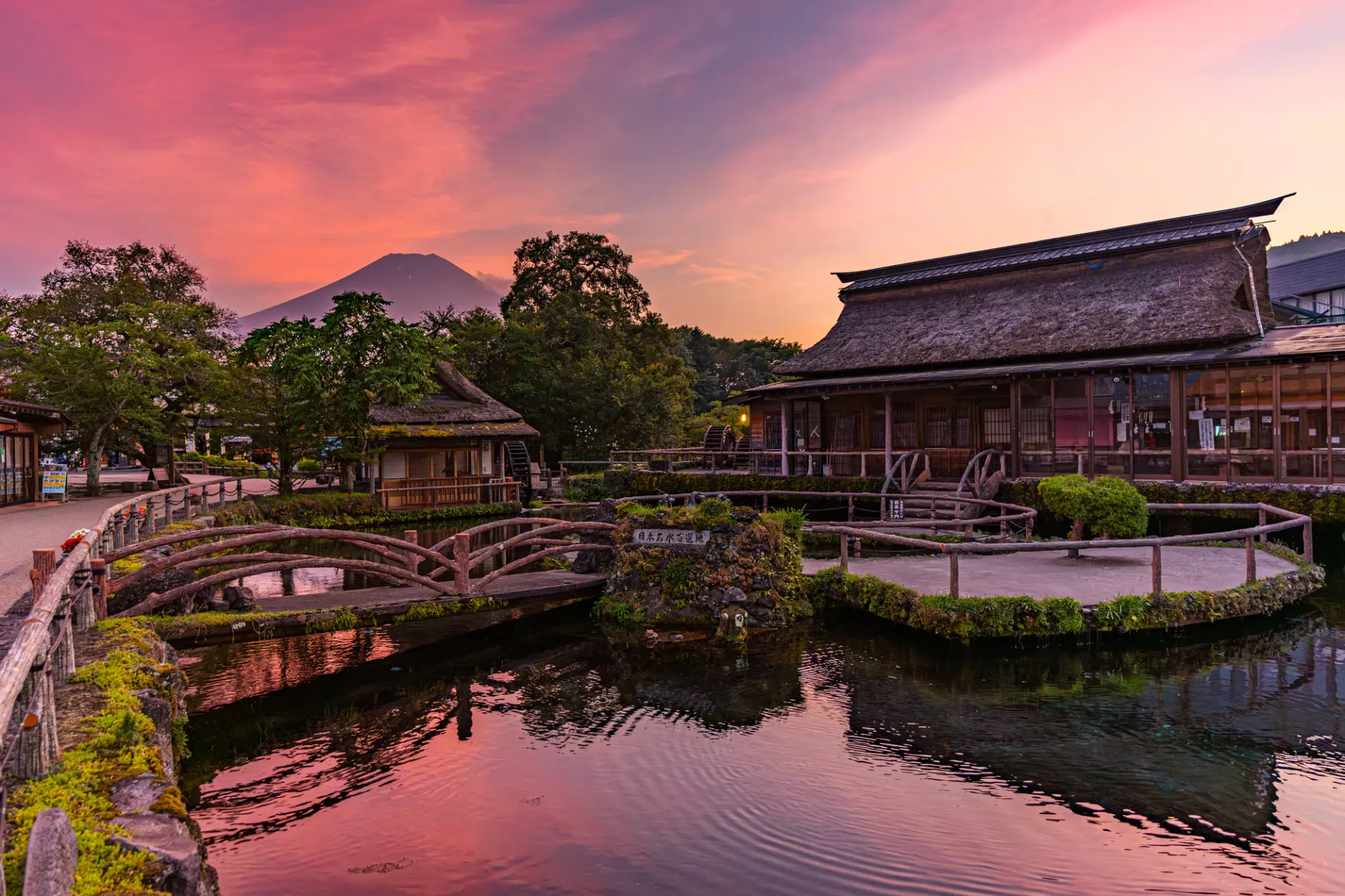
Nakaike Pond, often seen on posters of Oshino Hakkai, is the central spot that attracts the most visitors.
Its appeal lies in its high clarity, which lets you clearly see the bottom despite its depth of about 8–10 meters, along with its beautiful cobalt-blue surface.
The sight of albino trout (golden fish) and carp swimming gracefully in the pond is also fantastical, and many people take commemorative photos with the thatched-roof-style waterwheel hut and Mt. Fuji in the background.
By the way, Nakaike Pond is a privately owned artificial pond created for tourism scenery, so it is not included among the Oshino Hakkai ponds from a geological or historical perspective.
It is fed by the same pure underground water from Mt. Fuji, and visitors are free to drink the water and take some home.
There are also restaurants and souvenir shops nearby, and the eight ponds are within walking distance, making it a recommended base or starting point for exploring Oshino Hakkai.
- Address
- Shibokusa, Oshino Village, Minamitsuru District, Yamanashi 401-0511
2. Nijumagari Pass Observation Terrace SORA no IRO
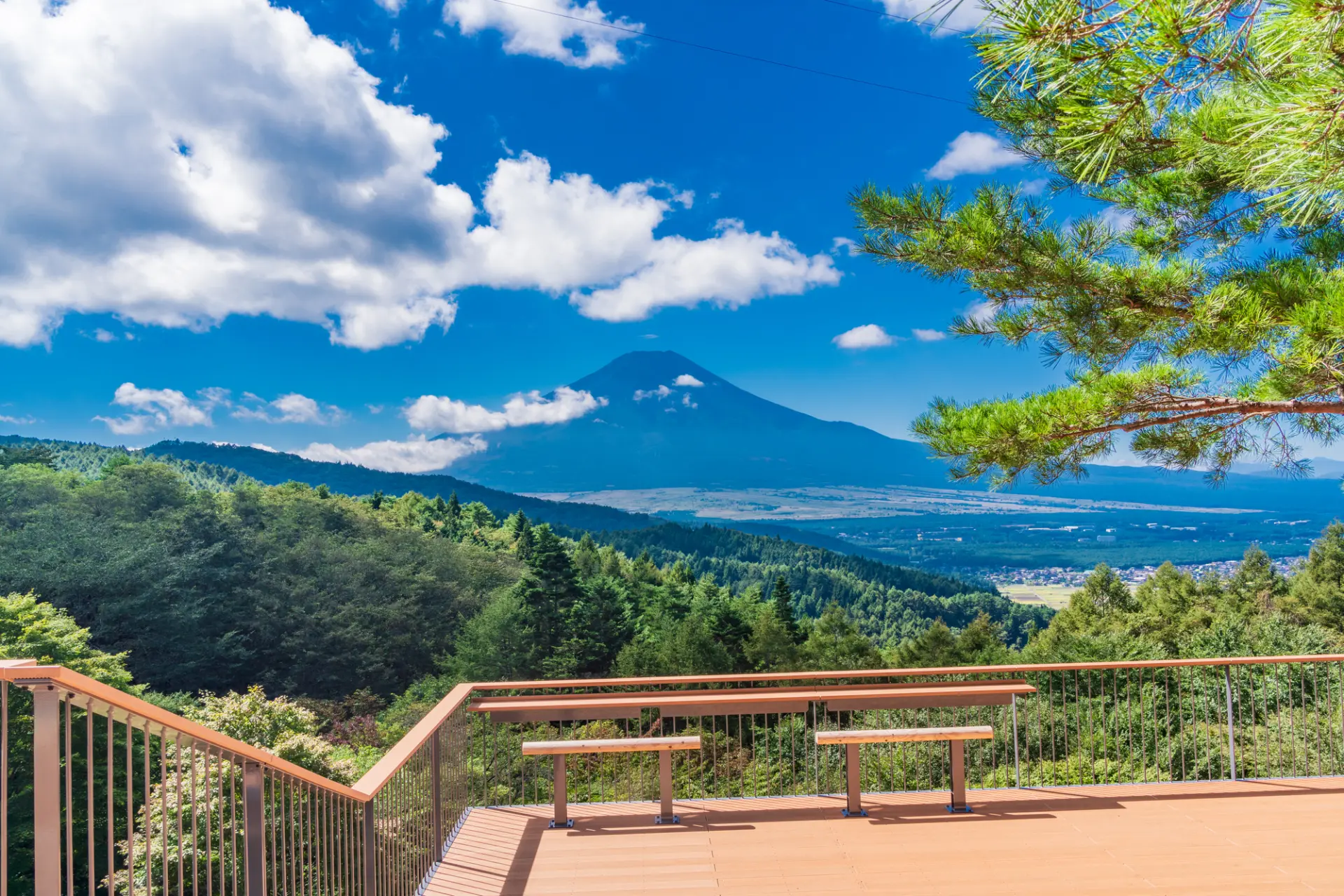
Opened in 2022, the Nijumagari Pass Observation Terrace “SORA no IRO” is a scenic facility located on a mountain pass at an elevation of 1,155 meters, about 15 minutes by car from Oshino Hakkai.
Its main feature is a spacious wooden deck about 50 meters long with nothing blocking the view, complete with transparent glass fencing, hammocks, and pine-shade benches, all designed with an open feel that blends into nature.
From the deck, you can take in a 360-degree panoramic view over the Oshino Basin, the Southern Alps, and even a sea of clouds, creating an immersive and overwhelming scenic experience.
The scenery changes dramatically depending on the season and time of day, with sunrise, sunset, autumn leaves, and snow views among the highlights.
The view of Mt. Fuji from here has also been recognized as one of the “100 Best Fuji Views in Kanto” and the “New 100 Views of Mt. Fuji,” and it is also known through photographer Koyo Okada’s famous work “Oshino Fuji.”
3. Oshino Hakkai Ikemoto
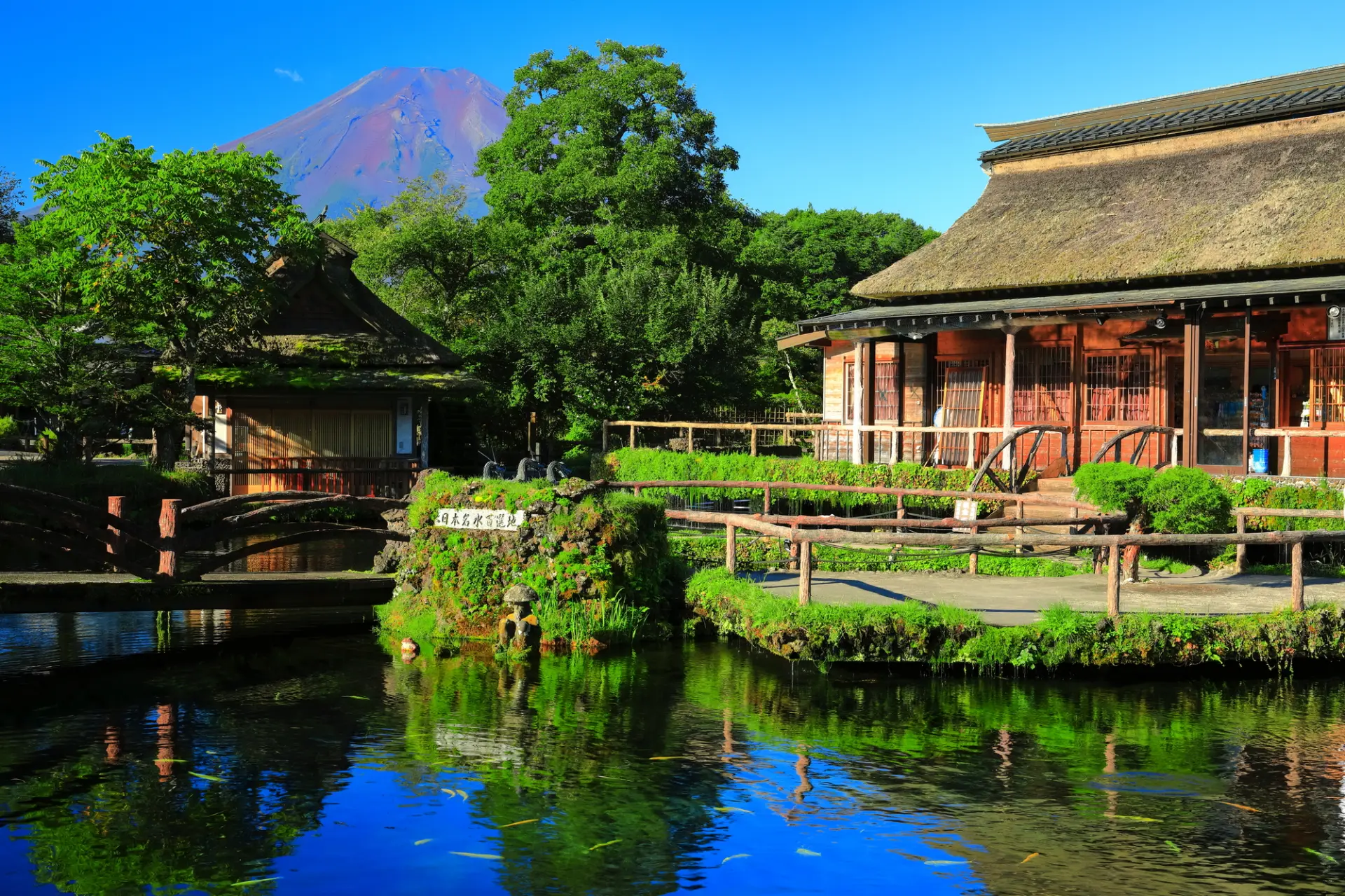
Oshino Hakkai Ikemoto is a long-established souvenir shop combined with a teahouse and restaurant located right in front of Nakaike Pond.
Built in a great location with thatched-roof-style scenery and views of Mt. Fuji, it is popular with visitors as an Instagram-worthy photo spot and a starting point for exploring Oshino Hakkai.
At the storefront, you can buy street-food-style snacks such as light meals and rich soft-serve ice cream, as well as pickles and original local sake.
It can be used in many ways, whether for taking a break on the bench while looking out at the pond, grabbing a bite during your walk, or picking out souvenirs.
The top recommendation is their specialty kusa mochi, made fresh and grilled on the spot.
Made with carefully selected domestic glutinous rice, mugwort, and sweet bean paste, and finished with spring water from Oshino Hakkai, it is a dish made with special attention to quality.
It is popular for its rich aroma and authentic mugwort flavor, so be sure to give it a try.
Enjoy More Than Just the Scenery! 3 Popular Places to Eat Around Oshino Hakkai
Next, here are three popular restaurants and takeout spots around Oshino Hakkai.
We selected places with different styles and specialties so you can choose based on your taste, situation, and time of day.
They are perfect for lunch or a quick meal during your walk, so be sure to stop by.
1. Ikemoto Chaya
Ikemoto Chaya is a long-established dining spot located in front of Nakaike Pond.
The interior has a calm Japanese-style design with the warmth of wood, and one of its charms is being able to dine or take a break while looking out through the windows at the spectacular view of the pond and Mt. Fuji.
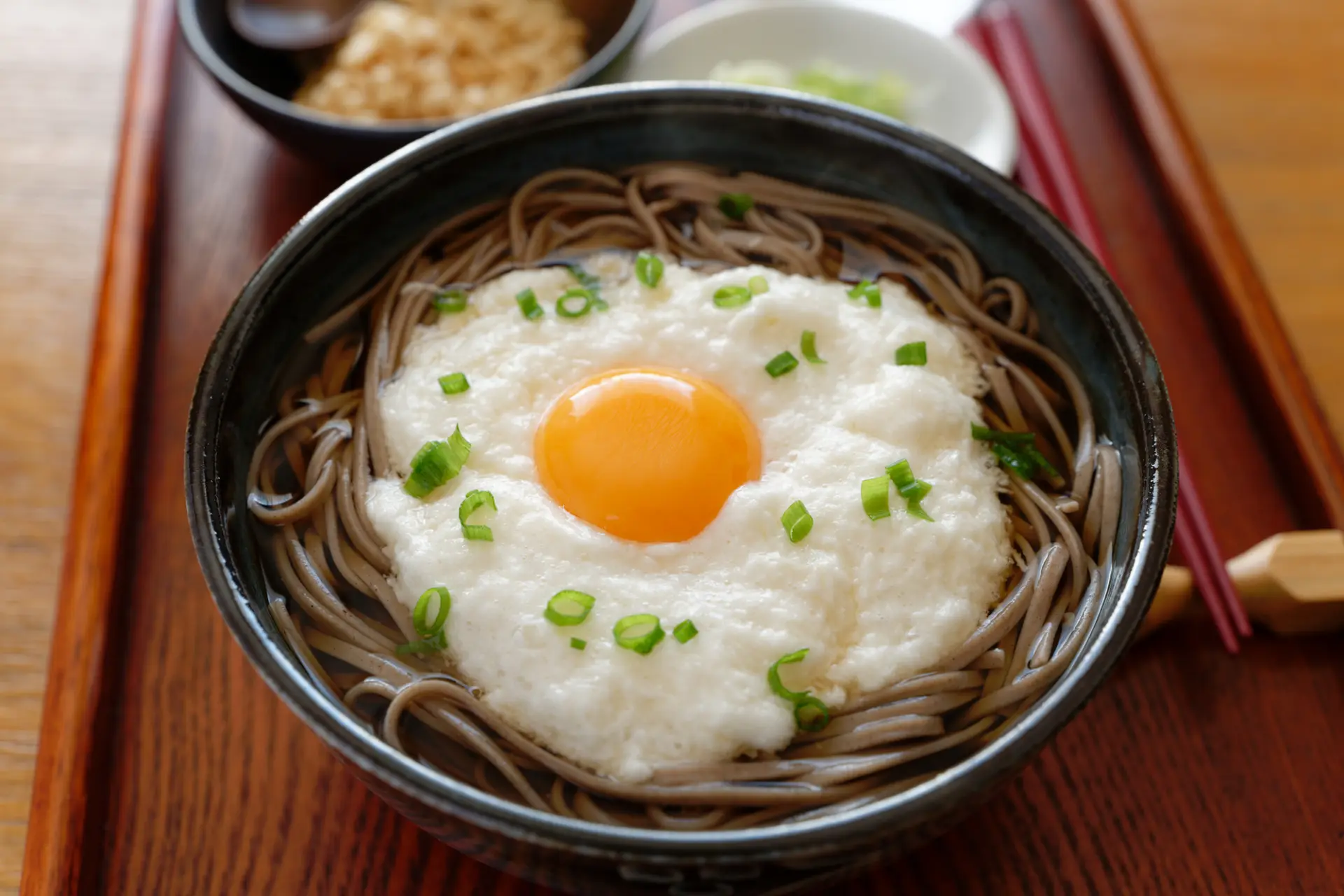
A popular menu item is their freshly milled and freshly made soba, including zaru soba and sansai soba.
The noodles, chilled firmly in cold water, have a pleasing firmness and smooth texture, and the soba-yu made with Oshino Hakkai’s famous water is also delicious.
Also highly recommended are the salt-grilled char and yamame trout, freshly grilled from the fish tank out front, with fluffy flesh and crispy skin.
2. Isoage Maruten Oshino Hakkai Store
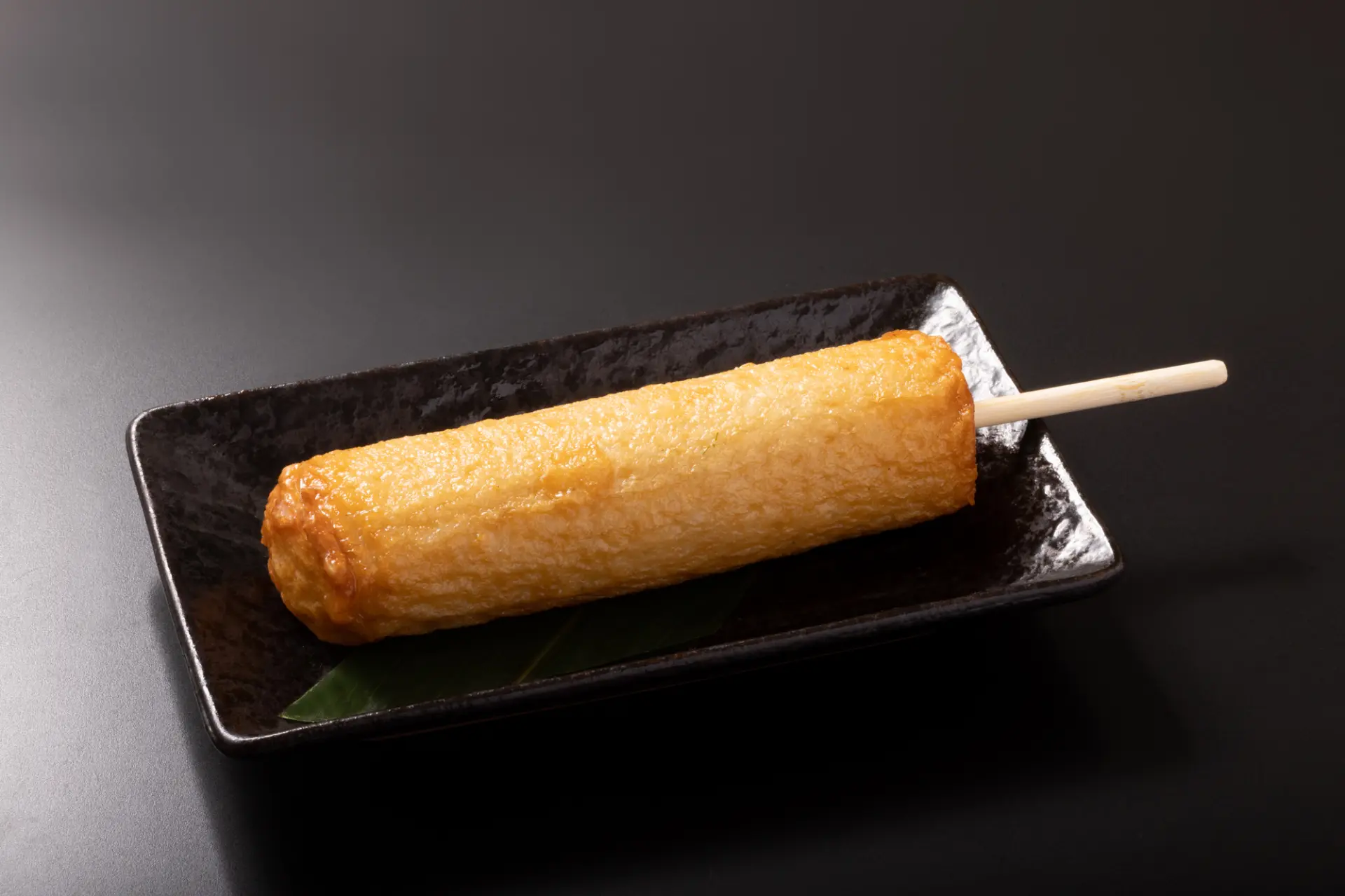
Isoage Maruten Oshino Hakkai Store is a takeout specialty shop inside Oshino Hakkai Ikemoto that sells isoage, a type of fried fish cake and a specialty of Ise-Shima (there are table seats in front of the shop).
Made with a focus on natural salt and hon mirin, the shop’s isoage is known for its springy yet fluffy texture, packed with plenty of fresh seafood.
The display case is lined with bite-sized isoage from classic flavors to creative varieties, making the choosing part fun as well.
Popular items include the easy-to-eat stick-style Ebi Mayo Stick, Octopus Stick, and Cheese Stick.
They are easy to hold and let you enjoy them piping hot and freshly fried, which is another plus.
3. Tebakido
Tebakido is a handmade rice cracker shop located beside Waku Pond.
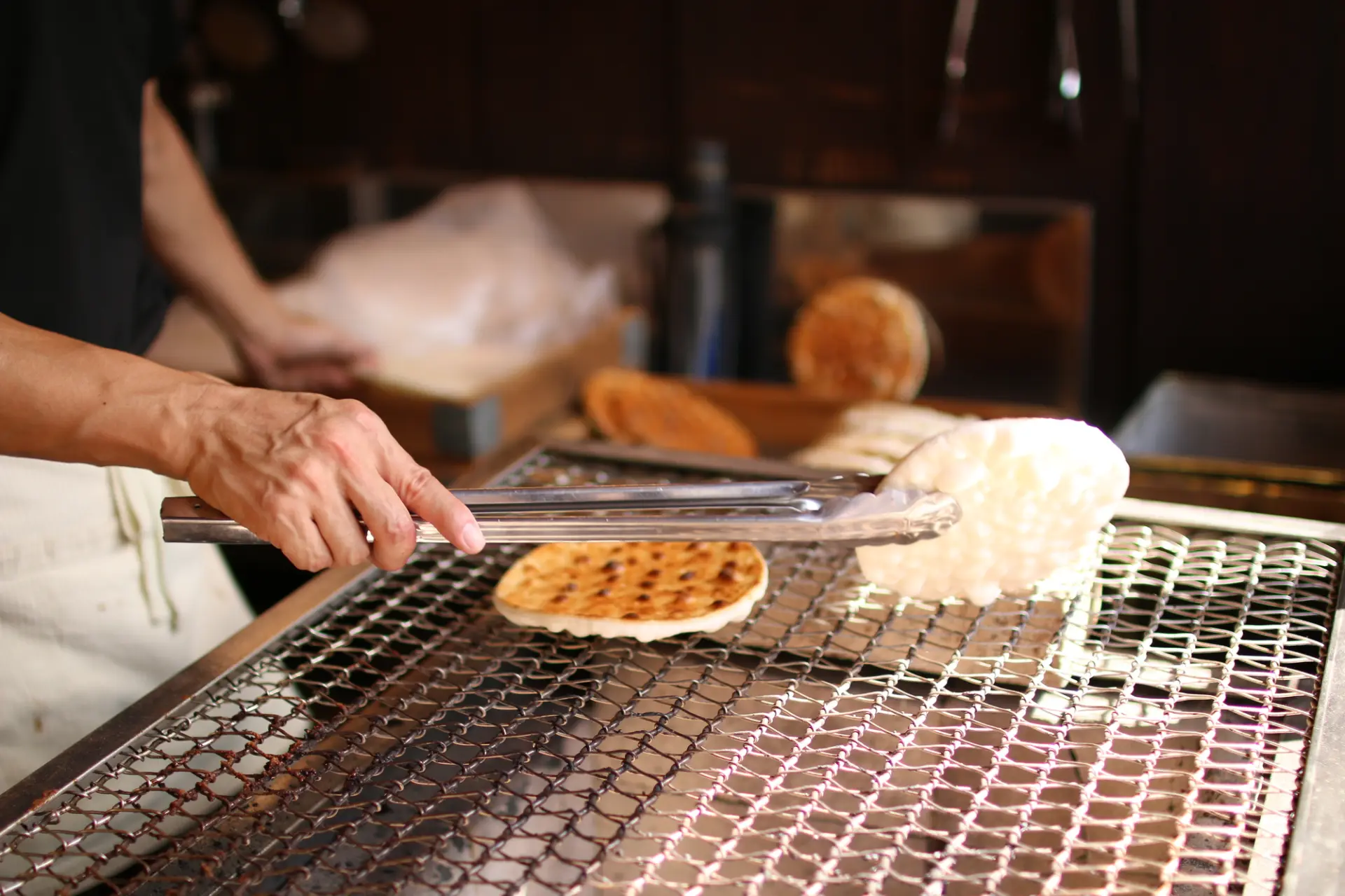
Its signature feature is the performance of carefully grilling each cracker one by one over charcoal at the storefront, filling the air with the savory aroma of soy sauce, and serving them in a by-weight style perfect for eating on the go.
It is popular for offering both the lively atmosphere and the crisp texture of freshly grilled crackers at the same time.
The shop’s signature freshly grilled senbei, about the size of your palm, comes in heart and round shapes, which is part of the fun.
It is also recommended for souvenir shopping thanks to its wide lineup, including cute Mt. Fuji-shaped crackers and its series of broken mochi snacks.
3 Recommended Places to Stay Near Oshino Hakkai
Here are three recommended places to stay around Oshino Hakkai.
All of them are popular ryokan where you can enjoy spectacular views and natural scenery at the foot of Mt. Fuji while relaxing during your stay.
Use the information below to find a hotel that catches your eye and consider staying there.
1. Hakkai Konohanakan
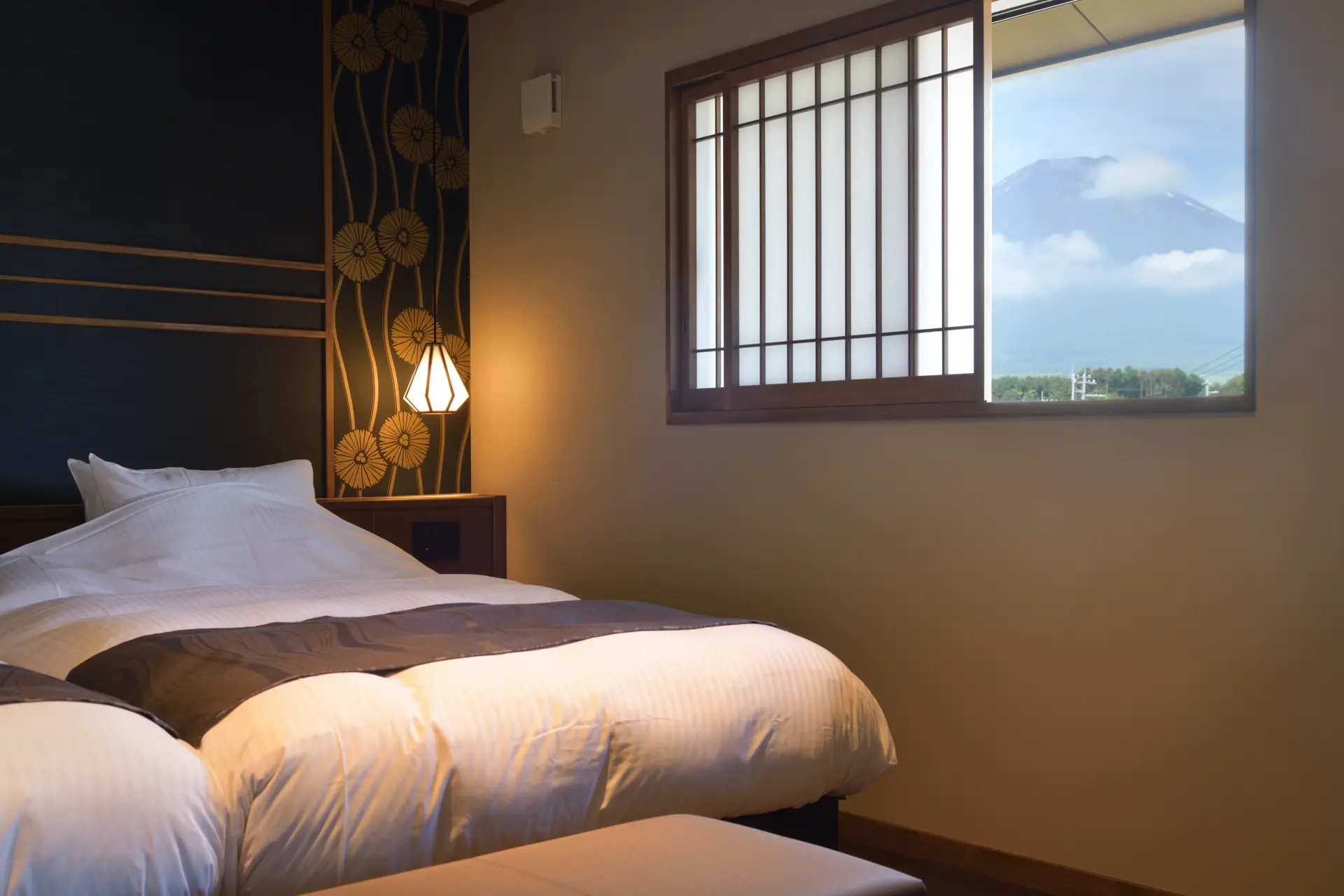
Hakkai Konohanakan is a hot spring ryokan located about 3 minutes by car from Oshino Hakkai and about 5 minutes from Lake Yamanakako, set at the foot of Mt. Fuji.
Its appeal lies in its fully private style with only five rooms, each designed as a detached space complete with a private entrance, semi-open-air bath, and garden.
Every guest room is surrounded by beautiful natural scenery, offering a comfortable and extraordinary stay.
Another highlight is the monthly changing meals served in your room.
A variety of dishes made with carefully selected ingredients from Yamanashi Prefecture and Oshino Village brighten the table and let you fully enjoy seasonal flavors at their best.
*Guests under 10 years old and those with limited mobility (unable to walk on their own) cannot stay.
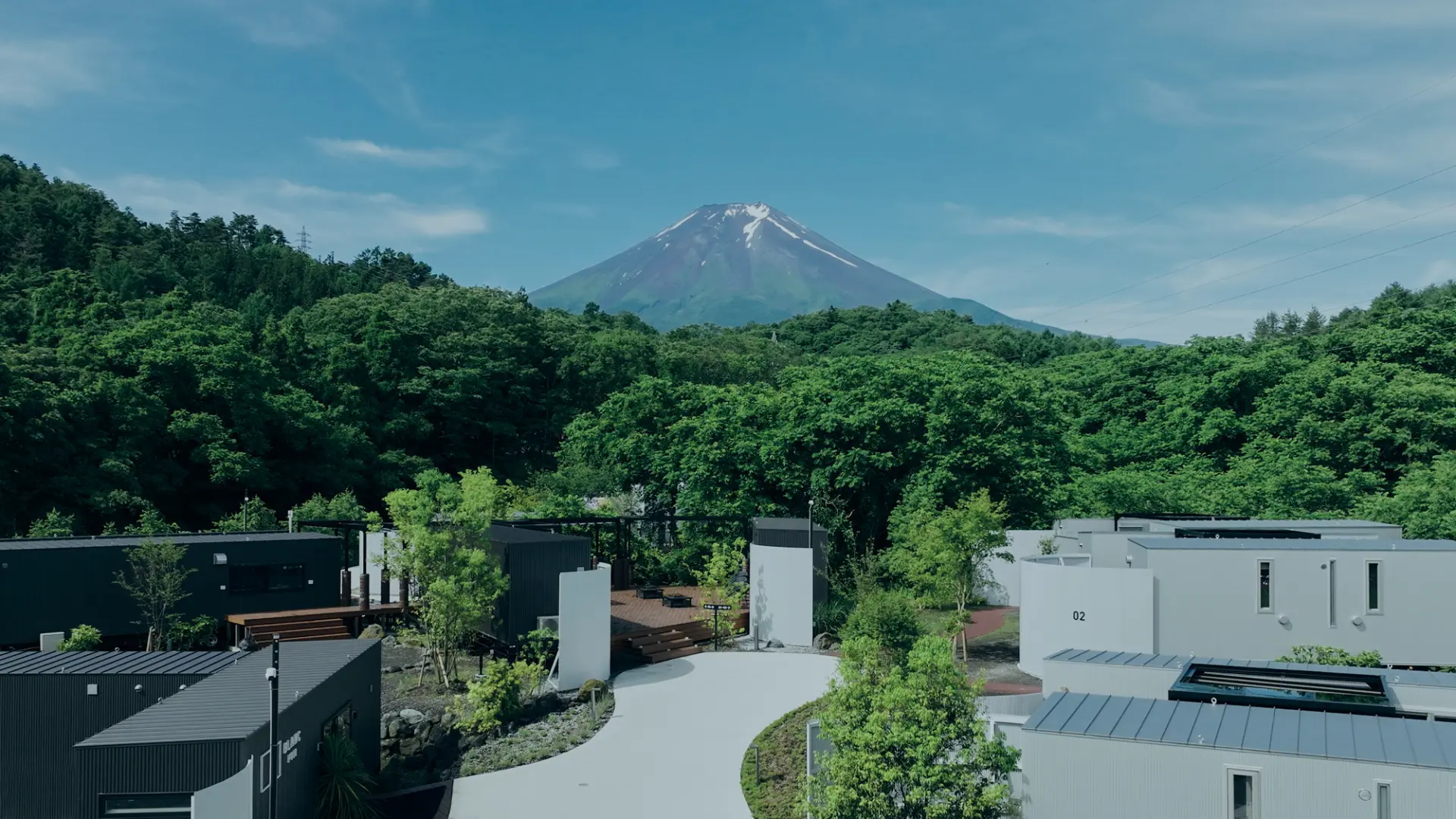
2. BLANC FUJI
BLANC FUJI is a nature-oriented condominium hotel located about 10 minutes by taxi from Fujisan Station (with a free shuttle available by reservation).
Based on the concept of “experiencing margin,” the property places 11 independent villas, using trailer houses as guest rooms, throughout a forest of about 1,700 tsubo.
Each villa comes in different types, such as ones with an open-air bath or a private sauna, offering well-equipped facilities and amenities while staying close to nature.
The property also has a restaurant where you can enjoy wood-fire cooking and a bonfire space, making it possible to experience the nature of the Mt. Fuji foothills with all five senses.
3. Hotel Kaneyamaen
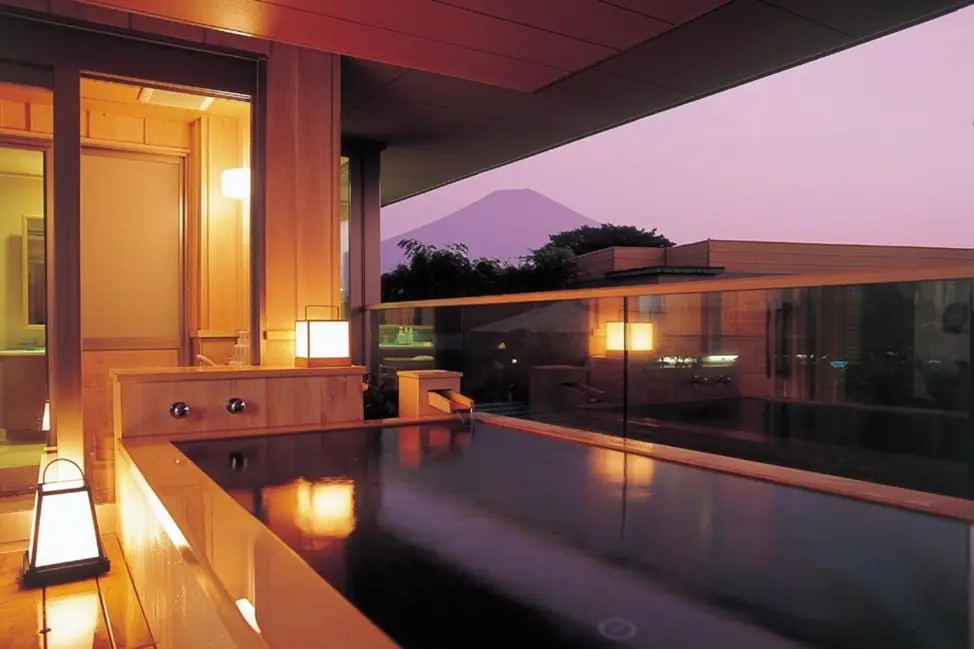
Hotel Kaneyamaen is a large hot spring ryokan located about 10 minutes from Fujisan Station by free shuttle bus (1:00pm–6:00pm, call after arriving at the station).
It is a popular inn with the achievement of ranking 7th nationwide in the 2025 edition of “100 Best Hotels and Ryokan in Japan Chosen by Professionals,” one of the country’s longest-running rankings.
Its greatest attraction is the spectacular view from the rooftop open-air bath “Mt. Fuji,” where you can enjoy sights such as red Fuji at sunrise and snow-covered scenery depending on the season and time of day.
In addition, the free-flowing hot spring water with a high alkaline pH of 10.3 leaves your skin feeling smooth, making it perfect for soothing the fatigue from sightseeing.
3 Popular Tourist Spots to Visit Along with Oshino Hakkai
Finally, here are three popular sightseeing spots that are easy to access from the Oshino Hakkai area.
All of them are in the Fuji Five Lakes area and offer different ways to enjoy the grand scenery of Mt. Fuji.
Be sure to visit them after exploring Oshino Hakkai and make the most of your trip to Yamanashi.
1. Kawaguchiko
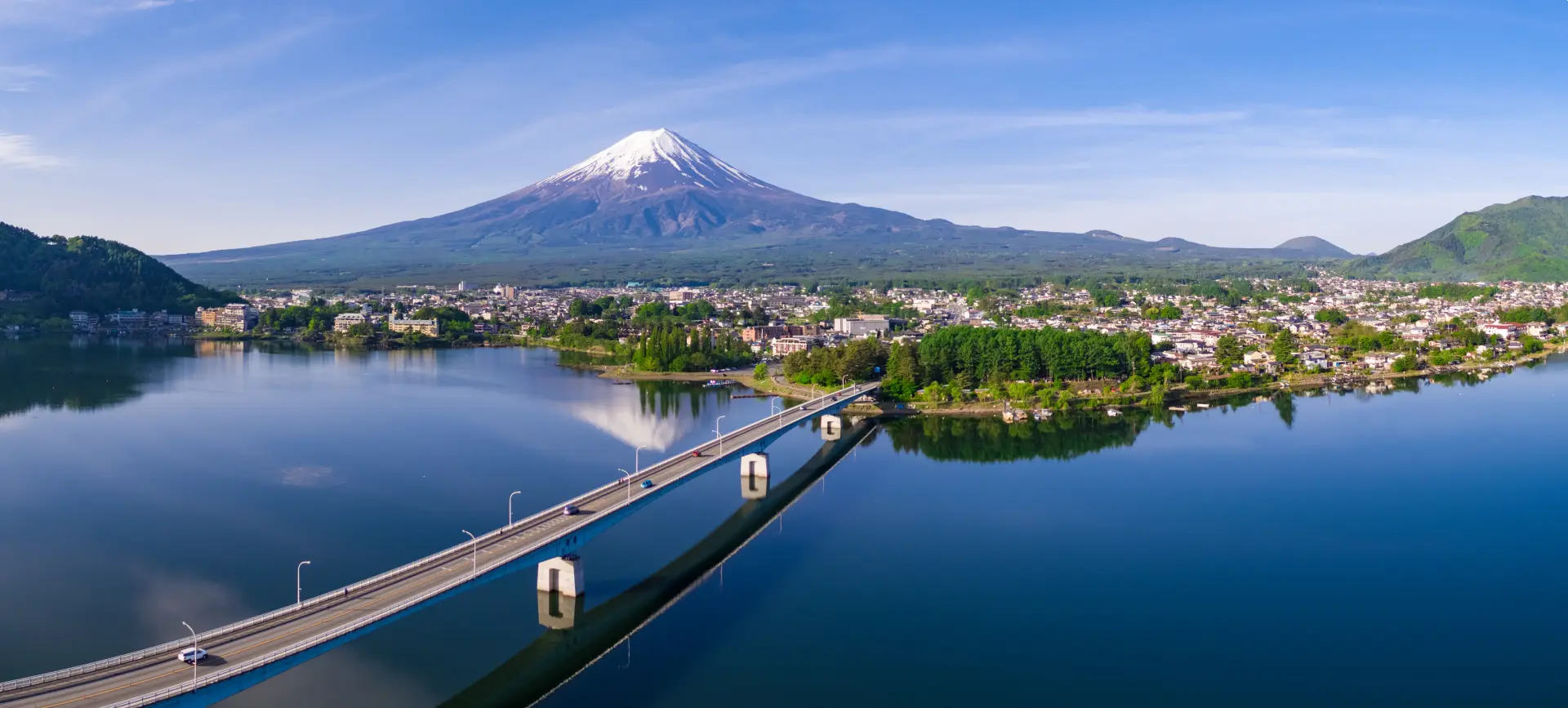
Kawaguchiko is known as one of the Fuji Five Lakes and is a popular spot for its spectacular views of Mt. Fuji.
Along the lakeshore, cherry blossoms bloom in spring, purple lavender appears in early summer, and autumn leaves color the landscape in fall, creating beautiful scenery that changes with the seasons.
It is also known as the only lake among the Fuji Five Lakes that has both an island and a bridge.
2. Yamanakako
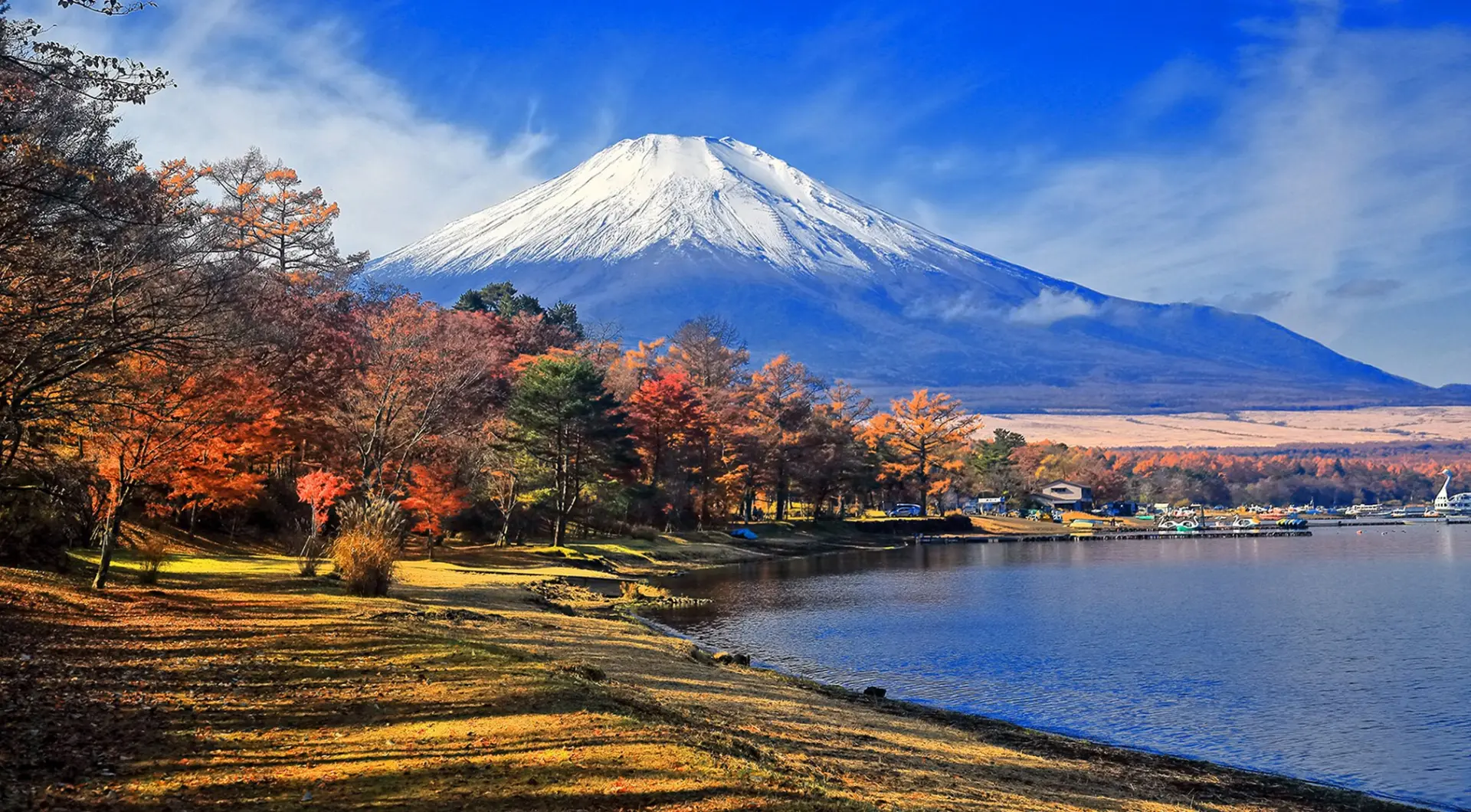
Lake Yamanakako covers about 6.57 square kilometers and sits at an elevation of about 980.5 meters, making it the third-highest lake location in Japan.
It is the closest of the Fuji Five Lakes to Mt. Fuji, offering beautiful seasonal scenery created by the grand mountain and the lake.
Tulips bloom in spring, sunflowers in summer, and cosmos in fall, while autumn leaves and beautifully snow-covered Mt. Fuji can also be enjoyed in the colder seasons, making it a place to enjoy sightseeing year-round.
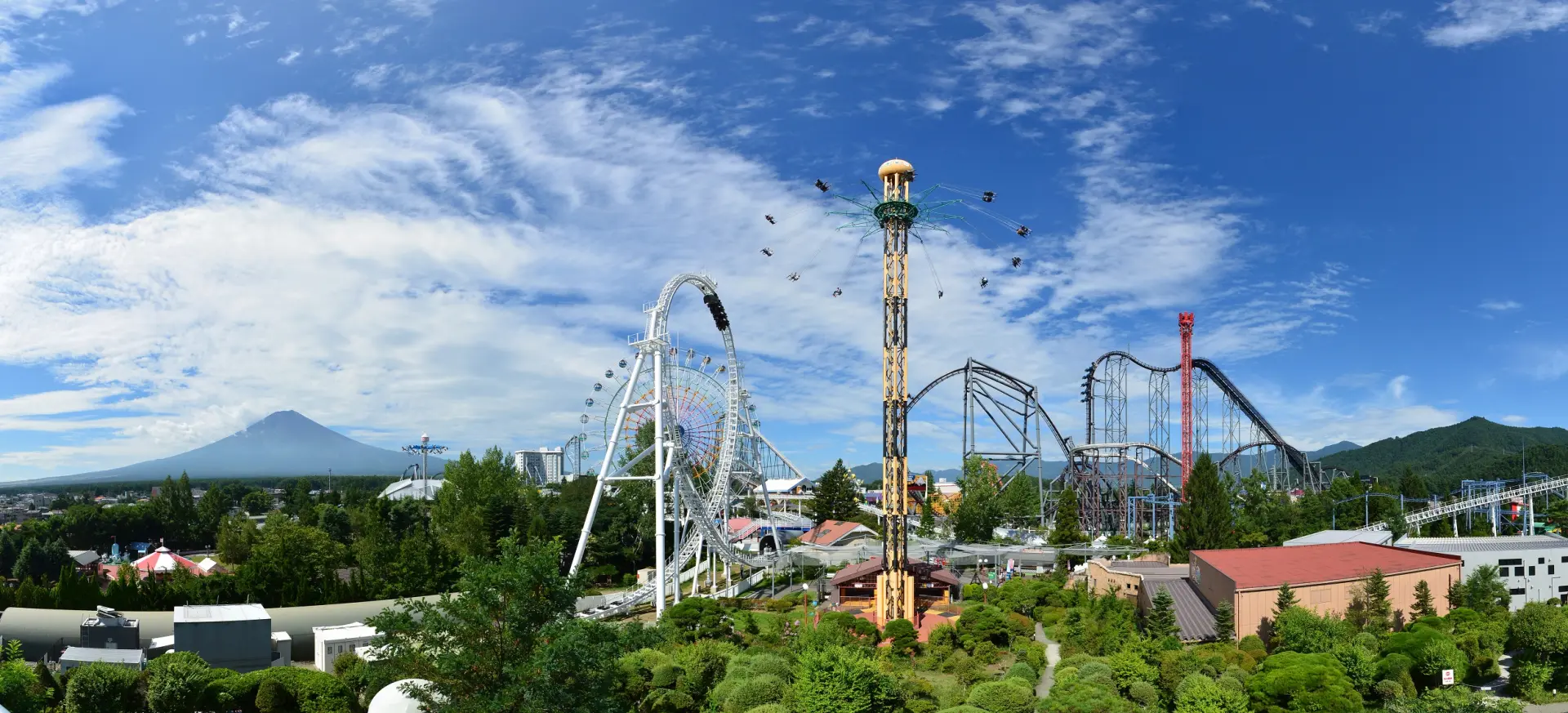
3. Fuji-Q Highland
Fuji-Q Highland is home to everything from world-class thrill rides to character-themed attractions.
It features plenty of exciting rides, including FUJIYAMA, known as the “King of Coasters” with a top speed of 130 km/h, and Eejanaika, an intense coaster boasting 14 total rotations.
It is also highly popular as an amusement park where you can enjoy many kinds of thrills, including the haunted house Senritsu Meikyu, the longest in Japan at 900 meters walking distance and infamous for the many people who give up halfway through.
Reviews




FAQ about Oshino Hakkai
Q
Is there a set order for visiting the ponds at Oshino Hakkai?
A
There is no fixed order, so you are free to visit them however you like. If you want to be efficient, starting from Deguchi Pond is recommended.
Q
How long does it take to visit all of Oshino Hakkai?
A
If you are visiting on foot, use Approx. 1 hour 30 minutes–2 hours as a guide. If you want to take your time at each pond, it is best to allow a little extra time.
Q
Is there an admission fee for Oshino Hakkai?
A
Only Sokonashi Pond, which is inside the Hannoki Bayashi Shiryokan Museum, requires an admission fee of 300 yen (junior high school students and older). The other seven sites are free and can be visited 24 hours a day.
Summary
So far, we have introduced the basic information and highlights of Oshino Hakkai, a group of ponds fed by underground water from Mt. Fuji.
From its crystal-clear water to the mystical views of Mt. Fuji, nostalgic satoyama scenery, and the energy of nature, Oshino Hakkai is full of charm.
Learning about the features and legends of the eight ponds before your visit will make your walk even more meaningful.
Be sure to also read this article, which brings together useful information for planning your trip, including Yamanashi’s特色, classic sightseeing spots, and shopping areas.