Tsujun Bridge

Verified [Verified] denotes information that has been published with confirmation of its owing parties.

Tsujun Bridge

Water is released around 120 times a year, creating a historic bridge between past and present through its stone arches.

Last update :
Supervised by :  Yamato Town

Built in 1854 to solve water shortages in the terraced rice fields, this stone arch aqueduct bridge is one of the largest of its kind in Japan, with an aqueduct length of Approx. 119 m, a height of Approx. 21.3 m, and a bridge length of Approx. 78 m. It was designated an Important Cultural Property of Japan in 1960, and in 2023 it became the first civil engineering structure in the country to be designated a National Treasure.

Inside the bridge is a mechanism that draws up water through three stone water pipes, applying the principle of the siphon. It is still in active use today, sending 15,000 cubic meters of water in 24 hours and continuing to irrigate the terraced rice fields.

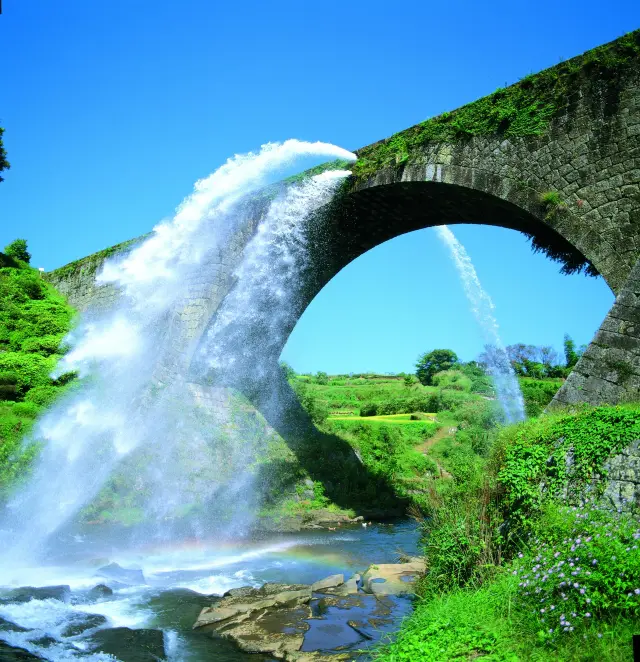
Water is released Approx. 120 times a year, and visitors can watch the powerful streams burst from both sides of the bridge from the surrounding embankments up close. By paying the crossing fee, it is also possible to watch from the top of the bridge. The schedule for release days is updated regularly on the official website.

Highlights

  • A stone arch aqueduct bridge built in 1854, with an aqueduct length of Approx. 119 m and a height of Approx. 21.3 m.
  • It sends 15,000 cubic meters of water in 24 hours and still continues to irrigate the terraced rice fields.
  • Water is released Approx. 120 times a year. The powerful streams can be viewed from various spots.

Photos

  • Water is released Approx. 120 times a year

    Water is released Approx. 120 times a year

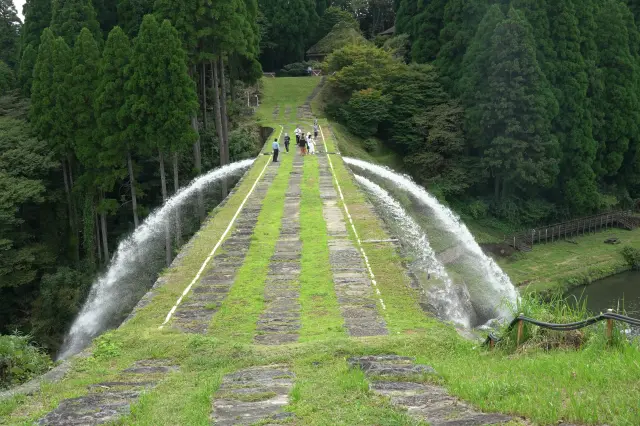
  • A huge volume of water is sent in 24 hours to irrigate the terraced rice fields

    A huge volume of water is sent in 24 hours to irrigate the terraced rice fields

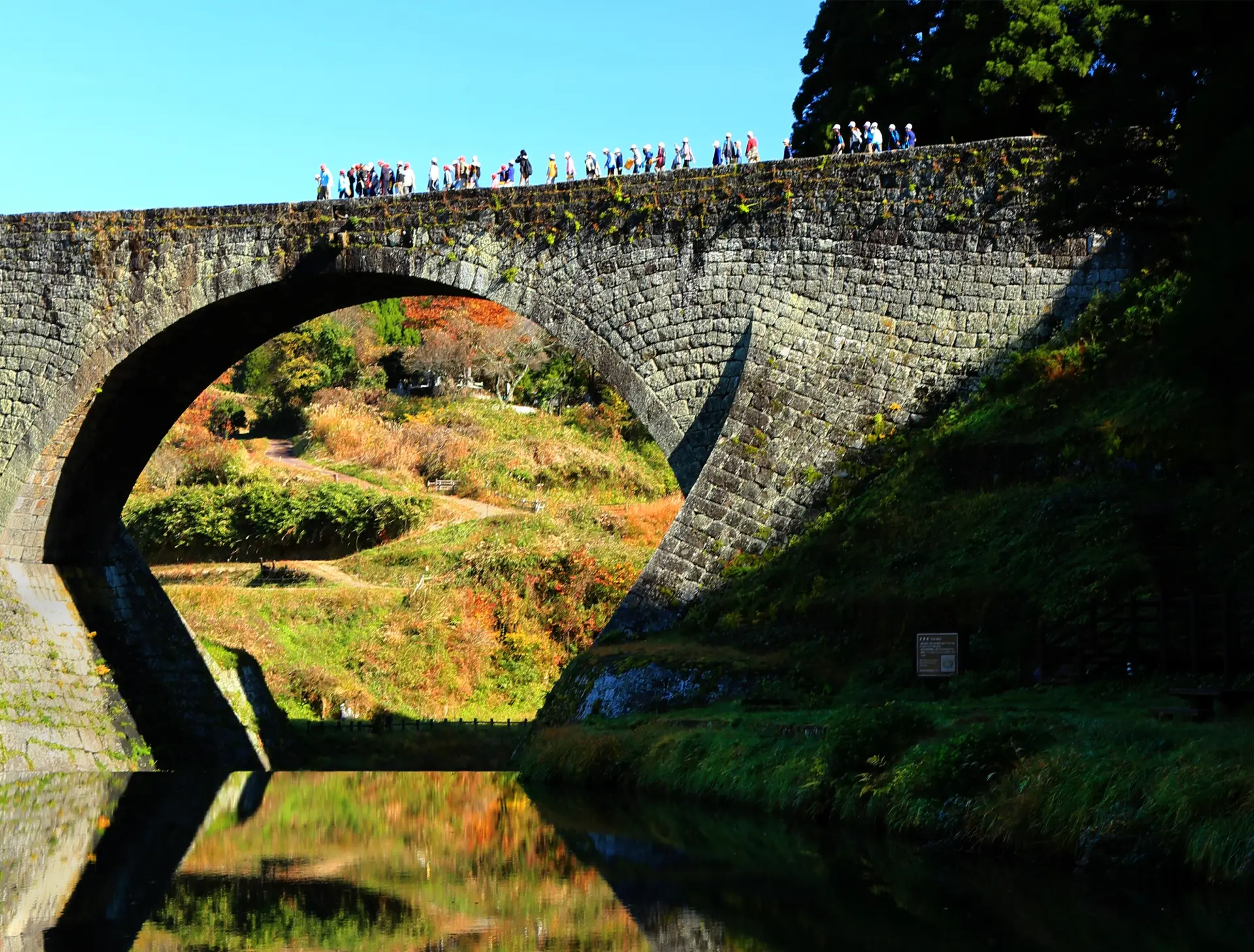
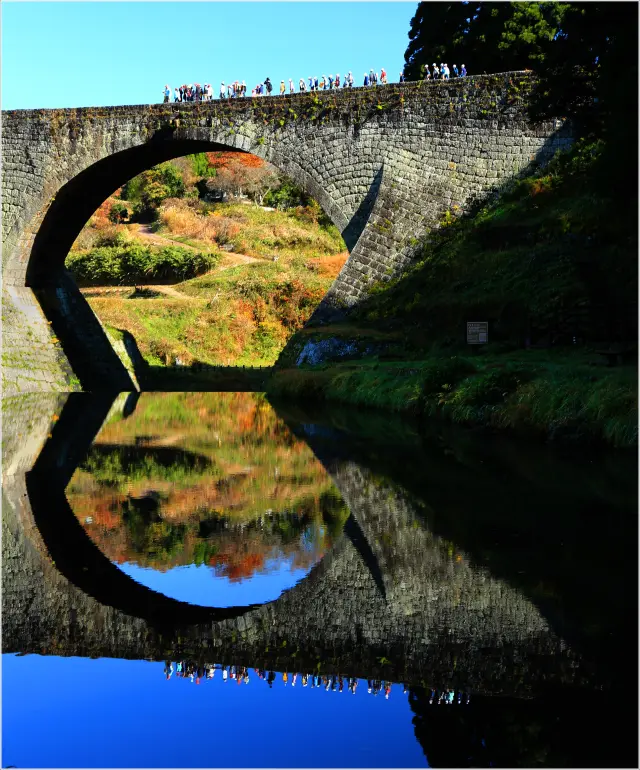
  • By paying the crossing fee, visitors can also watch from the top of the bridge

    By paying the crossing fee, visitors can also watch from the top of the bridge

Official FAQs

Frequently Asked Questions have been vetted and answered directly by each listing.

Q

Is there free Wi-Fi available in the area?

A

Tsujun Bridge Museum.

Q

Are there any sightseeing spots nearby?

A

Gorogataki Falls, Tsujun Bridge Museum, Yamato Cultural Forest.

Reviews

Details

Name in Japanese
通潤橋
Postal Code
861-3661
Address
Nagahara, Yamato Town, Kamimashiki District, Kumamoto Prefecture
Phone
0967-72-1115
Closed on
Open daily for viewing (bridge-top viewing 10:00am–3:00pm, see the calendar on the official website for water release days)
Hours
Open daily for viewing (water release from 1:00pm)
Admission
Free to view (bridge-top viewing fee: 500 yen for high school students and older, 200 yen for elementary and junior high school students)
Access
1) 1 minute on foot from the "Tsujunbashi-mae" bus stop on the Kumamoto Bus bound for Sakuramachi Bus Terminal
2) 18 minutes on foot from the "Yamato Town" bus stop on the Gokase express bus
Credit Cards
Not accepted
Official website
Official website (Japanese)