

The vibe inside feels very Showa-era. It’s not a big place, and when it’s crowded it can feel a bit tight, but that actually adds to the local izakaya feel.
Service isn’t especially warm, but they do what they need to do—nothing to complain about.
Kuroyuri | Review by Tina Lai
Other Reviews by Tina Lai
-
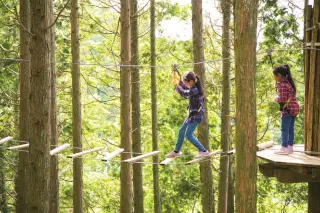
Mount Rokko Athletic Park GREENIA
One of Japan’s largest athletic parks, surrounded by the rich natural beauty of Mount Rokko. Its vast grounds of Approx. 230,000 square meters, about the size of six Hanshin Koshien Stadiums, make the mountains, sky, and waterfront all part of the adventure. Supervised by the popular video creator group Fischer's, the park offers highly photogenic athletic activities that are perfect for social media.
This is the kind of place where you’ll end up exhausted, but in a really fun way.
The whole park is huge, and everywhere you go feels like another challenge, kind of like a real-life giant adventure park.
There are lots of rope courses, climbing activities, and balance-based obstacles. Some of them don’t look like much at first, but once you actually get on them, your legs start shaking right away. It’s definitely not just for kids. Adults will be out of breath too. The design feels thoughtful, not like they just threw together a few attractions and called it a day. -
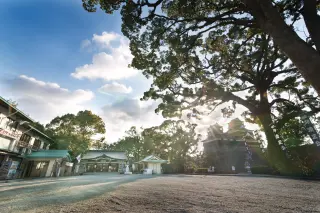
Kato Shrine at Kumamoto Castle
This shrine enshrines Kato Kiyomasa (1562-1611) as its principal deity. He was active as a Sengoku warlord and, in the Edo period (1603-1868), ruled Higo Province as the first lord of the Kumamoto Domain, earning the affectionate nickname “Seishoko-san” among the people. It stands in the Honmaru (the castle’s main bailey) of Kumamoto Castle, one of Japan’s Three Great Castles, which Kiyomasa built.
The shrine is small, but the atmosphere is very quiet. You can see the main keep of Kumamoto Castle directly, and the view is really nice. A lot of people stop to take a quick photo and pray for good luck, then head out.
It’s mainly to commemorate Kato Kiyomasa, so it’ll resonate more if you’re into history. -
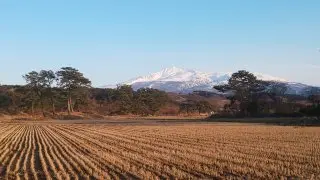
Kujukushima (Kisakata)
A scenic spot where 103 islets of all sizes appear to float in the rural landscape spreading out at the foot of Mt. Chokai. Long ago, islands dotted a shallow lagoon, and the area was praised as “Matsushima of the East, Kisakata of the West”-a stunning view that even captivated Matsuo Basho. In 1804, a major earthquake estimated at magnitude 7 uplifted the surrounding land by Approx. 2 m, turning it into tidal flats (land) and creating the landscape seen today.
So visually soothing—like a jigsaw-puzzle landscape brought to life.
When the weather’s nice, the whole sea sparkles. Totally worth taking photos.