
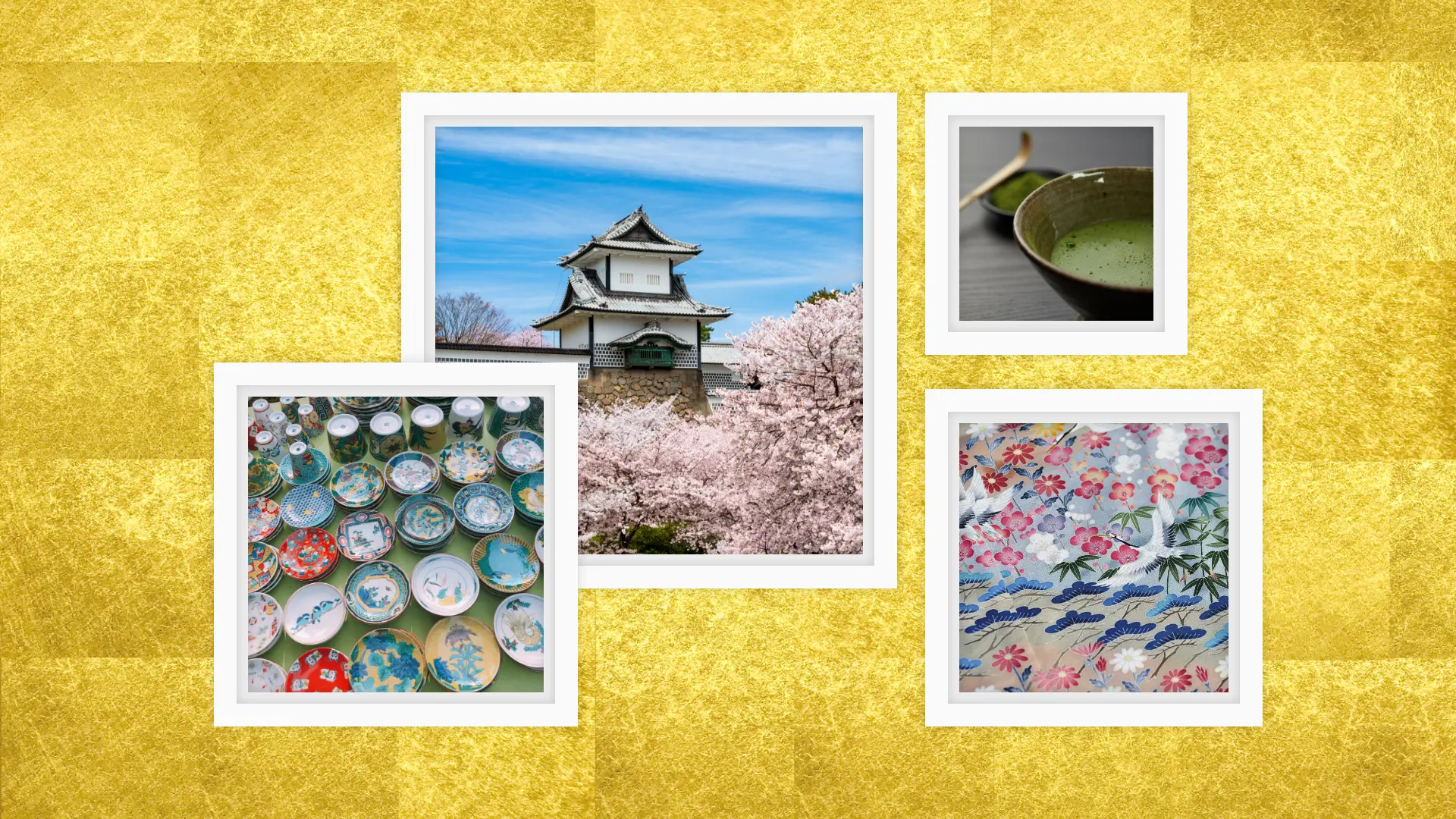
A Complete Guide to Kaga Culture: Born from the Wealth of “One Million Koku”
During the Edo period, the domain government was established in Kaga Province, the area centered on present-day Kanazawa, giving rise to “Kaga culture,” which has continued to develop to this day. The Maeda family, lords of the Kaga Domain, invested the wealth known as “one million koku” into promoting culture. As a result, exceptional skills were refined across many fields, from crafts such as Kutani ware and Kaga yuzen to tea ceremony, Noh theater, gardens, and cuisine, and these traditions have been passed down to the present. This article offers an in-depth guide to Kaga culture, including how the Kaga Domain built its million-koku wealth and the vibrant culture that grew from it. Be sure to read it before visiting Kanazawa.
Kaga History and the Maeda Family
Here is an introduction to the Maeda family, who developed Kaga with their million-koku wealth, and their history.
Kanazawa Before It Was Ruled by the Kaga Domain
In the Kanazawa folk tale “Imohori Togoro,” it is said that long ago, a young man named Togoro was digging potatoes in the mountains when gold dust was found on their roots. When he washed them in spring water, gold dust collected at the bottom, and the spring came to be called Kanaarai no Sawa, meaning “gold-washing marsh,” which eventually became a place name. This spring is Kinjo Reitaku, located on the edge of Kenrokuen Garden, and the story is also recorded on its inscription. It is also said that there may have been a settlement of Kanaya-shu, people who made their living mining gold.
Kanazawa originally began as a town of deeply religious people. In the mid-16th century, Jodo Shinshu, a sect of Buddhism, established a temple called Kanazawa Mido as a missionary base. Buildings and lodging facilities were then set up around it, forming a temple town. A bridge called Gokuraku Bridge still stands inside Kanazawa Castle, and it is said to be a remnant of the Mido period.
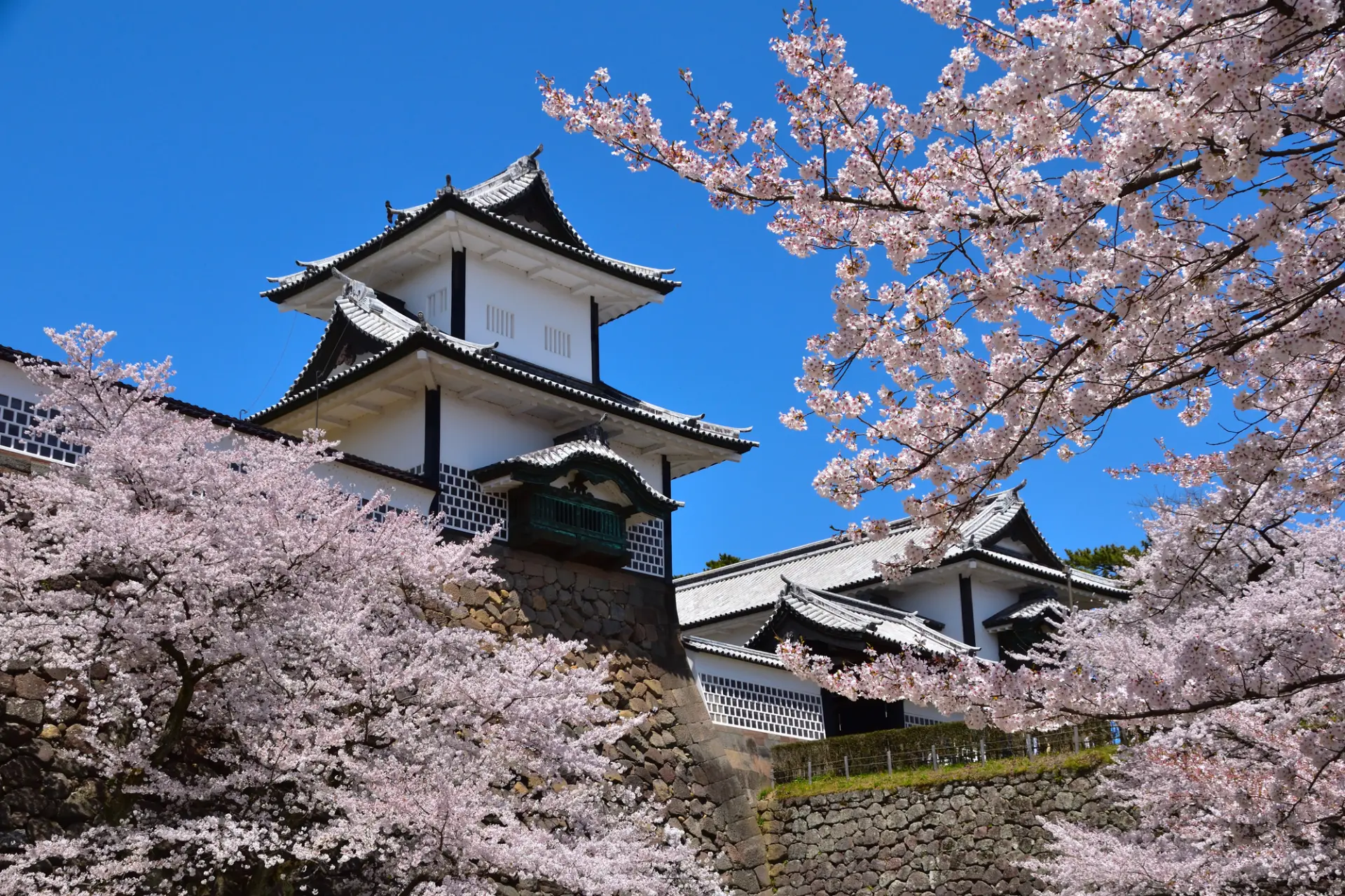
Kanazawa Mido was conquered by Oda Nobunaga, and his retainer Sakuma Morimasa became the local lord. Morimasa then renamed Kanazawa Mido “Kanazawa Castle.” Later, Maeda Toshiie replaced Morimasa as lord of Kanazawa Castle. Under Maeda Toshiie, castle construction advanced with the building of a castle keep, the creation of high stone walls, and more.
The Maeda Family of the Kaga Domain, Builders of “One Million Koku”
The wealth of the Maeda family of the Kaga Domain was known as “Kaga Hyakumangoku,” or “Kaga of one million koku.” Under the Tokugawa shogunate during the Edo period, there were around 300 domains, and the Kaga Domain was consistently the largest throughout the era. A “koku” was a unit of land productivity. It represented the amount of rice that could be harvested from that land in one year. One koku was Approx. 180 liters, the amount of rice an adult man would eat in a year. At the time, rice functioned much like currency. This “kokudaka,” or assessed rice yield, served as an indicator of a daimyo’s power, including economic strength, military capacity, and territorial scale.
During the Edo period, around 1664, the Kaga Domain ranked first among daimyo domains with 1.03 million koku. The Satsuma Domain, in second place, had 730,000 koku, making Kaga the clear leader. For reference, Sendai Domain ranked third with 620,000 koku. These figures show just how high the Kaga Domain’s kokudaka was.
There were three key figures behind Kaga becoming the top domain in Japan: the first lord, Maeda Toshiie; the second, Toshinaga; and the third, Toshitsune.
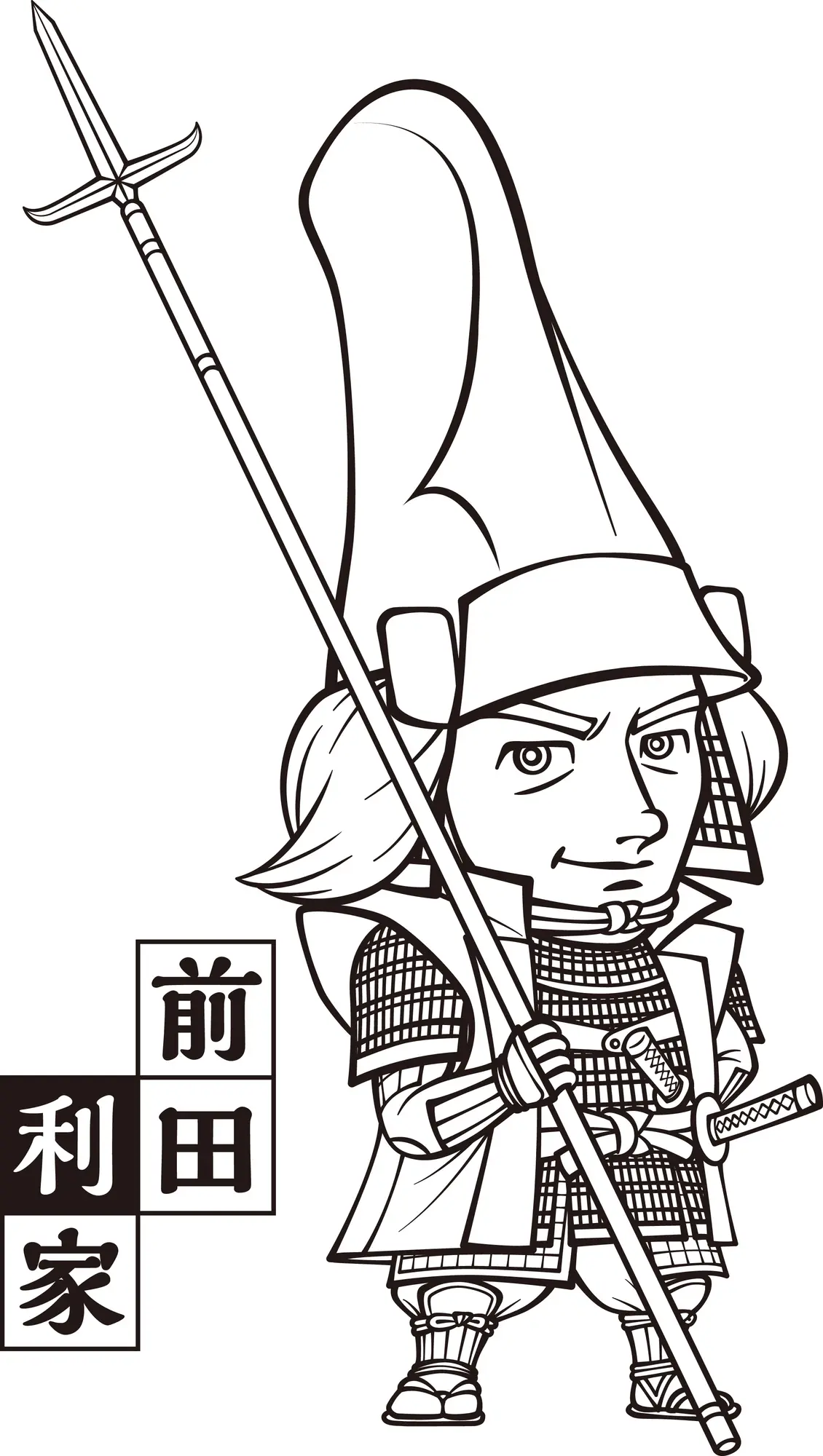
Maeda Toshiie, the founder of the domain, was a master of the spear from a young age. With his brave and fearless fighting style, he rose to prominence as a member of Oda Nobunaga’s personal guard. Incidentally, Toshiie was the fourth son of the Maeda family, so he was not originally in line to inherit the family. However, he was recognized by the Oda family and ultimately succeeded as head of the Maeda family. Toshiie’s first territory is said to have been only around 7,000 koku. Even so, he continued to distinguish himself, and in 1581, when he was around 43, Nobunaga granted him all of Noto Province, worth Approx. 200,000 koku.
Then Oda Nobunaga was killed in the Honnoji Incident, and the Battle of Shizugatake began between Toyotomi Hideyoshi and Shibata Katsuie. For Toshiie, Hideyoshi was a close friend, while Katsuie was a warlord he respected like a father. After struggling over which side to take, Toshiie sided with Katsuie and joined the Battle of Shizugatake. There are various theories, but it is generally believed that he later betrayed Katsuie, withdrew without fighting at Shizugatake, and defected to Hideyoshi. Toshiie was skilled in arithmetic and is said to have personally calculated the necessary soldiers, weapons, and food using an abacus. (In general, such calculations were apparently handled by retainers.) Meanwhile, Hideyoshi was trying to promote a land survey policy known as kenchi, which examined land area and harvest yields in order to collect annual taxes accurately. Hideyoshi valued Toshiie’s strong arithmetic skills and brought him into his circle. Even after Hideyoshi unified Japan, Toshiie stood alongside Tokugawa Ieyasu at the center of the Toyotomi government and rose under Hideyoshi to become a daimyo with 800,000 koku.
The second lord, Toshinaga, was the person who brought the Kaga Domain to one million koku. The turning point came in 1600 at the Battle of Sekigahara, where Tokugawa Ieyasu and Ishida Mitsunari clashed. Toshinaga sided with Tokugawa Ieyasu and fought hard in the Hokuriku region. As recognition for his achievements, his territory was increased by 200,000 koku, making him a great daimyo with one million koku.
The person who inherited that one million koku was the third lord, Toshitsune, in 1605. Toshitsune was the one who laid the foundation for the Kaga Domain, which lasted for 300 years. To ensure stable rice harvests, he implemented policies such as strengthening farming villages and improving agricultural production. As a result, the Kaga Domain’s kokudaka increased to 1.25 million koku. Toshitsune’s policies made “Kaga Hyakumangoku” unshakable for 300 years.
Kanazawa Hyakumangoku Festival
The Kanazawa Hyakumangoku Festival is one of Kanazawa’s largest festivals. It commemorates Maeda Toshiie’s entry into Kanazawa Castle. More than just an event, it is also a festival where visitors can experience traditional performing arts and culture closely connected to the Kaga Domain. Here are the highlights.
What Is the Kanazawa Hyakumangoku Festival?
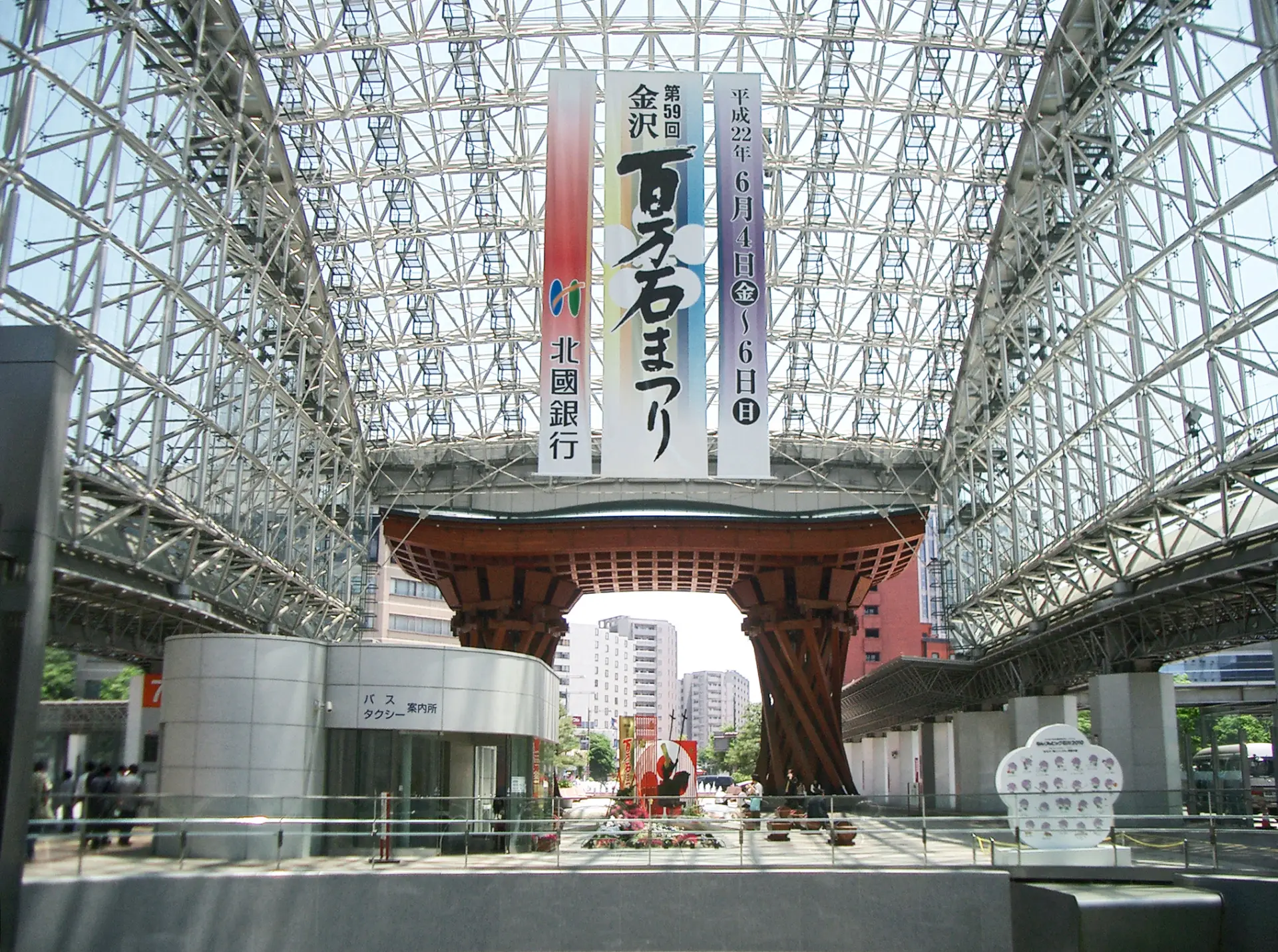
The event commemorating the entry of Maeda Toshiie, founder of the Kaga Domain, into Kanazawa Castle on June 14, 1583, and his role in laying the foundations of Kanazawa, is held every year in early June in Kanazawa City. It is one of Kanazawa’s largest festivals, attracting many visitors not only from across Japan but also from overseas. The main event is the lavish Hyakumangoku Procession, a large-scale historical parade that recreates Maeda Toshiie’s entrance into Kanazawa Castle. One highlight is that a famous actor plays Maeda Toshiie each year. Groups such as warrior units, Kaga Tobi performers, lion dancers, and music bands take part, departing from in front of the Tsuzumi-mon Gate at Kanazawa Station’s East Plaza and entering Kanazawa Castle through Ishikawa-mon Gate. It is a major parade lasting as long as four hours.
Warrior Units
These are the historical procession units at the core of the Hyakumangoku Procession. Participants wearing armor and jinbaori surcoats march as samurai from the Warring States period. The procession includes units made up of people and groups connected to the Maeda family, including Maeda Toshiie, of course, his wife Matsu, retainers, the Akahoro-shu, and the Eight Senior Retainers of Kaga. These warrior units appear in the latter half of the Hyakumangoku Procession and are the festival’s biggest highlight.
Kaga Tobi
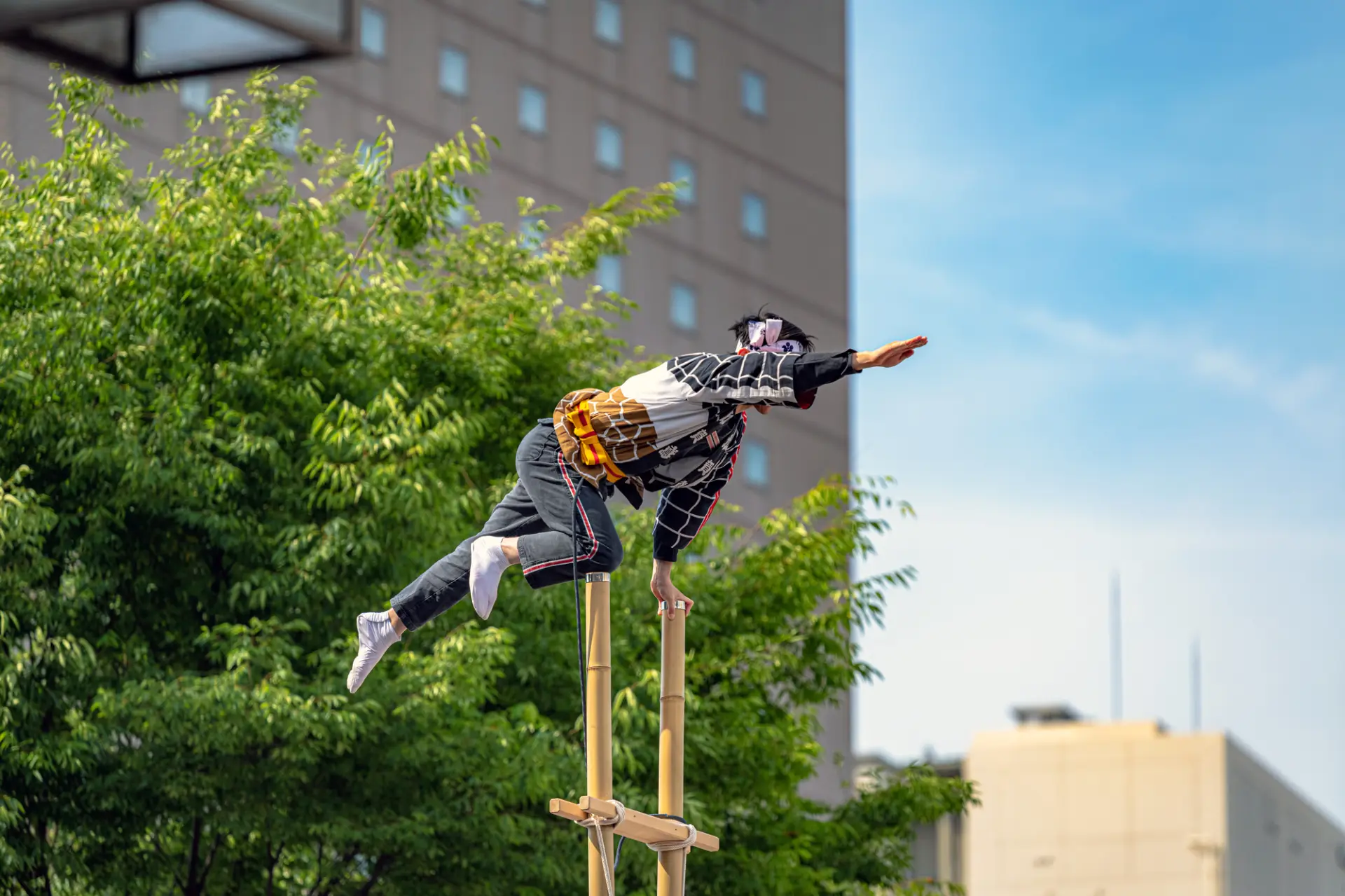
Kaga Tobi is a traditional performing art and firefighting culture that originated with the daimyo fire brigades of the Kaga Domain. The domain organized elite firefighting groups to prepare for fires at its Edo residences. Today’s Kaga Tobi continues that tradition. During the Hyakumangoku Festival, members of the Kanazawa City fire brigade form the Kaga Tobi procession and perform skills such as matoi-furi, waving firefighters’ standards, and hashigo-nobori, ladder climbing. Ladder climbing is said to have begun in the Edo period, when firefighters set up tall ladders at fire scenes to check the state of the fire, the wind direction, and building conditions from above. The performances, including handstands and one-legged poses atop tall ladders, are spectacular!
Lion Dance
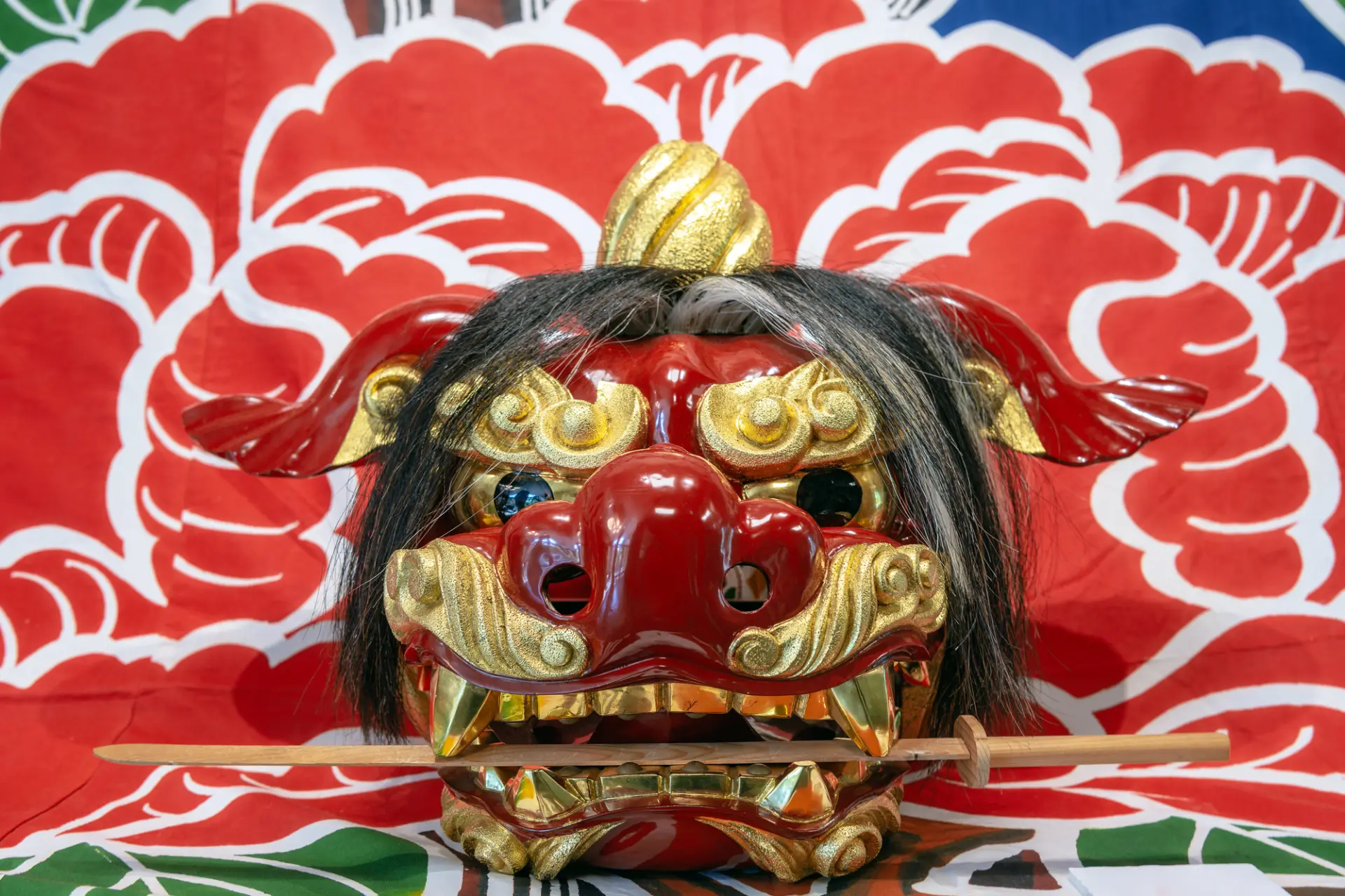
Kaga Shishi is a lion dance passed down in Ishikawa Prefecture. It is said to have originated when local people performed a celebratory lion dance as Maeda Toshiie entered Kanazawa Castle. It later spread with the encouragement of successive domain lords. Unlike the typical two-person lion dance, it is known for its large, powerful lion head. Another feature of Kaga Shishi is its strong martial arts elements. At the Kanazawa Hyakumangoku Festival, local preservation groups take part and proceed while performing the lion dances passed down in their own towns. Visitors can see the lion shake its mane and movements accompanied by stick-swinging and taiko drums.
Music Bands
The parade music bands lead the Hyakumangoku Procession. Local school brass bands, baton twirling teams, fire department bands, police bands, Self-Defense Forces bands, and others take part, marching while performing music and routines. They heighten the excitement before the historical procession begins.
At the Kanazawa Hyakumangoku Festival, visitors can experience not only the parade but also the Kaga culture created by the Kaga Domain, including tea ceremony at the Hyakumangoku Tea Ceremony and the dreamlike Takigi Noh of Kaga Hosho performed under torchlight.
Traditional Culture of Kaga
With the wealth of the Kaga Domain’s one million koku, a brilliant traditional culture emerged that rivaled Kyoto and Edo, then developed in its own distinctive way. Here is an introduction to the traditional culture of Kaga that continues to be passed down today.
Why Kaga Culture Was Born
Kaga culture blossomed against the backdrop of the Maeda family’s Kaga Hyakumangoku. During the Edo period, the Maeda family of the Kaga Domain, which ruled the Kaga region, possessed financial power second only to the Tokugawa family, who founded the Edo shogunate. Because of this, the Tokugawa family was wary of the Maeda family. From the Tokugawa perspective, they likely worried that the Maeda family might rebel at any time. To divert that suspicion, it is believed that the Maeda family invested its wealth not in military affairs but in cultural policies such as culture and crafts. They invited outstanding cultural figures from Kyoto and Edo in many fields and established first-class culture in Kanazawa. In this way, a distinctive culture was born, influenced by both Kyoto’s court culture and Edo’s samurai culture.
During the Edo period, at the domain lord’s direction, cultural pursuits such as Noh and tea ceremony were encouraged not only among samurai but also among townspeople, including merchants and artisans, and became deeply rooted in the castle town of Kanazawa. Samurai culture was closely tied to spiritual discipline. Its emphasis on refined aesthetics and inner richness influenced the daily lives of people in the castle town. As a result, after the age of the samurai ended and the Maeda lords and many of their retainers left Kanazawa, the townspeople carefully preserved that culture, and it remains in Kanazawa today.
Tea Ceremony
Chanoyu, the Japanese tea ceremony, is a traditional culture in which matcha is prepared and served to guests. It is not simply a set of manners for drinking tea. It is a comprehensive art that brings together etiquette, spirituality, and aesthetics. Its origins are said to date to the Kamakura period, when Zen monks introduced tea from China, and it spread among samurai and court nobles in the Muromachi period. In the 16th century, Sen no Rikyu perfected wabi-cha, and the spirit of wabi-sabi, which finds beauty in simplicity, as well as the hospitality expressed by ichigo ichie, or “one time, one meeting,” came to be highly valued. These ideas remain important to Japanese people today. Tea ceremony has been passed down to the present as a culture of hospitality that embraces everything in the space, including the tea room, utensils, hanging scroll, flowers, and sweets.
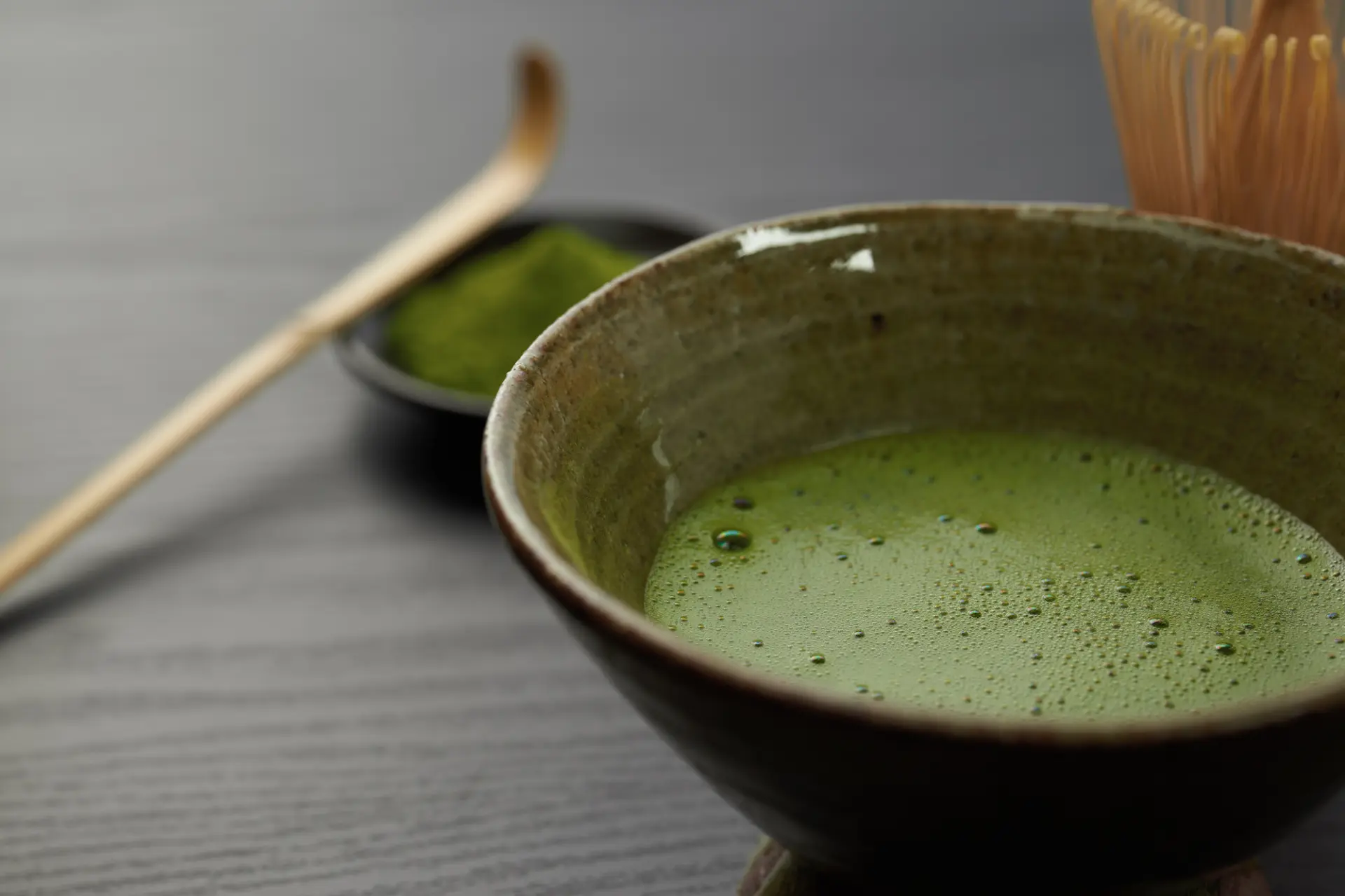
Under the Kaga Domain’s policy of encouragement, tea ceremony also spread through Kaga. The Maeda family valued tea ceremony for generations and continued to protect it with care. That tradition is still alive in Kanazawa, where many tea rooms remain throughout the city. Ishikawa Prefecture ranks first in Japan for wagashi confectionery consumption by prefecture, and it also has one of the highest numbers of tea ceremony classes.
After Toyotomi Hideyoshi unified Japan, warlords of the Warring States period also gained time to enjoy the arts. Maeda Toshiie was one of them. With Sen no Rikyu, who perfected tea ceremony, as his tea master, Toshiie attended and hosted tea gatherings and deepened his understanding of chanoyu. Toshiie was the figure who helped establish tea ceremony culture in Kaga.
The third lord, Toshitsune, is especially important in the relationship between the Kaga Domain and tea ceremony. Toshitsune employed Senso Soshitsu, the fourth son of Sotan, grandson of Sen no Rikyu, who later became the founder of the Urasenke school. Senso is said to have taught tea ceremony not only to domain retainers but also to merchants and townspeople. As a result, tea ceremony culture spread rapidly throughout the castle town.
The fifth lord, Tsunanori, protected tea ceremony culture as part of the domain’s culture and helped it mature and develop. He also focused on promoting crafts, producing and collecting renowned tea utensils, and tea ceremony culture in Kaga entered its golden age.
In this way, the foundation of tea ceremony was established and developed in Kaga. Even today, Kanazawa is one of Japan’s leading centers of tea culture.
Kaga Hosho
Kaga Hosho is the Noh theater tradition that developed under the Kaga Domain. It has been designated an intangible cultural property of Ishikawa Prefecture, and Kanazawa City works to protect and preserve it.
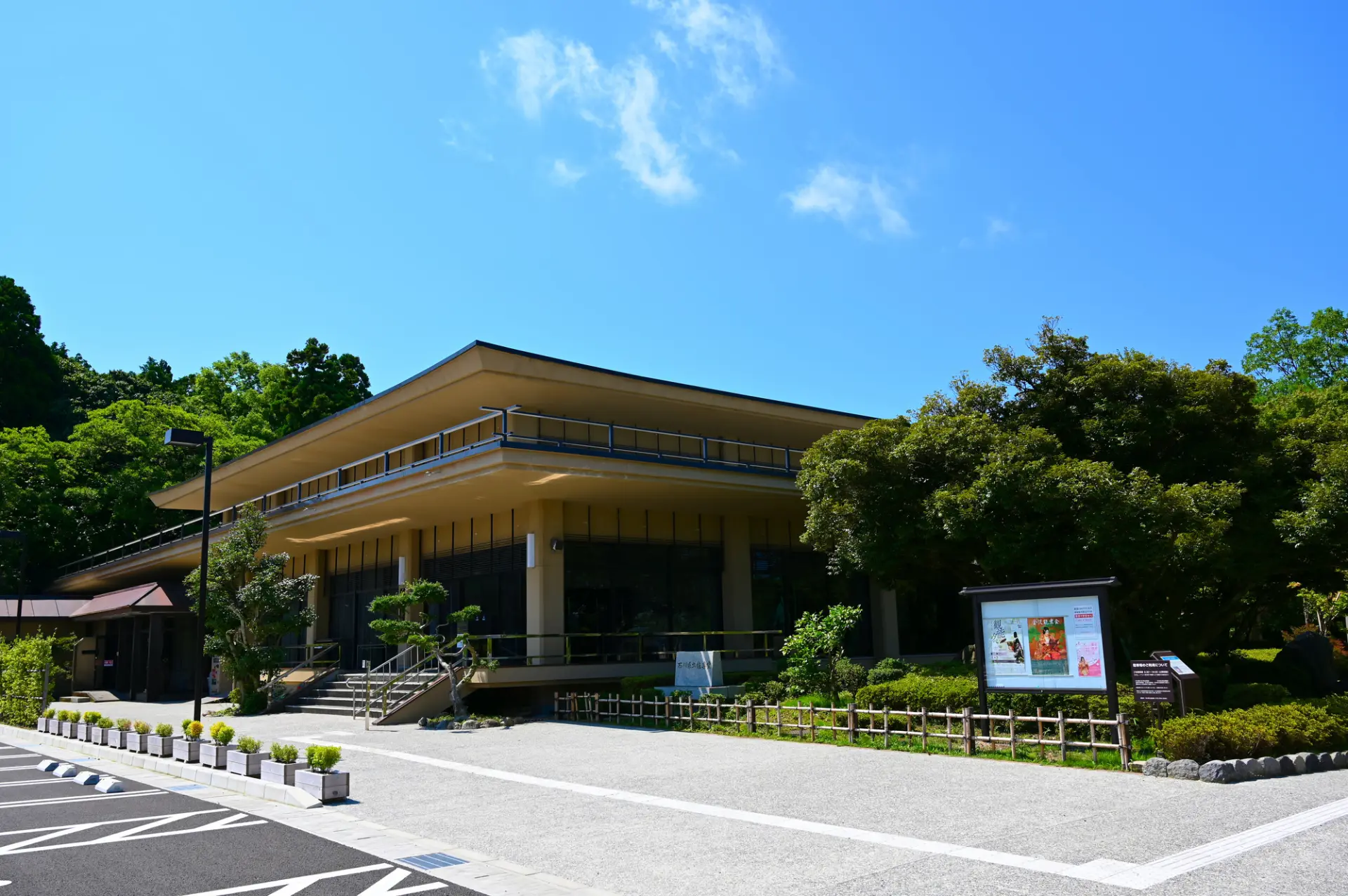
During the Edo period, Noh was shikigaku, a performing art staged for official ceremonies and events of the shogunate. Domains across Japan also retained Noh performers, and the Kaga Domain was no exception. Noh was performed for the domain lord’s ceremonies, celebrations, and hospitality, and it was valued as part of samurai refinement.
The domain founder, Toshiie, also loved Noh and is said to have practiced enthusiastically, even every few days. From Toshiie’s time, the Maeda family had a foundation of appreciation for Noh, but among the many schools of Noh, it was from the fifth lord, Tsunanori, that the family came to favor the Hosho school.
Influenced by Tokugawa Tsunayoshi, who favored the Hosho school, Tsunanori also changed to the Hosho school. He had his retainers learn Noh chanting and dance as samurai accomplishments, and he further encouraged townspeople to study them as well. In this way, Noh, especially the Hosho school, became particularly popular in the Kaga Domain, forming the foundation of “Kaga Hosho.” It is said that Noh chanting could be heard throughout the town, to the point that people described it as “chants falling from the sky.”
Kaga Yuzen
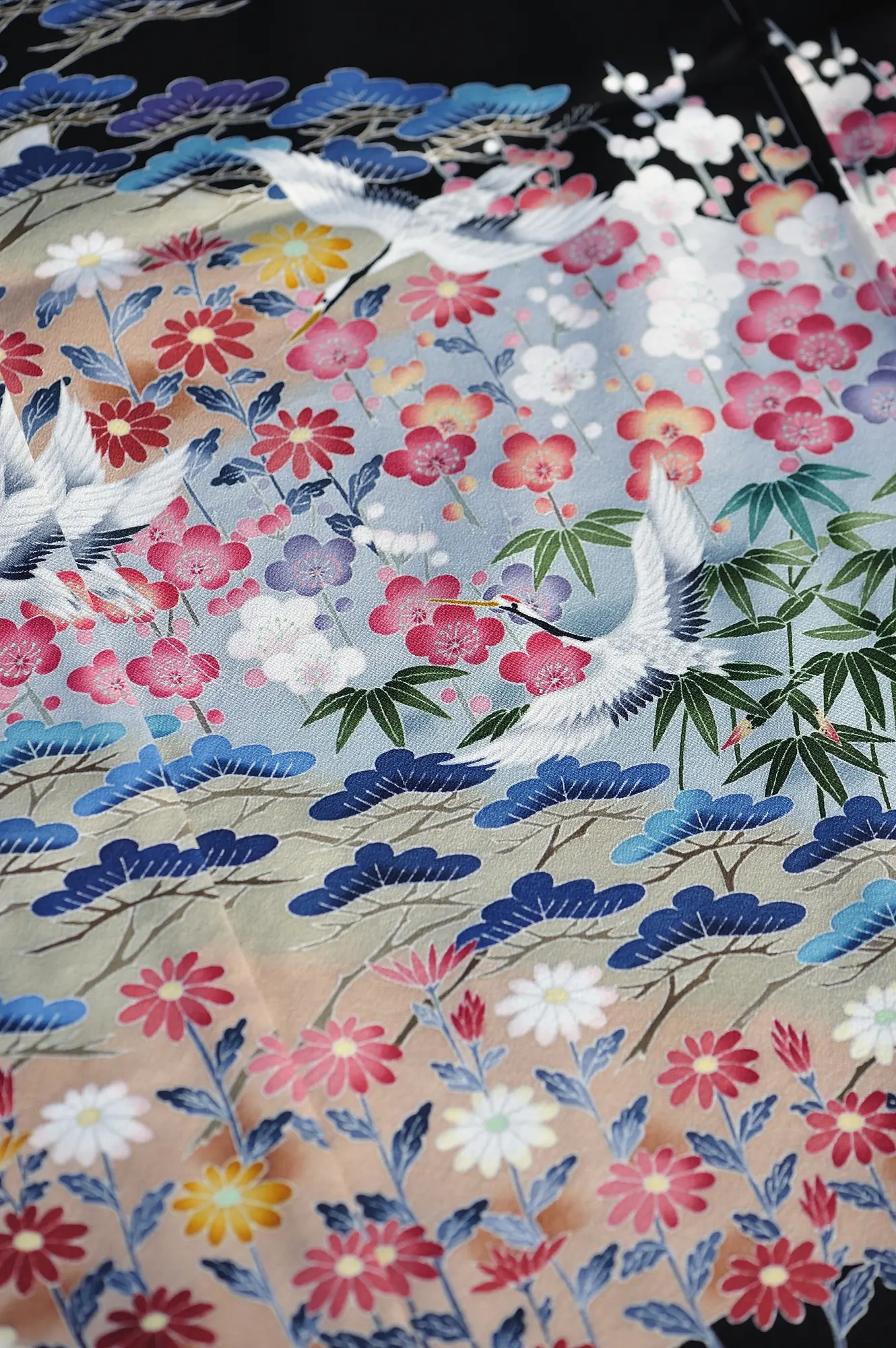
Kaga yuzen is said to have begun with Umezome, a plain-dyeing technique unique to Kaga that existed Approx. 500 years ago. Later, in the mid-Edo period, yuzen dyeing was born when the designs of Miyazaki Yuzensai, a popular fan painter in Kyoto, were applied to dyeing. Influenced by this, yuzen dyeing also developed in Kaga.
Kaga yuzen continues to use techniques passed down since the Edo period, and its colors are based on the Yuzen Gosai, or “five colors of yuzen”: suo, sometimes also called enji, indigo, ocher, grass green, and ancient purple.
The designs are subdued and mainly feature realistic paintings of flowers and birds. Many beautiful gradations known as bokashi are used. Techniques such as soto-bokashi, in which the outside is dyed darker and the center lighter, and mushikui, or “insect-eaten” effects, are also used. The finishing is also distinctive. In Kyoto yuzen and other styles that use the same yuzen dyeing technique, gold leaf, shibori tie-dyeing, embroidery, and other embellishments are used for finishing. Kaga yuzen, however, does not add these elements and uses almost no techniques other than dyeing. It is a traditional craft designated by the national government.

Kutani Ware
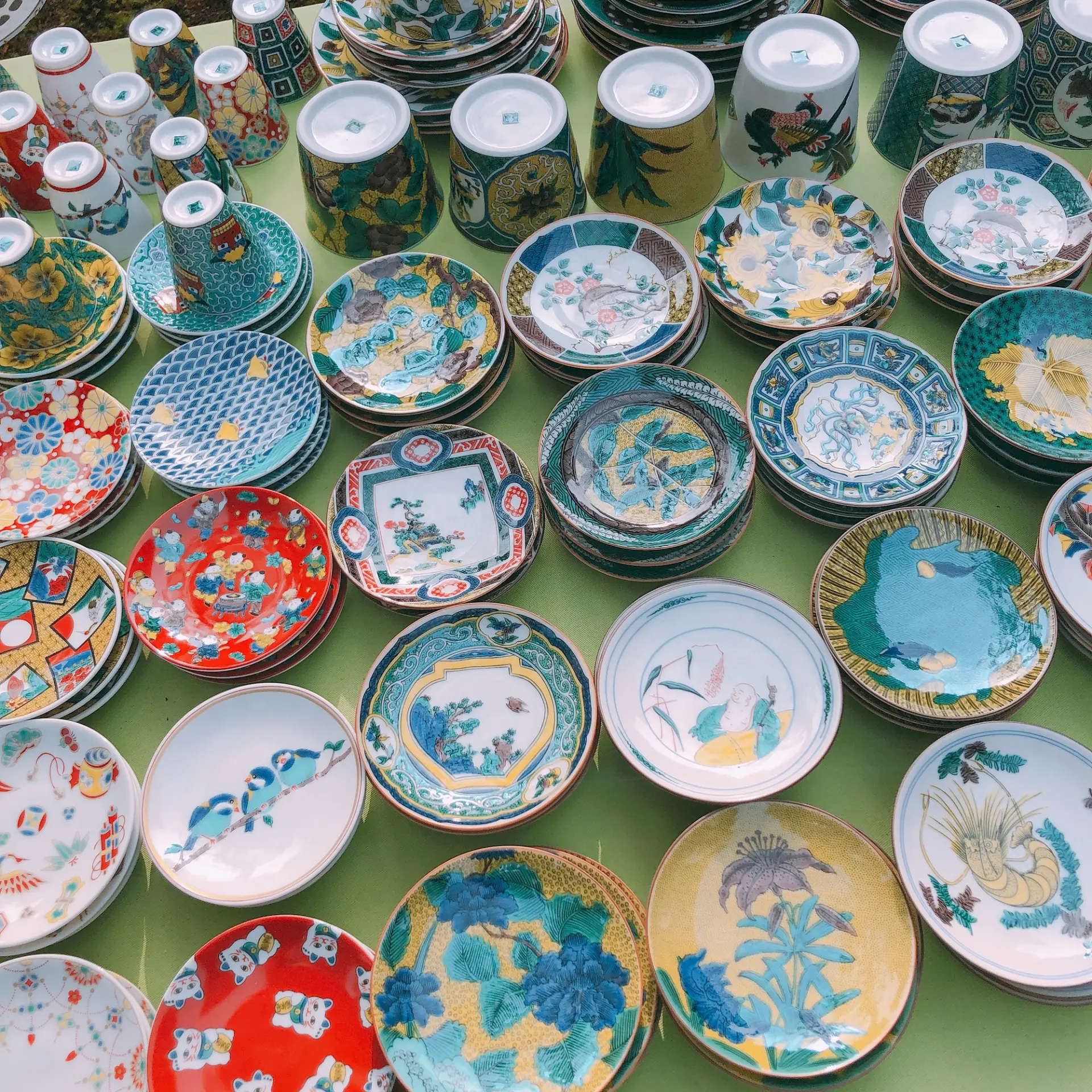
Kutani ware is known for its eye-catching five-color overglaze enamel decoration. It is a traditional craft of Ishikawa Prefecture. It was born in the early Edo period, more than 370 years ago. Kutani ware is classified as porcelain, like Arita ware and Kyo ware. Unlike ceramics such as Seto ware, Mino ware, and Mashiko ware, which are made from clay and fired at low temperatures to become thick, heavy, and absorbent, porcelain is made from stone containing glassy feldspar and silica and fired at high temperatures. It is hard, nonabsorbent, and produces a metallic sound when tapped.
Kutani ware has three main painting styles. First, the style called aote uses four overglaze colors, green, yellow, navy blue, and purple, without red, covering the entire vessel so that no blank space remains on the base. It is a very bold design.
Iro-e is characterized by the use of the Kutani Gosai, or “five colors of Kutani”: green, yellow, purple, navy blue, and red. Chinese-style landscapes, figures, flowers and birds, and seasonal scenes are painted in a pictorial and realistic way in the center of the vessel. Like a hanging scroll or folding screen, it is a very gorgeous style of colored decoration.
Aka-e uses red overglaze enamel and features fine, detailed painting across the entire vessel. In addition to red, it may also be decorated lavishly with gold.
Gold Leaf
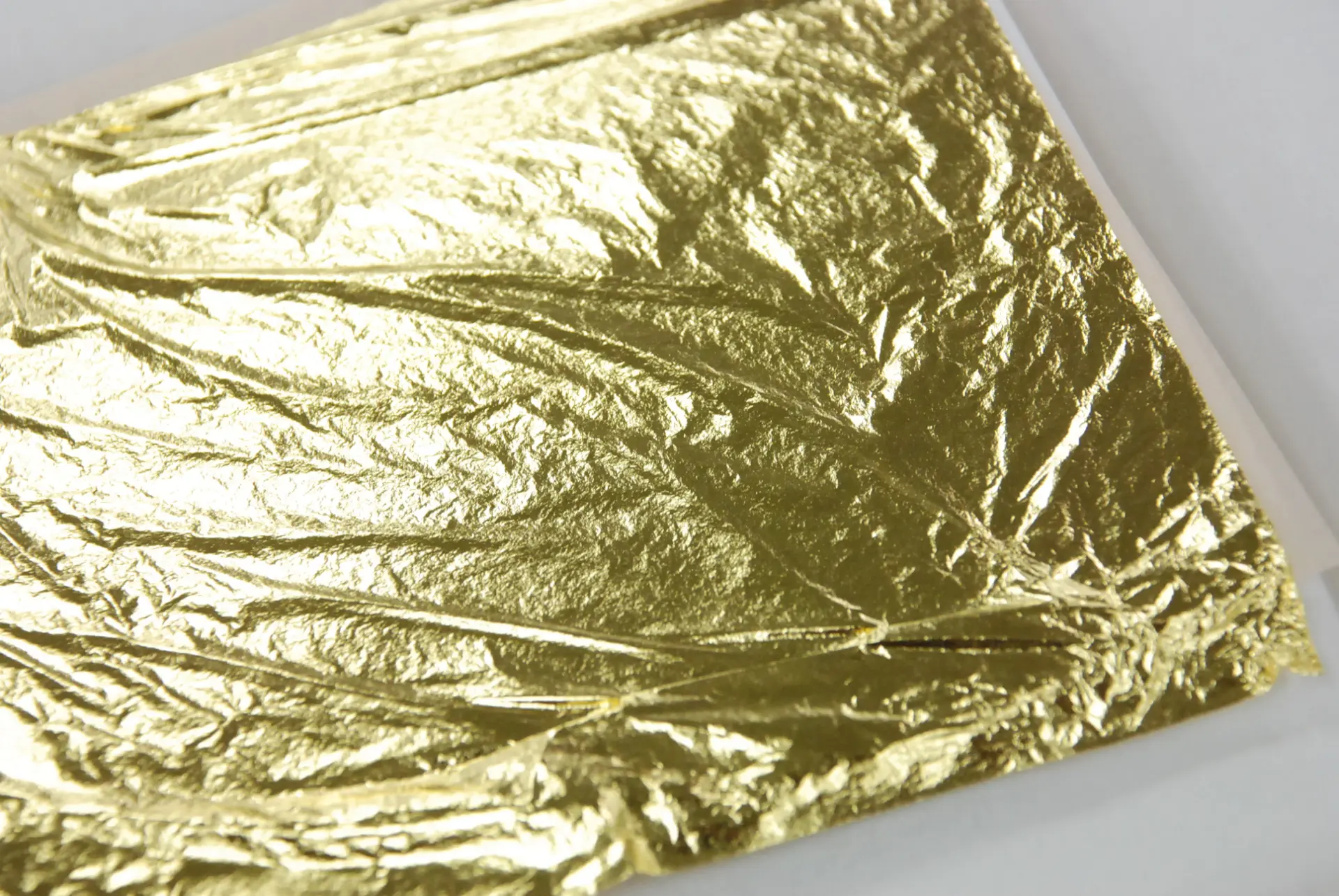
Kanazawa produces 99% of Japan’s domestically made gold leaf, making it the country’s largest production center. Gold leaf production in Kanazawa is thought to have begun during the Warring States period.
This is because records remain showing that Maeda Toshiie ordered gold leaf beating from the camp at Hizen Nagoya, in present-day Saga Prefecture, where he is believed to have stayed while taking part in Toyotomi Hideyoshi’s invasions of Korea. Later, under the Edo shogunate, the shogunate strictly controlled gold and silver and banned gold leaf production outside Edo and Kyoto. Production was also banned in Kanazawa, causing it to decline for a time.
However, after the Ninomaru area of Kanazawa Castle burned down in 1808 and a large amount of gold leaf was needed for reconstruction, the Kaga Domain obtained permission from the shogunate, invited gold leaf artisans from Kyoto, and learned their techniques.
At the end of the Edo period, Kanazawa townspeople negotiated with the shogunate for permission to manufacture gold leaf under the pretext of “rebeating damaged leaf” when leaf made in Edo was transported to Kanazawa. As a result, permission was granted, but only for official domain use such as repairs to Kanazawa Castle.
From then until today, Kanazawa’s gold leaf artisans have continued to refine their skills, and the city became Japan’s largest production center.
Kaga Food Culture
Kaga cuisine was registered as a national Intangible Cultural Property in December 2025. It is a traditional food culture representing Ishikawa Prefecture. This is only the second case of Japanese cuisine being registered as a national Intangible Cultural Property, following Kyo-ryori, or Kyoto cuisine. That shows how historically or artistically valuable this cuisine is to Japan, and how it embodies the human “skills” that people have passed down through generations.
Kaga cuisine also emerged from the samurai culture of “Kaga Hyakumangoku.” Honzen-ryori, a formal style of dining that emphasized ceremony and status in samurai society, and high-ranking kyo-o-ryori, or banquet cuisine for entertaining guests, developed over time, refining both flavor and technique.
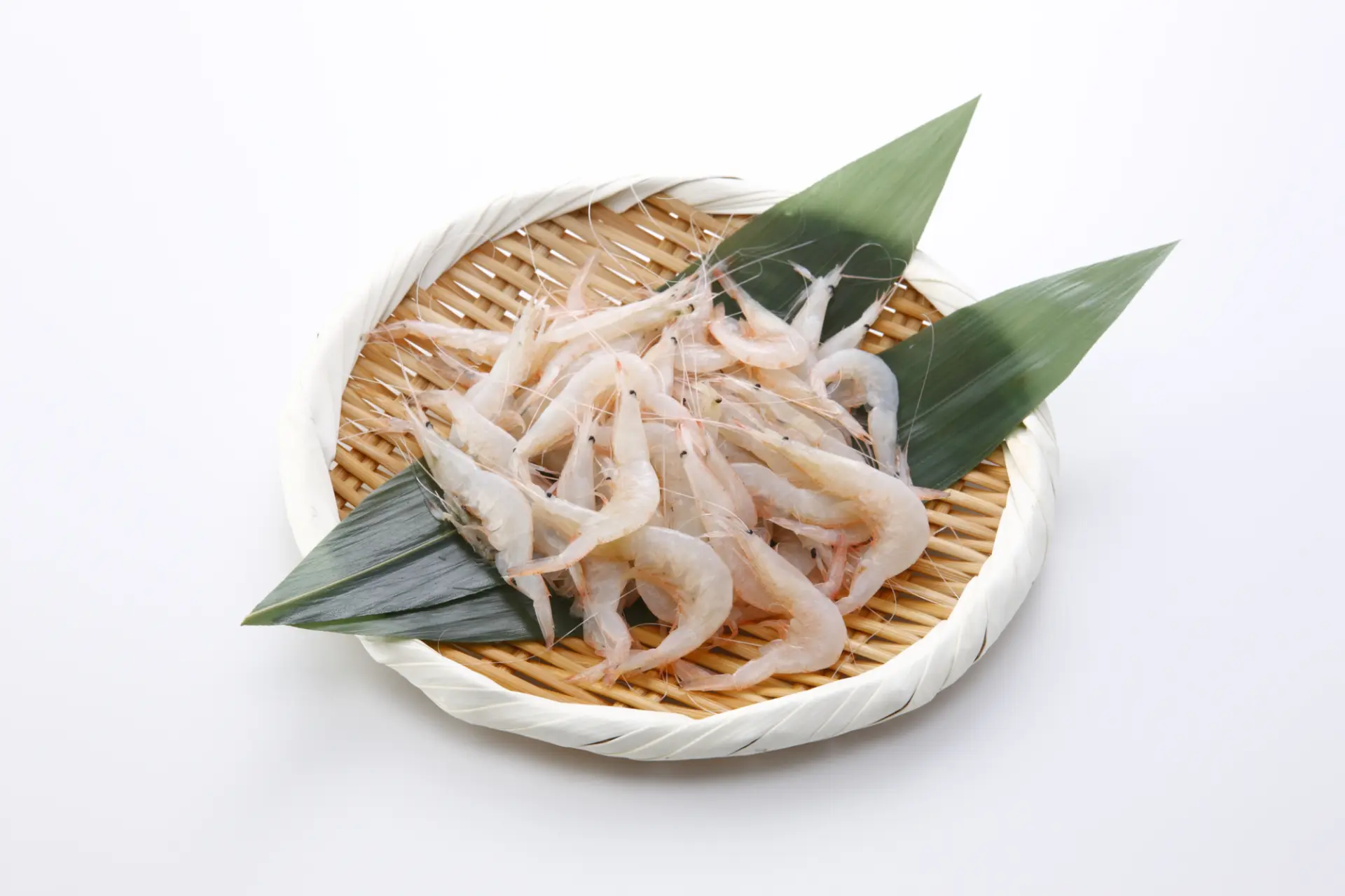
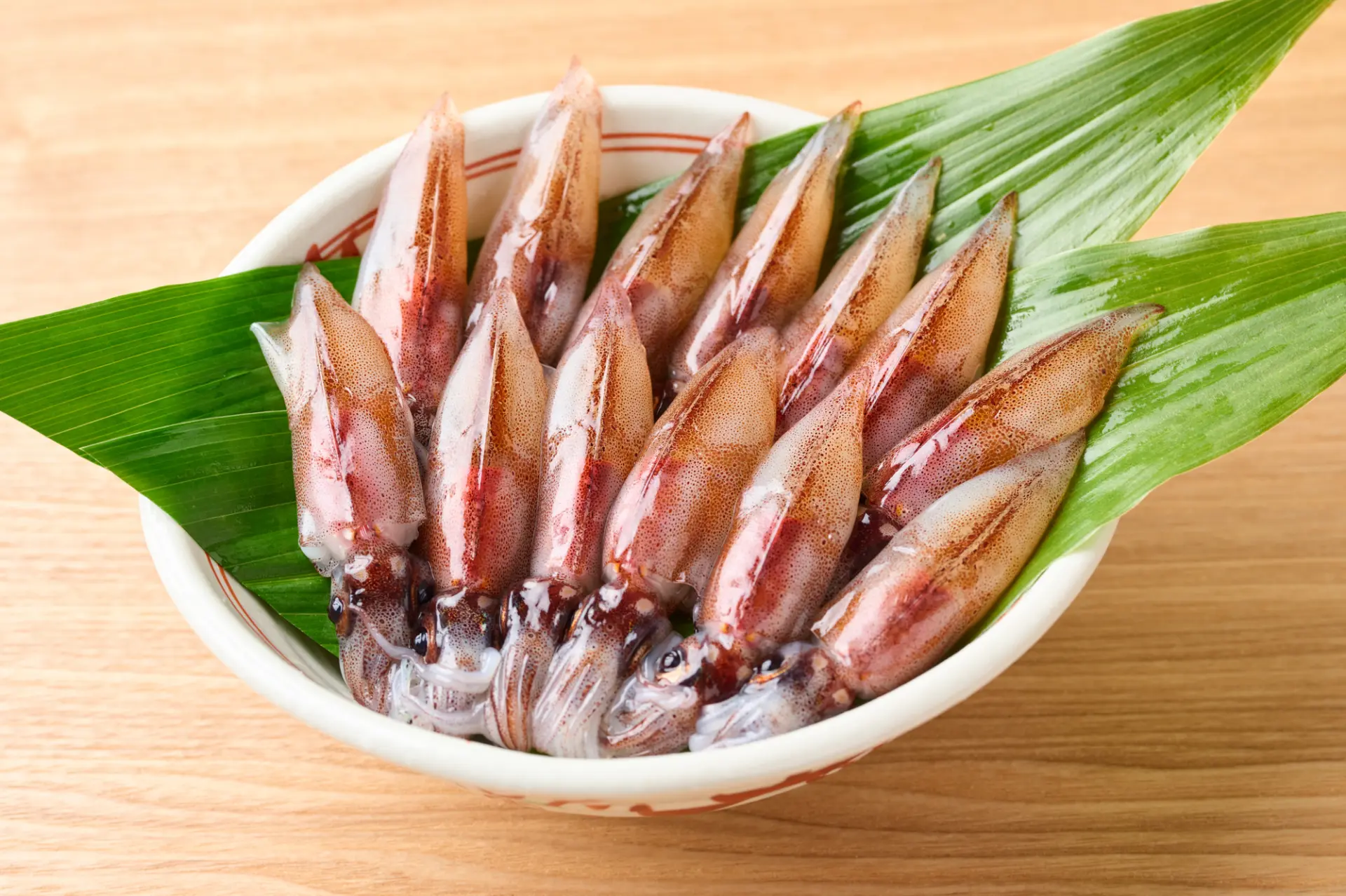
Another essential point in understanding Kaga cuisine is that Ishikawa Prefecture is blessed with abundant nature. Above all, there is seafood. Facing the Sea of Japan, Ishikawa sits where warm and cold currents meet. Seasonal seafood is easy to find, from firefly squid and white shrimp in spring to snow crab and winter yellowtail in winter.
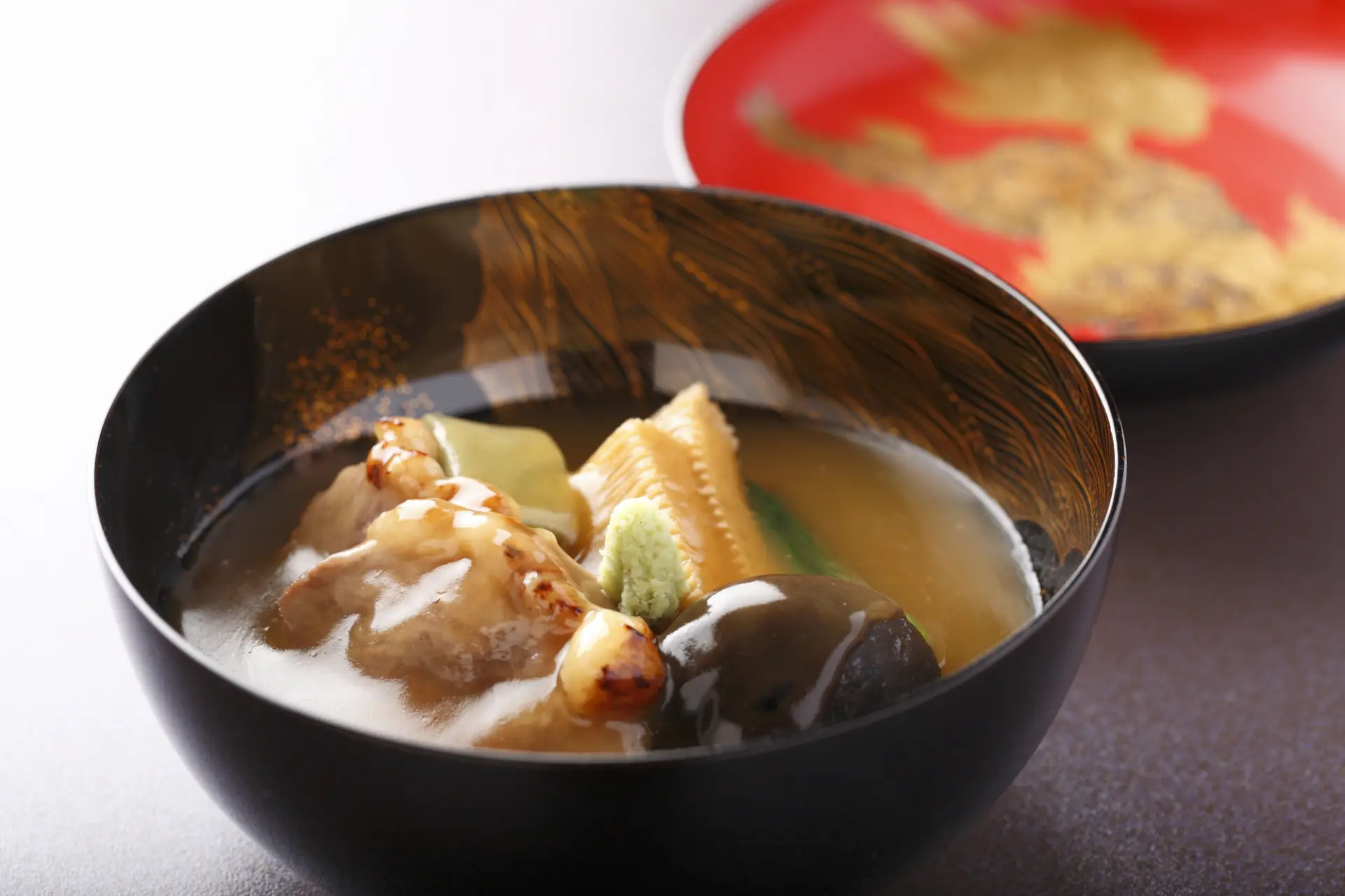
One representative Kaga dish is jibuni. Duck or chicken is coated with wheat flour, then simmered in a sweet-savory sauce with seasonal Kaga vegetables and sudare-fu, a local specialty wheat gluten.
Historic Landscapes of Kaga
Many areas still offer views of the historic landscapes shaped by the Kaga Domain. Here are some of the most popular sightseeing spots among them. Each offers scenery reminiscent of the Edo period. Renting a kimono from a local rental shop and strolling through these areas is highly recommended.
1. Kenrokuen Garden
Kenrokuen Garden conveys the glory of Kaga Hyakumangoku to the present day.
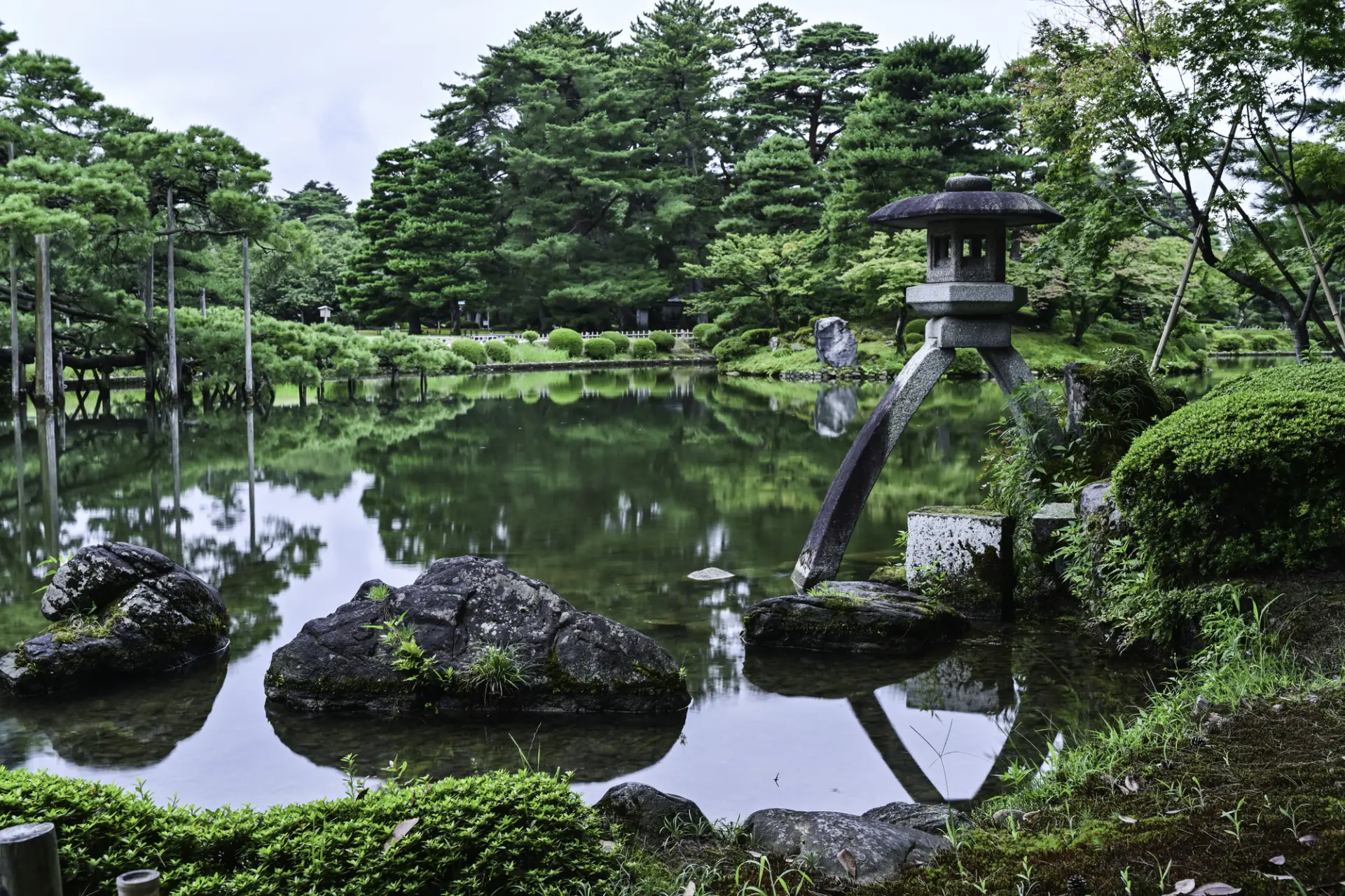
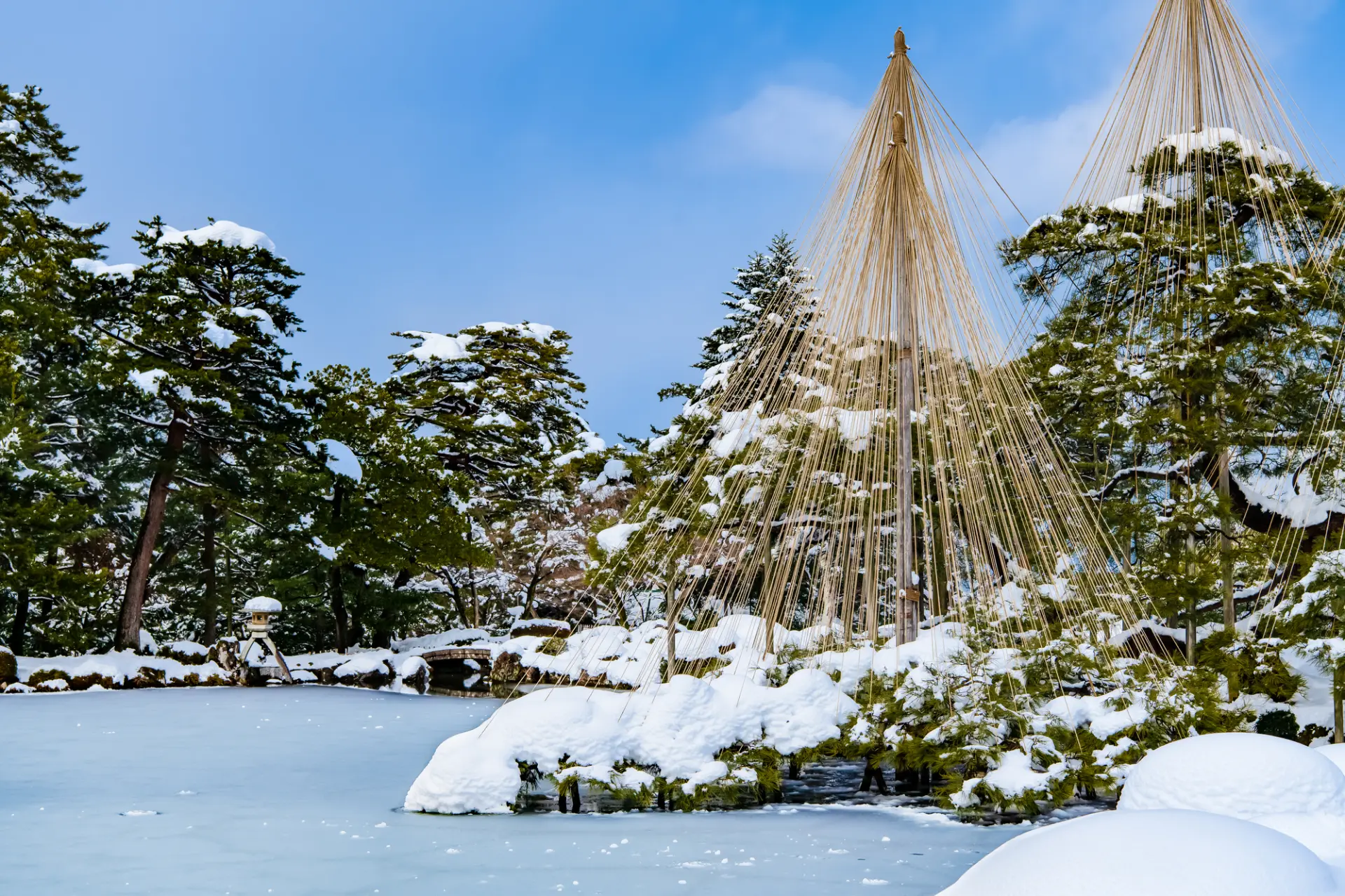
Kenrokuen is said to have begun in 1676, when Maeda Tsunanori, the fifth lord of the Kaga Domain, built a garden on villa grounds facing Kanazawa Castle. Later, successive domain lords shaped it over many years into one of the representative daimyo gardens of the Edo period. It is said to have taken almost its current form during the time of the 12th lord, Narihiro, and the 13th lord, Nariyasu. One of Japan’s Three Great Gardens, it can be enjoyed throughout the seasons: plum and cherry blossoms in spring, irises and fresh greenery in early summer, and autumn leaves in fall. It is especially known for its snowy winter scenery. In Kanazawa, which faces the Sea of Japan and receives heavy snowfall, yukitsuri is used to support tree branches with ropes and protect them from heavy snow. For the famous Karasaki Pine inside the garden, a tall pole is erected, and ropes are stretched out radially from it to support the branches.
Kenrokuen is a strolling-style garden. Across its 114,000-square-meter grounds, ponds, bridges, artificial hills, and teahouses for resting and dining are scattered throughout, allowing visitors to enjoy the scenery as they walk. The garden’s name comes from the “six attributes”: spaciousness, seclusion, human artistry, antiquity, water features, and panoramic views. One of its pleasures is that the scenery changes with every step.
2. Nagamachi Samurai Residence District
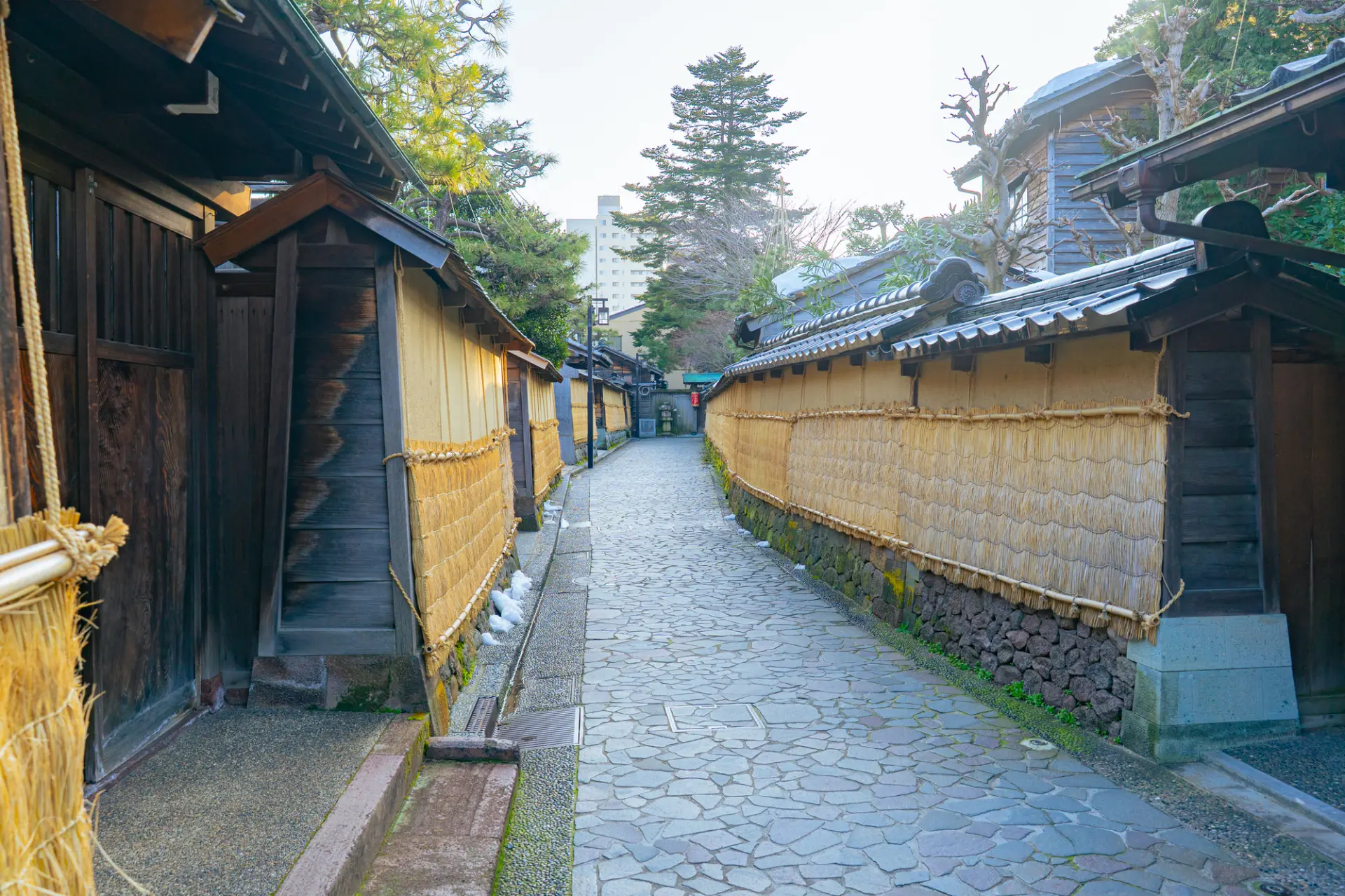
This area preserves grand samurai residences that make you feel as if you have traveled back to the Edo period. You can see traditional earthen walls and stone-paved lanes. During the domain era, this was where the residences of middle-ranking samurai stood side by side. Some residences are open to the public, allowing visitors to see the elegant interiors and gardens of samurai homes from that time. The surrounding area also has shops selling traditional crafts and eateries offering dango dumplings and other treats, so enjoy strolling around.
3. Chaya Districts
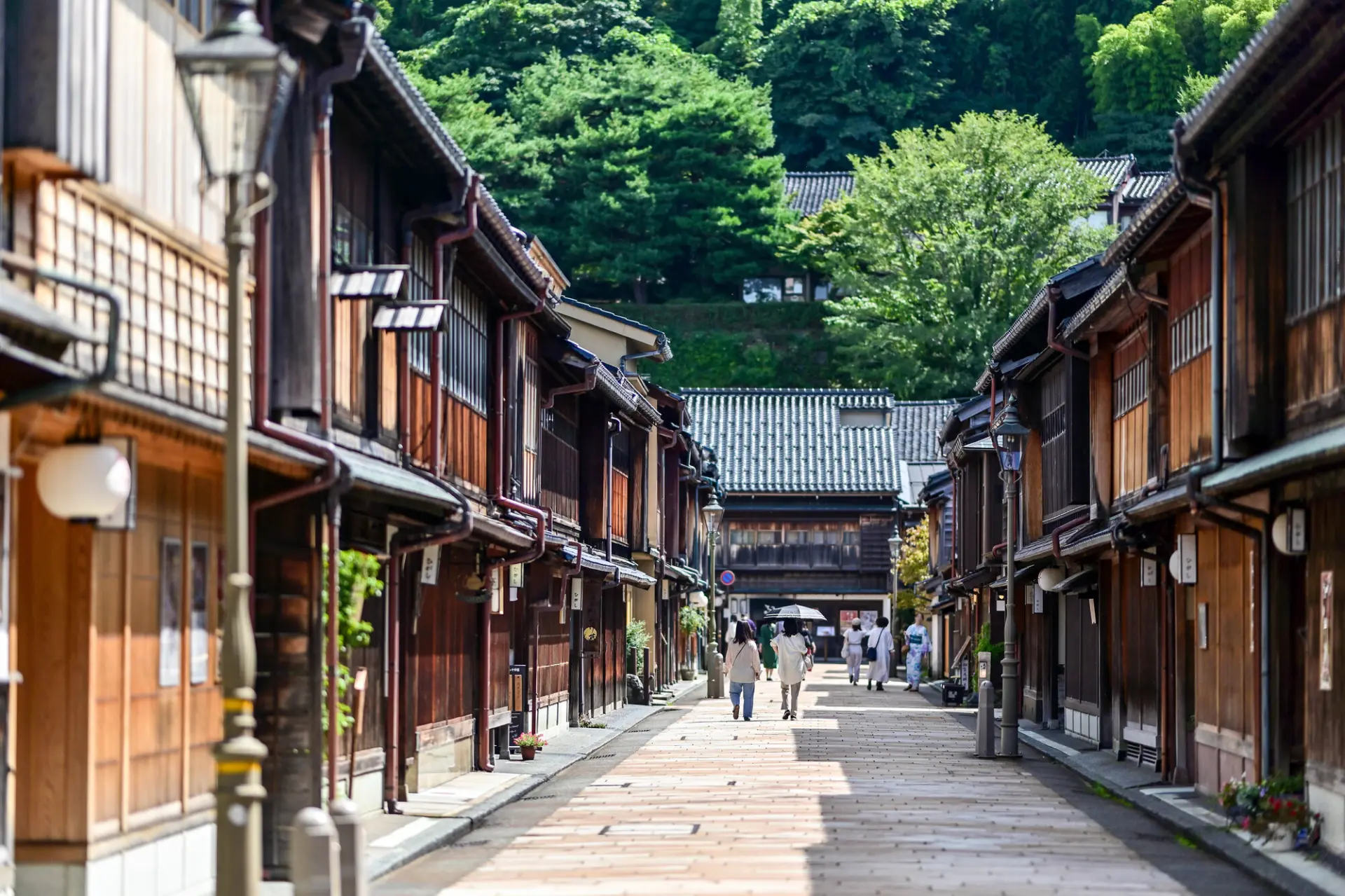
In 1820, the Kaga Domain gathered teahouses that had been scattered throughout the town into designated areas and managed their operations. In effect, these were geisha districts officially approved by the Kaga Domain. The “Three Chaya Districts of Kanazawa”—Higashi Chaya District, Nishi Chaya District, and Kazuemachi Chaya District—still remain today.
The area that became especially lively as a chaya district in the late Edo period is Higashi Chaya District, located Approx. 30 minutes on foot from Kanazawa Station. It is an Important Preservation District for Groups of Traditional Buildings, where Edo-period streetscapes are preserved. A chaya was an adult social venue where geiko entertained guests with dance and shamisen music. Even today, five teahouses are still in operation, and more than a dozen geiko are active there. These teahouses follow the so-called ichigen-san okotowari custom, meaning first-time visitors are not admitted, and you cannot enter unless introduced by someone who already visits the teahouse. However, at the Kanazawa Asanogawa Enyukai Hall museum, you can learn about the history of Higashi Chaya District, watch geiko dance, and experience an ozashiki banquet-style setting.
There are also kimono rental shops, so strolling in kimono is recommended.
One thing to note is that eating while walking is prohibited in Higashi Chaya District because it is designated as a preservation district. As a general rule, eat inside the shops. Following good manners helps protect the beautiful streetscape.
Summary
Through this article, you have likely seen that all of Kaga culture was born because the Maeda family built the wealth of one million koku. Kaga’s own distinctive culture and scenery, neither Kyoto nor Edo, emerged during the Edo period and have been carefully passed down to the present day. When you visit Kanazawa, be sure to look for traces of the million-koku legacy.

Author
Freelance Announcer
Sayaka Motomura
Focused on sharing insights related to traditional culture, performing arts, and history.