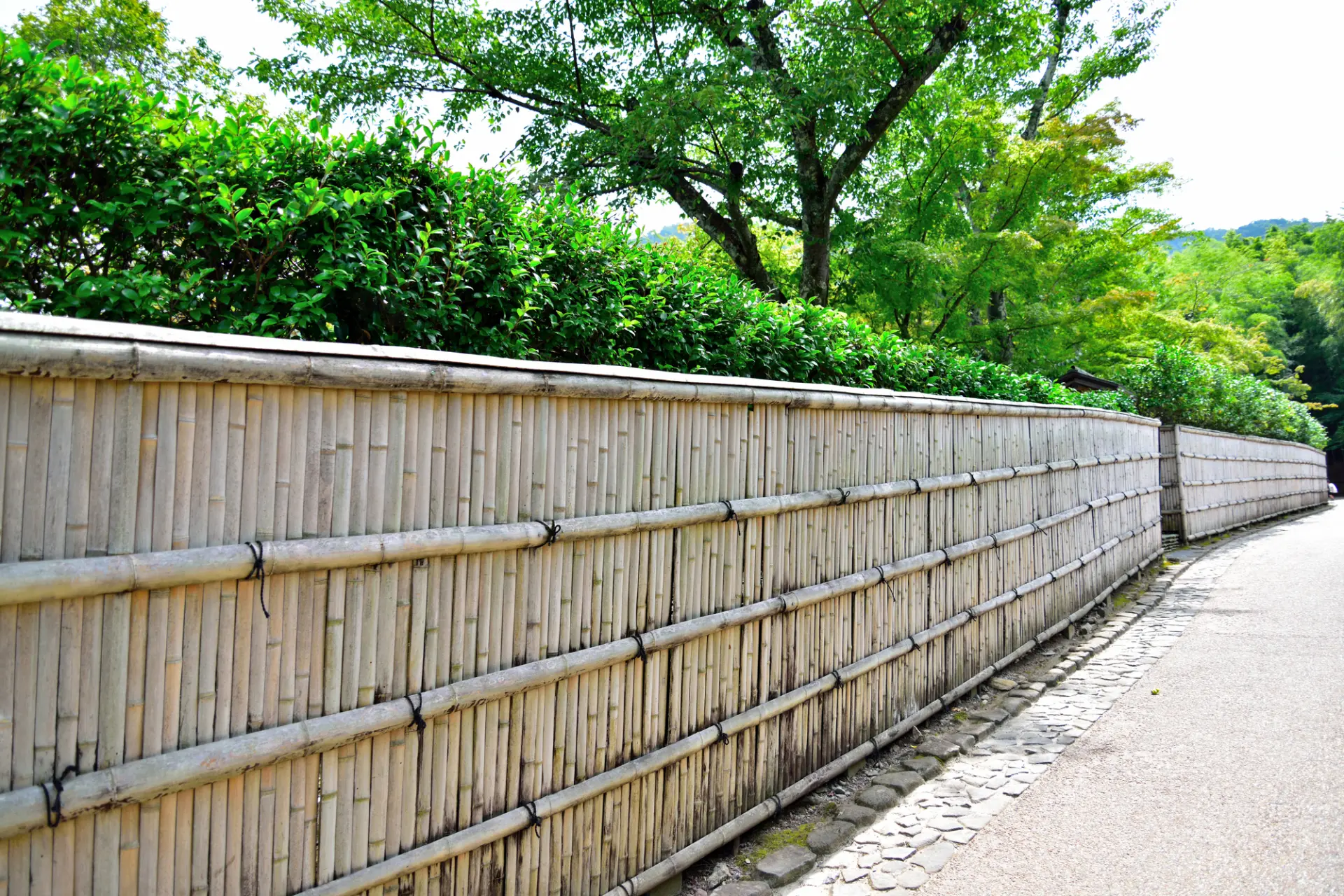
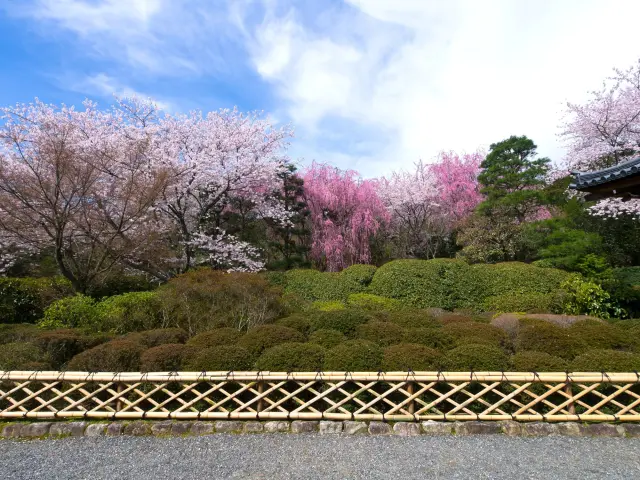
A bamboo fence is a type of fence unique to Japan, made from bamboo about 1 to 2 meters tall. It reflects the Japanese concept of ma, rooted in the country’s garden and architectural culture. By emphasizing spatial openness and paths for light and wind, it contributes not only to protection but also to harmony in the landscape and space. Bamboo fences are a uniquely Japanese landscape element that bring calm and elegance to gardens and buildings. They appear in documents from the Heian period (794–1185), suggesting they have long been tied to aesthetic awareness in gardens and architecture.
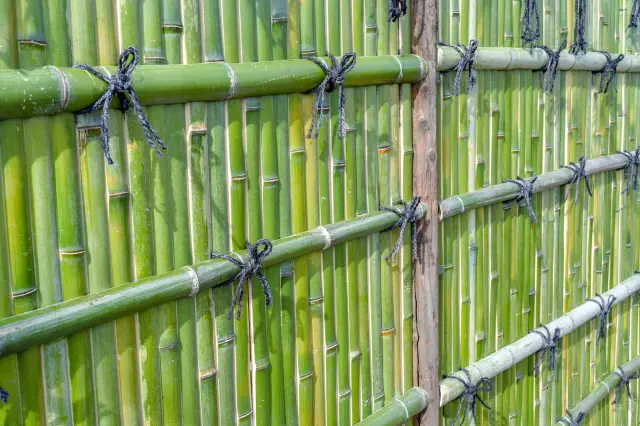
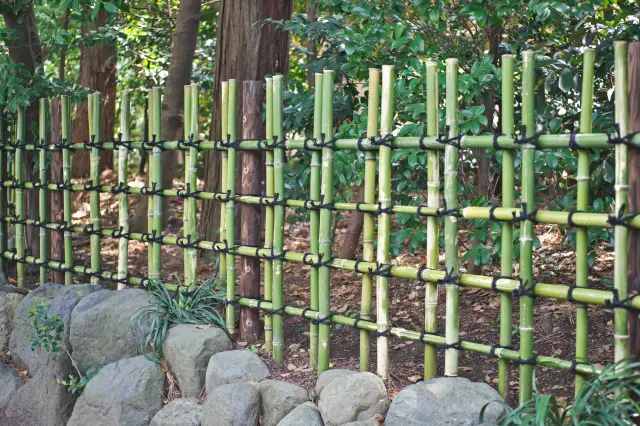
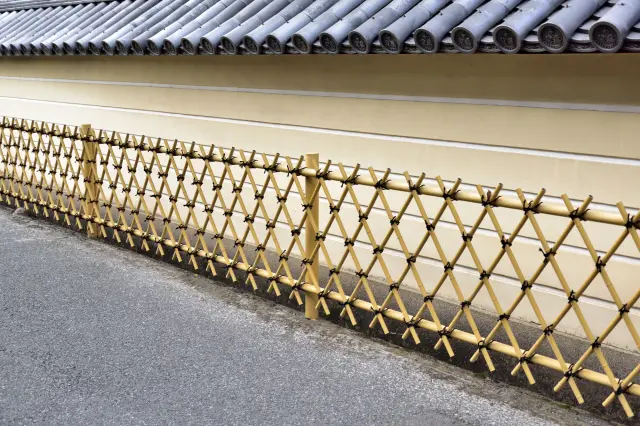
There are several types of bamboo fences, each suited to different uses and aesthetic preferences. Kenninji-gaki is used in temples and formal gardens, reflecting the calm aesthetic sense of samurai and aristocrats. Yotsume-gaki is widely used in machiya townhouses and tea gardens, with understated decorative qualities that blend into everyday living spaces. Yarai-gaki combines protection and decoration in samurai residences, reflecting the class structure and aesthetic values of Edo-period society. Bamboo fences were also depicted in ukiyo-e prints and illustrated guides to famous places during the Edo period (1603–1867), where they were recorded as part of the everyday landscape.
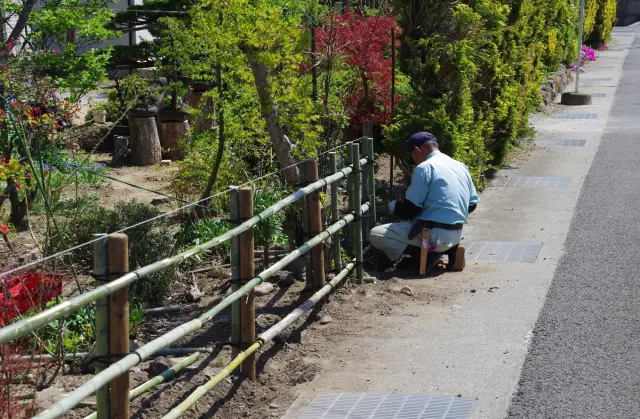
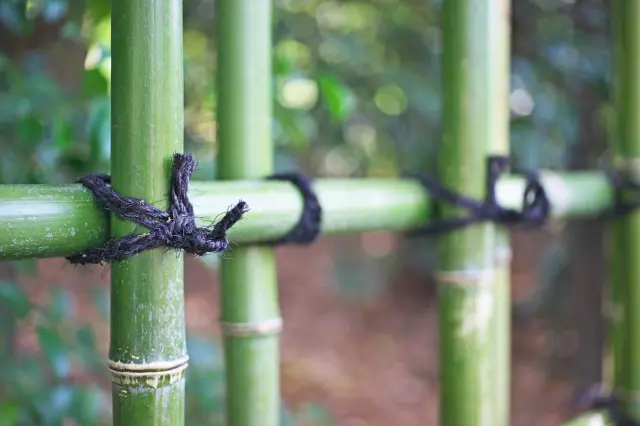
Made by skilled craftsmen, bamboo fences require careful techniques in selecting the bamboo, aligning the nodes, and weaving the structure. Black palm-fiber rope is used for tying, and the tightness and decorative effect are adjusted through the knotting method. An artisan’s sense of beauty can also be seen in the shape and spacing of the bamboo. Even today, bamboo fences are still widely used in gardens, tea gardens, and ryokan inns. Green bamboo gradually changes to a sooty brown color over several years. As the rope tightens over time, the entire fence develops a softer expression. These changes over time reflect a cultural value in Japan of appreciating nature and the passage of time as a source of beauty.
Highlights
-
Bamboo fences are a uniquely Japanese type of fence that help shape the look of gardens and buildings.
-
They reflect the concept of ma, with attention to spatial openness and paths for light and wind.
-
Types vary by use, including Kenninji-gaki, Yotsume-gaki, and Yarai-gaki.
-
They were depicted as part of everyday scenery in Edo-period ukiyo-e prints and illustrated guides to famous places.
-
With skilled craftsmanship and changes over time, they grow into scenic elements full of character.