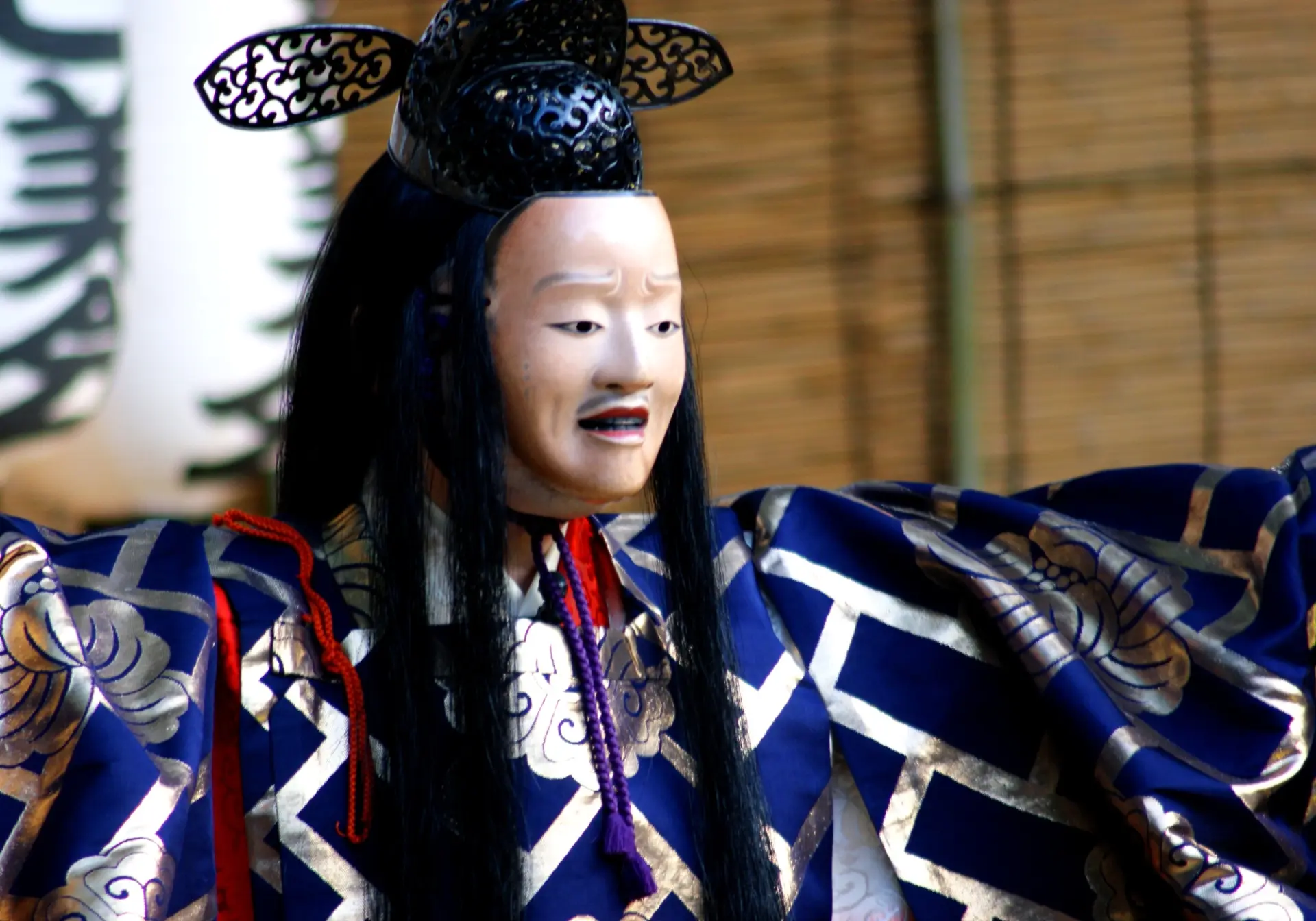
Noh, a traditional Japanese performing art, is a musical drama composed of three elements: chant, hayashi instrumental music, and dance. It is also described as Japan’s traditional musical theater. Noh performers wearing masks develop the story as they dance to the accompaniment of flutes and drums. In Noh, emotions are expressed not through facial expressions, but through movements and formalized patterns. Many stories feature non-human main characters such as demons, ghosts, and gods. Noh masks, dance forms, and hayashi music create the atmosphere, while minimal stage settings spark the audience’s imagination.
The origins of Noh date back to the early Nara period (around 710–720), beginning with sangaku, which was introduced from the Asian continent. Sangaku was a performing art that combined acrobatics, mimicry, and musical performances, and it spread through shrine and temple festivals as well as street entertainment among the people. It later developed through sarugaku from the mid-Heian period (around 950–1050) to the Kamakura period (1185–1333), and was established in its present form during the Muromachi period (1336–1573). Loved by the warrior class and the upper classes, it also gave rise to performances with spiritual and religious symbolism.
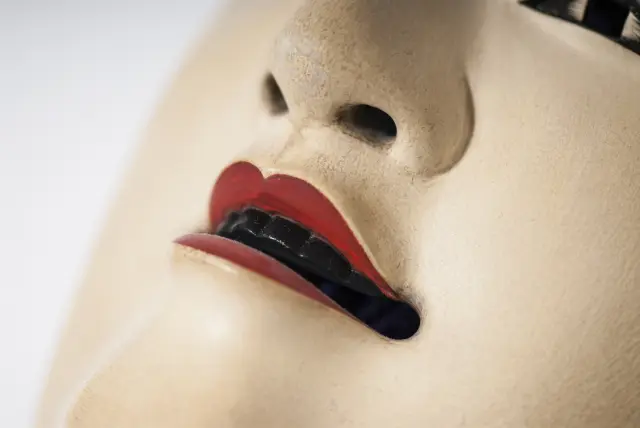
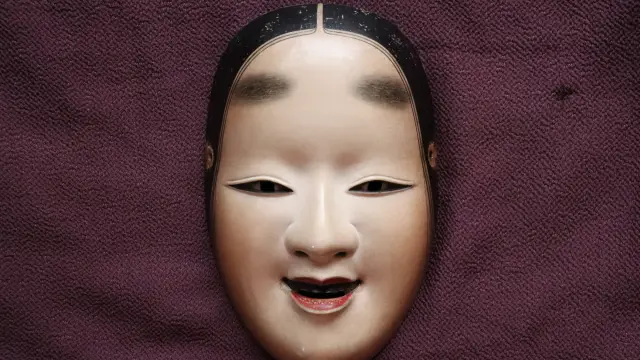
The production of Noh uses wood for masks, silk and hemp for costumes, and stage props. Noh masks are hand-carved by artisans to create subtle expressions, and the colors and patterns of the costumes symbolize the characters and the performance. Acting follows established forms and is expressed through sliding steps and set movements.
Today, Noh continues to preserve its traditional style while also being performed in contemporary spaces. Blending classical and modern elements, it is enjoyed in theaters and cultural venues, and is also often presented in educational settings and international exchange programs. Through the five senses, Noh stirs the audience’s imagination and continues to be passed down as an art form that conveys the appeal of Japanese culture.
Highlights
-
It is composed of three elements: chant, hayashi instrumental music, and dance.
-
A traditional musical drama in which Noh masks, dance forms, and hayashi music create the atmosphere.
-
It originated in the Nara period and was established in its present form during the Muromachi period.
-
Noh masks and costumes are crafted with artisan skill, and acting is expressed through established forms.
-
Even today, it is used in theaters, education, and international exchange.