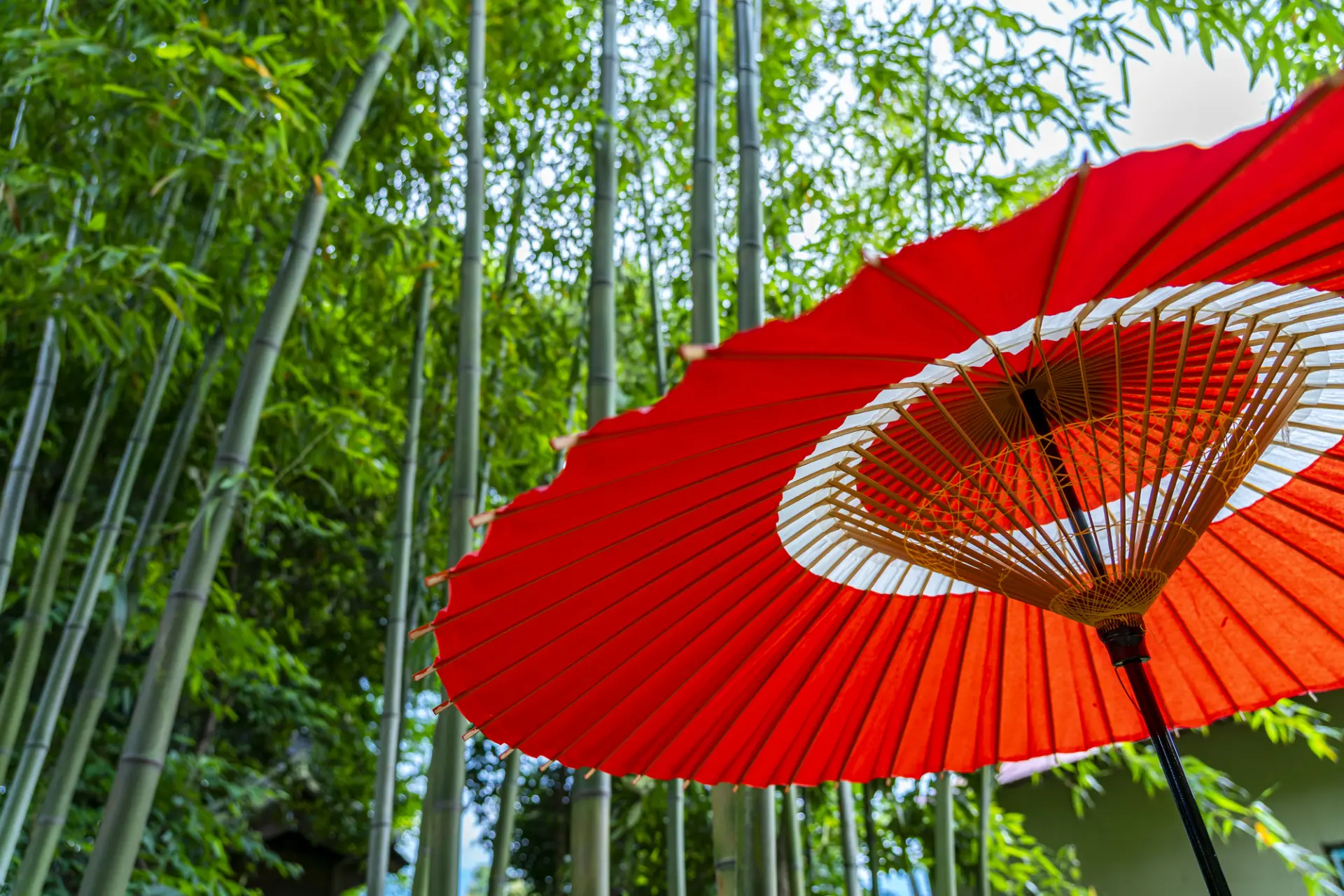
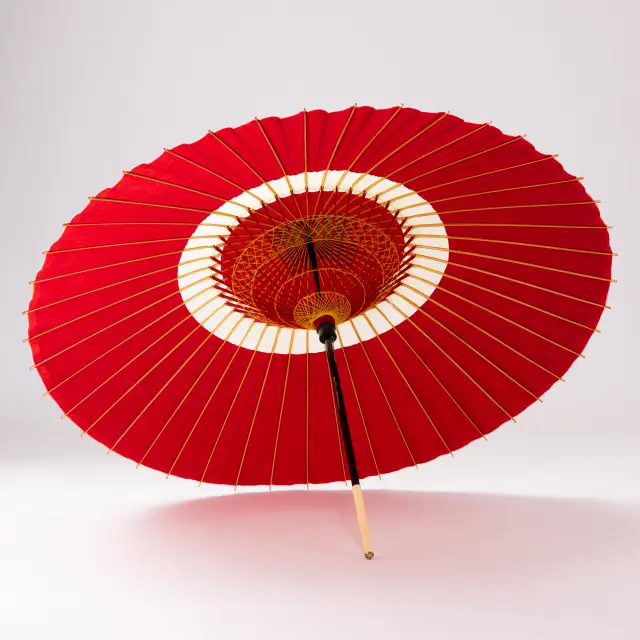
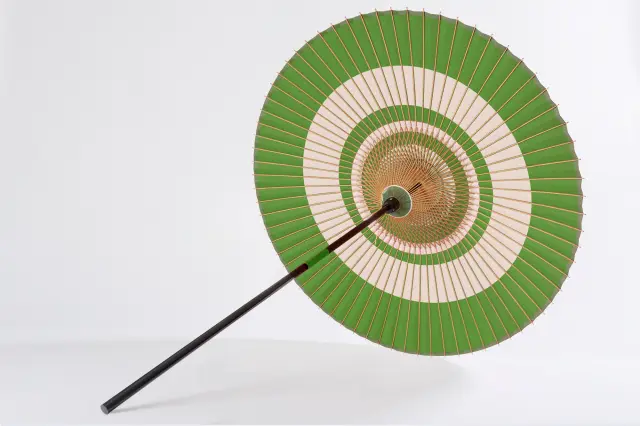
Traditional Japanese wagasa are handcrafted umbrellas made from natural materials such as washi paper and bamboo. Each production area has its own distinctive features in color, shape, and the slenderness of the ribs. Gifu wagasa are known for their playful, slim designs, while those from Kyoto favor simplicity and the beauty of wabi-sabi. In Tottori and Toyama, durability strong enough to withstand snow is a defining feature. Used for both decoration and practical purposes, wagasa are also highly valued as gifts, display pieces, and everyday rain gear.
The exact origin of wagasa is unclear, but umbrellas were already in use in ancient Egypt, Greece, and Persia. In Japan, the oldest record is said to be a kinugasa canopy presented from Baekje in the 6th century. They appeared in picture scrolls during the Heian period (794–1185). They were improved into a foldable form during the Azuchi-Momoyama period (1573–1600), and became widespread among common people from the mid-Edo period onward, around the mid-1700s. They were also incorporated into performing arts such as kabuki and tea ceremony, becoming a symbolic presence in Japanese culture.
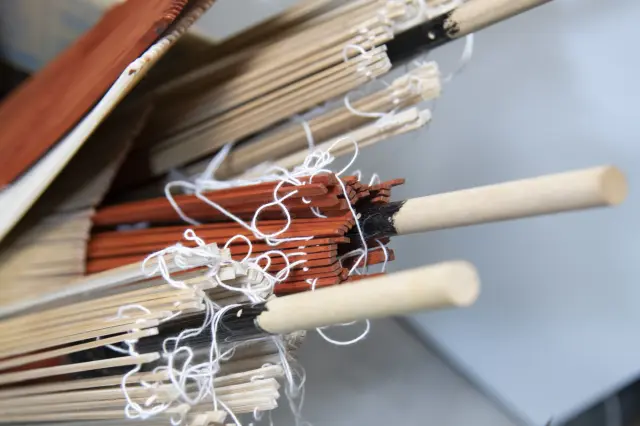
Wagasa are made mainly from washi paper and bamboo, and unlike Western cloth umbrellas, they are lightweight and breathable. Artisans assemble the framework by hand, apply the washi paper, and waterproof it with persimmon tannin and other materials. Precise craftsmanship can be seen in every detail, with each artisan's individuality expressed through the smoothness of opening and closing, durability, and richness of color.
Today, wagasa are often used for display, traditional cultural experiences, and stage props. They are also popular as decorations in homes and commercial spaces, blending traditional value with modern life. The handmade texture, color, and form of wagasa have become an important link between preserving Japanese culture and adapting it for contemporary use.
Highlights
-
A traditional craft made with washi paper and bamboo, lightweight and breathable.
-
Distinctive designs vary by production area, including Kyoto, Tottori, and Toyama.
-
A symbol of Japanese culture, used in performing arts and rituals since the Heian period.
-
Artisans express waterproofing, durability, and color beauty through hand craftsmanship.
-
Today also used for display, stage props, and home decoration.